

 Fabian Lainé

Full Guide
Dead by Daylight Extinguishing Fires: the guide to the modifier and the Lantern, until August 11th
In brief
Blackout returns for only the third time in Dead by Daylight, from August 4 to 11. This radical modifier removes your perks, items, and the game's HUD, plunging you into a brutal hide-and-seek where information travels through sound and memory. The Lantern becomes your best ally for coordinating with your team and locating generators.
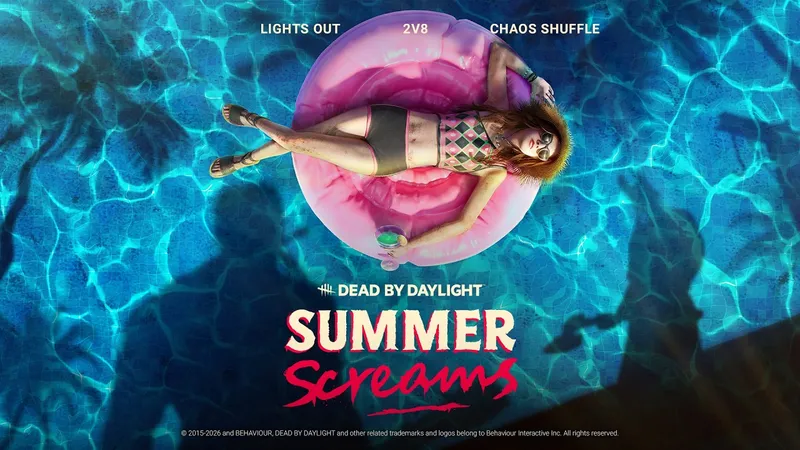
Since August 4, Dead by Daylight has been running the Lights Out modifier, which kills the lighting, strips the HUD, and takes away your entire loadout. This is the second of the three weeks of Cries of the Summer, the summer event launched on July 28, and it ends on Tuesday, August 11: so there's only this Sunday and Monday left to enjoy it before the 2v8 mode takes over until August 18.
This is only the third iteration of the modifier, and the first since the Castlevania version from September 2024. It's not a simple copy-paste: the rotation is limited to five maps, the Lantern gains new aura reads, generators start with a head start, and the anti-camp system's range is doubled.
Here's what Lights Out removes, what it gives back in exchange, how to play each side on the maps in question, and how to schedule the event quests before Tuesday's switch.
What the modifier removes
Lights Out neutralizes most of what you rely on in a standard match. According to the game's official wiki:
- Perks, items, add-ons, and offerings are disabled: both sides' loadouts are reduced to zero.
- The HUD is stripped down to the bare minimum: survivor portrait, chase status, hook stages, and action prompts. You can no longer see your teammates' health states.
- The killer's terror radius is disabled. No more rising music: the killer arrives in silence, every time.
- Scratch marks disappear. Once line of sight is broken, a survivor becomes genuinely untraceable.
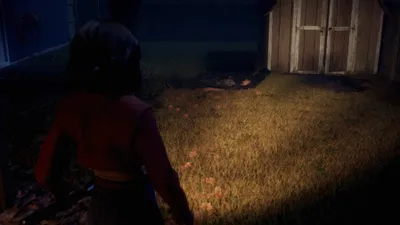
- The fog is noticeably thicker than in previous iterations, and it hinders the killer just as much as the survivors.
The result is a game of hide-and-seek that's much slower than the standard version, where information travels through sound and map memory rather than auras and perks.
What it gives back in exchange
Behaviour has offset the loss of these usual cues with a series of numerical adjustments, all carried over from the 2024 iteration and kept for this year:
- All generators start with a minimum 5% progress. This detail matters: a generator that's already been worked on is easier to locate by ear when visibility drops to a few meters.
- The base repair speed increases to 1.2 charges per second, a +20% boost per survivor.
- 11 chests spawn on the map, with an upgraded loot table: Rare rarity at minimum, no keys, and a Lantern in 60% of draws.
- The Endurance effect gained after being unhooked lasts 60 seconds instead of its usual duration.
- The anti-camp system's range is doubled to 32 meters, a correction taken directly from the abuses observed in previous versions.
The Lantern: the centerpiece of the week
The Lantern is the event item for Lights Out, and it's the one that structures the entire match from the survivor side. It carries 90 charges and works on three levels:
- The beam reveals the aura of the nearest unfinished generator. It's your compass when you're disoriented, but every second spent is a second less for later.
- Environment reading is the novelty of this iteration: the holder sees the auras of pallets, windows and breakable walls within a 32-meter radius. In other words, the Lantern isn't just for finding generators, it's also for preparing a chase.
- Marking: placed on a generator, it reveals its aura to all survivors within 32 meters. Without a HUD, it's your only real coordination tool in a solo queue. The official wiki also describes a 15-second block on the killer's ability to read generator auras once the effect ends.
Two limitations to keep in mind: the killer can destroy a placed Lantern, and a survivor who is downed drops theirs. Placing your Lantern before heading into a chase is therefore often more worthwhile than keeping it in hand.
The five maps in rotation
Unlike a classic match, Lights Out only draws from a reduced selection. This year, only five maps are on the program — Greenville Square, present in 2024, has not been brought back.
| Map (English name) | Realm | What changes in the dark |
|---|---|---|
| Mount Ormond Resort | Ormond | Large open, snowy map: the snow reflects a bit of light, but rotation distances are enormous without scratch marks. |
| Treatment Theatre | Léry's Memorial Institute | Fully indoor map. The most brutal of the lot: corridors, blind spots and no long sightlines to anticipate. |
| Family Residence | Yamaoka Estate | Tall grass and bamboo: the best terrain in the rotation for disappearing while crouched. |
| Dead Dawg Saloon | Grave of Glenvale | Small, compact map. Generators are close to one another, and chance encounters are constant. |
| The Devastated Square | Borgo | The realm's ground fog stacks with the modifier's fog; the central hall remains the only reliable landmark. |
On the survivor side: play by ear, mark, and don't isolate yourself foolishly
The first mistake is to play Lights Out like a normal match, just darker. Without a HUD, you don't know if a teammate is injured, hooked or in a chase: the information has to be produced, not awaited.
- Drop your Lantern as soon as you find a generator rather than lugging it around. A marked generator becomes a rally point visible at 32 meters for the whole team, and that's what prevents matches where four survivors run around in circles on their own.
- Open chests early. With 11 chests and loot of at least Rare rarity, a med-kit or a flashlight can change the ending of a match. But the sound of opening one carries: do it at the start of the trial, not while the killer is patrolling your area.
- Break line of sight, then stop. Without scratch marks, a killer who loses you has absolutely nothing to find you with again. Continuing to run is the best way to get spotted again.
- Make the most of the 60 seconds of Endurance after an unhook: that's enough time to get the rescued survivor far from the hook and heal them elsewhere, rather than on the spot.
- Save your 90 charges. The beam is meant to reorient yourself when you're lost, not to light your way constantly.
On the killer side: no more terror radius, but no more blinding either
Removing the terror radius makes everyone stealthy, which mechanically erases the relative advantage of stealth killers: in this mode, surprise is the norm rather than a power. On the other hand, the fog also robs you of your bearings, and you have neither a slowdown perk nor an information perk to make up for it.
- Destroy planted Lanterns first. A marked generator draws survivors in; breaking the Lantern cuts off the opposing team's coordination more effectively than landing one extra hit in a chase.
- Patrol widely. With anti-camp range extended to 32 meters, staying near a hook is directly punished. Pressure needs to come from the generators, not from the hook.
- Anticipate repair speed. +20% per survivor with no slowdown available whatsoever means a generator left alone for two minutes is lost.
- The Treatment Theatre is your best map. The indoor hallways cancel out the survivors' escape advantage and let you cut off rotations blind.
- Listen before you commit. Generators worked on from the start produce an exploitable sound cue: a methodical patrol pays off more than a random chase.
The Summer Screams quests: nine days left to complete them
The event quests, for their part, don't stop on Tuesday: they remain available until August 18. The event has 14 in total, unlocked in successive waves — the first on July 28, the second on August 4 alongside the Fire Extinguished, the third on August 11 with 2v8. Each quest in the first wave rewards 10,000 bloodpoints.
The real goal remains the three summer banners, unlocked at 4, 9, and 14 completed quests. Behaviour hasn't published any French labels for them, so we're keeping the English titles Summertime Smash, Bonfire Bonding, and Sunshine, or Whatever.
Among the objectives listed are: complete 12 trials, repair a total of 20 generators, sacrifice or kill 20 survivors, destroy 12 pallets, cleanse 2 totems, damage 10 generators, or be chased for 60 seconds within a single trial. A tip on method: objectives that rely on mechanics that are altered or absent from the current modifier are much easier to complete in the standard queue. Next week's 2v8 changes the rules even more drastically — if a quest is giving you trouble, don't save it for last.
What's coming Tuesday
On August 11, the Fire Up event gives way to the ninth iteration of 2v8 for seven days, until the event closes on August 18. The PTB for the Chorus of Sin chapter, open on Steam since August 4, is also reaching the end of its cycle: the final version of the chapter is expected on August 25.
In other words: if you wanted to try a mode where the game strips away absolutely everything from you, it's this weekend or in two years. The two previous iterations were spaced seven months and then twenty-three months apart, and there's no indication the next one will come sooner. The best use of these last two days remains the same for both sides: a Lantern placed, a map learned, and a lot less running around.
Share this article
Blackout: would you rather play survivor or killer in this chaos without any bearings?
Frequently asked questions
What happens if I keep my Lantern charged all the time?
You waste its 90 charges. The beam should only be used to reorient yourself when lost or to locate an urgent generator. The Lantern's real value lies in marking: place it on a generator so the whole team can see it within 32 meters and finally coordinate without a HUD.
Why should survivors break line of sight, then stop running?
Without scratch marks, once you've broken the killer's line of sight, they have no way of finding you again if they can't hear you. Continuing to run and letting them hear you again is the worst possible decision: stay still and silent after putting distance between you.
Is Treatment Theatre really that favorable for the killer?
Yes. It's an entirely indoor map with narrow corridors and no long sightlines. Survivors can't use open space to escape: the killer can cut off rotations blindly and force the confrontations they dominate.
How much time do I have to complete all the challenges before the mode changes?
The challenges don't stop on Tuesday, August 11: they remain open until August 18. You have nine full days to complete them, while Blackout only lasts the last two days of its week.
Do I absolutely need to open all 11 chests to have a chance?
No, but opening chests early is really worth it: minimum Rare rarity and a 60% chance of finding a Lantern inside. That said, the opening sound carries, so do it when the killer isn't in your area, ideally early in the trial.
Key takeaways
- Without perks, items, or HUD, you're playing blind: sound and map memorization become your only weapons
- The Lantern reveals generators, pallets, and windows within 32 meters, and must be placed down to mark them for the whole team rather than carried around in hand
- Only five maps are in rotation, each one radically changing how it plays under the modifier's thick fog
- Killers lose their terror radius and perks but gain doubled anti-camp range: the pressure has to happen at generators, never at the hook
- Generators start at 5% progress and repair 20% faster, making every second critical
Comments
No comments yet. Be the first to react!
Leave a comment
Similar guides




Latest articles



Your opinion counts
Rate Dead by Daylight
Click a star to rate