
 Fabian Lainé
Full Guide
Tomodachi Life: Dream Life Journey — treasures, reward baskets and the 44 pets
In brief
Tomodachi Life hides a treasure system that's far more complex than it appears: 246 items to collect, spread across mini-games, trips, dreams, and trophies, with baskets of different sizes containing closed, exclusive sets. Each basket favours a different strategy, from the small lot rich in animals to the large basket generous with money, and the 44 pets are scattered asymmetrically depending on the source.
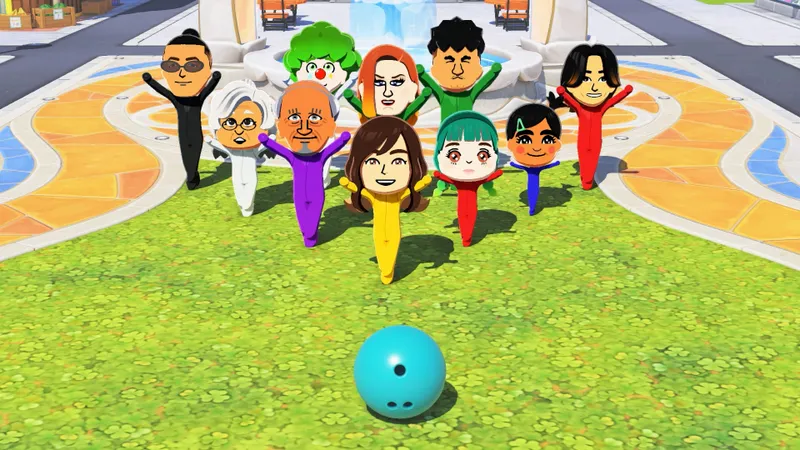
In Tomodachi Life: Une vie de rêve, the entire menagerie of the island and a good chunk of your finances hinge on a single choice: the basket you pick after winning a mini-game offered by a Mii. Three baskets are held out to you — a small one, a medium one, a large one — and the contents are drawn at random. But not from the same pool.
That's the whole point of the system, and almost nobody says it clearly: each basket size has its own closed pool. The community's data survey of the game lists 246 treasures (numbered up to 247, with a single slot left empty in the catalog), of which 203 come from mini-games. The other 43 come from elsewhere, and no basket will ever give them to you, even if you play for a thousand hours.
Here, with the numbers in hand, is what each pool contains, which basket to aim for depending on whether you're chasing money or the collection, and where the 44 pets are found.
The four sources of treasures
A treasure has only three uses: give it to a Mii (their happiness level rises if they like the object, and the exchange earns you a bit of money), leave it with them to play with, or sell it back at the buyback shop. Everything therefore starts with how they're obtained, and there are only four ways.
| Source | Treasures involved | What you need to do |
|---|---|---|
| Mii mini-game | 203 | Accept and win a mini-game, then choose a basket |
| Travel destination | 18 | Send a Mii on a trip and wait for their souvenir |
| Mii dream | 13 | Enter the dream bubble of a sleeping Mii |
| Trophy | 12 | Reach a progress milestone on the island |
In other words: more than eight treasures out of ten go through mini-games. Systematically turning down invitations from your residents means shutting yourself out of 82% of the collection.
Small, medium, large: what each basket really contains
The 203 mini-game treasures are split almost evenly across the three sizes: 67 in the small pool, 67 in the medium one, 65 in the large one. Four items escape the system, more on that below. Cross-referencing these pools with the resale prices found in the game's data, the hierarchy becomes very clear.
| Basket | Treasures in the pool | Median value | Average value | Pets | Items worth €150 or more | Items worth €1 or less |
|---|---|---|---|---|---|---|
| Small | 67 | €8 | €45.90 | 20 (30%) | 7 | 16 |
| Medium | 67 | €33 | €59.30 | 11 (16%) | 4 | 3 |
| Large | 65 | €40 | €85.90 | 9 (14%) | 13 | 1 |
For money, the large basket wins by a wide margin. Its average value is nearly double that of the small pool, one item in five is worth at least €150, and only a single dud lurks in it. The small pool, on the other hand, is a lottery ticket: its median drops to €8 because it's stuffed with knick-knacks worth €0.10 — Pebble, Screw, Receipt, Bottle cap, Cicada shell, Sea urchin skeleton, Autumn leaf. Sixteen items in the small pool are worth €1 or less.
But the small basket hides the two biggest jackpots in the lottery: the Diamond and the Engagement ring, worth €500 each. And the most expensive item in the game, the Gold bar (€1,000, on-screen description: "It's gold, through and through."), is found in the medium basket, not the large one. The top item in the large pool is the Pure gold cup, at €850, followed by the Precious vase at €400.
Another difference, decisive for collectors: certain categories are exclusive to a single pool.
- Large basket: the 10 records (Jazz Album, Classical Music Album, Video Game Soundtrack…) and 10 of the 11 TV shows are locked into it. None of them will ever drop anywhere else.
- Medium basket: the 10 video games, including the delightful "Tomodachi Life Game", are reserved for this size.
- Small and medium: the 10 items in the Reading category are split 5 and 5, and never appear in the large basket.
One last detail, and it's a nice touch: losing a minigame doesn't leave you empty-handed. Your Miis console you with Toilet Paper (€1) or a Box of Tissues (€1.20), two treasures that don't appear in any of the three baskets. Two other items also fall outside the baskets, the Silver Coin (€100) and the Gold Coin (€200).
The 44 pets, basket by basket
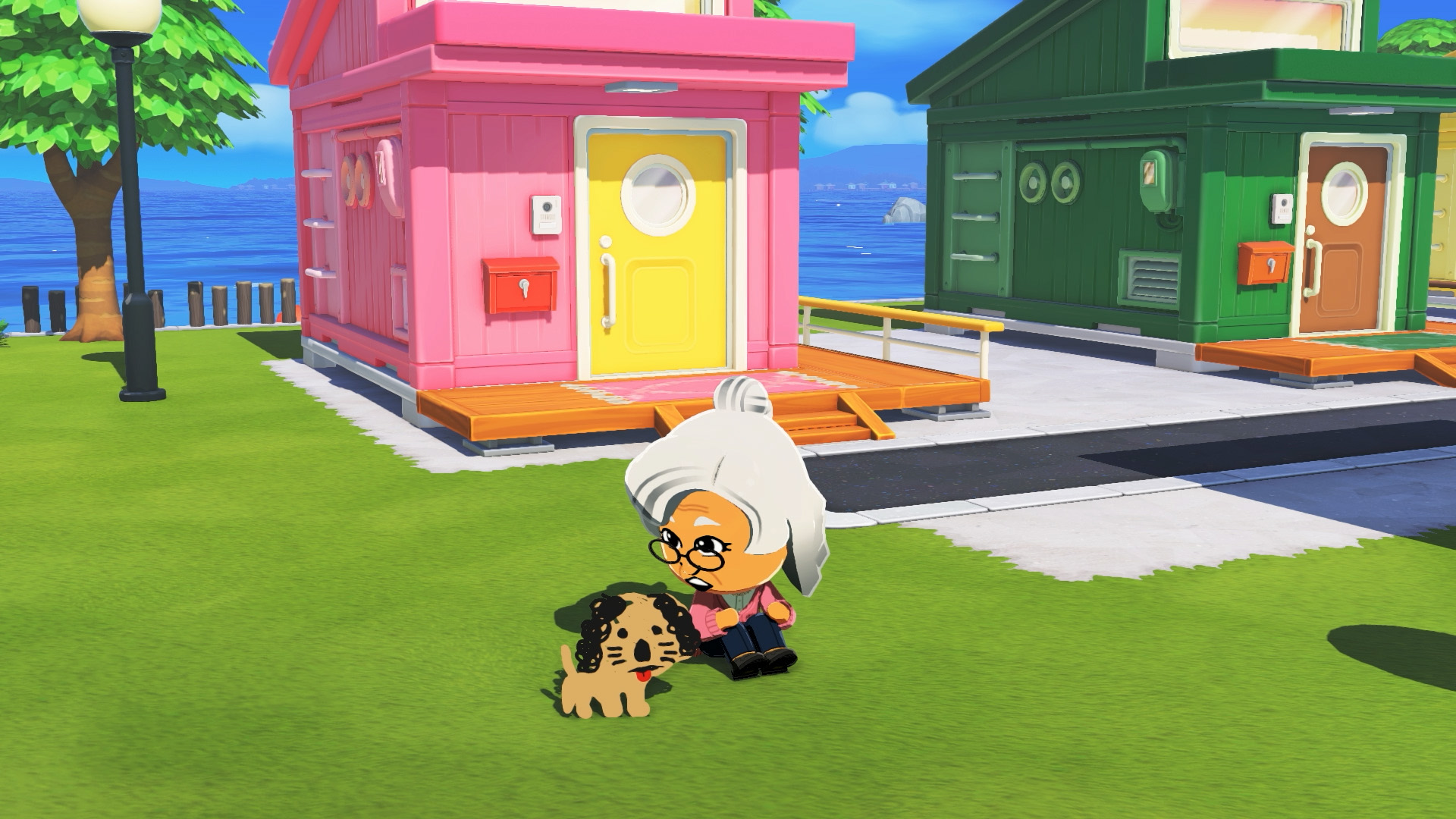
Animals are treasures like any other, except that once given, they accompany the Mii on their travels. There are 44 of them, ranging from the mundane to the downright absurd. And against all odds, it's the small basket that offers the most: 20 of the 44 are found there, or 30% of its pool, compared to 14% for the large basket. If you're trying to complete the menagerie, the small basket is therefore not a bad choice, despite its laughably low median value.
Small basket (20 animals) — Bearded Dragon (€60), Axolotl (€50), Sea Angel (€5), Hercules Beetle (€100), Spirit (€250), Frog (€3), Hamster (€10), Hedgehog (€20), Keseran-pasaran (€250), Rabbit (€45), Jellyfish (€3), Butterfly (€30), Parakeet (€57), Sugar Glider (€31), Clownfish (€15), Goldfish (€10), Chick (€15), Water Flea (€1), Robot (€198), Chipmunk (€70).
Medium basket (11 animals) — Capybara (€120), Cockatoo (€80), Cat (€100), Spotted Quoll (€70), Dog (€100), Pig (€120), Ghost (€250), Penguin (€150), Octopus (€20), Turtle (€55), Creature Egg (€2).
Large basket (9 animals) — Alpaca (€120), Horse (€200), Flamingo (€150), Kangaroo (€150), Unicorn (€300), Lion (€200), Shark (€150), Tuna (€150), Tyrannosaurus (€300).
The last four don't come from any basket at all. The UFO (€58) can only be obtained from a Mii's dream, and Alien α, β and γ (€77.70 each) are brought back from a special tour that the French catalogue doesn't name yet — the English data refers to it as an Outer Space Tour. So there's no point grinding minigames hoping to see them drop.
Two pitfalls to watch out for: the Keseran-pasaran and the Spirit, at €250, are the two most valuable animals in the small basket, well above the Cat or Dog at €100. And the Creature Egg, at €2, is worth absolutely nothing on resale — keep it to give as a gift instead.
Dreams, trips and trophies: the 43 treasures outside the baskets
The 13 dream treasures are collected by touching the speech bubble of a sleeping Mii: Bird Feather (€5), Spinning Top, Hourglass, Binoculars, Magnifying Glass, Globe, Stopwatch, Hand Mirror, Faucet, Restaurant Menu, Light Bulb, Fragile Rubber Band and the UFO. None of them are worth more than €58: you go for these for the collection, not for the cash.
The 18 travel souvenirs are tied to a specific destination. The French catalogue lists 13 circuits of five stops each, i.e. 65 locations, plus a few special destinations. Each region has its own souvenirs: Koala Plush (€36) for Oceania, Sauna Whisk (€34) for the Scandinavian circuit, Nature Documentary (€20) for a Galápagos circuit, but also Celadon Tea Set, Mini Statue of Liberty, Alebrije, Olive Oil Soap or Hawaiian Keychain. A Mii always sent to the same place will never bring back the complete collection.
The 12 trophies, finally, are the island's progression rewards. Three series of four tiers, bronze, silver, gold and platinum:
| Series | What it rewards | Tiers |
|---|---|---|
| Trophies | Increases in your Miis' happiness level | 10 / 20 / 50 / 100 |
| Bubbles | Entries added to the island's lexicon | 10 / 20 / 50 / 100 |
| Palettes | Creations made at the creation workshop | 10 / 20 / 50 / 100 |
Their resale value is €0: the buyback shop won't take them. They're the only treasures in the game that are strictly unsellable, which settles the question of whether to keep them.
Selling without getting it wrong
The buyback shop is one of the most expensive buildings on the island: €3,000 to build, versus €1,000 for most shops. It pays for itself quickly, provided you sort things out. Three simple rules:
- Don't sell what a Mii might like. Gifting a treasure they're fond of raises their happiness level and earns you money: you cash in twice. Animals, in particular, are worth more than a resale receipt.
- Clear out the bric-a-brac immediately. The €0.10 items from the small basket interest no one and just clutter your stock. Sell them off without a second thought, even if the payout is symbolic.
- Don't sell off set exclusives cheaply. A resold record or TV programme can only be found again in the large basket, a video game only in the medium one: if your collection isn't complete, that's hours of minigames to redo for a few dozen euros.
In the long run, the most profitable strategy remains mechanical: take the large basket whenever money is your priority (€85.90 average value versus €45.90), and switch to the small one only during phases when you're hunting for a missing animal or book.
Making your own treasures
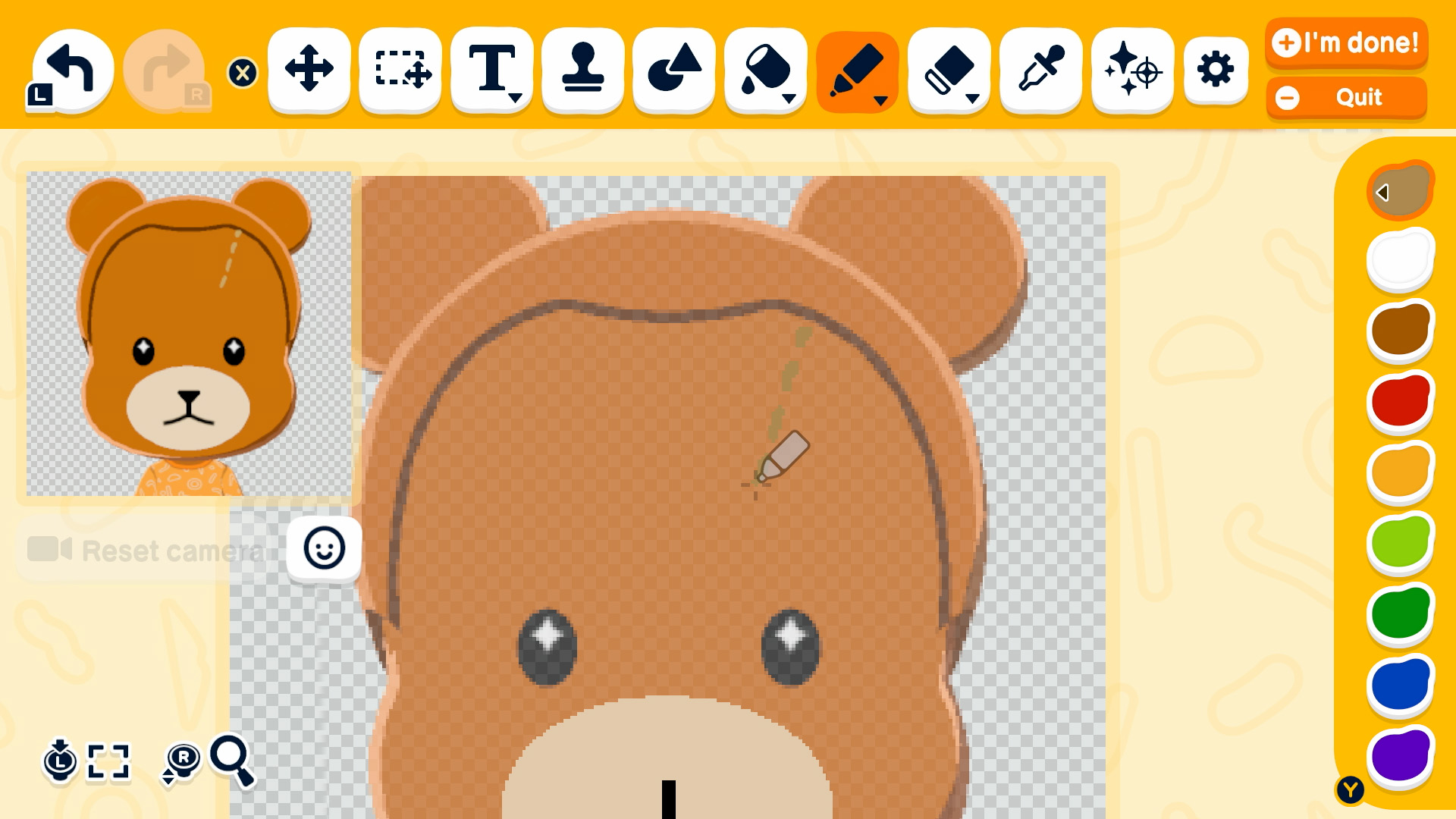
If you're missing an item and the lottery is dragging on, there's a way out. By spending a wish at the wishing fountain, you unlock the creation workshop's treasure catalogue: you can then draw your own items, which stock the shelves of the Treasures shop (€1,000 to build) where you can buy them at will.
Be careful though: these creations have nothing to do with the catalogue's 246 entries. They don't complete any collection — it's a staging tool, not a shortcut to the unicorn. On the other hand, they do count towards Palette trophies, which track the number of creations made, not their nature.
The efficient routine
In practice, on an ordinary session: accept every mini-game offered — it's the only source that feeds 82% of the catalogue —, take the large basket by default, switch to the small one as long as you're missing animals or books, and don't look for records or TV programmes anywhere other than in the large batch. Empty the bric-a-brac at the buyback shop, keep the animals to give as gifts, and let the twelve trophies sit in your collection: they're worth nothing, except for display.
A word on method. Nintendo publishes neither loot tables nor resale prices: these figures come from the community's data-mining of the game, cross-checked against the labels of the French client. The internal probabilities within a batch remain unknown, and the averages cited assume a uniform draw. The hierarchy between the three sizes, however, does not depend on this assumption: the batches are fixed.
Share this article
Your strategy when facing the three baskets: what's your priority?
Frequently asked questions
Which basket should you choose to earn the most money?
The large basket, without a doubt. Its average value reaches €85.90 compared to €45.90 for the small one, one item in five is worth at least €150, and junk items are almost non-existent. The only catch: the Gold Bar (€1,000) is found in the medium basket.
Is the small basket really worth it for collectors?
Yes, despite appearances. It contains 20 of the 44 animals (30% of the lot), far more than the large basket. If you're after the complete menagerie, the small basket makes up for its laughable median value with its concentration of animals.
How do you get the four animals that never appear in the baskets?
The UFO can only be obtained through a Mii's dream. The three Aliens (α, β, γ) are brought back from a special trip circuit (the Outer Space Tour). There's no point grinding mini-games for them, they'll never show up there.
Which animals from the small lot are the most profitable to resell?
The Keseran-pasaran and the Spirit are each worth €250, two and a half times more than the Cat or Dog at €100. But honestly, gifting them pays off more than reselling them.
Why does the buyback shop cost €3,000 when the other shops are worth €1,000?
Because it pays for itself quickly if you offload your junk. But be careful: progression trophies can't be resold (€0), and animals bring more happiness when gifted than when sold.
Key takeaways
- The small basket is stuffed with junk worth €1 but hides the two biggest lottery prizes (Diamond and Ring, worth €500 each).
- The large basket doubles the average value of the small lot and monopolises every disc and TV programme.
- The 44 animals aren't evenly balanced: 20 in the small basket (30% of the lot), 11 in the medium one, 9 in the large one, plus 4 exclusive to dreams and trips.
- 82% of treasures come from mini-games; turning down invitations means shutting yourself off from most of the collection.
- Progression trophies can't be sold and are worth €0; keep them, it's smarter than trying to sell them.
Comments
No comments yet. Be the first to react!
Leave a comment
Similar guides
Latest articles



Your opinion counts
Rate Tomodachi Life: Living the Dream
Click a star to rate