

 Fabian Lainé
Full Guide
Tomodachi Life A Dream Life: food, gifts and Happiness Seeds — the guide to keeping your Miis happy day to day (2026)
In brief
Tomodachi Life: Une vie de rêve revolves entirely around food and gifts to keep your Miis happy and generate Happiness Seeds. This guide explains how to identify food preferences, put together a strategic menu, give gifts that truly make an impact, and optimize your resources to turn your island into a lasting haven of happiness.
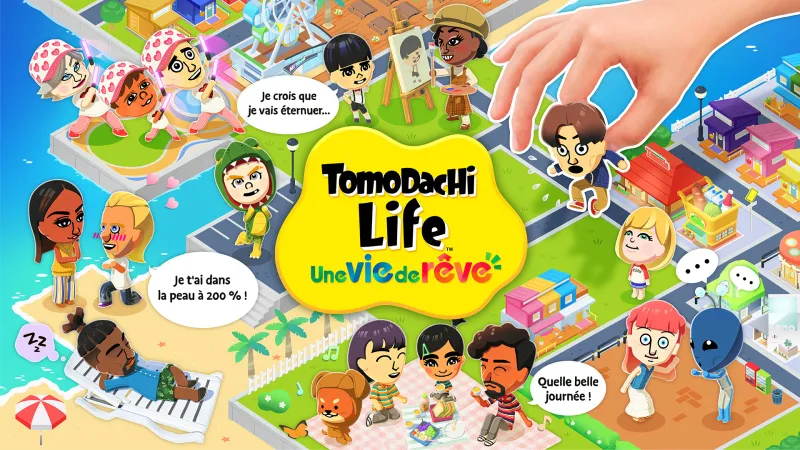
On your island in Tomodachi Life: Living the Dream, no building moves your Mii along faster than a well-chosen dish or a gift that lands just right. The game, built by Nintendo for Switch 2, keeps the cult mechanic from the first installment — feeding, dressing, listening — but wraps it in a Happiness Seeds economy that turns every interaction into a small wager. This in-depth guide covers food preferences, gifts that truly hit the mark, the Wishing Fountain, and the best ways to stockpile resources to keep your residents happy for the long haul. The goal: to save you from spending three hours handing out ties to a Mii who doesn't want any.

Why food and gifts dominate life on the island
Every Mii living with you has a mood meter that rises when you bring them what they like and drops if they get bored. Unlike more austere simulation games, Tomodachi Life doesn't ask you to plan out entire days: you simply need to respond to the little concerns that pop up above the houses — hunger, wanting to chat, feeling down, an outdated outfit. Food and gifts are the game's fastest, most frequent, and clearest response. They also unlock the famous standout lines like "I like-like-like-like-like you!" when a Mii confesses their feelings, proof that meeting basic needs paves the way to more memorable moments.
Since the Switch 2 version, these gestures also earn Happiness Seeds, the game's soft currency, which in turn fund island customization. It's a virtuous cycle: the happier your Mii are, the more Seeds you collect, and the more things you can give them. Understanding this loop is the first step toward guiding your residents instead of just reacting to them.
The five levels of food preference
As in the 3DS installment, each Mii is born with a random taste that gets revealed dish by dish. The game sorts reactions into five tiers, from outright disgust to sheer ecstasy. Read their face: the mouth, the eyes, and the little mood bubble immediately reveal the level of enjoyment.
- Dislike — the Mii spits it out or turns their head away. The mood meter drops a notch and the preference is remembered: never push this dish again.
- Neutral — the Mii eats without enthusiasm. No information is stored, you can try again later, but it's low value.
- Fine — a moderate smile. The meter rises a notch, useful as a stopgap when stock is empty.
- Like — a genuine smile and a small heart. The meter rises noticeably and a liked food is added to the Mii's profile, viewable from Town Hall.
- Love — an explosion of joy, visual effects, and exclusive animations. This is the goal: the dish joins the list of favorites and earns you more Seeds.
Moving from one tier to the next isn't linear: two similar food categories can produce opposite reactions. Best practice is to test one food per category at the start, then note the results. Town Hall keeps this record automatically, but you'll save time by keeping your own notes for the Mii you're pampering.

Putting together a balanced menu: categories and rotations
The Corner Store's shelves group about a dozen food families: main dishes, savory snacks, sweets, hot drinks, cold drinks, frozen desserts, world specialties, party food, seasonal products and little treats. Each family holds dozens of items to unlock over time. Here's the most efficient way to manage your stock when starting out on your island.
- Buy one of each family in the first few days rather than emptying your wallet on a single display case. This will be your test kit.
- Restock after every "Love it" reaction so you can serve the dish again during mood dips: it's the most reliable combo.
- Immediately rule out disliked dishes — offering them by mistake wastes time and money for no benefit whatsoever.
- Always keep a dessert and a drink in reserve: Mii often ask for them after an argument or a strong emotion (a failed confession, a botched haircut, etc.).
The Corner Store restocks its inventory daily. Stop by once a day, if only to spot new arrivals: some rare food items stay on the shelves for just one session.
The gifts that really hit the mark
Contrary to what you read on forums, not all gifts are equal. They fall into three main families: clothing (hats, tops, bottoms, full outfits), accessories (plushies, gadgets, decorations to place in the house) and useful items (books, musical instruments, games). Each family works on a different aspect of the Mii's personality.
- Clothing triggers try-on sequences: the more the outfit matches the perceived style (chic, sporty, casual, extravagant), the stronger the reaction. You can also make them yourself in the Creation Workshop, which guarantees a unique gift.
- Decorative accessories get placed in the Mii's room and passively boost their happiness with every visit. It's the most "set it and forget it" investment, ideal for residents you don't interact with very often.
- Useful items can trigger new spontaneous animations: a Mii given a book will read in their room, while another given a guitar will improvise a mini-concert visible through the window.
The best gift, however, remains their favorite food: less spectacular on screen, but able to raise the mood meter without going through a customization tutorial.

Happiness Seeds: earning, spending, saving
Happiness Seeds fall every time a Mii experiences a positive event: a “Love it” reaction to a dish, a resolved concern, a successful spontaneous animation, an improvised song at the TV Station, a wedding celebrated at the Wedding Hall. The counter visibly climbs next to your balance, and the harvest sound is identical to the one from the first Tomodachi Life, a true throughline.
Main sources to remember:
- Favorite meals — 3 to 8 Seeds per serving, with a bonus if you discover a new favorite.
- Well-received gifts — 5 to 15 Seeds depending on the item's rarity.
- Resolving a concern — up to 20 Seeds for a conflict between two Miis settled without a hitch.
- Relationship milestones reached — moving from “Acquaintances” to “Slight Interest”, then to “Friends”, “Romantic Feelings” and finally “Secret Love”, each tier unlocks a bonus.
- Custom songs — writing your own lyrics and having a Mii sing them earns a batch of Seeds per listen.
On the spending side, Seeds fund heavy customization: new house models, exotic facades, Town Hall extensions, unlocking certain options in the Island Builder. Save up at least a small thousand Seeds before tackling an infrastructure extension: prices climb quickly once you start on amenity buildings.
Wishing Fountain, cherubs and potential residents
The Wishing Fountain is the island's magical spot. When a Mii tosses a hat into it, a cherub may appear and give rise to a potential resident — a new Mii you can welcome into your home. This random mechanism triggers more often when the island's overall happiness rate is high, which encourages you to satisfy everyone and not just your favorites.
In practical terms, the more regularly you feed and gift all the residents, the more the Fountain “reacts” during visits. Plan a quick round each day: a gift for a Mii up on the hill, a favorite dish for two others, resolving a mini-conflict near the harbor. Combined, these small attentions raise the collective happiness tracked at the Town Hall, and therefore your chances of getting a cherub.
Once the potential resident appears, you choose whether or not to move them in. Feel free to decline without guilt if you're already close to the hundred-resident threshold: every extra Mii slows down the management loop and complicates tracking food preferences.
Quirks and mood: beyond meals
The quirks — fidgeting, waving, floating and about a dozen others — are set from the Mii's profile. They don't replace meals or gifts, but they can unlock a chain reaction: a Mii who spontaneously “waves” at a neighbor sometimes triggers a new friendly interaction, itself rewarded with Seeds.
For a balanced profile, mix a visible quirk (fidgeting, waving) with a discreet one (floating, winking). Too many loud quirks on the same Mii end up saturating your notification feed and blurring your read on truly urgent needs.

Order of priority: who to satisfy first at the start
At the start, you might be tempted to spoil the Mii modeled after yourself. That's the wrong instinct: begin instead with the second resident you imported, often a family member or close friend. There are two reasons for this: first, the initial "Acquaintances" stage is cleared faster if you don't focus exclusively on your own Mii; second, a social core of three or four well-fed Miis triggers cross-interactions that multiply Seed production.
The ideal progression for the first few hours looks like this:
- Hour 1 — welcome your first two Miis, give each one food from every category, and note their favorites.
- Hour 2 — give each Mii a first piece of clothing, unlock the higher-tier Convenience Store.
- Hour 3 — bring in two additional Miis, place a decorative item in each bedroom, throw a first hat into the Wishing Fountain.
- Hour 4 and beyond — kick off the first two-Mii interactions ("Go for it!" or "Don't do that!" during attempts to get closer) and start collecting Seeds from relationship milestones.
Shops and buildings to prioritize funding
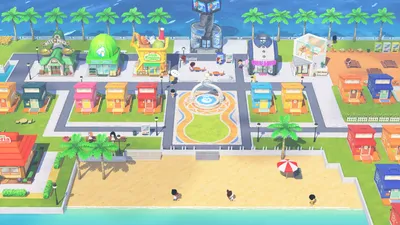
The island in Tomodachi Life: Living the Dream gradually fills up with shops and lively spots. Here's the most cost-effective order to spend your first Seeds.
| Priority | Building | What you gain |
|---|---|---|
| 1 | Convenience Store | Expands food variety, increases the range for testing preferences |
| 2 | Clothing Shop | Unlocks ready-made outfits to give to shy Miis |
| 3 | Decoration Shop | Provides "placed" accessories for passive happiness |
| 4 | Market | Seasonal foods to refresh the meal loop |
| 5 | Photo Studio | Enables memorable photo shoots that earn Seeds and enrich the island album |
| 6 | TV Station | Broadcasts custom songs and major events, social boost |
The more story-driven buildings — Ferris Wheel, Wedding Chapel, upgraded Town Hall — come later, once your couples have gone through the "Feelings of Love" stage followed by "Secret Love".

Common mistakes and time-saving tips
- Overfeeding the same Mii — the mood gauge caps quickly, and serving a third dish in a row no longer earns anything. Move on to the neighboring Mii.
- Ignoring red concerns — when a Mii shows a red bubble (conflict, major case of the blues), deal with it first: the Happiness Seed reward is higher than three standard meals.
- Neglecting the Creation Workshop — an outfit you designed yourself counts as a separate gift and sometimes earns more than a purchased item, especially if the colors match the Mii's perceived style.
- Forgetting the little quirks — resolving them takes thirty seconds and noticeably extends social interaction chains without touching your wallet.
- Putting too many Mii in a shared house — eight residents can share a home, but shared concerns multiply just as much. Two to three roommates are enough to liven things up without overloading.
Bonus tip: after every major update — version 1.0.4 on July 22, 2026, for example, fixed a rare save bug after using the Island Builder — remember to swing by the Town Hall. Certain Happiness Seed reward rebalances activate silently and change the profitability of the most common interactions.
In summary: the routine that keeps the island running
Feed, gift, listen, repeat: the virtuous loop of Tomodachi Life: Une vie de rêve boils down to this fourfold gesture. Systematically test foods during the first few days to map out tastes, alternate gifts between clothing, accessories, and items, toss a hat into the Wishing Fountain every day, and keep an eye on the Happiness Seed counter to fund a building every two or three days. Your Mii will move through the "Acquaintances," "Slight Interest," "Friends," "Romantic Feelings," and "Secret Love" stages without ever stalling, and your island will run like a slightly off-kilter clock — which is exactly how Nintendo wants it.
Share this article
Would you rather maximize the happiness of your favorite Miis first, or aim for balance across all residents?
Frequently asked questions
How do you know if a dish is truly a favorite or just okay?
Check the Town Hall or keep your own notes: a real favorite will consistently trigger a "Love it" reaction with a burst of joy, hearts, and visual effects. Neutral or "Like it" reactions yield fewer Seeds and are less reliable over time. Read the Mii's face — the mouth and eyes never lie.
Should you buy lots of different food early on, or focus on a single type?
Buy one item from each food family to put together your initial test kit. This is the most cost-effective strategy: you'll quickly discover preferences without emptying your wallet, then restock only the confirmed favorites, which earn far more Seeds.
Which type of gift should you prioritize: clothing, accessories, or useful items?
Decorative accessories are the most "set it and forget it" investment, since they passively boost happiness with every visit. Clothing creates spectacular sequences when the outfit matches the Mii's style. Useful items unlock spontaneous animations. But honestly, a favorite food remains the most effective gift: less flashy, but formidably efficient.
What are Happiness Seeds actually used for, and how do you save them wisely?
Seeds fund major customization: houses, Town Hall expansions, and amenity buildings. Save at least a thousand Seeds before starting an expansion, since prices climb quickly. Focus first on favorite meals and resolving conflicts, which pay out regularly without major expense.
How do you boost activity at the Wishing Fountain to welcome new residents?
The Fountain reacts more often when the island's overall happiness rate is high. Pamper all your residents, not just your favorites — a daily trip to the top of the hill with a gift and a favorite dish increases the chances of seeing cherubs appear and new Miis show up.
Key takeaways
- Each Mii has five levels of food preference: test dish by dish at the start and memorize the favorites so you can serve them again systematically.
- Happiness Seeds pour in when you feed favorites, resolve conflicts, and celebrate relationship milestones: save up a thousand Seeds before tackling infrastructure expansions.
- Gifts fall into three families — clothing, decorative accessories, and useful items — and each one triggers a different facet of a Mii's personality.
- Stopping by the Corner Store daily and restocking after discovering each new favorite ensures smooth rotation without breaking the bank.
- A high overall happiness rate boosts activity at the Wishing Fountain: that's the whole point of pampering all your residents, not just your favorites.
Comments
No comments yet. Be the first to react!
Leave a comment
Similar guides
Latest articles






Your opinion counts
Rate Tomodachi Life: Living the Dream
Click a star to rate