


 Fabian Lainé
Full Guide
Moonlight Peaks: 2026 Season and Village Festival Calendar
In brief
Moonlight Peaks condenses an entire year into four months of 28 days each, with a calendar of events and crops that changes radically depending on the season. You must manage your vampire's schedule (active at night, dead at sunrise), balance Energy and Blood Pool, and navigate between village festivals, contests, and crop rotations that spoil instantly when the season changes. This guide breaks it down month by month: key festival dates, profitable crops, NPCs to cultivate, and pitfalls to avoid for 2026.
Moonlight Peaks is a nighttime farming game where you play as a young vampire settled in a village populated by witches, werewolves, mermaids and demons. The pace here is very different from classic farming sims: the calendar only lasts four months, each season strings together its festivals, its crops and its markets, and simply staying up after dawn can cost you your life. This guide lays out the village's time map for 2026: season length, dated events, available crops, NPCs who only go out on certain days, and pitfalls to avoid at the turn of the month. A useful reminder before we start: Moonlight Peaks does not have an official French version to date (interfaces are in English, German, Japanese, Korean and Chinese), so all proper names mentioned here are deliberately left in their in-game form.
A tight calendar: 4 seasons of 28 days
The basic rule to remember from your very first night: an in-game year wraps up in four months, each one covering a full season. You start in Spring, then move on to Summer, Autumn (often labeled Fall in the game) and Winter. Each season lasts 28 days, with a week modeled on ours: Monday through Sunday, with weekends unlocking specific markets. The shift from one season to the next is brutal: out-of-season crops die on the first morning of the new month. Small consolation, a crop that's almost ripe on the last day of a season is automatically harvestable the following day — a handy safety net for, say, Cranberries planted late in autumn.
Living in reverse: the vampire's day/night cycle
The big specificity of Moonlight Peaks is that your day begins when the sun sets. You're active from 6 PM to 6 AM, and you absolutely must get back to your coffin before dawn. Missing sunrise triggers ongoing damage: you need to take shelter under trees or awnings, drink a Sunscreen Draught (2 hours of immunity), or switch to Bat Form to get home as fast as possible. Having your health bar empty out in broad daylight is a Game Over barely softer than permadeath: you wake up the following evening, lighter on gold and part of your inventory.
Instead of the classic stamina gauge, the game has you juggle two resources every night:
- Energy: consumed by physical work (farming, mining, chopping wood). Recharges by sleeping or with the Lunar Essence potion (+50).
- Blood Pool: powers supernatural abilities — Bat Form, spells, hypnosis. Once it runs dry, the vampire enters a weakened state: reduced speed, spells locked and Energy consumption doubled. Needless to say, farming in that state is a bad idea.
Another constraint to factor into your schedule: you can only speak to each villager once per night and give them at most two gifts per week. Over a 28-day season, that theoretically leaves 8 windows per NPC to build friendship — and therefore to prepare gifts ahead of the village's big events.
Spring: the month where it all begins (days 1 to 28)
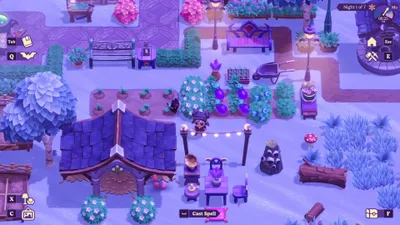
Spring is the month of getting started. The crops available from the very first evening are deliberately cheap: Wild Potato (3 days), Wily Wheat (4 days), Onion (4 days), White Grape and Blood Grape (5 days). The season's big yields come later, with Cruelcumber, Eggplant, Carrot and especially Drikker (magic crop available in spring and summer, 9 days to grow but 500 coins for the seed).
Two dates to mark on the calendar:
- Loveage Festival — Spring 20 & 21: the village's festival of love, orchestrated by Llemi, the demon of love. Four stalls are open: the bouquet stall run by Luna (Azaleas, Plumerias, Tulips, Roses from 8 to 20 coins), Elvira's gift shop at the Midnight Market (desserts, decoration pieces up to 3,000 coins, blueprints), the buffet cooked by Mina in front of Third Eye Threads (up to three dishes to contribute), and the Secret Admirer exchange: on Saturday (day 20), you choose up to three NPCs to give a gift to via Llemi; the exchange cutscene plays out on Sunday morning.
- End of season — Spring 28: remember to harvest anything that won't survive into summer, convert your fruit into processed goods (Kegs), and prepare your summer seeds.
Summer: mugginess, heatwaves and the Moonlight Ball
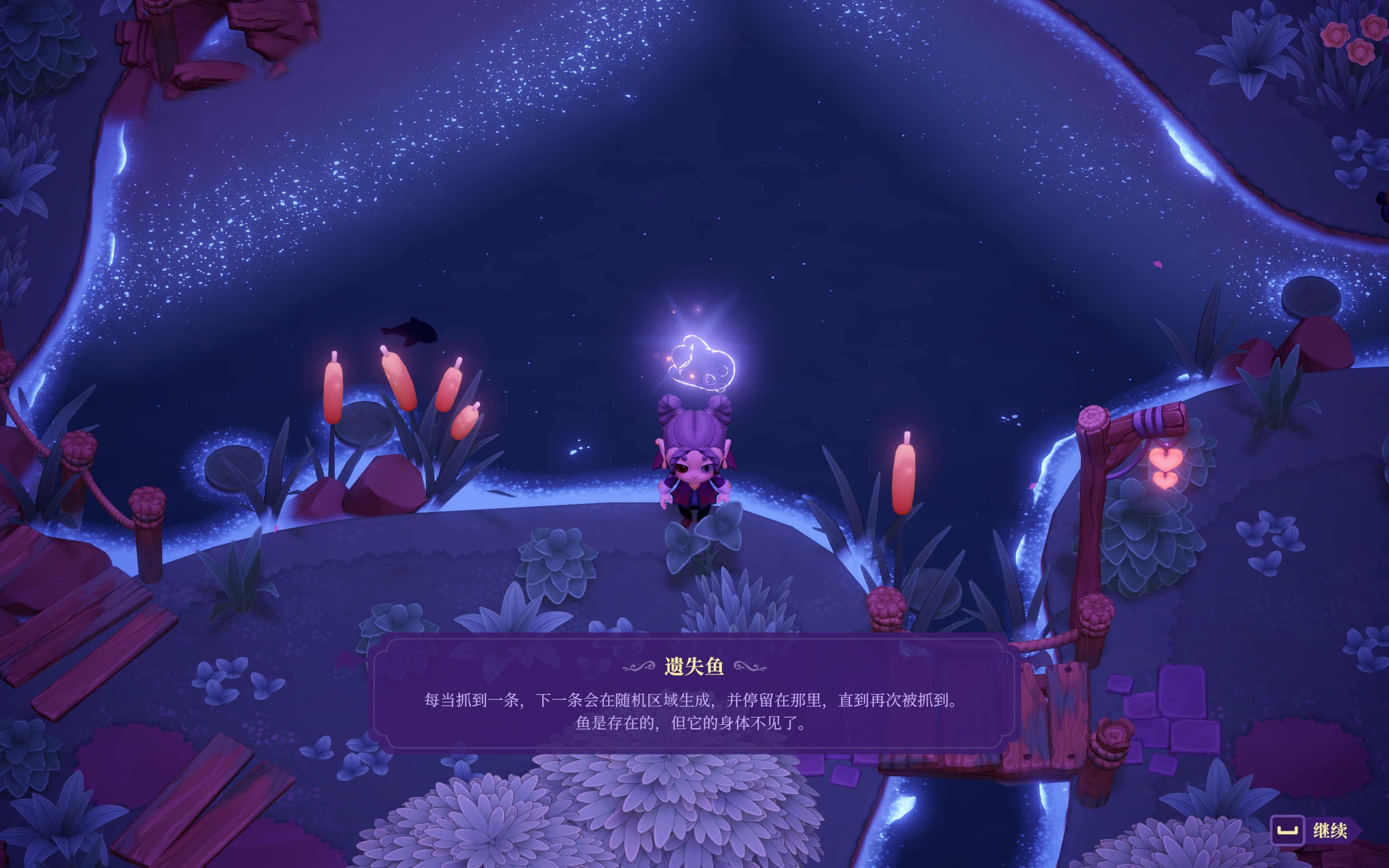
Summer brings the most profitable crops in the game in terms of gold per day. Moon-Melon requires a big investment and a long cycle, but its ratio is unbeatable early in the game. Gobbler (magic crop, 6 days, 550 coins for the seed, 690 for star quality) literally sends your income through the roof. You also keep your ranks in Blood Grape, Blood Tomato, Strawberry and Sugarbones as long as they were planted before Summer 1. Notable newcomers: Lava Pepper, Melon, Rice, Skunktail (9 days, 180 coins) and Common/Amanita Mushroom, which can be gathered in the wild areas.
Only one festival marks the month, but it's a pivotal one:
- Moonlight Ball — Summer 20: the village's grand ball, with a dress code and romantic dates. The date is confirmed but the detailed content (cutscenes, dance mini-game) evolves with each patch — you're better off showing up in costume, having raised your heart points with your target person, and keeping a high-quality gift in reserve.
Summer is also the best time to start producing Moonfruit, the only magic crop that grows in every season (6 days, 55 coins). You'll find it useful for potions all year round.
Autumn: the double festival and peak profitability
Autumn is the busiest month on the Moonlight Peaks calendar — and probably the most profitable if you play the regrowing-crops card.
In the fields, the absolute star is the Grave-Vine Grape: after the first harvest, it regrows every 3 days, making it the best total yield of the season. Other heavy hitters: Happy Mandrake (magic crop, 520 coins of profit over 28 days), Pumpkin (390 coins), Cranberry, Radish, Red Corn and Rice. This is when you say goodbye to any spring/summer crops that haven't been harvested yet.
Three events you shouldn't miss:
- Mastersoup Event — Fall 5: annual cooking contest hosted by Mina. Four contestants, three rounds, one dish to memorize and then recreate per round, with progressive elimination. The jury is made up of the cheekens brought by Luna (their palate is reputed to be infallible). The Master Soup Trophy is presented to the winner by Evan.
- Evernight Festival — Fall 26 to 28: the big autumn event, a sort of Halloween equivalent for vampires, orchestrated by Pumpkin Head. Three days of programming with dated activities: the Twilight Showcase by Luna (up to six crops presented to the jury, 100 Evernight Coins for the winner), the Fashion Show by Aras on Autumn 27 (dress three models), the Jitterbug minigame at Elvira's (match-3 with critters), and the Pumpkin Dash by Pumpkin Head himself (cross a field without being spotted). The Evernight Coins earned can be spent at Sabrina's Evernight Shop: exclusive dishes, furniture, tools, blueprints and recipes. Atmosphere bonus: Orlock plays the violin throughout the village during the three nights.
Winter: rare crops and the year's close
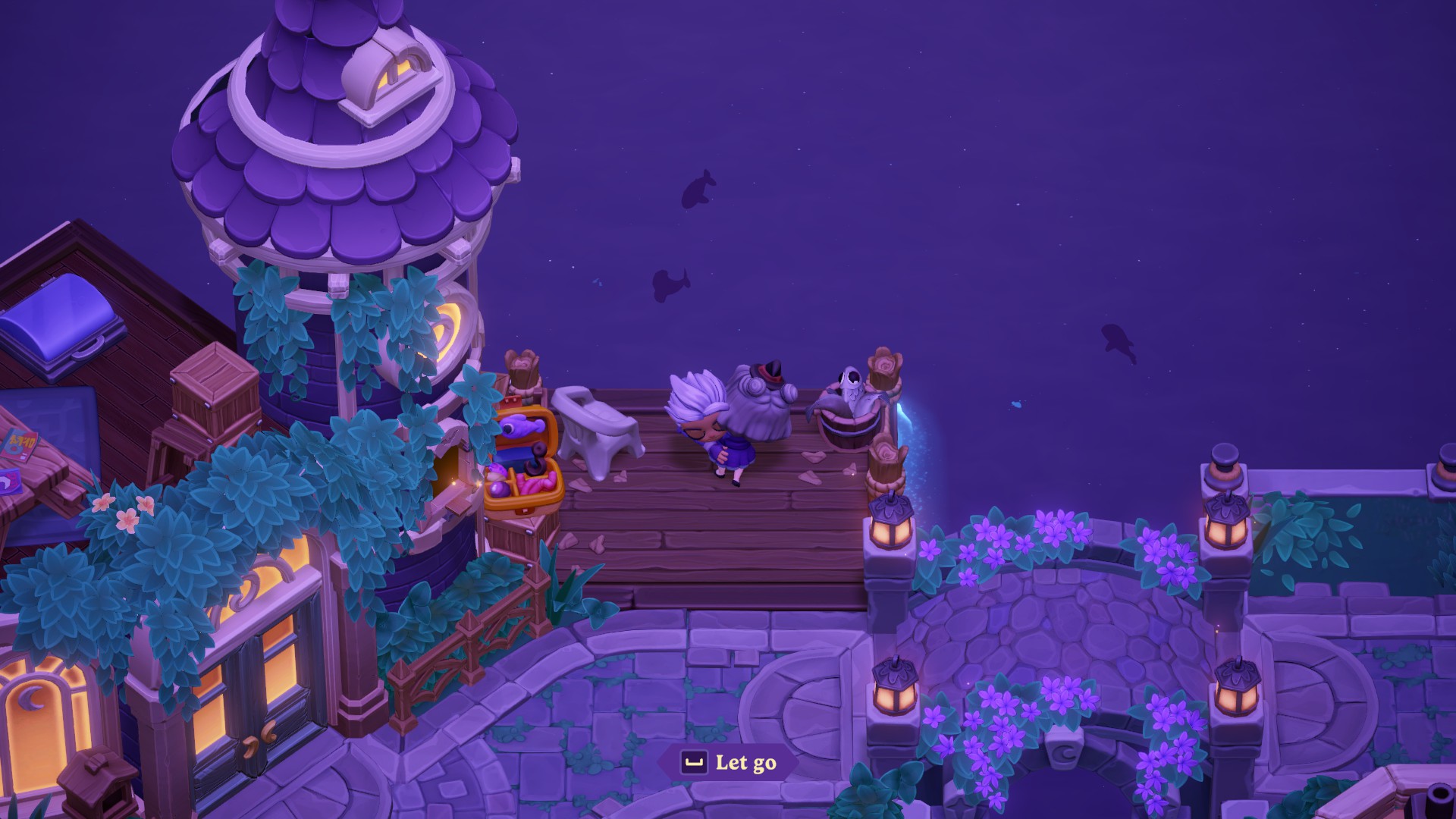
Winter is the season with the fewest crop options, but it has its gems. The classic field is limited to Blackberries, Blood Tomato, Blueberry, Cranberry, Onion and Wily Wheat. It's on the magical crops side that the season shines: Dark Strawberry (regrows, very profitable in Kegs), Sweet Wicca (600 gold profit over 28 days, the best winter score), Void Radish, Clawy Vera, Black Sun Currant, Hold-Me-Close and Weeping Wicca. Moonfruit remains available, of course, to round out your rotations.
Only one major event, but it's the highlight of the year:
- Winterwake — Winter 28: the night that closes out the year. Winter buffet set up next to Coffee and Coffins (slip a dish to Mina to add it to the buffet), the Winterwake shop at Sabrina's Midnight Market, the Pakkeleg gift exchange (only one entry per edition, choose wisely) and finally Fiona's fireworks: she'll offer to launch them if you're in town between 9 pm and 11:59 pm that same evening. Stay in the village right at 9 pm so as not to miss her offer.
The next day, it's back to Spring 1: the loop closes and you start a new year. Friendship counters, inventory and farm upgrades are all kept.
The weekly market schedule
Beyond the seasonal calendar, Moonlight Peaks layers on a weekly rotation of traveling merchants. You can't just buy anything anywhere: checking the map before heading out saves unnecessary trips.
| Merchant | Days | Location | Specialty |
|---|---|---|---|
| Yabbis | Monday, Tuesday, Friday | Forest | Mobile general store |
| Yabbis | Wednesday, Thursday | Marshes | Same, second stop of the week |
| Yabbis | Saturday, Sunday | Ambrosia Area | Weekend version of the stall |
| Sabrina | Weekdays (Webb of Wonders) | Fixed shop | Rare items, recipes, furniture |
| Sabrina | Saturday and Sunday | Midnight Market | Enriched weekend inventory |
| Snek | Saturday and Sunday | Midnight Market | Pet hats, decorative items |
| Jacques | Saturday and Sunday | Midnight Market | Art-related items |
Fixed shops (Howling Hammers, Coffee & Coffins, the clothing store, the bar) also have stock rotations to keep an eye on: a quick visit at the start of the week followed by another on the weekend is enough to miss nothing. During festivals, these same merchants also open a themed stall (Loveage, Evernight, Winterwake) with items unavailable the rest of the year.
Magic crops and seasonal transitions
Magic Seeds are a system apart. You can't plant them until you've unlocked the Aquaflux I spell, which becomes the only way to water them. Each magic seed is tied to one or two seasons: prepare for the transition by keeping the right seed in stock so you can get started right on the 1st of the month.
| Magic Seed | Season(s) | Growth | Price |
|---|---|---|---|
| Drikker | Spring / Summer | 9 days | 500 G |
| Gobbler | Summer | 6 days | 550 G (690 ★) |
| Mandrake | Autumn | 6 days | 280 G |
| Moonfruit | All seasons | 6 days | 55 G |
| Hold-Me-Close | Spring / Winter | 13 days | 260 G |
| Weeping Wicca | Spring / Winter | 13 days | 300 G |
| Dark Strawberry | Winter | 9 days | 25 G |
| Black Sun Currant | Winter | 12 days | 20 G |
| Clawy Vera | Winter | 8 days | 220 G |
| Void Radish | Winter | 9 days | 330 G |
During a transition, remember that only a crop that is nearly mature by Day 28 will be harvestable after the change. A seed planted on Day 20 of a 28-day season with a 9-day growth cycle will die on the 1st of the following month if it isn't out of season.
What to prepare before each season
Here's a mini checklist so you never miss the start of a new season:
- 3 days before the end of the season: stop planting crops whose growth cycle won't fit. Focus on Onion and Wily Wheat (4 days), which are safer.
- 2 days before: stop by Sabrina's to check the new seeds for the upcoming season. Also buy your Sunscreen Draught if your stock is low — festivals often lengthen the days.
- 1 day before: empty your Kegs and Preserve Jars to free up space. Fruits processed at the start of the next season give your finances a boost.
- Day 1 of the new season: collect the "bonus" crops that ripened automatically, immediately plant your new seeds, and prioritize regrowing crops to maximize your return over 28 days.
- On festival days: keep three cooked dishes on hand for Mina (Loveage, Winterwake), three personalized gifts for the Secret Admirer exchange, and a decent outfit for the Moonlight Ball.
Quick rundown of the yearly calendar
| Date | Event | Host |
|---|---|---|
| Spring 20-21 | Loveage Festival | Llemi |
| Summer 20 | Moonlight Ball | Village |
| Fall 5 | Mastersoup Event | Mina |
| Fall 26-28 | Evernight Festival | Pumpkin Head |
| Winter 28 | Winterwake | Fiona, Sabrina, Mina |
| Saturday / Sunday | Midnight Market | Sabrina, Snek, Jacques |
Conclusion: playing the calendar instead of enduring it
Moonlight Peaks draws all its richness from constraint: 28 days per season, a single day per night, a handful of events that can't be caught up on if you let them slip by. Block off the five key dates in your mental agenda (Spring 20-21, Summer 20, Fall 5, Fall 26-28, Winter 28), keep your weekend merchant wheel up to date, unlock Aquaflux I to open the door to magical crops, and systematically grow regrowing plants. Playing at this pace turns a year in Moonlight Peaks into a profitable loop where every night counts double — and where your coffin never closes on a missed party.
Share this article
Which village festival appeals to you most in Moonlight Peaks?
Frequently asked questions
What happens if I don't get back before dawn?
You take continuous damage from sunlight. You can take shelter under trees, drink a Sunscreen Draught (2 hours of immunity), or switch to Bat Form to return to your coffin. If you die, you wake up the following evening with less gold and missing inventory items.
Do crops planted late in a season survive into the next month?
No, unless they're nearly mature: a crop ready to be harvested on the last day of a season will automatically be harvested the next day, even if the new season would have killed it. This is your safety net for late plantings like Cranberries in autumn.
What's the best time to build affinity with NPCs?
Over 28 days, you have 8 windows per week to talk to each NPC and give them up to two gifts. Plan ahead before major events: Loveage Festival (Spring 20-21), Moonlight Ball (Summer 20), Mastersoup Event, and Evernight Festival (Autumn 26-28).
Which magic crop grows year-round?
Moonfruit is the only magic crop available all year (6 days to grow, 55 coins). It's ideal for constantly brewing potions, especially Lunar Essence to recharge your Energy.
Does Autumn really pay off more than the other seasons?
Yes, clearly. Grave-Vine Grape regrows every 3 days after its first harvest, and you have Happy Mandrake, Pumpkin, and Cranberry offering excellent yields. Add the three major events of the month, and it's the peak of activity and profit in the cycle.
Key takeaways
- A year lasts 4 months of 28 days: Spring, Summer, Autumn, Winter — off-season crops die on the first day of the new month.
- You're active from 6 p.m. to 6 a.m., and must return to your coffin before dawn or face a Game Over and loss of inventory.
- Energy and Blood Pool are your two critical resources: one depletes through work, the other through using powers and spells.
- Autumn is the densest season, with three major events (Mastersoup, Evernight Festival) and the best farming yield of the cycle.
- Each NPC can only be approached once per night and receive a maximum of two gifts per week — plan your affinities around the festivals.
Comments
No comments yet. Be the first to react!
Leave a comment
Similar guides

Latest articles




Your opinion counts
Rate Moonlight Peaks
Click a star to rate