



 Fabian Lainé

Recipes
Moonlight Peaks Cooking: recipe guide, cookbooks and the most profitable dishes
In brief
Moonlight Peaks hides the majority of its one hundred forty recipes behind four cookbooks, friendship exchanges, and foraging spots. This guide untangles the true profitability of dishes, identifies the Mill as a mandatory structural purchase, and explains why the Roti Roll and Mystery Meat Stew dominate the net income rankings by a wide margin.
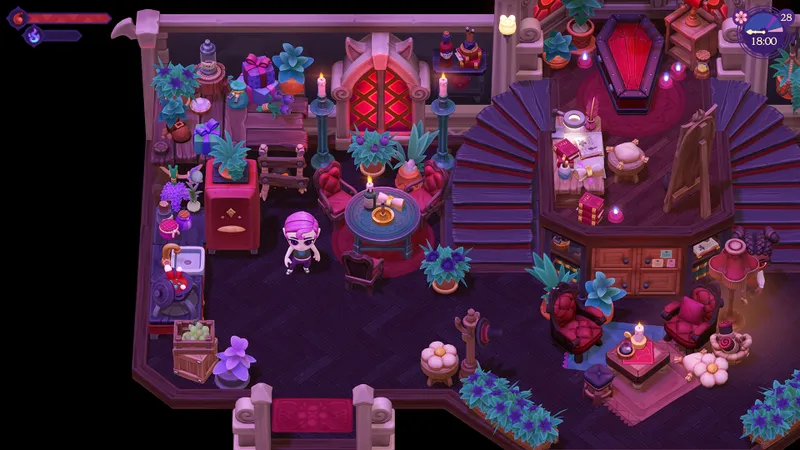
Moonlight Peaks drops a Cooking Station in your living room on the very first night, then explains nothing else. Yet it's the system that ties all the others together: the farm, the barn, fishing, and even the mana from your spells all end up in a pot. The official wiki lists more than a hundred and forty recipes, and the vast majority stay locked behind four books, seven friendships, and a handful of holes to dig.
Essential reminder: the game still has no French version. Little Chicken's Steam page only lists English, German, Japanese, Korean, and the two Chinese variants. All the names quoted here are therefore those of the English client, the only ones you'll see on screen.
That leaves the question most guides avoid: what to buy, in what order, and which dishes are worth the time they cost.
The Cooking Station and the four cookbooks
The Cooking Station is part of the starting furniture; a second one can be crafted with 5 Refined Stone and 5 Planks. A few recipes are available from the very first night, including two basic staples: the Tortilla (2 Red Corn) and the Bread (1 Flour), ingredients for about a dozen pricier dishes.
Everything else goes through the books, sold by Mina and Evan at Coffee & Coffins. Watch the hours: the café only opens from 8 p.m. to 1 a.m., and it's closed on weekends.
| Book | Price | Availability | Contents |
|---|---|---|---|
| Starter Cookbook | 750 coins | From the start of the game | 7 simple recipes: Pancakes, Blueberry Pancakes, Roulade Cake, Strawberry Pie, and three milkshakes |
| Sushi Cookbook | 1,500 coins | From the start of the game | Onigiri, Cruelcumber Maki, Gloy Gloy Maki, Gnasher Maki, Smelly Maki |
| Cooking for Vampires | 2,500 coins | After a letter from Mina | The bulk of the repertoire: soups, burritos, makis, cheese platters, drinks |
| Mana Cookbook | 2,500 coins | After a letter from Mina | Recipes based on Mana Essence, including Mana Chocolate at the Chocolatier |
The two 2,500-coin books only appear on the shelf once Mina's letter has been received: keep an eye on the mail rather than the counter.
The recipes that can't be bought
About twenty recipes come from Dig Spots, those diggable spots that reappear every night: Breakfast Burger, Chococake, Mocha, Iced Coffee, Irish Coffee, Rice Pudding, Veggie Burger, or Blood Orange Cupcake. Three others, all fish-based, come from Diving Spots: Fishy Burger, Fishy Burrito, and Fishy Soup.
The rest comes from the villagers. From 2 friendship hearts onward, seven characters hand over an exclusive recipe: Ridge (Roti Roll), Kim (Fishy Milkshake), Mina (Froggy Cake), Noel (Mouthout Maki), Orlock (Hangover Shake), Samael (Gluhwein), and Luna (Strawberry Cupcake). Two additional recipes, Carrot Soup and Mushroom Soup, arrive by mail from your mother, Laveau. Carrot Soup deserves a special mention: two ingredients, 1,500 coins on resale.
The real difficulty: the ingredient chain
The Cooking Station doesn't transform anything on its own: behind every serious dish lies an intermediate machine, and that's where progress stalls.
| Machine | How to Get It | Production |
|---|---|---|
| Mill | 8,000 coins from Ridge, at the Howling Hammer | Flour (1 Wily Wheat), Rice (3 Unmilled Rice), Sugar (1 Sugarbones gives 2 Sugar), Coffee Powder and Cocoa Powder (2 dried units each) |
| Herb Drying Rack | Blueprint from Luna, 30 Wood | All ten dried herbs, including Dried Seaweed, Dried Henbane, Dried Wolfsbane, Dried Cocoa and Dried Coffee |
| Enchanted Mortar | Blueprint from Sabrina, 5 Iron Bar + 10 Refined Stone | The powders: Henbane Powder, Wolfsbane Powder, Googly Garlic Powder, Nightshade Powder… |
| Cheese Press | Blueprint from Luna, 10 Planks + 5 Iron Bar + 5 Copper Bar | Cheese (Cowcula Milk), Ghoulembert (Draculamb Milk), Hellfeta (Piggoat Milk) |
| Chocolatier | Letter from Mina, 5 Iron Bar + 10 Refined Stone | Chocolate in 1 h, Mana Chocolate in 2 h |
| Jam Maker | Blueprint from Mina, 5 Iron Bar + 5 Refined Stone + 10 Planks | All jams, 1 h each, one unit of Sugar per jar |
The Mill is the absolute bottleneck: without it, no Flour, so no Bread, so no burger, no cake, no quiche. Its 8,000 coins are the most defining purchase of your first summer, far ahead of any book. Wily Wheat, the only source of flour, grows in all four seasons in four nights for 30 coins per seed: plant a permanent row of it.
Strong energy, weak energy: the numbers trap
The game displays two different energy icons, and that's the detail everyone misses. The official wiki is explicit: dishes made from blood ingredients restore "strong" energy, others restore "weak" energy, and the two values aren't comparable to each other.
- Field dishes, with strong energy: Mystery Meat Stew (120), Watergruwel (110), Blood Orange Juice from the Keg (110 for three fruits), Roti Roll and Mana Mandrake Soup (95), Huggy Maki (80), Hamburger (75).
- Pure sale items, with weak energy despite a high price: Hangover Shake (1,900 coins, 3 weak energy), Irish Coffee (1,600 coins, 4), Eggnog (1,400 coins, 3). Never eat these, sell them.
Blood Orange Juice is the best fuel in the game: three fruits at the Keg for 110 strong energy, even though it only resells for 260 coins. In a pinch, the Coffee & Coffins counter sells the Blood Orange Cupcake for 360 coins for 40 strong energy — its best ratio, ahead of the Void Cupcake (270 coins, 25).
Cooking for mana
Raw Mana Essence, extracted from magic crops at the Mana Extractor, only restores 1 point of mana. Cooking it multiplies the effect by three or four: most recipes in the Mana Cookbook restore 3 points, and the Mana Mandrake Soup goes up to 4, with 95 strong energy and a resale value of 2,400 coins. It's the most complete dish in the game.
A consequence of a detail confirmed by the wiki: the amount of mana restored doesn't change with quality stars. Cook your ordinary ingredients for your mana reserve, and save the star-quality ones for what you send to Chester.
Quality stars are worth 25% and 50%
Every dish exists with no star, one star, or two. Cross-referencing the wiki's tables, the scale is consistent: one star adds roughly 25% to the selling price and energy, two stars roughly 50%. The Mystery Meat Stew goes from 2,100 to 2,600 then 3,200 coins, and from 120 to 150 then 180 energy.
Quality is managed upstream: Basic Fertilizer and especially Premium Fertilizer improve crops without speeding up growth, and the Firefly Pollinator — a blueprint given at 10% Museum completion — works across a 9×9 area while consuming 5 Firedrop per night. The wiki doesn't yet detail the rule for how ingredient quality transfers to dish quality, but a 50% revenue boost on recipes worth 3,000 coins more than justifies the fertilizers.
The dishes that actually pay off
The raw price tells you nothing about profitability: you have to subtract what the ingredients would have earned sold as-is. Here's the real ranking, based on no-star prices.
| Dish | Ingredients | Sale price | Net margin |
|---|---|---|---|
| Roti Roll | 1 Drikker + 1 Tortilla + 1 Wolfsbane Powder | 2,700 | +1,590 |
| Mystery Meat Stew | 1 Drikker + 1 Gobbler | 2,100 | +1,320 |
| Angry Maki | 2 Angry Mandrake + 1 Rice + 1 Dried Seaweed | 1,600 | +805 |
| Hamburger | 1 Gobbler + 1 Bread + 1 Cheese | 1,500 | +780 |
| Carrot Soup | 1 Carrot + 1 Henbane Powder | 1,500 | +740 |
The Roti Roll comes out on top, and it only requires 2 hearts with Ridge, whom you'll be visiting anyway for the Mill. The Mystery Meat Stew has the best yield of the bunch, needing just two ingredients while granting 120 energy on top; however, the wiki doesn't yet document how its recipe is unlocked, so don't bank your finances on it.
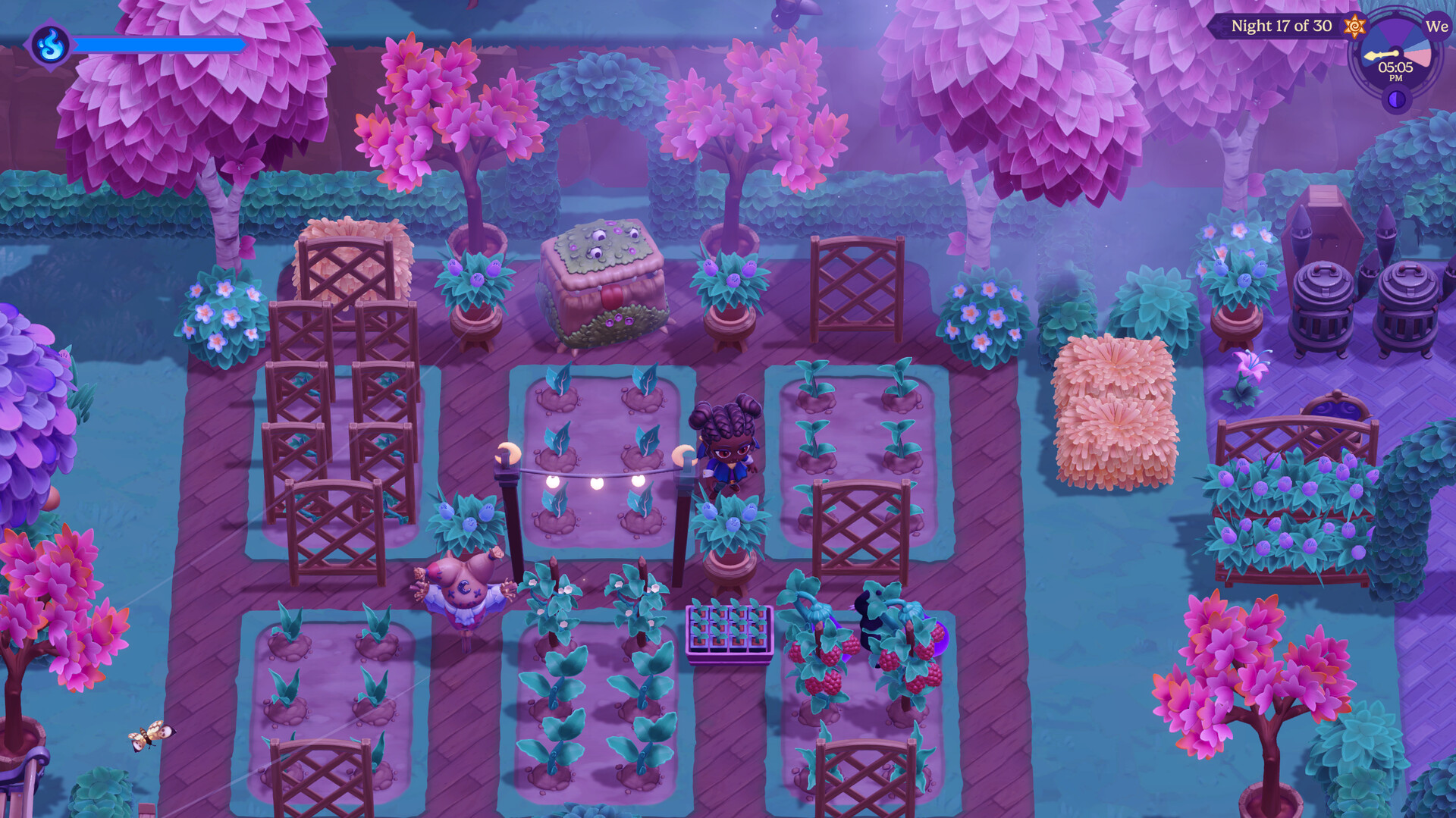
Both of these dishes revolve around the Drikker, a magical spring and summer crop bought for 280 coins per seed, which grows in 9 nights, requires the Aquaflux spell, and needs its cup filled with water. The Gobbler grows in 6 nights for 350 coins per seed, in summer only, and must be fed two fish or insects before harvest.
The dish with the highest raw price remains the Mana Milkshake at 3,100 coins (4,600 at two stars), but it uses 2 Sweet Wicca: 13 nights to grow, and the plant only reaches maturity if a Hold-Me-Close is within two tiles.
The recipes you can't cook at home
Three recipes can only be obtained at the Evernight festival, in exchange for the event's currency: Pumpkin Spice Latte, Pumpkin Pie, and Pumpkin Stew, at 2 Evernight Coin each. Missing them pushes completion of this Almanac page back a full year.
The Master Soup contest, held by Mina on the 5th of Fall, is the other event not to miss: four contestants, three rounds — starter, main course, dessert — one elimination per round, and a jury of Cheekens brought in by Luna for their supposedly refined palate. The challenge tests recipe memory, and since it's a soup contest, you need to pick the soup option in every round: Mushroom Soup (Yellow Glowglammer + Common Mushroom), Sunburst Stew (Sunburst + Yellow Glowglammer), then Rice Pudding (Cowcula Milk + ground Rice). Evan hands the Master Soup Trophy to the winner.

The purchase order that wins you a season
Spend in this order: the Starter Cookbook for 750 coins to offset your first eggs and berries, then the Herb Drying Rack and the Cheese Press as soon as Luna sends you the plans, since they only cost wood and a few bars. The Mill at 8,000 coins comes next, and should be targeted early: it unlocks Bread, Rice, and Sugar, meaning three-quarters of the four-digit recipes. The two books at 2,500 coins only come after that. Meanwhile, a single habit changes everything: dig every Dig Spot and dive into every Diving Spot. Twenty-two free recipes lie dormant there, which most players neglect in favor of ore.
Share this article
Do you tackle Moonlight Peaks by prioritizing the farm or the kitchen?
Frequently asked questions
What are the four cookbooks and how do you unlock them?
Starter Cookbook (750 coins) and Sushi Cookbook (1,500 coins) are available right away from Mina and Evan at Coffee & Coffins. Cooking for Vampires and Mana Cookbook cost 2,500 coins each but only show up at the counter after you receive a letter from Mina — check your mail regularly rather than waiting around at the shop.
Why is the Mill worth 8,000 coins when there are so many other machines?
The Mill is the only source of Flour, a pivotal ingredient in dozens of recipes: Bread, burgers, cakes, quiches. Without it, you're stuck right from the first summer. Other machines process optional or less central ingredients.
Which dish earns the most net margin after ingredient costs?
The Roti Roll: 2,700 coins on resale for just 1,110 coins in ingredients (Drikker + Tortilla + Wolfsbane Powder), a margin of +1,590. The Mystery Meat Stew follows very closely with better energy efficiency, but how to unlock it remains unclear on the wiki.
Should you eat the Hangover Shake, Irish Coffee, and Eggnog?
No. These are traps: pathetic weak energy (3 to 4 points) for a high selling price (1,400 to 1,900 coins). Always sell them instead. The Blood Orange Juice and Blood Orange Cupcake offer much better energy fuel.
Does ingredient quality affect the mana yield from Mana Cookbook recipes?
No, the amount of mana stays the same. Cook your ordinary ingredients for mana, and save the starred produce for selling to Chester, where the 25 to 50% price bonus is really worth it.
Key takeaways
- The 8,000-coin Mill is the most critical purchase: without Flour, you'll be stuck on half of the recipe book.
- Plant a permanent row of Wily Wheat and let the cycle loop itself, it's your food foundation.
- The Roti Roll and Mystery Meat Stew outclass every other dish in net margin once ingredient costs are deducted.
- Two energy icons coexist: strong and weak aren't comparable, and some expensive dishes are meant to be resold for pure profit.
- Ingredient quality adds 25% or 50% to revenue without changing the mana yield, so save the starred ones for Chester.
Comments
No comments yet. Be the first to react!
Leave a comment
Similar guides





Latest articles







Your opinion counts
Rate Moonlight Peaks
Click a star to rate