

 Fabian Lainé
Full Guide
Minecraft Chaos Cubed 2026: Bounce disc and new features
In brief
Chaos Cubed (26.2 Java, 26.30 Bedrock) arrives with much more than underground caves: a brand-new music disc called Bounce, a native Friends List finally on Java, an experimental Vulkan graphics engine, and revolutionary sculk sensors that detect sulfur geysers. All of these changes redefine what's possible in redstone and exploration.
Released on June 16, 2026, the Chaos Cubed drop (Minecraft Java Edition 26.2 and Bedrock Edition 26.30) is far from limited to a new biome. Behind the famous Sulfur Caves lie a brand-new music disc, a native Friends List on Java, an experimental Vulkan graphics engine and, the icing on the cake, sculk sensors capable of reacting to sulfur geysers. Here's how to get your hands on each of these new features from patch 26.2.
Chaos Cubed 26.2: a summer 2026 under the sign of sulfur
After the previous drop focused on interiors, Mojang Studios chose to head back underground for its second "drop" of 2026. Chaos Cubed introduces a brand-new cave biome, the Sulfur Caves, two complete block families (sulfur and cinnabar, 14 variants each), a passive mob with variable physics — the sulfur cube — and a handful of technical features that go well beyond mere exploration.
The official patch notes list six new music tracks composed by fingerspit, a physical disc called Bounce, a Friends List overhaul, the arrival of an optional Vulkan 1.2 engine and the extension of sculk sensors to the new geyser mechanic. All of these changes appear identically on Java 26.2 and Bedrock 26.30, with a few variations here and there.

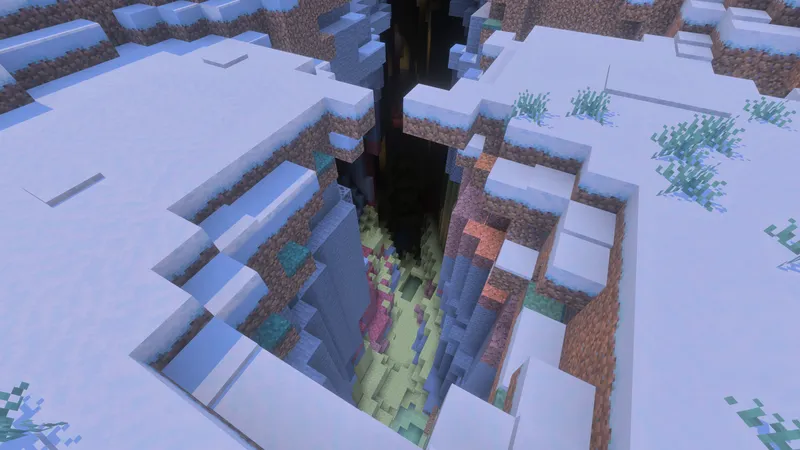
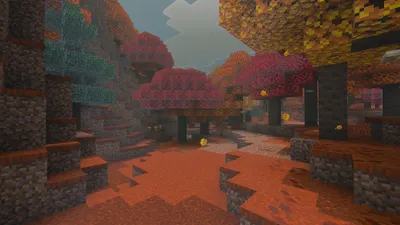
Credit: Mojang Studios / Microsoft — a mineshaft generated at the heart of a Sulfur Cave, where you can find the Bounce disc.
"Bounce" music disc: fingerspit's new track
The Bounce disc is the only track from the update to be offered as a droppable item. The composer fingerspit's five other tracks (Memories, Ebb, Home, Shores and Nightly) are only played as ambient music in the Sulfur Caves and cannot be captured on a disc.
How to get it:
- First, locate a Sulfur Cave. This underground biome stands out for its yellow and red walls (sulfur and cinnabar) and its large greenish pools.
- Within the biome, look for an abandoned mineshaft. Unlike "classic" mineshafts, those that appear in a Sulfur Cave have their minecart chests stocked with unique loot.
- Search every minecart chest: according to the official loot table, Bounce has a moderate chance of appearing there. A mineshaft usually generates several minecarts, which makes finding it fairly quick if you have the patience to open them all.
- Place it in a regular jukebox: when it plays, it emits a comparator signal of value 8, just like the other discs.
Tip: Sulfur Cave mineshafts sometimes share their pools with sulfur cube generators, a kind of natural spawner. So stock up on milk and potions of poison resistance before heading in.
Friends List: sociability finally native on Java
After years of having to go through Discord or the Realms feature, Java Edition 26.2 finally integrates a Friends List comparable to Bedrock's. A new button appears on the title screen and in the Pause menu; by default, the O key opens it in-game.
How to enable it:
- The feature is opt-in: go to Options → Online → Friends List Options to activate your profile and allow requests.
- Once enabled, the list shows you in real time who is offline, online, or in a world.
- Send or accept requests by simply typing a Microsoft gamertag. Requests are bidirectional: send, receive, and acceptance toasts appear in-game without interrupting the game.
- An invitation to join a world can be sent with one click from the list, which elegantly replaces the manual sharing of Realms codes.
On Bedrock 26.30, the Groups (Parties) feature, previously experimental, officially exits beta testing. It allows you to form a group of up to 15 players who automatically follow the party leader from one world to another, on Realms as well as on community servers.
Vulkan 1.2 Engine: A New Graphics Backend
This is probably the biggest "engine-side" change in a long time: Java Edition 26.2 offers a Vulkan 1.2 rendering engine as an option, alongside the traditional OpenGL. Mojang presents it as a long-term undertaking, but the current implementation is already usable for testing.
How to enable it:
- Open Options → Video Settings, then scroll down to the Renderer line.
- Switch to Vulkan (experimental). A game restart is required.
- Vulkan primarily targets recent dedicated graphics cards (GeForce RTX 20xx and above, Radeon RX 5000 and above, or Intel Arc). On older integrated GPUs, the experience may be less stable than with OpenGL.
- In case of crashes or artifacts, you can simply switch back to OpenGL from the same options: nothing is irreversible.
Expect performance gains to vary depending on your configuration: Mojang mainly mentions better multi-thread management and preparation for richer vanilla shaders in future drops. The engine remains explicitly marked as experimental, so it will take some time before it becomes the default renderer.
Sculk Sensors and Sulfur Geysers: Hybrid Redstone
The big "engineering" surprise of the patch is how the new sulfur geysers integrate with the vibration system. A geyser forms naturally in the springs of the Sulfur Caverns, when a block of potent sulfur is placed above a magma block or a lava source, beneath a column of water. Each water block above increases the height of the plume by about 7 blocks.
But what interests redstone engineers is this: each eruption emits two game events — one at the start, one at the end — which the Sculk Sensor and its cousin the Calibrated Sculk Sensor detect perfectly. In other words, a simple block of potent sulfur becomes a natural clock, capable of powering doors, dispensers, or pistons via sculk without any player intervention.
How to set up a detector:
- Mine potent sulfur with a pickaxe (silk touch recommended) and obtain at least one sculk sensor from Ancient Cities or by breeding it via a sculk worm.
- Stack the geyser: a magma block, a potent sulfur block on top, then a column of water.
- Place the sculk sensor within 8 blocks. With each eruption, it will emit a brief redstone signal.
- To adjust the timing, add or remove water blocks: the higher the column, the more powerful and spaced out the eruption.
- By replacing the magma with a lava source, the eruption becomes continuous, with slightly muffled sounds — handy for mechanisms that require a constant signal.
This integration is particularly notable because it turns a decorative block into a signal generator, without going through classic redstone. Sulfur cube farms entirely driven by sculk are already popping up all over social media.
Recap: how to unlock each new feature
To spare you any back-and-forth through the patch notes:
- Bounce Disc: minecart chests in a mineshaft running through a Sulfur Cavern.
- Friends List (Java): Options → Online → enable, or the O key in-game.
- Groups (Bedrock): the "Group" button on the main screen, for up to 15 players.
- Vulkan Engine: Options → Video Settings → Rendering Engine → Vulkan (experimental).
- Sculk detection of geysers: place a sculk sensor near a geyser (potent sulfur + magma/lava + water column).
None of these features require creating a specific world. A simple existing world, updated to 26.2 or 26.30, will generate the new biomes in chunks not yet explored.
A pivotal patch before the end of 2026
Chaos Cubed may seem modest on paper, but it actually represents one of the most technical drops Mojang Studios has delivered since the overhaul of procedural generation. With the arrival of Vulkan, the gradual unification of social features between Java and Bedrock, and the opening of sculk vibrations to non-mob blocks, the team is laying important foundations for what's next.
The 2026 roadmap hints that a third drop awaits players in the fall, likely centered around the Nether theme and rendering optimizations. In the meantime, the Sulfur Caverns offer plenty to fill your inventory with new items — and above all, a piece of fingerspit that you'll have to earn to hear it at home.
Share this article
What excites you most about Chaos Cubed?
Frequently asked questions
Where exactly can you find the Bounce disc?
Spot a Sulfur Cave (yellow/red walls, greenish pools), then look for an abandoned mineshaft running through it. Search the minecart chests: Bounce has a moderate chance of appearing there. Multiple minecarts make the discovery fairly quick if you're patient.
Will Java's Friends List work with Bedrock?
Not directly: Java 26.2 has its own Friends List, while Bedrock 26.30 takes its Groups feature (15 players max) out of beta. Both systems run in parallel for now, but they share the goal of eliminating dependency on Discord or Realms.
Should I force Vulkan if my GPU isn't recent?
No. Vulkan targets recent dedicated graphics cards (RTX 20xx+, RX 5000+, Intel Arc); on older integrated hardware, OpenGL will remain more stable. It's opt-in and reversible with one click, so feel free to test it and switch back to OpenGL if it crashes.
How do you use sulfur geysers for redstone?
Stack it up: magma, powered sulfur, water column. Place a sculk sensor within 8 blocks. With each eruption, the sensor emits a brief redstone signal. Adding/removing water adjusts the frequency; replacing the magma with a lava source makes the eruption continuous.
Do I need to create a new world to access this content?
No. Any existing world, updated to 26.2 or 26.30, will automatically generate the new biomes (Sulfur Caves, geysers) in chunks that haven't yet been explored. The social and graphics features are available everywhere without limitation.
Key takeaways
- The Bounce disc is obtained from mineshaft chests in Sulfur Caves, the only droppable music track in this patch.
- The Java Friends List finally leaves beta: live invitations, real-time status, no more need for Discord to play with friends.
- The optional Vulkan 1.2 engine promises better multi-threaded performance and paves the way for future vanilla shaders, but it remains marked as experimental.
- Sulfur geysers emit events that sculk sensors can detect: natural clocks without classic redstone for farms and automated mechanisms.
- Everything is accessible on an existing updated world: zero need to create a new save to enjoy these new features.
Comments
No comments yet. Be the first to react!
Leave a comment
Similar guides
Latest articles








Your opinion counts
Rate Minecraft
Click a star to rate