


 Fabian Lainé
Full Guide
Cyberpunk 2077: how the police work in 2026, shaking off the NCPD and surviving MaxTac
In brief
Since the 2.0 overhaul, Cyberpunk 2077's NCPD isn't messing around anymore: active patrols, roadblocks, netrunners and MaxTac turn every crime into a full-blown manhunt. This guide explains how the wanted stars pile up, what the police deploy at each level, and above all how to break contact without fighting.
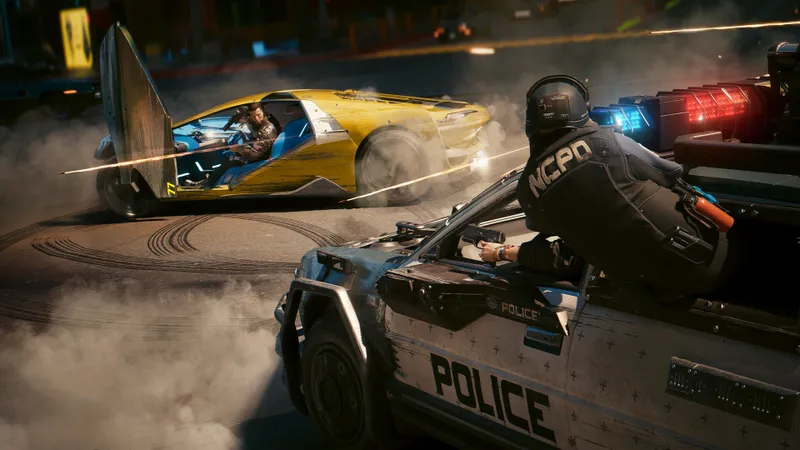
Since update 2.0, the NCPD is no longer the joke it was at launch. Officers actually patrol the streets, arrive by vehicle from off the minimap, set up roadblocks, hack your car, and eventually call in MaxTac. Yet most French-language pages that still rank for the query "escape the police Cyberpunk" describe the December 2020 game, the one where cops materialized behind your back and gave up three seconds later.
This guide describes the system as it runs on August 10, 2026, on version 2.31: what triggers wanted stars, what the NCPD deploys at each tier, the procedure for breaking contact, what a MaxTac squad is really worth, and why Dogtown follows different rules.
One point to take on board right away, because it shapes everything else: CD Projekt Red spelled it out in black and white when unveiling its overhaul, the NCPD accepts neither bribes nor surrender. There's no button to give yourself up, no fine to pay, no negotiation. You run, or you take the hit.
What 2.0 changed, and what still holds true today
The official 2.0 update notes list the pillars of the new system, and none of them have been revised since: the NCPD comes after you the moment you commit a crime, whether on foot or in a vehicle; the type of units sent and their behavior depend on your NCPD wanted level (that's the term used in the English version); chases can involve various NCPD vehicles, roadblocks, and MaxTac "dropping in via AV," the game's term for its aircraft.
Three details from that same list remain underused by players:
- Officers present at a crime scene will chase you down. A gig that goes sideways in front of a patrol parked at the corner, and you end up with stars without having aimed at a single civilian.
- You can pick up NCPD radio chatter. It's your best audio cue for proximity when you're hunkered down.
- NCPD officers are valid targets for quickhacks. It's the single most useful addition in the entire overhaul, and I'll come back to it below.
2.1 added a related layer: when V takes an aggressive approach toward a gang during certain gigs or main quests, that gang can now come after V in pursuit. It's not the same system as the wanted stars, but the geography of the chase is identical.
What earns you stars (and what doesn't)
Night City is still a city where you can walk around armed without anyone batting an eye. As long as you're shooting hostiles — NPCs marked with a yellow chevron — the police couldn't care less, including during NCPD reported crimes, which are precisely what they're paid to handle.
What triggers a first star, on the other hand:
- Hitting a civilian or an officer. Note that 2.0 removed the one-hit-kill protection for civilians: a stray bullet is now enough to kill one.
- Running over a pedestrian or ramming an NCPD vehicle at high speed.
- Stealing a police vehicle, or getting spotted inside a perimeter locked down by the NCPD.
The number one cause of accidental escalation is area-of-effect damage. A grenade thrown a bit short on a Kabuki street, a Contagion hack that spreads from an enemy to the crowd nearby, a vehicle exploding at a busy intersection: the game makes no distinction between the civilian you meant to spare and the one you vaporized by ricochet.
Escalation, star by star
| Level | What the NCPD sends |
|---|---|
| 1 star | Officers already on the scene open fire if they spot you and appear on the minimap, but no one comes looking for you. Moving a few streets away is enough. |
| 2 stars | The first genuinely active tier: patrol cars converge on your last known position, with two officers each. Not very dangerous, but the numbers rise quickly. |
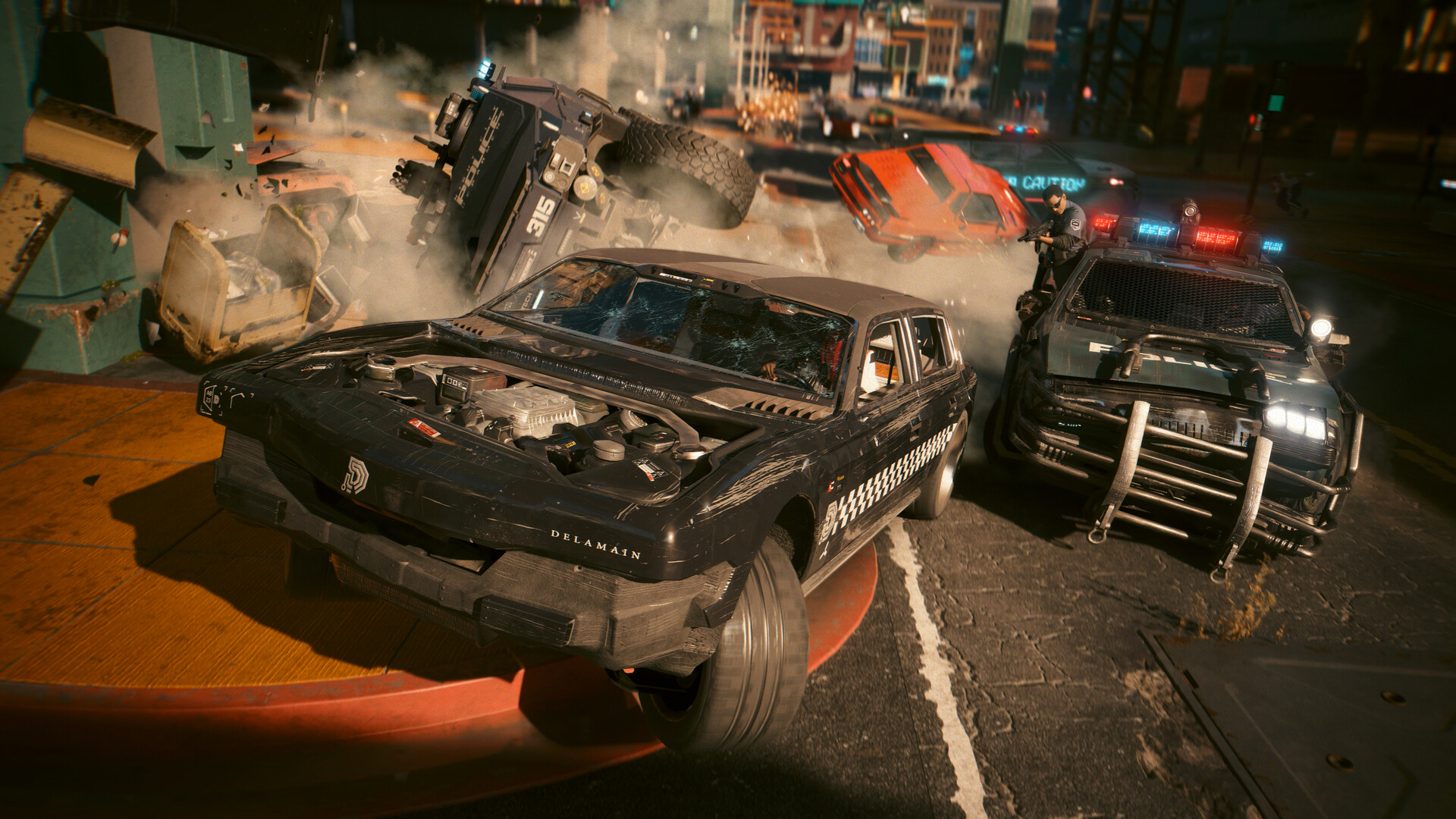
| 3 stars | A big jump. Heavier vehicles, groups of four, combat drones, heavy-armored officers, an occasional sniper, and roadblocks. In open terrain, you get overwhelmed. |
| 4 stars | Doubled numbers and the arrival of NCPD netrunners, who target both you and your vehicle. |
| 5 stars | Everything above, plus a MaxTac squad dropped in by Basilisk. |
Losing the NCPD: the method that works
Fleeing in Cyberpunk 2077 is a matter of geography, not firepower. The trigger is line of sight: as long as a pursuer can see you, the counter doesn't move. As soon as you leave their field of view, the stars turn transparent, then start blinking — the signal that the search is about to be called off.
In order:
- Get off the road immediately. Reinforcements arrive by road and park on the road. Alleys, covered passages, stairwells, rooftops: every change in elevation is worth three turns.
- Multiply the angles. The AI doesn't search thoroughly. It rarely takes many turns past your last point of contact: a container, a pillar, a service landing are enough.
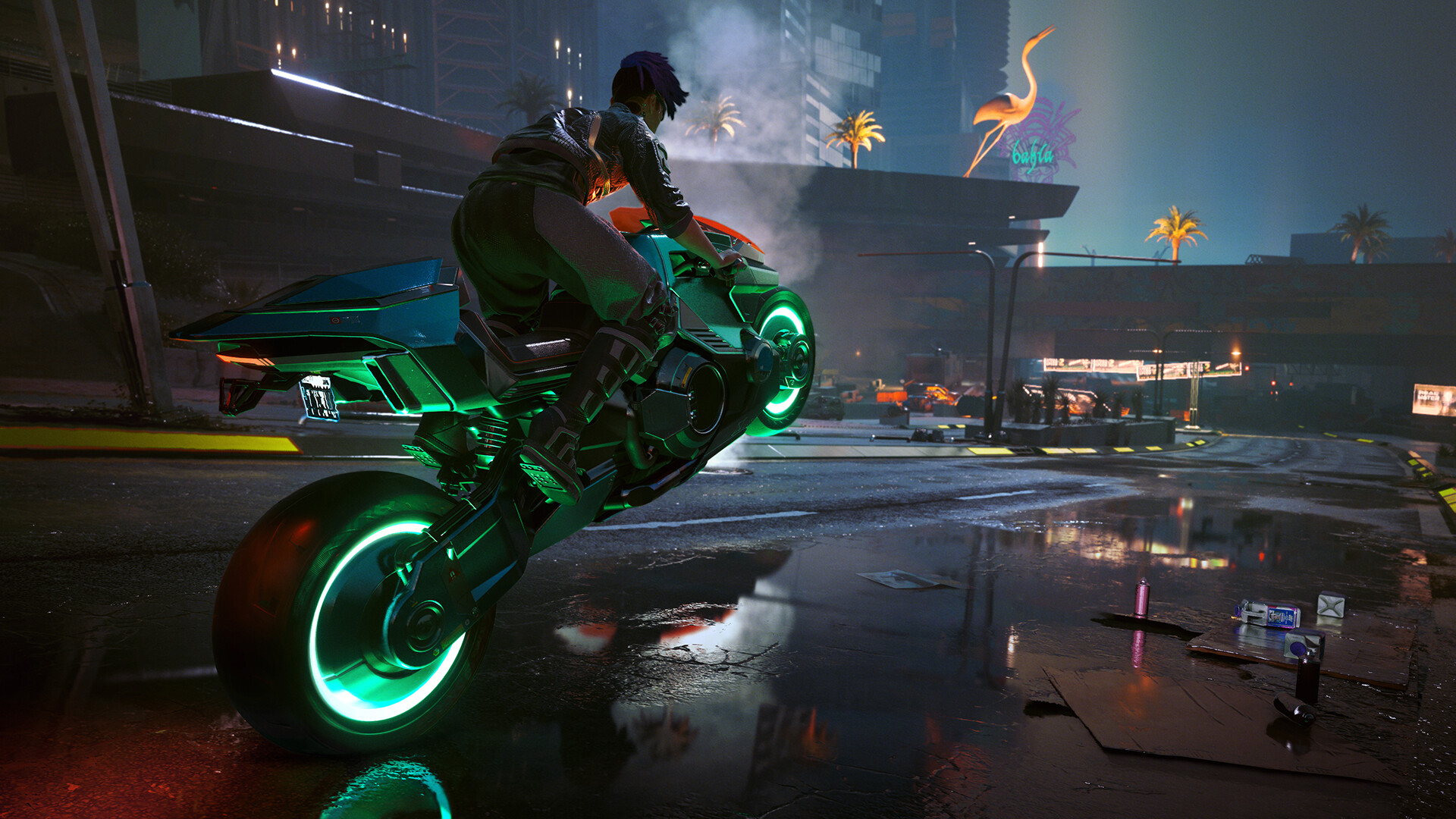
- Go on foot past three stars. From four stars onward, netrunners disable your vehicle and leave you stranded in the middle of an avenue. The motorcycle remains the exception: it can go where no patrol car can follow.
- Use smoke grenades, added precisely by 2.0. They break line of sight without killing anyone, so without adding a star.
- Hack the police. An Optic Camo Shutdown on the officer who just spotted you gives you the second you need to disappear around the corner; a Ping launched from a hideout shows you who's behind the walls. Keep an eye on your RAM: always keep enough for an escape hack, not just for killing.
- Don't count on fast travel. It stays locked while you're in combat: you have to break contact first, which makes it an emergency exit, never an escape route.
- An interior with a loading screen — elevator, apartment, shop — ends the chase in almost all cases.
Good news once the stars go out: an officer who crosses your path afterward doesn't restart the manhunt. The game keeps no memory of past crimes, which makes the "disappear for ten seconds" strategy far more worthwhile than a fight.
Five stars: what MaxTac is really worth
MaxTac isn't just "tougher." The squad drops in from a Navi, usually with four operators, and deliberately covers every role at once: a rifle assault trooper, a melee specialist wielding Mantis Blades, a netrunner who hits you with offensive hacks, a sniper, and a heavy weapons carrier. Several of them use Sandevistan cyberware, which explains that constant feeling of being outpaced.
Three principles change everything in this fight:
- Don't stay out in the open. A corridor, a doorway, a parking ramp neutralizes the sniper and forces the melee fighter to come to you alone.
- Strike on landing. The moment the squad touches down is the only window when the operators are grouped together and stationary.
- Get out of the vehicle. At this heat level, your car is a target that gets hacked within seconds, not a shelter.
One honest note to close on this topic: no quest, no fixer contract, no objective in the game asks you to beat MaxTac, and reinforcements keep coming as long as the five stars hold. It's a challenge you set for yourself, not a source of progression — and fleeing remains, mechanically, the most effective response.
Dogtown plays by different rules
The Phantom Liberty district falls outside NCPD jurisdiction: it's BARGHEST, the militia holding the area, that comes after you. The consequences are concrete.
- The units sent are fewer in number and less well equipped than those in Night City. A two-star skirmish there is noticeably more manageable.
- BARGHEST cares relatively little about civilian casualties: climbing very high in stars here requires directly attacking the militia itself.
- MaxTac, however, can still deploy at maximum heat level. The district isn't a safe zone.
- The terrain there is more open and more heavily patrolled: breaking line of sight is harder than in Watson or Heywood, where alleyways are everywhere.
The habits that avoid almost all trouble
Cyberpunk 2077's police system isn't punitive: it's predictable. Three habits are enough to never suffer from it.
Pick your exit before opening fire. Before triggering a contract out in the street, scope out the alley, parking lot, or service stairwell behind you. The question is never "can I win this fight," but "which way do I leave."
Treat area-of-effect as a risky weapon. Grenades, vehicle explosions, and Contagion are the three most frequent sources of accidental stars. In a crowd, a single-target hack like Short Circuit or Overheat is better than an effect that spreads.
Ease off the throttle in dense districts. Little China, Kabuki, and Japantown concentrate traffic and pedestrians; many chases start with a pedestrian run over at full speed, not a shootout.
Finally, keep in mind that this mechanic has been stable since 2.0: subsequent updates have stuck to fixes, like that Yaiba Kusanagi bug that flipped over during a car chase, fixed by patch 2.31 in September 2025. In other words, what you learn today will still hold true in your next playthrough — on PC, PS5 Pro, Xbox Series, or Switch 2.
Share this article
Facing MaxTac, do you fight or flee?
Frequently asked questions
Why am I getting a star without shooting anyone?
A stray bullet, a cyberware weapon explosion or a car crash can kill nearby civilians. The area of effect doesn't discriminate: a grenade thrown a bit short in Kabuki will obliterate the NPC standing next to it, and the NCPD shows up. Also watch out for NCPD officers already on the scene before your crime — they'll open fire if you get too close.
How do I actually break line of sight?
Leave the street, and multiply blind spots and changes in elevation. Alleys, covered passages and stairwells are worth three turns on their own. The NCPD's AI doesn't search seriously and gives up as soon as it loses visual contact — the stars flashing are the tell. An interior with a loading screen (elevator, shop, apartment) ends the chase almost for certain.
Do I absolutely have to fight MaxTac, or can I run?
Run. No quest forces you to beat MaxTac, and reinforcements keep coming as long as the five stars hold. Mechanically, fleeing is the optimal solution — if you fight them anyway, force them indoors to cancel out the sniper and strike when the squad lands and is momentarily immobile.
Is a motorcycle really better than a car for escaping?
Yes. It gets through where patrol cars get stuck, and NCPD bikers can't keep up with it as effectively. From four stars onward, netrunners hack regular vehicles and leave you stranded — the motorcycle remains the exception.
Can I surrender or pay a fine?
No. The NCPD doesn't accept bribes or surrender — CD Projekt Red confirmed this when unveiling the overhaul. No surrender button, no negotiating. You either run, or you take the bullets.
Key takeaways
- A stray bullet kills a civilian and triggers a chase — geography matters more than firepower when it comes to escaping.
- From three stars onward, the NCPD blocks off the roads: leave the street immediately for alleys, rooftops and covered passages.
- Hack the officers who spot you to break line of sight — it's the most useful mechanic in the entire overhaul.
- MaxTac shows up at five stars with four heavily equipped operators: forcing them indoors cancels out the sniper and slows them down.
- No quest forces you to fight MaxTac — fleeing remains mechanically more effective than engaging.
Comments
No comments yet. Be the first to react!
Leave a comment
Similar guides



Latest articles






Your opinion counts
Rate Cyberpunk 2077
Click a star to rate