
 Fabian Lainé
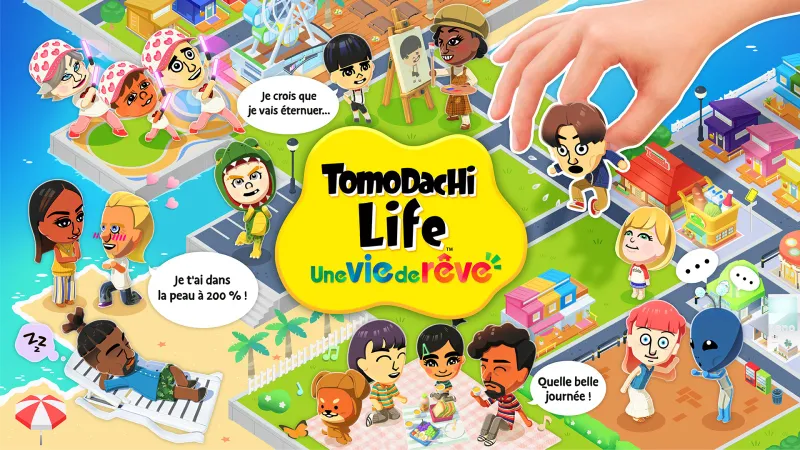
Full Guide
Tomodachi Life: A Dream Life – The Complete Clothing Guide: Shop, Creation Studio and Mii Style 2026
In brief
Tomodachi Life: A Dream Vacation offers two clothing pillars to dress your Miis: the Clothing Shop with its daily rotation, and the Design Studio for drawing your own outfits. This guide breaks down how each system works, how to read your islanders' preferences, and how to make the most of the catalog to maximize happiness without ruining your island economy.
On your island in Tomodachi Life: Living the Dream, a happy Mii is almost always a well-dressed Mii. The Clothes Shop and the Design Studio together form the fashion heart of the game: two buildings that decide whether your rock singer will really wear their leather jacket, whether your grandmother will get her floral dress, and whether your giant humanoid dog will end up in a three-piece suit. This 2026 guide, designed for the Nintendo Switch and Switch 2 version released on April 16, 2026, breaks down all the ins and outs of your Miis' wardrobe: where to stock up, how to read their preferences, when to give the right outfit, and above all how to make the most of the Design Studio to create unique pieces that Nintendo will never sell.

The Clothes Shop: your island's main fashion outlet
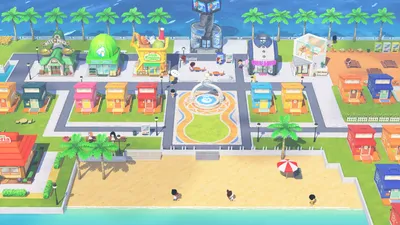
On the island map, the Clothes Shop is easy to spot thanks to its colorful storefront, usually built close to the Convenience Store and the Market. It's the first fashion store you unlock, and it remains your main source of clothes throughout the game. Inside, the screen is divided into several clearly labeled tabs: the new arrivals available for the day, a seasonal section that follows the island's calendar, and a catalog that lists every item discovered in the past.
The selection changes every real-world day. This daily rotation is the most important mechanic to understand: don't count on an event triggering to see a t-shirt you spotted the day before come back. In practice, each new day offers you a different lineup, wider than the Convenience Store's food selection, and often surprising. You'll find a mix of dresses, t-shirts, shirts, necklaces, hats, shoes, and full costumes with wild themes — panda, mustachioed plumber, fairy-tale princess, traditional Japanese outfit, chef's apron.
Understanding how the sections and daily rotation work
The rotation follows the console's clock. On Switch and Switch 2, manually advancing the date to force a refresh technically works, but it breaks the natural progression of relationships, dreams, and birthdays. Nintendo hasn't patched out this possibility, but the game's overall balance advises against it: instead, spend your days visiting the shop just once a day, like doing your rounds in town.
Three tabs to remember:
- Today's new arrivals — the short-lived selection refreshed at midnight. This is where you'll find the rarest pieces.
- Seasonal — a section modeled on the current season (swimsuits in summer, cardigans in autumn, festive outfits in December).
- Catalog — the big ledger where any item already bought or given becomes available to order again, regardless of chance.
The catalog is your safety net: once an item appears there, you'll always be able to buy it again for a Mii, or offer it to another resident. Quickly building up a well-stocked catalog is therefore one of the real long-term goals, even more important than buying every new item right away.
Anatomy of an outfit: top, bottom, shoes, headwear
Every Mii wears an outfit broken down into four distinct slots:
- The top — t-shirt, shirt, sweater, cardigan, jacket, dress, or full bodysuit.
- The bottom — trousers, shorts, skirt, jeans, bermuda shorts, or the bottom half of a full costume.
- The shoes — sneakers, heels, boots, flip-flops, slippers.
- The headwear (optional) — beanie, cap, beret, crown, helmet, mask.
A crucial point that's often overlooked: headwear can be removed without the Mii changing the rest of its outfit. This means, for example, you can leave a resident in their dancer bodysuit but take off the top hat when the scene doesn't call for it. Full costumes (character, animal, mascot), on the other hand, take up the top and bottom slots as a single unit, which instantly replaces the base outfit.
Clothing preferences: decoding your Miis' personalities
Each Mii has its own tastes, shaped both by its personality and by a favorite color chosen at creation. The starting outfit, known as the "normal outfit", always features this favorite color: a Mii who likes purple will wear a purple top, purple shorts, and a matching pair of shoes. That's why some Mii seem delighted by a simple pastel shirt while others only react to wacky costumes.
To read these preferences in-game, open the Mii's profile and watch its expression as you hover over an item in its inventory: hearts, stars, or an indifferent look. In practice, three main trends emerge:
- Classic / elegant — three-piece suits, evening gowns, blouses. Ideal for serious characters.
- Colorful / kawaii — brightly colored outfits, patterned dresses, magical girl uniforms.
- Eccentric — animal outfits (dinosaur, duck, tiger), superhero costumes, mascot outfits. "Funny" or "chatty" Miis love these.
A truly loved outfit boosts the Mii's happiness meter faster than the equivalent food item, and often triggers a little scene: the Mii admires itself in an imaginary mirror, jumps for joy, or gives you a knowing wink.
Giving clothes as gifts: the happiness trick to remember
Clothing is one of the most cost-effective happiness levers in the game, alongside food and apartment decoration. There are two ways to hand it out:
- Direct purchase for a Mii — from the Shop, select an item, then choose the recipient. The money is deducted, and the clothing joins their personal wardrobe.
- Gift from the catalog — once a Mii passes happiness level 20, they earn the right to a free gift with every level up. You then pick straight from the catalog, without spending a single coin.
This second method completely transforms the game's economy: instead of buying the same flowered dress five times for five Miis, you buy it once, it gets added to the catalog, and you can then gift it to everyone else as they level up. This is the mechanic that lets you properly dress an island of 30 or 40 residents without going broke.
Be careful, though: turning down an outfit is sometimes the best option. A Mii who dislikes the eccentric style will grumble if you force a duck costume on them. Listen to their reactions in the fitting booth before confirming — the little dialogue shown on screen is your best guide.
The Design Studio: creating your own outfits
This is the real 2026 novelty compared to the 3DS version, and the hidden gem of the Switch version. The Design Studio lets you freehand draw, on pre-cut patterns, fully customized clothes that will join your Miis' wardrobe. The principle is identical to that of the pattern editor in Animal Crossing, but applied to a social simulation universe.
The available patterns cover several types of pieces:
- Sleeveless top — tank tops, bralettes, light tops.
- Long-sleeved top — sweatshirts, shirts, sweaters, jackets.
- Shorts — bermudas, cycling shorts, summer shorts.
- Skirt — short skirts, long skirts, pleated or straight.
On top of that, there are patterns for decorative items that go beyond clothing but are worth knowing about: drink cans, food bowls, house facades, floor tiles, cuddly animals, and even small 3D shapes (pyramid, octahedron) to texture. The Design Studio is therefore not just a fashion studio, but a truly versatile graphic design studio, with your clothes as the flagship use case.
The drawing studio: tools, palette, and best practices
In terms of tools, the Design Studio offers a brush with adjustable size, a paint bucket to fill an area, an eyedropper to pick up a color again, an eraser, and most importantly, stackable drawing layers. You can also import patterns you've already drawn to create variations, which allows you to build a coherent "collection": three tops and two skirts that complement each other, all based on the same starting print.
A few practical tips for a clean result on screen:
- Work on large areas first with the paint bucket, then refine with the brush. This avoids empty areas that show up as gray in-game.
- Use layers to separate pattern and background: you'll be able to touch up one without erasing the other.
- Regularly test the render worn by a Mii: what looks crisp on the pattern can stretch strangely on a torso or sleeve.
- Plan for a gradient of three close shades rather than two stark colors — the eye perceives volume better this way.
Other sources of clothing: the market, surprise bags, and dreams
The Clothing Shop isn't the only place to stock up. Three alternative channels are worth exploiting daily to complete the collective wardrobe:
- The Market — its selection changes every day, with discounted items and sometimes pieces that never appear in the Shop. Make it a habit to check it at the start of every session.
- Surprise bags from the evening market — a mini-game of chance where you pay a fixed price for random contents. An interesting risk/reward ratio if your catalog is starting to overflow with basics.
- Dreams — your Miis can dream of specific clothes at night. Upon waking, the corresponding item is unlocked and sometimes given for free. Check the sleep report every morning.
Finally, some residents will spontaneously offer you an item they're proud of — often a personalized outfit bearing their name, very handy for understanding their tastes. Always accept: it maintains the relationship and enriches the overall catalog.
Managing your clothing budget without breaking the bank
Prices vary enormously from one item to another. A simple plain t-shirt costs a few dozen dollars; a full mascot costume can run into the hundreds. On a new island, the temptation is strong to buy everything at once, only to find yourself broke when a birthday comes around.
A few simple rules to keep your wallet in check:
- Set a maximum daily budget. A hundred dollars a day is enough to keep the catalog stocked without breaking the bank.
- Prioritize missing types: it's better to own one item from each category than ten tops and zero shoes.
- Only buy full outfits for the Miis whose tastes you're sure of. This is the highest and riskiest expense.
- Always keep enough set aside to give a birthday gift — the game will remind you, but it's frustrating to be short on cash that day.

Event outfits: weddings, the chapel, and special occasions
When creating a Mii, one of the most understated — yet essential — settings concerns the outfit they'll wear during official events. Two archetypes are offered: the formal "suit" outfit and the formal "dress" outfit. A point often overlooked: this choice is independent of the Mii's gender. You can absolutely have a character get married in a dress even though they were created as male, or vice versa. It's even possible to select both options: the game will then alternate depending on the circumstances.
These event outfits are triggered automatically in several key contexts: confessing at the Wishing Fountain, making things official at the Town Hall, the ceremony at the Wedding Chapel, and certain TV appearances. If you see a resident show up in wedding attire without having done anything, it's very likely that another relationship progressed while you were away: check the island's news log to catch up on the event.
Coordinating outfits for couples and families
Once a couple is official and a baby arrives, the question of family style suddenly becomes interesting. Nothing forces parents to dress in a coordinated way, but the visual effect is striking during TV appearances or in the photo studio. Two strategies work well:
- Shared color, different cuts — both parents share purple or green, but one wears a shirt and the other a dress. A good compromise between uniformity and personality.
- Shared pattern via the Studio — design a unique print in the Design Studio, apply it to both a long-sleeve top and a skirt, and give each version to one parent. This gives a real "TV sitcom family" look.
For babies, the wardrobe is more limited: children wear specific outfits that can't be directly modified, but the overall atmosphere of the apartment (which is itself customizable) rubs off on the overall look. A candy-pink living room with two parents in retro outfits and an infant in a yellow onesie: every detail counts.
Unlocking rare items: patience and consistency
Certain pieces only appear after a certain threshold of Happy Points given back to the Wishing Fountain, or after unlocking new buildings on the island. The principle is simple: the more your community grows and thrives, the wider the daily selection becomes. Don't look for a shortcut — the pace is tied to that of the overall game.
The most sought-after items in the long run:
- Animal mascot costumes (tiger, panda, dinosaur, duck).
- Traditional outfits inspired by different cultures (kimono, poncho, Scottish outfit).
- Professional uniforms (chef, firefighter, doctor, sailor).
- Outfits that "wink" at other Nintendo franchises — sometimes surprises via updates.

Conclusion: fashion as a driver of attachment
Fashion in Tomodachi Life: Living the Dream is not just cosmetic decoration — it's the main language through which your Miis tell you who they are. Every outfit is a statement: the shy neighbor who blushes in their superhero costume, the retiree who gives you pleading looks for that floral dress spotted in the shop window, the rock singer who refuses anything that isn't black. So make the following a habit starting tonight: stop by the Clothes Shop and the Market every day, try something new on a Mii with strong preferences, then spend ten minutes a week at the Design Studio creating a brand-new piece. After a month of play, your island will look nothing like it did at the start — and your properly dressed Miis will repay you with Happy Seeds, hilarious anecdotes, and memorable photos to collect.
Share this article
When dressing your Miis, do you prefer to?
Frequently asked questions
Should you manually advance the date to get more items at the Shop?
Technically possible on Switch and Switch 2, but it's tricky: it breaks the natural progression of relationships, dreams, and birthdays. Nintendo hasn't patched this loophole, but the game's balance strongly discourages it. Instead, visit the Shop once a day just as you would in real life.
How do I know if my Mii really likes a piece of clothing?
Open their profile and hover over the item in the inventory: hearts, stars, or an indifferent expression will tell you. When offering it in the shop, the small dialogue displayed is your best guide. If the reaction seems hostile, decline and save the item for another islander.
Is there a way to dress 30 or 40 islanders without spending a fortune?
Yes: buy a piece just once to add it to the catalog, then give it as a free gift during each level-up past level 20. This is the key mechanic for managing a large island economically.
Is the Design Studio only for drawing clothes?
No, it's a full graphic design studio. You can also texture decorative objects (cans, bowls, house facades, floor tiles, small 3D shapes), which opens up possibilities well beyond fashion alone.
Is it normal for an outfit to refuse head accessories?
Full costumes (character, animal, mascot) occupy the top and bottom as a single block and replace the entire outfit. Regular outfits, on the other hand, allow you to remove the head accessory without changing anything else, offering more flexibility.
Key takeaways
- The Clothing Shop's daily rotation is your best ally: visit it every day to uncover rare pieces, rather than trying to force luck.
- The catalog is a crucial safety net: once purchased, any item of clothing can be given as a free gift during level-ups.
- Clothing boosts happiness faster than food when it matches a Mii's tastes: watching their reactions and respecting their preferences really pays off.
- The Design Studio goes beyond simple fashion by giving you the tools to draw unique outfits, from shirt patterns to house decorations.
- Refusing an outfit that doesn't suit a Mii's style is often better than forcing it on them: the AI reacts and judges, so listen to what it's telling you before confirming.
Comments
No comments yet. Be the first to react!
Leave a comment
Similar guides


Latest articles





Your opinion counts
Rate Tomodachi Life: Living the Dream
Click a star to rate