

 Fabian Lainé
Full Guide
Pokémon Pokopia: How to Unlock Villagers (2026 Guide)
In brief
Pokémon Pokopia shakes up the classic formula by putting you in charge of rebuilding an island where every resident depends on specifically designed habitats. This guide covers the Habitadex, the core system for attracting Pokémon, then details the key steps to unlock the essential residents — from the starter trio to the exploration abilities that truly open up the world.
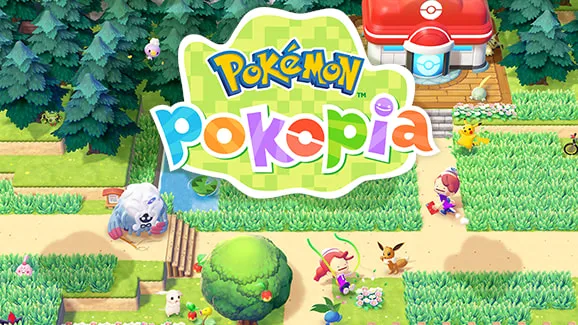
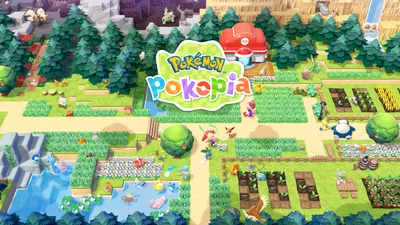
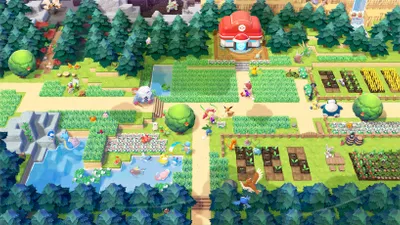
Pokémon Pokopia landed on Nintendo Switch 2 on March 5, 2026 and no longer has much in common with the classic Pokémon games. Developed by Koei Tecmo for The Pokémon Company, this cozy title puts you in the shoes of a Ditto capable of transforming into around thirty Pokémon to restore an abandoned island. The goal: rebuild the village, develop five regions (Terrassec, Grisemer, Collinangle, Flotîles-Millefeux, and Ville-Nouvelle), and above all build the 209 habitats that will make Pokémon want to come live alongside you. This guide covers all the residents you can unlock, along with the conditions to meet, the quests to complete, and the abilities they teach in return.
Understanding the Habitadex: the key to attracting residents
Before setting off to hunt for new neighbors, you need to get to grips with the game's central system: the Habitadex. It complements the Pokédex, but this time it catalogs the environments you've built. Each Pokémon has specific preferences — tall grass, bodies of water, altitude, heat, humidity — and will only appear in your village if the corresponding habitat is complete and functional.
Two main methods let you unlock a new habitat:
- Spot the glimmering traces left behind by a curious Pokémon. By analyzing them, you gain the species' precise requirements (materials, vegetation, furnishings).
- Buy the blueprints from the computer at the Pokémon Center. Each region unlocks new models provided you've made enough progress in its regional level.
Once the habitat is validated (a starry halo appears around it), the Pokémon comes to visit depending on the weather, the time of day, and a bit of luck. If it likes what you've built, it eventually settles down for good — and at that point, it becomes a true resident with personalized quests and an affinity gauge.
The first residents: Bulbasaur, Squirtle, and Charmander
Within the first few hours, you cross paths with the starter trio. Each encounter unlocks an ability granted to Ditto, essential for what follows.
- Squirtle: this is the very first companion. You find it hungry on the ground; feeding it teaches Ditto Water Gun, essential for moistening arid land and watering crops.
- Bulbasaur: it asks you to use Water Gun to revive ten patches of withered tall grass around the starting village. Once the quest is completed, it teaches Leafage, the ability that lets you grow your own patches of tall grass.
- Charmander: it joins your roster when you gain access to the volcanic areas of Collinangle. It teaches Ember, essential for burning brush, lighting campfires, and unlocking the charred materials used by the hottest habitats.
These three residents form the foundation: without them, it's impossible to build half the habitats in the game. In fact, invest your first Pokos (the local currency) in the Lovely Flower Meadow (4 patches of wildflowers): this habitat attracts not only Pidgey and Butterfree, but also Eevee, a versatile resident who triggers excellent Mepo Berry and ivy gathering quests.

Unlocking Insécateur and Tygnon: the exploration experts
Once the fundamentals are in place, two resident Pokémon fully open up exploration: Insécateur for gathering, Tygnon for clearing debris.
Insécateur
To attract Insécateur, you need to build the Shaded Tall Grass habitat, which requires 1 large tree (any species) and 4 tall grass squares. Once the bug is present, it asks for 2 sturdy sticks to train its cutting. Complete the quest and Métamorph learns Cut, the ability that lets you harvest wood, leaves, and flowers in abundance — a prerequisite for most intermediate habitats.
Tygnon
Tygnon joins your village as soon as you build an Outdoor Training Corner in the starting hamlet. Its friendship quest involves bringing it 2 stones, which it uses as dumbbells. As a reward, it teaches Rock Smash, the key ability for breaking rocks blocking paths and collecting stackable earth cubes. Without it, there's no way to access the deep areas of the Parched Lands or the Onix trapped there.
Attracting Magicarpe, Lokhlass, and Dracolosse: the advanced residents
The most useful residents arrive after a few hours of play and radically transform your exploration. They are tied to the Grisemer and Flotîles-Millefeux regions, unlocked through story progression.
- Magicarpe: it appears as soon as you have the first water points in the village, in a Calm Pool habitat. Its quest teaches you Splash, one of the most practical abilities in the game for crossing small terrain features at full speed. Favorite gift: earthworms, collected by digging near the shores with Cut.
- Lokhlass: hard to obtain but essential, Lokhlass requires an ocean-side habitat combining sand, choppy waves, and a floating toy (to be purchased at the PC). Once settled, it teaches Surf, the ability that lets Métamorph cross large bodies of water and explore the Flotîles-Millefeux. Favorite gift: polished pearls.
- Dracolosse: the grand finale. It only agrees to settle once you've built a Fruity Highland Camp, which requires an elevated site, several berry baskets, and a campfire. The associated quest is long, but the reward is major: the Glide ability, which finally allows you to reach peaks that were previously inaccessible. Favorite gift: golden Mepo berries.
Magnéti and its evolution Magnéton arrive at the very end of the game via an industrial habitat set up in New Town (scrap metal, electrical terminals, and pylons). Once befriended, they offer the Magnetic Flight ability, complementary to Dracolosse's Glide: it's used to gain altitude by sticking magnetized blocks together to build your most ambitious constructions.
The Onix case: the hidden quest of the Parched Lands
Onix deserves a section all to itself because it is locked behind a regional quest chain. It hides in the northwest of the Parched Lands, near the Rocky Ridges gate, stuck behind a rock wall too hard to break at first. To free it:
- Trigger the quest Investigation in the Cave and then Yawn Until Your Jaw Drops. The latter involves Slowpoke: you need to raise its yawn to 100 points by increasing the ambient humidity (repeated watering with the Water Gun, opening blocked springs).
- Once the rain is triggered, the rock softens: Onix's Rock Smash does the rest.
- To install it in your village, build the Silky Tall Grass habitat, made up of 1 smooth stone (to be recovered in the cavity behind the small waterfall in the cave) and 4 patches of dry tall grass.
Onix is essential to complete the reconstruction of the Parched Lands Pokémon Center: neglect it and regional progress stays blocked.
Maximizing affinity: quests, favorite gifts, and friendship
Once a Pokémon has settled in, the next goal is to raise its affinity level. The higher the friendship, the more rewards the resident offers (rare materials, exclusive habitat blueprints, mini-games, plushies). Three levers to activate every day:
- Daily quests: each resident offers at least one quest per day, usually a gathering task, a visit, or a morphing challenge. Completing them earns affinity points and Pokos.
- Gifts: the Pokémon Center's PC details preferences. A few useful examples:
- Eevee: Mepo berries and ivy
- Clefairy: mushrooms, copper, limestone
- Pikachu: shells, glass fragments, thread
- Arcanine: iron, gold, luminous rock
- Lapras: polished pearls and shiny seaweed
- Dragonite: golden Mepo berries and scales
- Custom decorations: adding favorite items (a plushie in their likeness, furniture matching their type) around their habitat passively increases affinity each day.
Once a certain friendship threshold is reached, a resident gives you their upgraded habitat blueprint, often adorned with their official plushie. This is also what unlocks the most powerful morphing abilities, such as Strength with Machamp or Camouflage with Zorua.
Bonus: Ditto, Zorua, and the surprise residents
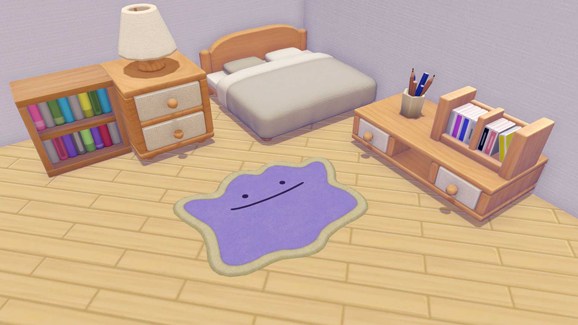
It's impossible to talk about the village without mentioning Ditto itself. The protagonist can copy every Pokémon whose friendship quest they complete: it's the cornerstone of all the game's abilities. So prioritize the quests of Bulbasaur, Squirtle, Scyther, and Onix right from the first area, or you'll quickly hit a wall.
A few secondary residents also deserve your attention:
- Zorua: it appears in a dark forest habitat with roots and black stones. It teaches Camouflage, very useful for blending into blocks and approaching skittish Pokémon.
- Machamp: recruited after evolving Machoke through the storyline. It offers Strength, which allows you to move the heaviest earth blocks.
- Graveler: requires a rocky habitat and teaches Rollout, a brutal ability that destroys everything in its path while gathering materials.
- Slowpoke: essential for Onix's quest but also a resident in its own right; it likes lily pads and fresh berries.
Our tips for completing the Habidex
Finishing all 209 habitats requires a good dose of organization. Here are the habits that will save you dozens of hours:
- Prioritize exploration abilities. Leafage, Water Gun, Cut and Rock Smash alone unlock half of the habitats in the game.
- Revisit each area depending on the weather and time of day. Rain, fog and nighttime bring out traces that are only visible under these specific conditions.
- Don't overlook the versatile habitats. Some habitats attract several Pokémon (the Beautiful Flower Meadow invites Butterfree, Pidgey and Eevee), which helps optimize your resources.
- Buy the blueprints as soon as a new batch arrives at the PC shop: the most expensive models often correspond to the rarest residents.
- Decorate as much as possible to keep several residents in the same biome — collective affinity rises faster when several neighbors live together in a well-furnished area.
With patience and a bit of planning, your Pokopia village will go from an abandoned plot of land to a true sanctuary for the game's 300 Pokémon. The most satisfying part? When Dragonite finally flies over your central plaza before the eyes of the original residents, everything comes full circle — and all that's left is to polish off the final habitats to complete the Habidex 100%.
Share this article
What type of resident do you prefer to unlock first?
Frequently asked questions
How do you unlock Onix? Is he really the one blocking the Parched Lands?
Yes. Onix is stuck behind a rock that's too hard, northwest of the Parched Lands. You need to complete the regional quest chain starting with "Investigation in the Cave," then bring in Slowpoke (raise humidity to 100 points with Water Gun). Once the rock has softened, Rhyhorn smashes it with Rock Smash. After that, build the Silky Tall Grass habitat to recruit him permanently.
What's the first habitat to prioritize to save Pokos?
The Beautiful Flower Meadow (4 wildflower tiles, very low cost). It attracts Pidgey, Butterfree and especially Eevee — a versatile resident who triggers excellent gathering quests. It's the best investment to get started and progress quickly.
Are resident quests mandatory to gain friendship?
No, but it's the most effective way. Every completed quest raises affinity and earns you Pokos. Favorite gifts help too, but daily quests remain the main driver — and they're unlocked every day.
Do you really need to unlock Lapras to progress? It seems complicated.
Yes, Lapras is essential: he's the only one who teaches Surf, the ability to cross large bodies of water and explore the Millefeux Floating Isles. Without him, you're regionally stuck. The habitat requires sand, waves and a floating toy — it's manageable if you've already mastered the early steps.
What do Magnemite and Magneton bring that Dragonite doesn't?
Dragonite teaches Glide for height. Magnemite/Magneton bring Magnetic Flight, which is complementary: you stack magnetized blocks to build your most ambitious structures in the late game. The two combine for complete mobility.
Key takeaways
- The Habitadex replaces the Pokédex: Pokémon only appear if you build the exact environment they require.
- The starter trio (Squirtle, Bulbasaur, Charmander) teaches the three fundamental abilities — without them, you're stuck.
- Scyther and Rhyhorn are the real gamechangers: Cut and Rock Smash finally let you explore seriously.
- Magikarp, Lapras and Dragonite make up the advanced progression — each one unlocks a region and a major ability (Splash, Surf, Glide).
- Affinity is built up through daily quests and favorite gifts: the higher it climbs, the more the resident rewards you.
Comments
No comments yet. Be the first to react!
Leave a comment
Similar guides

Latest articles





Your opinion counts
Rate Pokémon Pokopia
Click a star to rate