

 Fabian Lainé
Build
Hearthstone: the Summon Warlock (Herald Warlock) deck from top legend after patch 36.2
In brief
Patch 36.2 has redefined the deck hierarchy and propelled Convoke Warlock to the top of the ladder. This offbeat archetype mixes the Convoke engine from Cataclysm with a big-hand strategy from the Scarlet fort, culminating with Deathwing the World-Breaker sweeping away enemy boards.
The August 4 patch 36.2 brought only a single change to Hearthstone's Standard format: the reversal of the Void-Scale Brute buff, which brought Demon Hunter Soul Void back into the pack. Three days later, the hierarchy is already being reshuffled, and one archetype is taking advantage to settle at the very top of the ladder: Convocation Warlock, known as "Herald Warlock" among English speakers. On August 7, one list finished its session at legend rank 6 with 14 wins to 10 losses, playing between ranks 6 and 86 (data recorded by hearthstone-decks.net, Firestone data). On the French-speaking side, hearthstone-decks.com already ranked the archetype in tier A at the end of July.
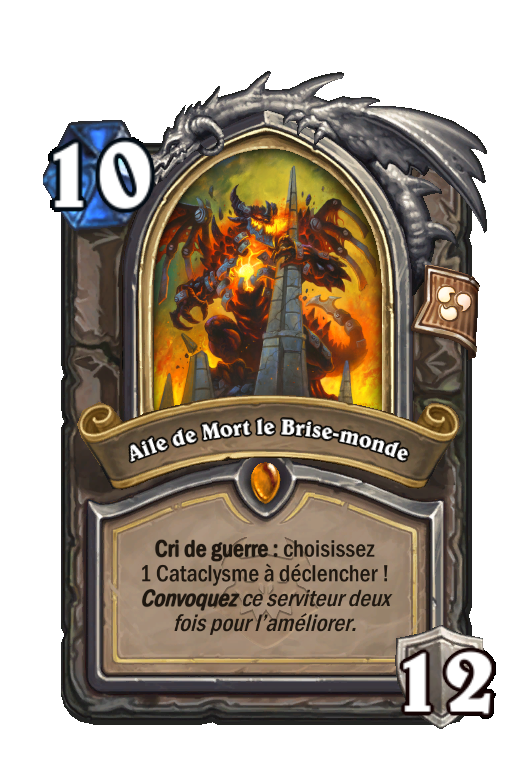
The deck combines two engines that seem to be at odds with each other: the Convocation keyword introduced by the Cataclysm expansion in March 2026, which summons increasingly dangerous Cho'gall's Soldiers, and a "big hand" plan built on cards from Fall of Fort Purple, where Solitude's Arrow and Invisible Atlas turn every card kept into a resource. It all culminates with Deathwing the World Breaker, the hero card that triggers devastating Cataclysms as a battlecry.
Here is the full list with its import code, a detailed breakdown of how Convocation works, the game plan, and our mulligan tips, as well as the crafting cost in case you're looking for a new project after the Demon Hunter nerf.
The August 7, 2026 legend rank 6 list
Games last around ten minutes on average: this is neither an aggro deck nor a pure control deck, but a high-curve midrange that wins through successive waves of board presence. All the names below are those from the French client, verified against the official card database.
| Cost | Card | Count |
|---|---|---|
| 0 | Catacombes maudites | 2 |
| 1 | Conflagration | 1 |
| 1 | Éclat glaciaire | 2 |
| 2 | Chaînes maudites | 2 |
| 2 | Confinement démoniaque | 1 |
| 2 | Disciple lige d'ombre | 2 |
| 2 | Drain d'âme | 2 |
| 2 | Pomme pourrie | 1 |
| 3 | Crâne en cage | 2 |
| 3 | Flammes infernales | 2 |
| 3 | Sbire du gang des diablotins | 2 |
| 4 | Godfrey, le traître | 1 |
| 4 | Sanctuaire du Crépuscule | 2 |
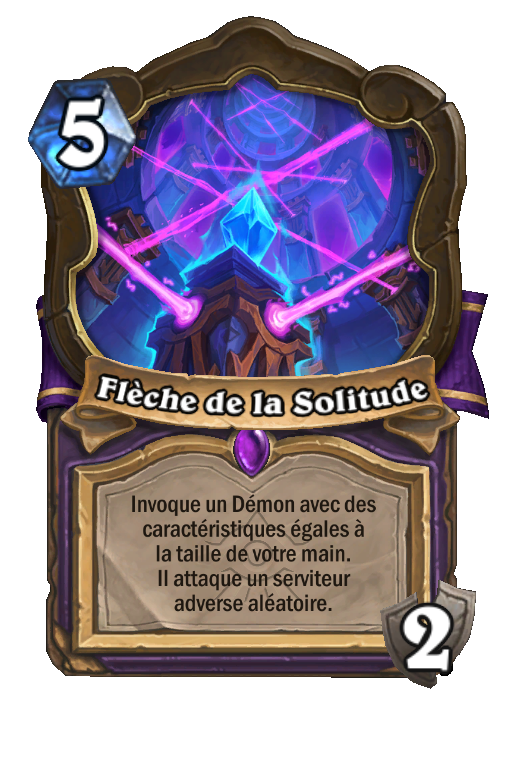
| 5 | Flèche de la Solitude | 2 |
| 6 | Ultraxion | 1 |
| 8 | Annihilation | 2 |
| 10 | Aile de Mort le Brise-monde | 1 |
| 10 | Atlas invisible | 2 |
Deck code: AAECAf0GBtGCB6mIB9C/B5vUB9vXB63ZBwyPnwTnoATTngaEmQeTvgfYvgfgvgfd1wew2Qex2Qe32QeN3AcAAA==
Convocation: the deck's engine
The Convoke keyword is Cataclysm's signature mechanic: every card that "convokes" summons onto your board the soldier tied to your class's colossal minion. For the Warlock, that's the Cho'gall Soldier, a minion that devours the minion placed to its right at the end of your turn to grow stronger. Convokes stack over the course of the whole game and upgrade your future soldiers in stages — the client text specifies on each soldier "Convoke this minion twice to upgrade it." The further the game goes, the more each Convoke produces a threat that's hard to ignore.
Three cards feed the counter. Shadow Liege Disciple convokes as early as turn 2 and returns 3 HP to your hero on death. Twilight Sanctum, a 4-mana location, convokes and draws a card each time it's activated: it's the best card in the deck, serving as both a board engine and a draw engine. Finally, Ultraxion, a 6/7 dragon, convokes as a battlecry and reduces the cost of Deathwing along the way.
Everything converges on Deathwing the World-Render: the hero card also upgrades as your Convokes accumulate, and its battlecry lets you choose Cataclysms to trigger among four effects — Rule of the Dragon (summons a 12/12 Dragon), Eradication (destroys the enemy minion with the highest HP), Rasement (4 damage to all enemy minions), and Fascination (places five random 1-mana legendary Dragons into your deck). In a game where you've convoked regularly, Deathwing arrives cheaper, clears the opponent's board, and immediately reapplies pressure: it's your main win condition against slow decks.
The big hand, second pillar of strength
The deck's other pillar comes from Escape from Durnholde. Godfrey, the Traitor establishes a valuable passive effect from the start of the game: cards drawn in excess no longer burn, they return to your hand as soon as space frees up, with a 1-mana cost reduction. So you can draw without restraint, which the deck does a lot.
This full hand becomes a weapon. Skull of the Man'ari, a 3-mana Taunt, gains 1 HP per card in your hand and blocks aggressive decks from the early game. Arrow of Loneliness, a 5-mana location, summons a Demon whose stats equal the size of your hand — and which immediately attacks a random enemy minion: with eight or nine cards in hand, that's an 8/8 or a 9/9 cleaning house upon arrival. Invisible Atlas ties the system together: the spell costs 1 mana less per card in hand and draws three cards, often ending up costing 2 or 3 mana in practice.
The Catacombs of the Damned, at 0 mana, smooth everything out by letting you discover a card from your deck in temporary form: a way to fetch the missing answer without emptying your hand over time.
Annihilation and the Imp Gang: the cleanup that wins games
The list's most elegant synergy links two cards from Escape from Durnholde. Imp Gang Boss, a 3-mana 2/5 Taunt, places two 8/8 Demons with Taunt and Lifesteal at the bottom of your deck upon death. Annihilation, at 8 mana, destroys all minions then summons each Demon present among the three cards at the bottom of your deck.
In concrete terms: a minion that dies early in the game turns your Annihilation into a full board clear followed by two 8/8 Taunt, Lifesteal minions on an empty board. Against aggressive decks, this sequence alone can turn the game around; against slower board decks, it wipes out ten turns of opponent effort. Just be careful not to draw all the way to the bottom of your deck before casting the spell — with invisible Atlas, that can happen faster than you'd think in long games.
Mulligan and piloting depending on the matchup
In all cases, keep Shadow Lich Disciple, Sanctuary of Twilight and Cursed Catacombs: the Convoke and draw engine needs to kick in early so the thresholds are met by the time Deathwing enters play. Godfrey the Traitor works from the deck, so there's no need to look for it.
- Against aggressive decks (burn mage, hunter quest): keep Hellfire, Drain Soul, Skull of the Man'ari and Imp Gang Boss. Bad Luck Albatross, which restores 12 health at once in exchange for 3 damage over your next two turns, can happily be kept for the second draw. Your goal is simple: survive until turn 8 and turn the game around with Annihilation.
- Against slow decks (Lo'Gosh warrior, Rotnest death knight): keep Ultraxion if your curve allows it and prioritize Convoke on every turn. Sanctuary of Twilight, played early and activated every turn, opens up a resource gap that few control decks can close, and an upgraded Deathwing finishes the job.
- Frostbolt and Curse of Weakness are your tempo tools: freezing a big minion or borrowing the opponent's threat for a turn is often enough to protect a growing Soldier of Cho'gall.
Should you craft the deck?
Expect to spend around 8,200 arcane dust starting from scratch: three legendaries (Godfrey the Traitor, Ultraxion, Deathwing the Worldbreaker), six epic copies (Cursed Catacombs, Curse of Weakness, Arrow of Loneliness) and a handful of rares, keeping in mind that Frostbolt, Drain Soul and Hellfire come free from the Core Set. If you were playing Void Soul Demon Hunter, remember that the rollback from patch 36.2 opens a full dust refund for two weeks starting August 4 — enough to fund the switch without touching your savings.
A word of honesty to finish: across the whole ladder, Convoke Warlock lists tracked by aggregators sit around 46 to 49% win rate. It's a demanding deck, requiring careful sequencing of your Convokes, planning out Annihilation, and never wasting your hand. In good hands, the rank 6 legend result from August 7 proves its ceiling; if you'd rather play a deck that forgives mistakes, look elsewhere. For everyone else, it's probably the most rewarding archetype to pilot in Standard this early August.
Share this article
Are you planning to build this deck after patch 36.2?
Frequently asked questions
How much does this deck cost in arcane dust?
About 8,200 dust starting from scratch. Three legendaries (Godfrey, Ultraxion, Deathwing), six epics (Cursed Catacombs, Cursed Chains, Solitude Bolt) and a few rares, though several common cards from the Core Set are free.
What exactly is Convoke's role in the deck?
Each Convoke summons a C'Thun's Soldier that grows stronger with every additional summon. Three cards feed this counter: Shadow Liege Disciple (turn 2), Twilight Sanctuary (the best card for the engine), and Ultraxion (reduces Deathwing's cost). The more you convoke, the cheaper your hero card becomes.
How do you play the big-hand plan against slow decks?
You let your hand climb to full size thanks to Godfrey the Betrayer, who prevents burn and reduces excess cards. Solitude Bolt converts it into immediate threats (an 8/8 or 9/9), while Unseen Atlas loops the system by getting cheaper with each card in hand.
Why mulligan differently against aggro and control?
Against aggro, you keep Annihilation and its survival tools to turn the game around by turn 8. Against control, you aim to trigger Twilight Sanctuary every turn and play Ultraxion early to open up an insurmountable resource gap.
How much does Deathwing the World-Breaker cost when it arrives?
Its cost depends directly on the number of Convokes. With Ultraxion already reducing its cost and several Convokes accumulated, it arrives much cheaper and triggers devastating Cataclysms to close out the game.
Key takeaways
- Twilight Sanctuary is the deck's most important card: it convokes, draws you cards, and builds up your C'Thun's Soldiers.
- Annihilation + Imp Gang Boss turns an early draw into a board wipe followed by two 8/8s with Lifesteal.
- Solitude Bolt directly converts your full hand into a threat: an 8/8 or 9/9 that attacks immediately.
- The mulligan changes drastically depending on the opponent: Annihilation and control tools against aggro, Ultraxion and Convokes against control.
Comments
No comments yet. Be the first to react!
Leave a comment
Similar guides



Latest articles





Your opinion counts
Rate Hearthstone
Click a star to rate