


 Fabian Lainé
Phasmophobia: the complete Deildegast guide — the fastest entity in the game and how to slow it down to 0.4 m/s
In brief
The Deildegast, Phasmophobia's fastest entity with an initial speed of 3 m/s, becomes harmless once you understand its unique mechanic: every prop interacted with slows it down by 0.1 m/s. You can reduce it to 0.4 m/s by diversifying your interactions, turning this devastating monster into a manageable snail.
Kinetic Games slipped the Deildegast into Phasmophobia on July 21, 2026, alongside the full rework of 13 Willow Street and a major quality-of-life update. Two weeks later, it's the entity everyone's talking about in lobbies — and for a simple reason: it starts at 3 m/s, the highest base speed ever given to a ghost in the game.
For comparison, a standard ghost hunts at 1.7 m/s and a player runs at roughly 2.125 m/s. A Deildegast at the start of its contract catches you effortlessly and without even accelerating. Except Kinetic hasn't just added a simple sprinter: the Deildegast has the most original slowdown mechanic in the bestiary, and a team that understands it can reduce this monster to a 0.4 m/s snail.
Here's everything you need to know to identify it, slow it down, and make it out alive.
The three pieces of evidence for the Deildegast
The Deildegast is confirmed with the following combination:
- Ghost Writing;
- EMF Level 5;
- D.O.T.S. Projector
This trio has a history. For years, it remained the only three-evidence combination that no entity used — community wikis were still listing it recently as an "impossible" pairing in-game. By assigning it to the Deildegast, Kinetic has filled that gap.
This has an immediate practical consequence: if you were playing with an identification chart from before July 21, your deduction method is wrong. A contract that gives you Ghost Writing + EMF 5 + D.O.T.S. is no longer an anomaly or a bug: it's a Deildegast, full stop. No other entity shares this combination, which paradoxically makes it one of the easiest ghosts to confirm once you get all three pieces of evidence.
In practice, the most efficient way to gather evidence is to place the Ghost Writing Book as soon as you've located the ghost room, leave the D.O.T.S. Projector running continuously with a camera pointed at it, and watch the EMF Reader during every interaction. On difficulties that hide a piece of evidence (Professional, Nightmare, Insanity), identification will come down to behavior anyway — and that's where the Deildegast becomes recognizable a mile off.
The name, and what it tells us
The word comes from Norwegian folklore: deilde refers to a boundary marker, the stone that marks a property line, and gast means ghost. A deildegast is therefore the ghost of the boundary markers: the malevolent spirit of someone who, in life, moved boundary stones to steal land from their neighbors.
This isn't just a bit of lore trivia. The theme of moving objects runs through the character's entire mechanic — and Kinetic built its strength and its weakness around this idea.
The speed mechanic, number by number
This is the heart of the ghost, and it needs to be understood precisely.
The Deildegast starts at 3.0 m/s. Its speed decreases by 0.1 m/s for every unique object players have interacted with or picked up outside of hunts. The count includes dead players — so a dead player who keeps moving objects around is actually helping their teammates, which is a first in Phasmophobia.
The thresholds that matter:
- 0 objects → 3.0 m/s. There's nothing you can do except hide.
- 9 objects → 2.1 m/s. The ghost drops just below a player's running speed (2.125 m/s). This is the first threshold that really matters: from here on, running in a straight line becomes a viable option again.
- 13 objects → 1.7 m/s. The Deildegast matches the speed of a standard ghost. Classic looping techniques around a kitchen island or a couch work normally again.
- 26 objects → 0.4 m/s, its floor speed. At this point, it poses almost no threat in open spaces.
Which objects count, and which don't
Count: all manipulable decorative objects on the map (throwable props), light switches, the breaker box, faucets.
Don't count: cursed possessions, doors, and your own equipment. So opening and closing thirty doors on repeat will get you nowhere — and that's actually the first mistake teams make when they encounter the entity.
One detail worth noting too: these are unique objects. Picking up and putting down the same mug fifteen times only counts as one object. You need to diversify, not repeat.
The quirk everyone misses: no acceleration in line of sight
This is the trait that makes the Deildegast identifiable even without evidence. The Deildegast doesn't speed up when it sees you.
Almost all of the fast entities in Phasmophobia — Revenant, Raiju, Moroi, Deogen at close range — adjust their speed based on line of sight. The Deildegast, however, keeps exactly the same pace whether it sees you or not. A ghost that charges at you at full speed down a hallway but doesn't change its pace at all when it spots you is a very reliable behavioral signature.
Another useful oddity: the Deildegast interacts noticeably less with doors and switches than other entities — around a 10% chance per attempt, compared to 25% for a standard ghost. A room where the ghost is clearly active but where doors never move and lights stay put should raise a red flag.
Finally, quirky but real: the Deildegast sometimes slows itself down, by throwing objects of its own accord. True to its folklore, it moves things it shouldn't — and punishes itself in the process.
Identifying it without evidence, on Nightmare and Insanity
On difficulties that hide one or two pieces of evidence, the method is straightforward and requires no special equipment.
- Don't touch anything during the scouting phase. No item picked up, no switch flipped beyond what's strictly necessary. This keeps the Deildegast at its maximum speed.
- Trigger the first hunt with a player in an observation position, at a distance and out of reach, with a camera or a clear line of sight.
- Watch the speed. A ghost that crosses a room at a pace clearly faster than a running player, without ever varying, doesn't leave many candidates. A Revenant only moves that fast when it has a target in sight; a Raiju only speeds up near active electronics; the Deildegast, on the other hand, is constant.
- Confirm by contrast. Have the team interact with about ten objects, then observe the next hunt. If the ghost is noticeably slower than during the first hunt, it's confirmed.
This dual reading — fast at the start, slowed down after interaction — is behavioral proof that no other entity in the game can produce.
The survival strategy: the great cleanup
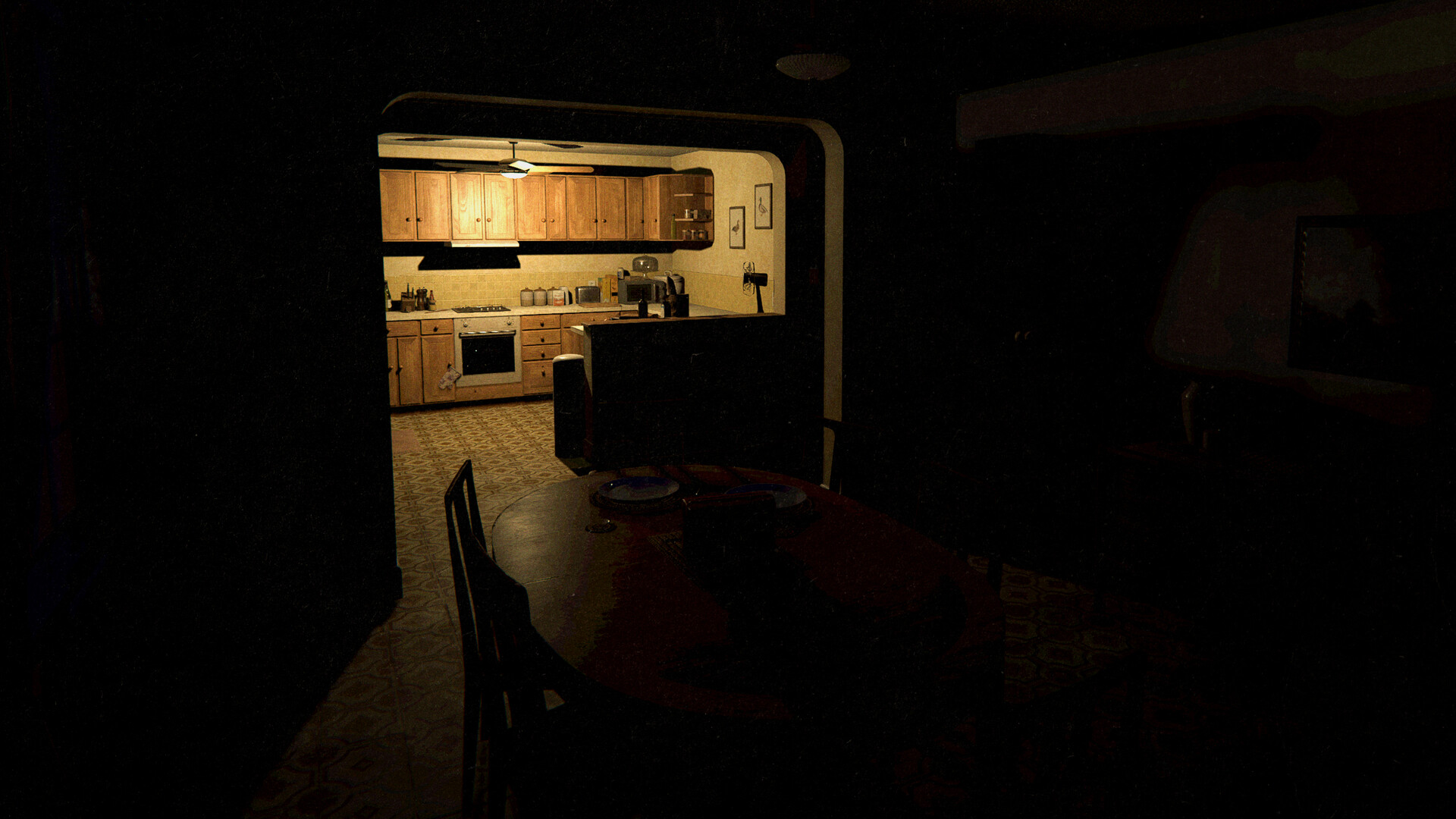
Against a Deildegast, the game is won beforehand, not during the hunt. Here's the protocol we recommend for a team of four.
Phase 1 — clean scouting. Locate the ghost's room without touching anything. You first want to see its maximum speed in order to identify it; only afterward do you sabotage it.
Phase 2 — the organized rampage. Once identification is confirmed, two players head out for systematic "interacting" in different rooms. The goal: reach 9 objects as quickly as possible, then aim for 13. Switches, taps, and the breaker box all count: a bathroom can easily net you three or four units in ten seconds. Diversify, don't repeat.
Phase 3 — evidence gathering. Only once the ghost is under 2.1 m/s do the risky tasks become reasonable: placing the Ghost Writing Book in its room, standing next to the D.O.T.S. Projector, taking objective photos. Early in the contract, each of these actions could potentially cost you your life.
Phase 4 — side objectives. Optional objectives that require staying exposed (Ouija board, incense in the ghost room) should be handled at the very end, at 26 objects if you have the time. At 0.4 m/s, the entity takes forever to cross a room.
And if you're caught before reaching 9 objects? Hide, no question about it. Running makes no sense against an entity that moves at 3 m/s: you lose ground every second. A locker or a closet is infinitely better than a sprint back to the truck.
What the 13 Willow Street overhaul changes elsewhere
The Deildegast didn't arrive alone. The July 21, 2026 update also brings:
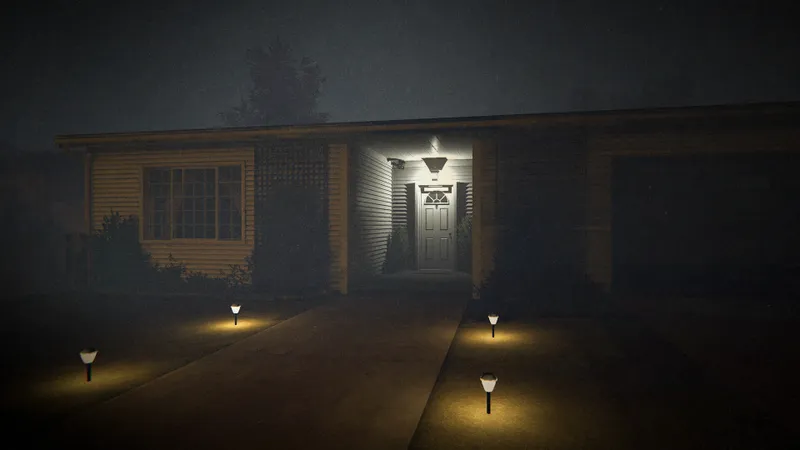
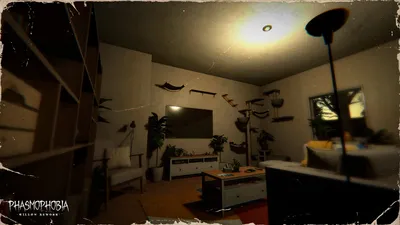
- the overhaul of 13 Willow Street, which keeps an almost identical layout but redesigns the rooms, reworks the theme (the house is now heavily "cat lover" themed, with wall-mounted cat trees and toys on the floor) and adds a large number of objects and interactions;
- the game's move to Unity 6, accompanied by hundreds of fixes;
- new keyboard shortcuts on PC;
- improvements to the photography system;
- a major pass of improvements for virtual reality.
A point worth noting: a map that receives "a large number of new objects to discover" is also a map where the Deildegast's object counter climbs faster. The Willow Street overhaul and the addition of this entity form a coherent whole, and it's probably not a scheduling coincidence.
A note on entity counting
You'll find conflicting totals online — 27, 28, even 30 entities depending on the source, including on authoritative sites. The counts diverge depending on whether they include the late-2025 additions and this latest arrival. We won't settle on a figure until Kinetic Games publishes an official consolidated list, and we'll update our guides as soon as that happens.
What is certain, however, is that the Deildegast is the newest addition, that it occupies a previously unused combination of evidence, and that it has the highest base speed in the game. The rest is bookkeeping.
Key takeaway
The Deildegast is a ghost with an inverted curve: terrifying at minute zero, harmless at minute twenty. This is exactly the opposite of Phasmophobia's usual logic, where collapsing sanity makes every contract progressively more dangerous.
The lesson is simple: against it, tidying up is a weapon. Pick everything up, open everything, activate everything — and watch the fastest ghost in the game end up following you at a walking pace.
Share this article
Facing a Deildegast at 3 m/s, what would you rather do?
Frequently asked questions
How many objects do I need to interact with for the Deildegast to become truly weak?
26 unique objects bring it down to 0.4 m/s, its absolute floor. But honestly, 13 objects are enough to bring it down to 1.7 m/s, the speed of a standard ghost, and at that point it becomes manageable with classic looping. The first 9 objects are your priority: at 2.1 m/s, you can at least run without being caught immediately.
Does picking up the same object multiple times count as multiple slowdowns?
No, absolutely not. This is one of the common traps. The count is based on unique objects: if you pick up and put down the same mug ten times, it only counts once. You need to diversify — mug, switch, tap, book, lamp, etc. Each distinct prop contributes its share.
How do I identify the Deildegast on Nightmare or Insanity when evidence is hidden?
Watch its speed consistency. During the first hunt without any object interactions, it moves at 3 m/s without ever speeding up when it sees you. Then have the team interact with about ten objects and start a second hunt: if it's noticeably slower, it's a Deildegast. No other entity produces this behavioral progression.
Does my equipment count toward the slowdown tally?
No. Only manipulable objects on the map — throwable props, switches, taps, the fuse box — slow the Deildegast down. Your flashlight, your EMF reader, your camera, none of that changes its speed in any way.
Why does the Deildegast interact so little with doors and lights?
True to its folklore as a boundary ghost that moves stones, it has an affinity for objects — not for the house's mechanisms. It only triggers 10% of doors and switches compared to 25% for a standard ghost. A room where the Deildegast is active but nothing moves at the doors or switches is therefore a good behavioral indicator.
Key takeaways
- The Deildegast starts at 3 m/s, the highest speed ever given to a ghost, but it drops by 0.1 m/s for every unique object interacted with.
- At 9 objects (2.1 m/s), you can finally run in a straight line without being caught — that's the first threshold that truly matters.
- Unlike every other fast ghost in the game, the Deildegast never speeds up when it sees you, which makes it recognizable through pure behavior.
- Only throwable props, switches, taps, and the fuse box slow the entity down — slamming doors on repeat does nothing at all.
- Its identification is the simplest in the game once you have the three pieces of evidence, since no other ghost has the combination of Ghost Writing plus EMF Level 5 plus D.O.T.S.
Comments
No comments yet. Be the first to react!
Leave a comment
Similar guides
Latest articles



Your opinion counts
Rate Phasmophobia
Click a star to rate