



 Fabian Lainé

Full Guide
Monster Hunter Wilds: The 2026 End Game Guide — Tempered Investigations, Talisman Farming and Optimal Artian Weapons
In brief
Monster Hunter Wilds shifts into end game as soon as HR 100 hits: Tempered Investigations become your playground, forged Artian weapons and deterministic rerolls dictate your raw power, and perfect Talismans make the difference between a decent build and a meta build. This guide covers HR-tier progression, cost-effective farming strategies (9-star, Melding Pot), optimal weapon rolls by type, and priority monsters for securing the best materials before the 2026-2027 expansion.
Once the credits have rolled and the map of the Forbidden Lands has been fully swept, Monster Hunter Wilds doesn't stop: it simply changes face. Grand Hunts give way to Tempered Investigations, Artian weapons forged from fragments torn from souped-up monsters, and the endless chase for perfect Talismans. Since the release of Title Update 4 in December 2025 (Gogmazios, Transcendence, 8-player hunts) and the final base-game update in February 2026 (Arch-Tempered Arkveld), the end game loop has gained a consistency that the March 2025 launch didn't have. Here's how to get into it properly, what to farm as a priority, and which rolls to aim for on your weapons to stay competitive until the expansion expected in 2026-2027.
Tempered Investigations: the gateway to the end game
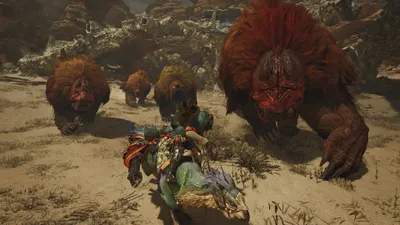
After completing the main story (Low Rank credits) and then the first High Rank arc, your HR counter unlocks starting at HR 21. That's when the map fills up with red aura icons: these are Tempered Investigations, the beefed-up version of classic monsters. They hit harder, have more HP, unlock additional moves, and above all drop end game materials: Artian weapon fragments, rare decorations, and Glowing Stones once you cross HR 100.
Progression happens in tiers. HR 41 opens the first tier of the Melding Pot with Suja (Summit of the Accord) and lets you craft somewhat more interesting Talismans. HR 50 unlocks the game's first two Arch-Tempered monsters, Rey Dau and Uth Duna, two difficulty tiers above. HR 100 is the real finish line of the end game: 9-star quests appear, Apex Tempered Investigations (including Gore Magala and Arkveld) become the main source of rarity 8 Artian materials, and the Gogmazios siege as well as the fight against Arch-Tempered Arkveld open up.
Two simple rules to avoid burning out: prioritize two-target Investigations (the "Grand Hunts"), which grant twice the rewards for barely any extra quest time, and always keep a few open slots in your Investigations log so you can snag the best ones as soon as they show up on the map.
Artian weapons: forging, upgrading, and optimal rolls
Artian weapons are the cornerstone of end game builds. They're forged at the Smithy using special fragments — Discs, Blades, Tubes, and Devices — obtained only from Tempered monsters. Only rarity 8 fragments, dropped by high-level Tempered Apex monsters, are worth using in 2026: they unlock raw damage that surpasses the roster's best standard weapons, with the added bonus of extra decoration slots and an element of your choice at the forge.
Once forged, the weapon goes from level 0 to level 5 through five random upgrades drawn from Attack (+5 raw damage), Affinity (+5%), Sharpness, and Element. This is where the famous reroll comes in: the game uses a pseudo-random generator whose sequence is pre-determined at the save point. In practice, if your five upgrades turn out badly, you quit without saving, reload, and retry the sequence by changing the forging order of several weapons to change the outcome.
The rolls to aim for depend on the weapon:
- Pure raw build (Great Sword, Hammer, Long Sword): 5 × Attack, i.e. +25 damage. This is the mathematical ceiling, viable on all weapons that hit hard and rarely.
- Crit build (Dual Blades, Insect Glaive): 3 × Attack + 2 × Affinity, to maximize the number of critical hits per second.
- Elemental build (Bow, Sword & Shield, elemental Dual Blades): 2 to 3 × Element + 2 × Attack, the best scaling against weaknesses.
- "Good enough" compromise: 3 × Attack + 1 × Affinity + 1 × Sharpness, more than sufficient for most players.
Since Title Update 4, fragments recovered from Gogmazios allow you to convert your Artian weapons into Gogma Artian weapons: same base stats, but with a slightly expanded upgrade pool and a unique visual signature. This is the new power ceiling.
Farming Talismans/Charms: where and how
On top of a solid Artian weapon, it's Talismans that push a build from "good" to "meta". Two paths open up once you've passed HR 100.
The first, and most profitable, is 9-star quests. Each completed quest awards a Gleaming Stone, which you bring back to the Smithy to be appraised into a Talisman with random skills. Two-target Investigations yield more Stones. For comfortable farming, target the easiest targets in the pool: 9-star Soaked Rey Dau, 9-star Soaked Uth Duna, or 9-star Soaked Nu Udra go down quickly with a decent build.
The second path, the Melding Pot, is found in Suja, in the Scarlet Forest Summit. There, you exchange appraised Talismans you don't want to keep for Melding Points, then spend those points to create either a new Gleaming Stone or a Silver Talisman Ticket obtained via Contracts. Crucial point: the game auto-saves as soon as a Talisman is created, so it is impossible to reroll a Melding result. The only viable strategy is volume.
Title Update 4 introduced a valuable shortcut, Timeworn Charms, obtained from the reward chests of Arch-Tempered event quests. When fed into the Melding Pot, they significantly increase the odds of getting a rarity 7 Talisman. Store them carefully.
The skills to prioritize: Weakness Exploit Lv. 2 (with at least one level-2 slot), Critical Eye Lv. 3, Focus Boost Lv. 3, or any multi-slot Talisman even with a mediocre skill: three free slots are often worth more than a flashy skill, since you can fit a powerful decoration in there.
HR monsters to prioritize
Not all Soaked monsters are equal when it comes to farming. Here's the shortlist of those that offer the best time/reward ratio in 2026:
- Tempered Arkveld: the best provider of Rarity 8 Artian fragments in the game. Farm it in Grand Hunt as soon as possible.
- Tempered Gore Magala: second major source of Rarity 8, with the bonus of materials for a set that remains one of the top performers across the board.
- Tempered Rey Dau and its counterpart Arch-Tempered (HR 50): an "easy" target for farming 9-star gear and Glowing Stones, as well as materials for the Thunder armor.
- Tempered Jin Dahaad: ideal for Ice builds, and its frontal charge remains an excellent test of your dodge timing.
- Tempered Nu Udra: source of the essential Fire materials to prepare for the Gogmazios hunt.
- Gogmazios (HR 100+ siege, Title Update 4): accessible in co-op with up to 8 players, it drops the materials needed for Gogma Artian conversion.
- Arch-Tempered Arkveld (February 2026 update): the ultimate boss of the base game, with brand-new Guardian moves. Save it for a build you've already fine-tuned.
Skip low-HR Tempered monsters beyond HR 100: the reward pool remains capped at Rarity 7, which won't help you progress.
The meta build per weapon against Tempered monsters
Here are three proven builds for the standout weapons of 2026, to be adjusted based on your Talismans.
Great Sword — the queen of burst damage. Aim for an Artian Dragon 5 × Attack with affinity rounded out by the armor. The skill skeleton relies on Critical Eye 5 / Critical Boost 5 / Weakness Exploit 5 / Attack Boost 4 / Focus 3. The Charged Wide Slash plus Shoulder Tackle combo remains unbeatable on immobilized targets, especially on Gore Magala and Arkveld.
Long Sword — the Swiss Army knife. An Artian Raw or a Gogma Artian with 3 × Attack + 2 × Affinity is the go-to reference. Prioritize Critical Eye 5, Weakness Exploit 5, Divine Blessing 3, Constitution 3 and a slot for Punishing Draw. The Long Sword handles both Gogmazios (dodging the oil explosions) and Arch-Tempered Arkveld, where the Iai Slash + Spirit Roundslash combo lets you cancel out its charges.
Hammer — the head-breaker. Like the Great Sword, the Gogma Artian with 5 × Attack crushes everything. The typical build consists of Attack Boost 5, Critical Eye 5, Critical Boost 5, Bead of Wisdom 3 (to ignore tremors) and Recovery Up 3. Chain Big Bang combos onto the heads of Rey Dau and Nu Udra to maximize KOs.
Across all these weapons, sharpness management remains key: always slot in a Whetstone or a Level 3 Handicraft skill to extend your DPS windows.
Conclusion
The end game of Monster Hunter Wilds in 2026 rests on a triptych: Soaked Investigations for raw materials, Artian weapons or Gogma Artian for raw power, Talismans for the finishing touch. Once you've cleared HR 100, the loop becomes hypnotic: every quest brings back a Gleaming Stone, a rarity 8 fragment, a decoration roll that could unlock a new rotation. With a major expansion announced for 2026-2027, it's more than time to leave the comfort of Low Rank behind: your Master Rank hunter is getting ready now.
Share this article
What's your immediate priority in end game?
Frequently asked questions
At what HR can I start doing real Tempered Investigations?
At HR 21, you unlock Tempered Investigations on the map. But real progression starts at HR 41 (first Melding Pot) and explodes at HR 100 when Apex monsters and 9-star quests appear. Before HR 100, it's all warm-up.
How do I roll a perfect Artian weapon if it's random?
It's pseudo-random and tied to your save file. If your five upgrades come out badly, quit without saving, reload, then forge a different weapon first to shift the sequence. Repeat until you get your roll (patience required, this is RNG manipulation).
Which Talisman should I absolutely prioritize?
Weakness Exploit Lv. 2 with at least one Level 2 slot, or Critical Eye Lv. 3. But honestly, a plain Talisman with three open slots is often worth more than one with a standout skill, because you can slot in a powerful decoration.
Do I really need to farm Gogmazios and Arch-tempered Arkveld to be competitive?
Gogmazios (Title Update 4) lets you convert your Artian weapons into Gogma Artian weapons, which extends the roll ceiling. Arch-tempered Arkveld (February 2026) is the ultimate boss but reserved for an already well-honed build. Not immediately mandatory, but it's the endgame grind.
Should I reroll at the Melding Pot or stick to my Glowing Stone quest?
The Melding Pot autosaves: rerolling is impossible. The only viable strategy is volume and Worn Charms to boost rare outcomes. 9-star quests remain your main and least frustrating source.
Key takeaways
- HR 100 is the real finish line: 9-star quests, Tempered Apex monsters, Gogmazios, and Tempered Arch-tempered Arkveld unlock.
- Rarity 8 Artian fragments only come from Tempered Apex monsters; rolls are pre-determined at save time, so quit without saving to change the forging sequence.
- Invest in weapons first, then Talismans: a badly rolled Artian with mediocre skills loses to a perfectly rolled Artian even with simple gear.
- Two-target 9-star quests (Tempered Rey Dau, Uth Duna, Nu Udra) yield twice as many Glowing Stones for nearly identical time investment.
- Title Update 4's Worn Charms boost your chances of rarity 7 at the Melding Pot: stockpile them like gold.
Comments
No comments yet. Be the first to react!
Leave a comment
Similar guides


Latest articles








Your opinion counts
Rate Monster Hunter Wilds
Click a star to rate