



 Fabian Lainé

Economy
inZOI Business Guide: How to Make Your Shop Profitable
In brief
Running a business in inZOI pays five to ten times more than a regular career, but only if you activate all three revenue engines: item sales, paid services, and entry fees. This guide details the star tiers to unlock, staff management without going broke, and the bug pitfalls to avoid as of August 2026.
Running a business is by far the most profitable activity in inZOI, ahead of traditional careers and freelancing. In practice, most shops cap out between 1,000 and 2,000 Meows per working day, whereas the same premises can bring in five to ten times more. The gap isn't about decoration: it comes down to three levers that the game explains nowhere.
This guide is based on the current version as of August 10, 2026 — v0.9.6, rolled out on July 30 — and on the figures published by the community on Krafton's official forums. As for the August update, it still has no release date: producer Kjun reiterated this on August 7.
Buying the land, registering the business
It all starts in city editing mode. Purchasable lots that can host a business are marked commercial property in their description: that's the only category on which a business can be registered. Once the lot is acquired, you click on it, confirm the registration, then manage everything else from the dedicated smartphone app.
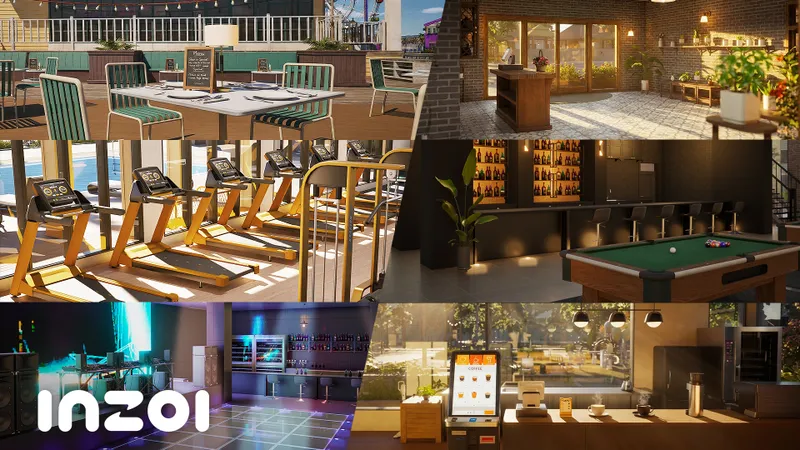
Four settings shape what follows: the establishment's name, its opening days and hours, the activities available to customers (with an optional target age range), and the list of recipes put up for sale. A business type tab offers ready-made templates — bakery, café, restaurant, gym, cybercafé, club, lounge, flower shop, hair salon, clothing store — which preconfigure the corresponding activities. Nothing forces you to stick to them: manual settings remain available, and this is actually the best option for a mixed business, one that sells items and charges for services.
The three revenue engines
You need to think in terms of three separate revenue streams, because they don't respond to the same levers.
- Item sales: cooking, baking, coffees, drinks, floral arrangements. Decent margin, but heavy management and exposed to the current display-case bugs.
- Paid services: paid lectures and massages, the most reliable engine once the establishment is built around them.
- Entry fees and hourly rates: unbeatable for equipment-based businesses — gym, cybercafé, cinema, club — since customers pay without anyone having to produce anything.
Most players only activate the first one. That's precisely why they hit a ceiling.
The star curve: what each tier unlocks
Commercial value rises by accumulating customer satisfaction. The thresholds are steep, but the unlocks are decisive, especially reaching 4 stars.
| Tier | Cumulative satisfaction | Main unlock | Grant awarded |
|---|---|---|---|
| 0 → 1 star | 500 | Self-promotion interaction (about 5 min, no cooldown, raises Rhetoric) | — |
| 1 → 2 | 2,000 | Advertising from the computer (15 min, success or failure, once per day) | 500 Meows |
| 2 → 3 | 5,000 | Second employee position | 700 Meows |
| 3 → 4 | 20,000 | Third employee position and eight-slot display showcase | 1,000 Meows |
| 4 → 5 | 35,000 | Fourth employee position and honorary plaque | 1,200 Meows |
In the reference playthrough tracked on the forums (day set to 96 minutes), the tiers were reached on days 3, 7, 10, 19 and 27. So budget around a month of playtime to reach a five-star establishment, with a slightly loss-making first quarter: the average over the first three days comes out at −34 Meows.
Paid lectures and massages: the real engine
Paid lectures require level 5 in the taught skill. They last about ten minutes, accommodate up to five clients, and can be chained without delay. They raise Rhetoric and massively improve the relationship with customers, which in turn feeds satisfaction.
| Stars | Lecture (per participant) | Partial massage | Full massage |
|---|---|---|---|
| 0 | 187 | 125 | 250 |
| 1 | 225 | 150 | 300 |
| 2 | 255 | 170 | 340 |
| 3 | 269 | 179 | 359 |
| 4 | 284 | 189 | 379 |
| 5 | 300 | 200 | 400 |
Massages have a huge advantage: no skill is required, so any cheap employee can handle them. The chair covers foot, hand and scalp massages in about twenty minutes; the table handles full-body massages in about thirty, for 400 Meows per session at five stars.
On the equipment side, the entry fee scale climbs from 10 to 64 Meows between 0 and 5 stars, and the hourly rate from 5 to 18. A slider lets you adjust these amounts from 50% to 150%. Pushing to 150% from the very first stars is the surest way to drive customers away: pricing fairness has a direct impact on satisfaction.
Staff, the line item that eats into margins
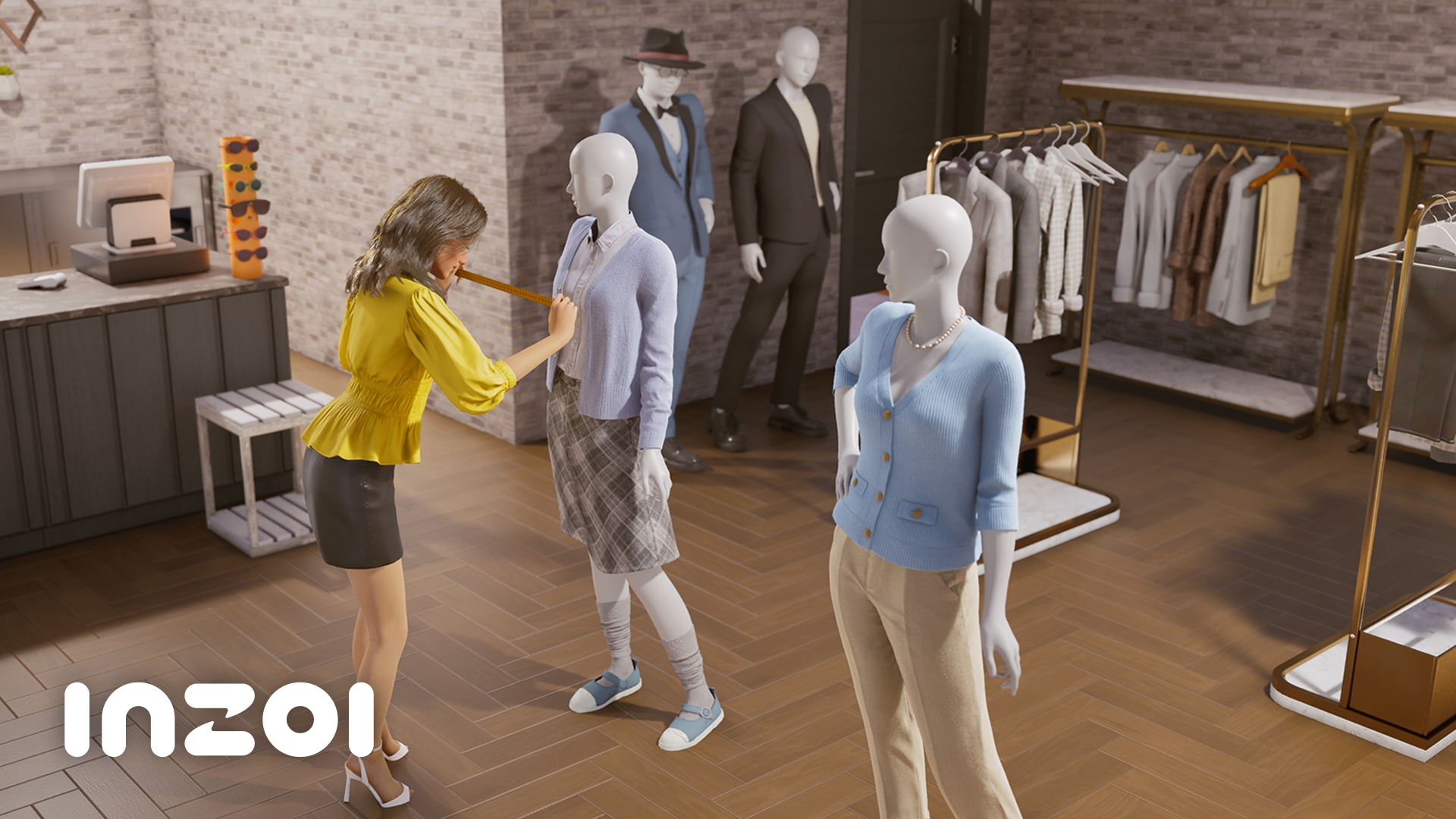
You can only hire Zois who are already known and unemployed, young adults at the very least. They clock in on their own, take orders, cook, handle checkout, clean and make repairs. You can assign them an outfit and specific tasks, and coach them in a skill you master better than they do.
Wages depend on the employee's skill level and the establishment's star rating. A beginner earns around 15 Meows an hour; a highly skilled profile in a four-star shop reaches about 70 Meows an hour, and up to 90 at five stars. In the reference playthrough, payroll goes from 90 Meows a day in the first week to more than 2,100 once things reach cruising speed. In other words: a shop that only sells items can't afford a skilled team.
One last point, and it's the most counter-intuitive one: stay on as the operator. If you switch the establishment to management-only mode, opening hours disappear from the Zoi's schedule, who is then treated as a mere visitor, and output collapses to the point of negative days. The best passive compromise is to let employees do the work while you remain on-site as the operator.
Boosting satisfaction
The factors that really matter: prices perceived as fair, the presence of restrooms, speed of service, the quality of the products sold, that of the furniture — low-end pieces trigger bubbles of discontent —, the relationship with the owner, and the cleanliness of the floors and tables.
Two tools add to this. The "Send a comment" interaction with a customer surfaces concrete suggestions, and a tip jar placed on the property generates tips proportional to satisfaction. As for advertising from the computer, it can fail: treat it as a bonus, never as the backbone of a day.
What to put on display
The star multiplier doesn't apply uniformly. Cooking, pastry, cafés and beverages see their sale price approach four times the base value at five stars. Flowers cap out around 1.6 times — except their base is already huge, which makes them the highest-margin items in the game.
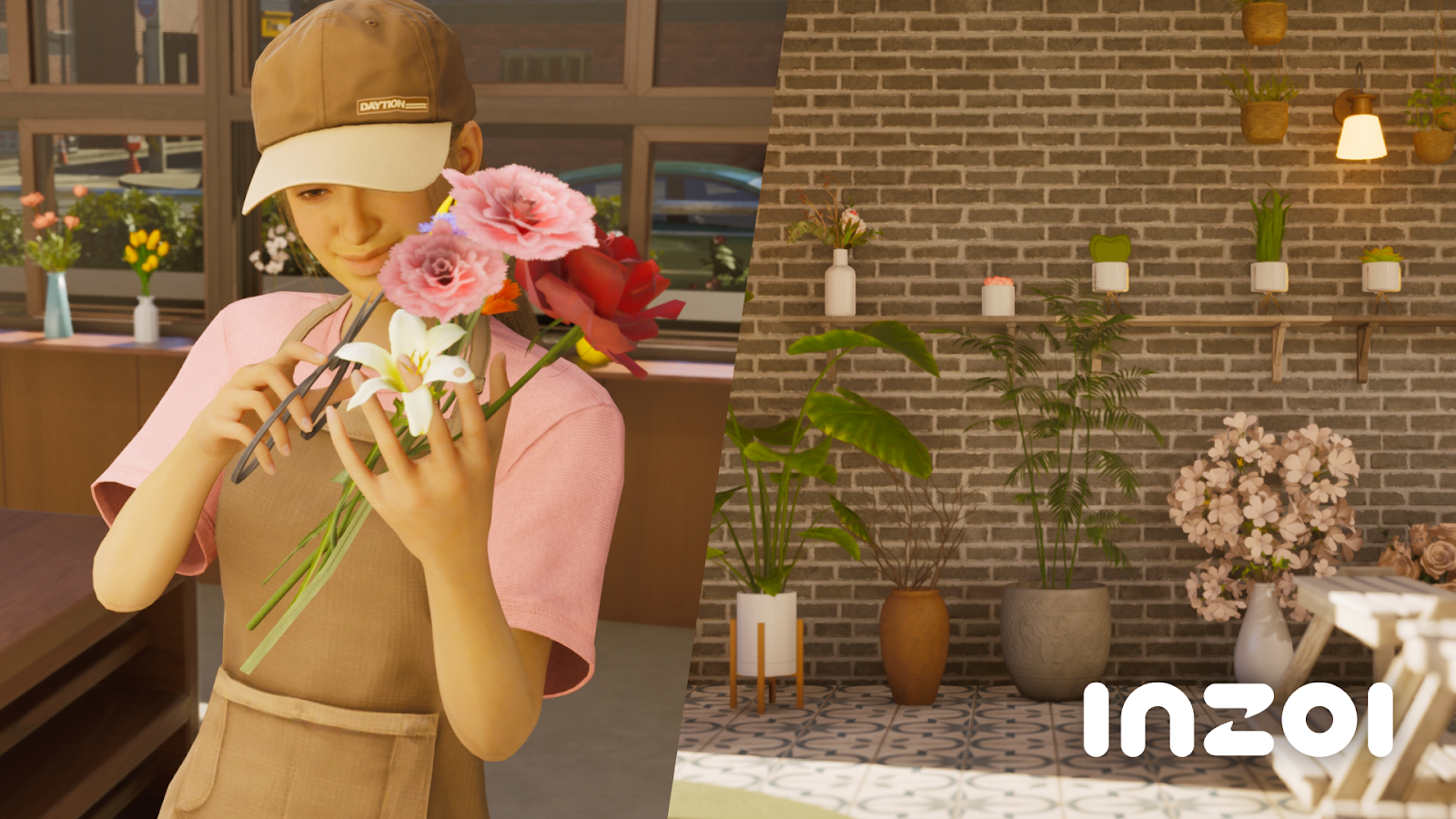
Specifically, at five stars and perfect quality: a basket of roses sells for 560 Meow for 5 in crafting fees, or 555 net profit per unit; a basket of lilies leaves 395, a basket of carnations 315, a bouquet of roses 277. No cooked dish comes close to these figures — the best, salmon-based, brings in about 310 Meow per serving. The top-tier cakes sell for 120 Meow per slice, but are cut into eight servings: the full margin of 925 Meow assumes all eight sell in the same day. One last caveat: these prices assume you already own the flowers, otherwise the game charges the online market rate on top of the crafting fees.
The known pitfalls as of August 10, 2026
Krafton publishes a monthly list of known issues; August's has been online since the 3rd. Several points directly affect businesses.
- Desynced hours: opening hours and kiosk order hours may not match. Officially acknowledged by Krafton.
- Per-portion sales: dishes and pastries prepared as a family-size recipe only sell portion by portion. Before the eight-slot 4-star display case, you therefore mechanically lose half the value of a whole cake.
- Poorly processed bulk purchases: since v0.9.0, players have reported customers taking an entire batch of displayed items without the full payment being collected.
- Quality loss on display: an item can lose its quality label once displayed and sell at the lower rate, especially with pastries and family-size dishes.
- Destructive "Put everything away": using this action on a nearby table or counter can empty surrounding display cases, including consumed ingredients.
The workaround that fixes several of these issues at once comes down to one line: only cook in individual portions. You avoid the quality bug, you put less strain on display cases, and you no longer have to wait for the 4-star tier to sell off a whole dish. Pastry is the exception, since it requires slicing — all the more reason to treat it as a role-play choice rather than a profit strategy.
Three ways to play, three returns
It's up to you to choose your ratio of time spent to profit.
- Maximum output, active play: you handle the lectures and massages yourself, with a few items on display as a bonus. About 20,000 Miaous per business day. It's repetitive, but it's the game's ceiling.
- Balanced: you hand the services off to employees, who are noticeably less efficient than a player chaining actions. The shop hovers around 5,000 Miaous a day with no effort.
- Passive, equipment-based: gym or cybercafé, entry fee plus hourly rate, nothing to produce. This drops to 1,000 or 2,000 Miaous a day, but two or three daily lectures pull this format back up toward 5,000.
French labels: what's confirmed, what isn't
Krafton's French patch notes are machine-translated and come with their share of typos, but they do confirm a useful set of official terms: commercial property, commercial lot, business preset, Manage Business, customer satisfaction, business value, Profit Summary, paid lectures, tip jar, Sales Counter, Display Showcase, Flower Basket, family recipes. The currency is indeed written as Miaous.
On the other hand, the exact labels for the five star tiers and the French names of certain dishes appear in no open official source: the figures cited here come from a test playthrough documented in English on Krafton's forums in April 2026, so before v0.8.0 and v0.9.0. The orders of magnitude hold up, but some rebalancing may have taken place since.
What comes next
Kjun detailed it in late July: the accommodation system in the works won't be limited to housing passing Zois. Krafton plans to graft onto it, via the business system, the means to create your own lodgings and configure rooms one by one. A hotel will thus become a business in its own right.
In the meantime, today's rule of thumb boils down to this: rush to tier 3 to unlock a second position, fund your progress with lectures you host yourself, sell only in individual portions, and never leave your shop to run it remotely.
Share this article
What type of business do you prefer to run in inZOI?
Frequently asked questions
How long does it take to build a business up to five stars?
About a month of in-game time with a day set to 96 minutes. The tiers hit on days 3, 7, 10, 19, and 27, but beware: the first quarter runs slightly at a loss (average of −34 Meows over the first three days).
What type of business earns the most money?
A mixed business that combines item sales (flowers preferably), paid services (massages and lectures), and entry fees (equipment). Florists earn 555 Meows in net profit per basket of roses at five stars, far more than a cooked dish.
Do I need to level up a skill to offer massages?
No, that's the main advantage of massages: no skill required. Any cheap employee can handle them. Lectures, on the other hand, require level 5 in the taught skill.
What happens if I leave my shop to let employees run it on their own?
Performance collapses down to negative days. You need to stay on-site as the owner-operator for the establishment to run properly, even if the employees are doing the work.
What price should I set for entry fees on my equipment?
Start moderately and increase gradually. Jumping to 150% right from the early stars is the surest way to drive customers away, since price fairness directly affects satisfaction. A slider lets you adjust from 50% to 150%.
Key takeaways
- Paid services (lectures and massages) are more reliable than item sales, which are exposed to display bugs.
- At five stars, a flower earns three to four times more than a cooked dish: focus on the florist.
- Stay on-site as the owner-operator, otherwise your employees become slackers and your revenue collapses.
- Payroll climbs from 90 to 2,100 Meows per day within a few weeks: an item shop alone can't sustain that.
- Each star tier unlocks an additional employee and decisive equipment; expect about a month to reach five stars.
Comments
No comments yet. Be the first to react!
Leave a comment
Similar guides




Latest articles





Your opinion counts
Rate inZOI
Click a star to rate