

 Fabian Lainé

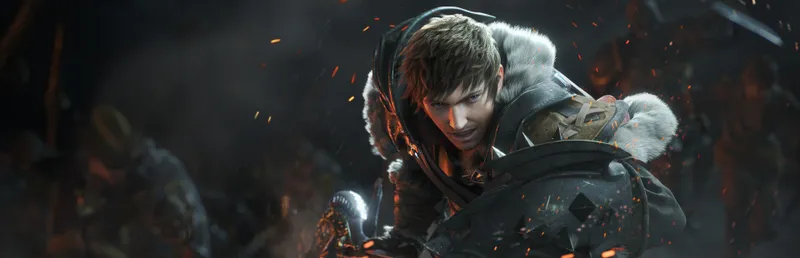
Full Guide
Final Fantasy XIV Online: the complete 2026 starter guide — jobs, expansions, free trial, and first steps in Eorzea after Dawntrail
In brief
Final Fantasy XIV Online has thirty million accounts and has dominated the genre for thirteen years. This guide takes you from character creation to endgame in 2026: master the unique Armoury System, take advantage of the free trial up to level 80, and navigate the five expansions that make up one of the best narratives in the MMORPG genre.
Thirteen years after its 2013 relaunch, Final Fantasy XIV Online has established itself as one of the most-played MMORPGs of the decade, with more than thirty million accounts created according to Square Enix. Driven by producer Naoki Yoshida, the title reached a new milestone in July 2024 with the Dawntrail expansion, which pushed the level cap to 100 and opened up the continent of Tural. In 2026, the current version is patch 7.x, with refreshed endgame content (raids, field operations, seasonal PvP) and a free trial that remains one of the most generous in the industry. Not sure whether to jump in? This guide walks you through it step by step: from character creation to job selection, from your starting city to discovering the five expansions, all the way to the endgame and the pitfalls to avoid in your first hours in Eorzea.

The Armoury System: one character, every job
Unlike most MMORPGs where choosing a class is a near-permanent commitment, Final Fantasy XIV runs on a unique principle: the Armoury System. Any character can play every job in the game, as long as they equip the matching weapon. Started out as a Warrior, a tank role? Put away your warhammer, pull out a bow, and you're now a level 1 Bard without ever creating a second character.
This flexibility changes everything: it makes the reroll grind pointless, it pools your general play experience credit (mounts, minions, side quests, achievements), and it lets you try out several roles before committing to one for raiding. Progression, however, stays separate: each job levels up and unlocks its own abilities independently. But a very generous "rested" system — an experience bonus for logging out in an inn or a city — combined with gear shared across several jobs, makes multi-jobbing reasonably manageable, even for a solo player. In practice, most veterans juggle two or three main jobs while keeping several secondary roles ready to fill a queue.
The free trial: A Realm Reborn + Heavensward + Stormblood + Shadowbringers up to level 80, with no time limit

The best argument for trying FFXIV remains its trial version, regularly cited as the most generous on the Western market. Specifically, a free account grants you the base game A Realm Reborn, as well as the Heavensward, Stormblood, AND Shadowbringers expansions, adding up to nearly a thousand hours of story content, up to level 80. No time limit whatsoever: you can spend six months or three years on it without ever pulling out a credit card.
You get eight characters per data center, access to every crafting and gathering job, the Gold Saucer's mini-games, fishing, and, since the 7.0 overhaul, Duty Support — companion NPCs that let you clear all the main dungeons solo. Limitations do exist, but they're reasonable: a 300,000 gil cap in your bank, no public shout chat or private messages, no access to the market board, no PvP, and no ability to create or join a Free Company or a linkshell. Plenty to comfortably give you time to decide before buying your first expansion.
Choosing your starting class: the eight disciples of war and magic
At character creation, you choose from eight starting classes, each evolving into a full "job" starting at level 30. On the disciples of war side (melee and ranged combat), you'll find: the Gladiator (who becomes Paladin, a defensive tank), the Marauder (who becomes Warrior, an offensive self-healing tank), the Pugilist (who becomes Monk, a fast melee DPS), the Lancer, who will become Dragoon, the Archer (who becomes Bard, a melodic ranged DPS), and the Machinist trainee role which becomes Machinist. On the disciples of magic side, the Conjurer becomes White Mage, the classic healer, while the Thaumaturge can branch into either Black Mage (the pure magical DPS) or Summoner (magical DPS with pets).
The other jobs — Dark Knight, Gunbreaker, Astrologian, Scholar, Sage, Ninja, Samurai, Reaper, Viper, Dancer, Red Mage, Pictomancer, Blue Mage — unlock later through dedicated quests, provided you have a first job at a certain level (often 50, 60, 70, or 90 depending on the expansion). For a first playthrough, two simple rules: if you're a pure DPS player at heart, pick Archer or Thaumaturge, since they play smoothly from level 1; if you want to quickly experience group content without waiting thirty minutes in queue, pick a tank (Gladiator, Marauder) — queues are nearly instant at every level. The choice is never final: remember, a single character can absolutely play everything.

Choosing your starting city: Ul'dah, Gridania, Limsa Lominsa
Depending on the class you choose, your character automatically starts in one of Eorzea's three city-states. Limsa Lominsa, the pirate city perched on the Indigo sea, welcomes Marauders and Thaumaturges. Gridania, the forest capital nestled within the Black Shroud, opens its gates to Archers, Conjurers, and Lancers. Ul'dah, the merchant city-state set in the middle of the Thanalan desert, is home to Gladiators, Pugilists, and Machinist trainees.
The choice has few mechanical consequences: all three main storylines converge before the end of A Realm Reborn, and you can travel freely between them from the very first levels via the aetheryte network. In practice, it's mostly a choice of starting atmosphere. Limsa is often recommended to new players because its maritime storyline is lighter and its hub very lively, but Ul'dah offers the densest political intrigue and Gridania the most subdued one. If you're undecided, try the city tied to your favorite class: nothing stops you from planting your flag elsewhere later.
The five expansions and their story, spoiler-free
Since 2013, FFXIV has released five numbered expansions, not counting the base game.
- A Realm Reborn (2013) opens the story and introduces you to Eorzea a few years after the "Calamity" that reshaped the world. It's the longest stretch and sometimes the slowest, but it lays down all the mythological groundwork for what's to come.
- Heavensward (2015), the first expansion, sends the adventurer to the vertical city of Ishgard, mired in a millennium-long war against dragons. The pace picks up noticeably, and the story takes on unexpected gravity.
- Stormblood (2017) shifts the action east, to Ala Mhigo and Doma, around a theme of liberation and armed rebellion against the Garlean Empire.
- Shadowbringers (2019) sends the adventurer into a parallel dimension, the First, in what remains widely regarded as the narrative peak of 2010s MMORPGs. It's also the expansion that introduced the Dancer job.
- Endwalker (2021) closes the grand arc begun eleven years earlier: the end of a cycle, bringing along the Reaper and Sage jobs.
- Dawntrail (July 2024) reopens the story to the west by unveiling the continent of Tural, centered on a succession race to determine the next ruler of Tuliyollal. It brings the Viper and Pictomancer jobs, pushes the level cap to 100, and launches the first phase of the game's graphical remake.
The endgame in 2026: Occult Crescent field operations, Ultimate raids, Crystalline Conflict PvP
Once you reach level 100 and wrap up Dawntrail's main storyline, FFXIV's endgame opens onto several parallel branches, to explore in whichever order suits you.
On the hardcore PvE side, Savage raids (harder versions of normal raids, eight players) make up the real weekly challenge, with a four-floor progression cycle refreshed with each major patch. A notch above, Ultimate raids — the hardest content in the game, with an almost legendary reputation in the MMO scene — demand weeks of preparation with a static team and reward purely cosmetic prestige weapons. Extreme trials, meanwhile, are the harder versions of fights against primals (unique bosses), a notch more accessible and an excellent stepping stone toward Savage.
On the more casual but very popular side, Dawntrail launched its own field operation: Occult Crescent, released with patch 7.25 in 2025, is played in large instances holding up to 72 players, mixing unique sub-jobs, exploration bosses, and the final raid, "Forked Tower." It's the direct successor to Bozja (Shadowbringers) and Eureka (Stormblood), community content beloved for its semi-scripted adventure feel.
On the PvP side, Crystalline Conflict, the 5v5 arena mode introduced in Endwalker, structures the competitive season with a monthly ranking and a set of cosmetic rewards refreshed each cycle. Frontline (72 players, three factions) and Rival Wings (24v24 with vehicles) round out the offering for fans of larger-scale PvP. Note: all PvP content is unavailable in the free trial.
The five early mistakes to avoid
1. Skipping the cutscenes. A Realm Reborn's pacing can be frustrating at times, but every cutscene feeds into the main storyline, and Shadowbringers and later Endwalker explicitly build on details set up ten years earlier. A player who mashes through dialogue is simply robbing themselves of the best reason to be here.
2. Ignoring the Hall of the Novice. This tutorial mini-hub, unlockable from level 15 with Smydhaemr in Vesper Bay, teaches core role-based mechanics (tank positioning, aggro management, healing priorities, DPS rotations) and unlocks very useful early rewards: potions, the "brand-new ring" experience ring, a minion set. Many newcomers skip it and regret it.
3. Not unlocking advanced jobs at the right time. Dark Knight, Gunbreaker, Reaper, Sage, Viper, Pictomancer each require an access quest at a specific level (often 50, 60, 70, or 90 depending on the expansion), picked up from a specific NPC. Check the lodestone so you don't miss out on a job that might suit you.
4. Neglecting the daily Duty Roulettes. These randomized queues give massive experience bonuses, gil, and above all "tomestones" — the most important endgame currency for upgrading your gear. Thirty minutes a day is enough to close the gap with veterans.
5. Believing you absolutely need to join a high-level Free Company to progress. No — most of the game is played in groups formed on the fly through the Duty Finder, and solo content with Duty Support now lets you follow the entire main storyline without ever depending on a community. A FC becomes useful later, when you want to move into Savage or Ultimate content.
Conclusion
Final Fantasy XIV Online in 2026 is an ocean of content: five expansions, more than twenty jobs, several hundred hours of main story, an endgame ranging from Ultimate raids to chocobo racing, and a community that has remained largely welcoming — a rare asset in modern MMOs. The free trial, with no time limit, gives you room to try it all at your own pace, with zero commercial pressure. The main obstacle, ironically, remains the sheer scale of the game itself: it's best to dive in without trying to understand everything in your first session. Focus on the main story, let guilds and PvP come later, and remember that thanks to the Armoury System, no starting choice is truly permanent. Eorzea is waiting for you — and it's rather patient.
Share this article
What appeals to you most about starting out in Eorzea?
Frequently asked questions
Do I really have to pay to play, or is the free trial actually enough?
The free trial opens up a thousand hours of story content up to level 80, including Shadowbringers. You'll only need to pay if you want to access Endwalker and Dawntrail, or if you want to lift certain restrictions (market board, public chat, Free Companies). Honestly, the trial remains one of the best deals in the industry.
I'm completely new to MMORPGs. Which job should I start with?
Pick a tank (Gladiator or Marauder) if you can handle the responsibility and love short queues. Otherwise, Archer or Thaumaturge offer a gentle progression without overwhelming you with mechanics. The choice is never set in stone since a single character can play everything.
How long does it take to finish the story up through Shadowbringers?
Expect between one hundred fifty and three hundred hours depending on your pace, how many side quests you do, and your prior MMO experience. A Realm Reborn drags on a bit, but starting with Heavensward the pacing becomes addictive.
Is there really solo content in FFXIV, or am I forced to group up?
Duty Support lets you complete all the main dungeons solo with NPC companions. The main scenario quest remains solo. Only Savage raids and Extreme trials require a group, but that's optional if you just want to enjoy the story and casual content.
Key takeaways
- A single character can play every job thanks to the Armoury System — no more need to create multiple alts to test out roles.
- The free trial covers A Realm Reborn, Heavensward, Stormblood, and Shadowbringers with no time limit or initial level cap.
- Choosing your starting city (Limsa Lominsa, Gridania, or Ul'dah) mainly affects the narrative atmosphere — the three storylines converge quickly.
- Tank queue times are nearly instant at every level, ideal if you hate waiting.
Comments
No comments yet. Be the first to react!
Leave a comment
Similar guides
Latest articles






Your opinion counts
Rate Final Fantasy XIV Online
Click a star to rate