

 Fabian Lainé

Full Guide
CS2 Hostage Mode Guide: Shelter Map, Rules & Tactics
In brief
Counter-Strike 2 has been running Shelter in competitive since July 2026: the series' first hostage map, where the stakes aren't human but animal. The rescue rules differ radically from defusal — two fixed objectives, a timer that extends on contact, and a reversed economy that pays patience better than aggression. To avoid falling into traps as early as round 1, you need to understand how a CT wins, how a T defends, and what price each mistake carries.
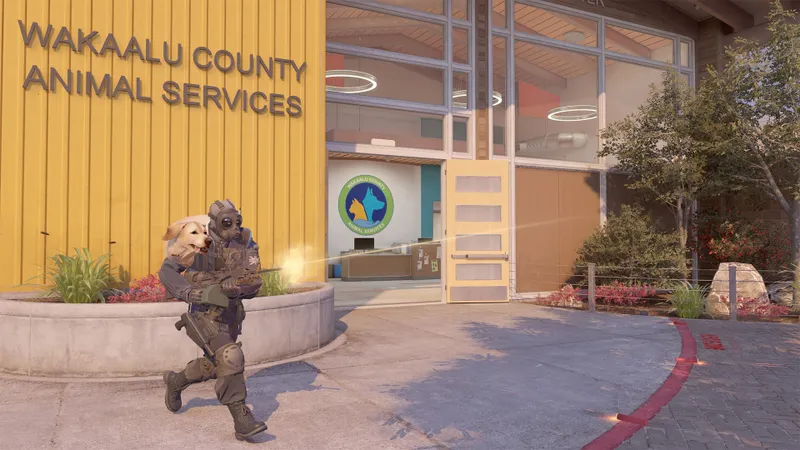
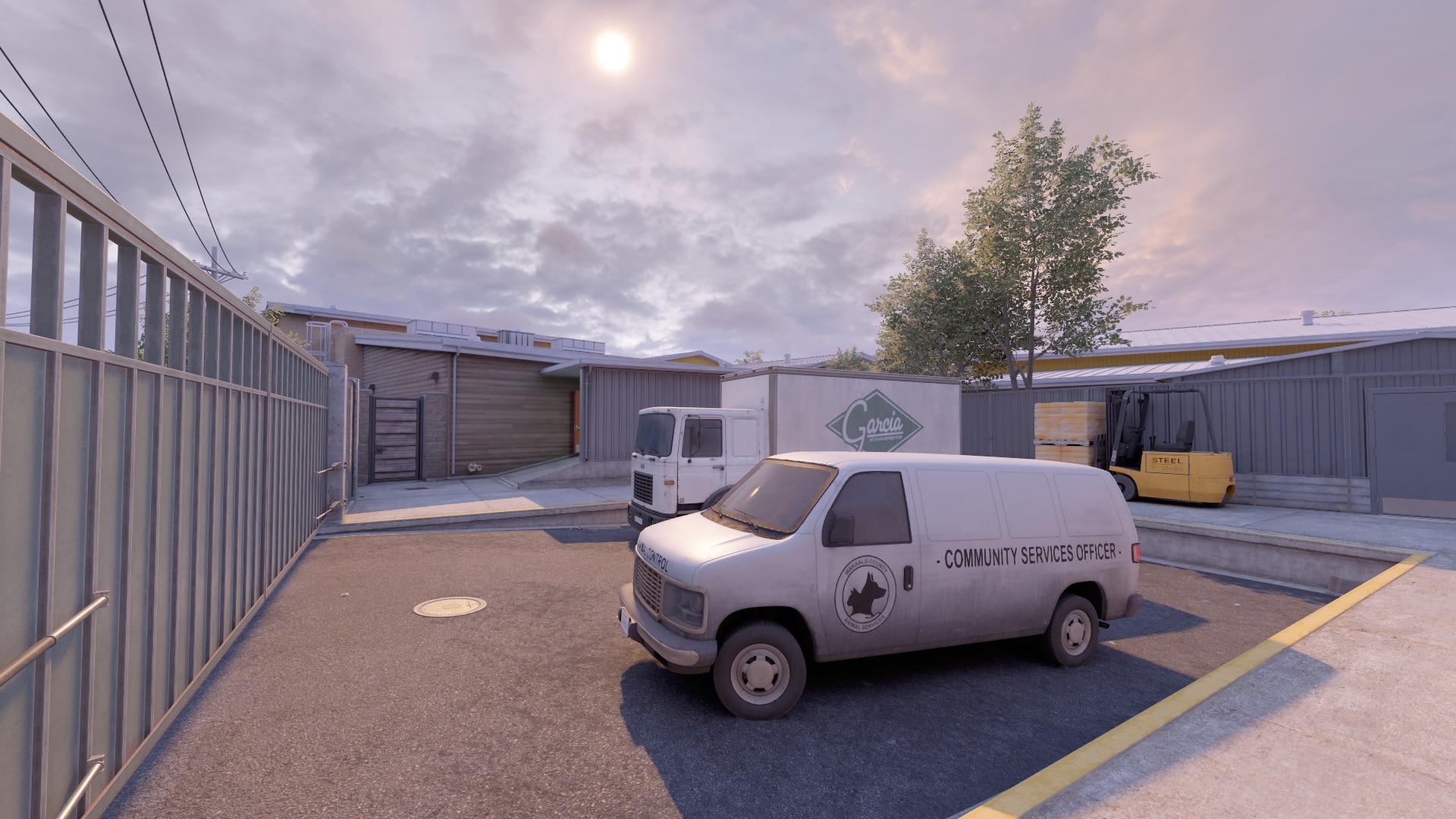
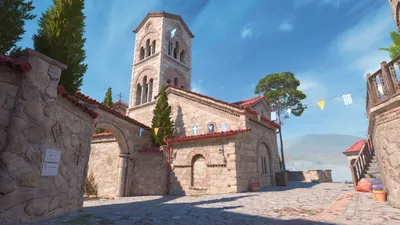
Since the July 8, 2026 update, Shelter has been part of the map selection for Counter-Strike 2's Competitive mode. It's an animal shelter, and above all the first map in the series where the hostages aren't humans but dogs. Valve has already resynced it three times against the latest version published by its author, the most recent on August 3.
The real subject here isn't the map, it's the scenario. Hostage rescue follows rules that have almost nothing in common with defusal: two fixed objectives instead of a mobile bomb, a shorter but extendable timer, different round bonuses, and a complete reversal of roles since it's the terrorists who defend. Most players who joined CS2 since 2023 have never had to learn it.
Everything that follows comes from the official competitive mode configuration and the variables of the game's current version, not from CS:GO memories. These are the numbers that will apply to your next match.
Shelter, Office, and Italy: three hostage maps out of fifteen
The game's mode configuration file lists fifteen maps in the competitive group: the ten defusal maps (Cache, Anubis, Inferno, Mirage, Dust 2, Nuke, Ancient, Train, Vertigo, Overpass), the three community maps added on July 8 (Boulder, Fachwerk, and Shelter), and the two hostage-scenario veterans, Office and Italy. So if you check every box before starting a matchmaking search, one game out of five can end up on a scenario you never practice.
Shelter isn't part of the active duty card pool just yet: it doesn't appear in Premier, where Season 5 runs on Ancient, Anubis, Cache, Dust 2, Inferno, Mirage and Nuke. Another absence worth noting, the Retakes mode only offers the ten defuse maps: there is no official training ground for hostage rounds. Hence the value of showing up already knowing the rules.
The map is the work of Rostik « SmurftYours » Fomich. It's set at the Wakaalu County shelter — the in-game signage reads « Wakaalu County Animal Services » — and features a fictional group, Phoenix Biotechnical, which kidnaps animals for illegal medical testing. The author keeps tweaking it: version 1.10, released on July 30, still adjusts collisions, and Valve keeps pushing these revisions into the game through its updates, on July 15 and 29 and then on August 3.
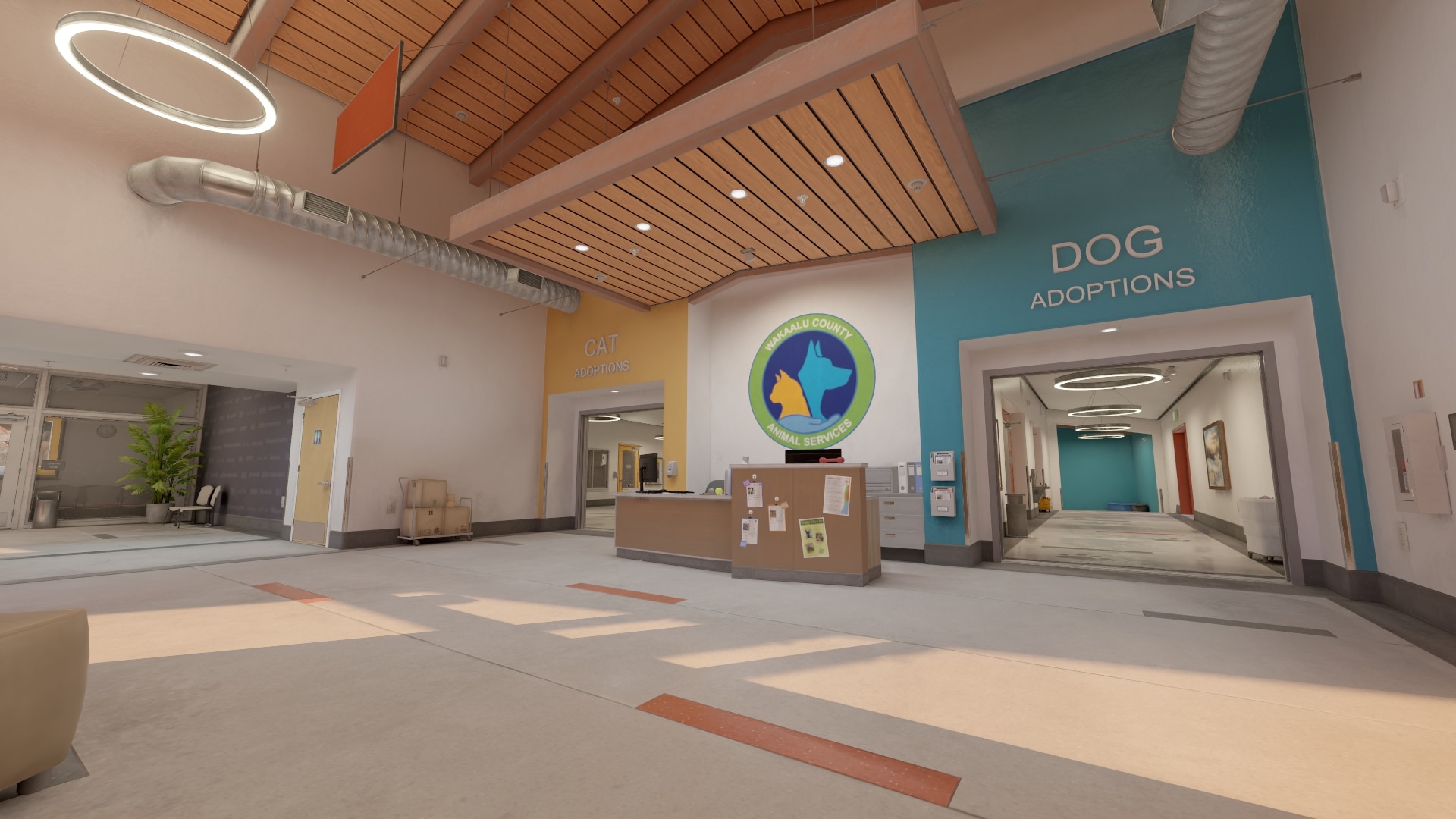
The hostage scenario rules, 2026 edition
- Two hostages maximum on the map, never more.
- Their positions are randomized at the start of the match, then locked in for the rest of the game. So the scouting you do in the first round stays valid for the following twenty-three: it's the most valuable piece of information in the match.
- A single rescue is enough to win the round for the counter-terrorist side.
- The clock shows 1:55, exactly like on defusal maps, but a full minute is added as soon as a CT gets their hands on a hostage.
- Hostages are invulnerable by default, but every point of damage you deal them costs you $30.
- Only one hostage per carrier. You have to be on the ground to pick one up, two CTs can't carry the same one at once, and the carrier is noticeably slowed down.
- If the carrier dies, the hostage drops on the spot. Ground gained isn't lost: a teammate can pick up where the first one fell.
- Only counter-terrorists can move hostages. Terrorists can only guard them.
- The rescue kit — "Rescue Kit" in Valve's official language files — costs the same as the defuse kit, i.e. $400, and cuts the hostage pickup time from four seconds to one, according to the Counter-Strike wiki. The purchase menu sometimes displays it under the defuse kit's label, a bug reported for a long time on Steam forums.
The economy: everything pays less, except waiting
This is the part nobody looks at, and it's the one that decides rounds 4 through 8. Here are the rewards actually applied by the Competitive mode settings, in MR12, with $800 starting money and 15 seconds of buy time like everywhere else.
| Situation (Competitive mode) | Reward |
|---|---|
| Round won by rescue (CT) | $2,900 per player |
| Round won by eliminating the enemy team (CT or T) | $3,000 per player |
| Round won by time running out (T) | $3,250 per player |
| Picking up a hostage | $300 for the player, $600 for each CT |
| Rescuing a hostage | $1,000 for the carrier, $600 for each CT |
| Damage dealt to a hostage | -$30 per point of damage |
| Loss | $1,400, increased by $500 per consecutive loss |
Compare that to a defusal map: $3,500 for a bomb explosion just as for a defusal, $3,250 for an elimination. On a hostage map, the round reward is systematically lower — with one exception, and it's a decisive one: terrorists who simply let the clock run out pocket $3,250, which is $250 more than if they kill all five CTs. The game rewards patience better than aggression.
On the counter-terrorist side, the math flips as soon as you add up the side rewards. A round won by rescue brings in $2,900 + $600 (pickup) + $600 (rescue) to each player, that's $4,100, and $5,400 to the carrier with their individual $300 and $1,000. A round won by killing the last terrorist without having touched a hostage: $3,000, and nothing else. The gap exceeds $1,000 per player, and it dictates a very concrete decision: if you're already holding the hostage and there's still an enemy holed up somewhere, head for the rescue zone rather than going hunting.
On the CT side: four decisions that win rounds
Make contact early, even without extracting the hostage. The extra minute is added at the moment of contact, not at the rescue. Making contact at 1:20 grants you an extra 60 seconds to retake the map cleanly, and pays out $600 to every teammate even if the round then goes up in smoke. It's the only mechanic in the game that lets you buy time.
Designate the carrier before the round. The rescue kit only speeds up the pickup, not the movement: it only has value on the player who will actually be carrying the hostage. No kit is handed out for free in competitive play, so it has to be bought — and it drops on the ground when its owner dies, exactly like a defuse kit. Pick up a teammate's rather than buying a new one.
Think in relays, not a solo race. Since the hostage stays exactly where the carrier fell, a route can be covered in two or three stages. A team that accepts losing its first carrier twenty meters further along has mechanically made progress; a team that refuses to engage until it has a numbers advantage is simply handing the clock over to the terrorists.
Watch your trigger discipline. Thirty dollars per point of damage: a badly placed burst in a tight corridor costs thousands of dollars come the next buy round. With friendly fire active in competitive, the bill can even be doubled. On Shelter, whose interiors are cramped, this is far from theoretical.
On the T side: you're on defense, and the clock pays you
The mental shift is total. With no bomb to plant, terrorists have no reason to take the initiative: their default win condition is the clock running out, and it's the best-paid round in the scenario. Leaving your positions to hunt for duels means trading $3,250 for $3,000, while taking on all the risk.
Since hostage positions are fixed for the entire match, a single scouting pass is enough; after that, play them like a double bombsite, with delayed angles and prepared rotations. The game even warns you when a hostage is picked up: as soon as that announcement appears, the opponent's route becomes predictable, since the rescue zone itself never moves. That's the best moment to cut off the path rather than rush the carrier.
Two reflexes round out the defense. First, prioritize the carrier above all else: they're slowed down, poorly positioned, and cost the opponent their biggest bonuses. Second, treat the retreat paths with Molotovs and incendiary grenades rather than the hostage zones themselves: a slow carrier forced to cross fire has to stop, and a stopped hostage is a recoverable hostage.
The details that make the difference
Hostages can't be rescued during warmup: use that time to walk the routes rather than attempt extractions that won't succeed. On the other hand, the first official round is your real scouting phase, since it fixes the location of both hostages for the following twenty-four rounds.
Finally, know that you have a choice. Boulder and Fachwerk, added the same day as Shelter, are classic defuse maps: only Shelter changes the scenario. If the hostage mode doesn't interest you, uncheck Shelter, Office, and Italy in the map selection. And if you do check them, do so knowing that a good team wins rounds there with a watch and route discipline, not with duels.
What to do before your next match
Remember three numbers and you'll already be ahead of the pack: 1:55 base time plus one minute on first contact, $400 for the rescue kit, $3,250 for terrorists who do nothing. The rest comes down to a single habit: treating the rescue as a timed team objective, with a designated carrier, a planned handoff, and a route decided in advance. Of the fifteen maps in the competitive pool, three are played this way. Might as well play them right.
Share this article
Do you prefer the hostage scenario or defusal in competitive?
Frequently asked questions
Why doesn't Shelter appear in Premier mode even though it's in competitive?
Premier runs on a fixed roster of seven defusal maps (Ancient, Anubis, Cache, Dust 2, Inferno, Mirage, Nuke) that Valve updates as a block. Shelter, Office, and Italy remain confined to classic Competitive mode and don't rotate into Premier.
Is the rescue kit really worth the $400 it costs?
Only if it's bought by the player who will grab the hostage: it cuts the pickup time from four seconds to one. Never buy a kit "just in case" — it'll drop on the ground when you die and someone else will pick it up. It's better to pool for it.
How do terrorists earn more by waiting than by killing?
By default, a T who watches the clock run out pockets $3,250. A T who kills all five CTs receives $3,000 for it. Valve pays inaction better than aggression to force defensive play, completely opposite to the defusal economy.
If I'm carrying a hostage and I die, is my progress lost?
No. The hostage drops where you fell. A teammate can pick up right there: ground gained is never lost, which is why you should think in relays rather than a solo run.
How many times do the hostage positions change during a match?
Never. They're randomized at round 1 and stay fixed until the end. Your initial scouting holds for the next 23 rounds: it's the most valuable piece of information in the game.
Key takeaways
- The rescue kit ($400) only has value on the player who will grab the hostage, not as a general team purchase.
- Terrorists earn $3,250 by letting the clock run out, which is $250 more than killing all five CTs: the game rewards patience.
- A CT who grabs a hostage adds a full minute to the clock, not to the rescue — it's the only mechanic that buys time.
- The positions of both hostages are randomized only once and stay fixed for the entire match: your round 1 scouting holds for the next 23 rounds.
- Every point of damage dealt to a hostage costs $30: a poorly placed burst in Shelter's tight corridors will cost you thousands the following round.
Comments
No comments yet. Be the first to react!
Leave a comment
Similar guides
Latest articles




Your opinion counts
Rate Counter-Strike 2
Click a star to rate