


 Fabian Lainé
Full Guide
Battlefield 6: the Aircraft Carrier Offensive mode guide — 32 vs 32, five surface-to-surface batteries and the two relays that lose you the match
In brief
Battlefield 6's Carrier Assault mode pits two teams of 32 players against each other over 30 minutes, with two paths to victory: destroy the enemy carrier or its two vulnerable relays once it drops to 50% health. Mastering the five ground-to-ground batteries scattered across the map and understanding the strategic pivot of the critical state makes all the difference between a crushing victory and a brutal defeat.
The Carrier Assault mode of Battlefield 6 has been playable since Tuesday, August 18, 2026 at 2:00 p.m. Paris time (12:00 UTC), with update 1.4.2.0 which opened the Top Gun phase of Season 4. The format comes down to three numbers: 32 vs. 32, single round, 30-minute countdown.
The rule that decides the most matches isn't the most visible one. You win by reducing the enemy carrier's HP to zero, but also by destroying its two M-COM relays once they become vulnerable. In this second case, EA is categorical: the team that loses both its relays immediately loses the match, regardless of the damage dealt to either carrier. A team far ahead on damage can therefore be overturned within a few minutes.
This guide covers how the mode works as documented by EA in its official French-language guide published on August 13, and draws conclusions on what to do on attack as well as on defense. The mode is played on Tsuru Reef, whose layout we detailed on August 11.
The rules that decide a match
Two victory conditions coexist, and they don't play out at the same pace: the first is a damage race spread across the entire round, the second a sudden stop that only becomes possible late in the match.
| Point | What EA says |
|---|---|
| Format | 32 vs. 32 |
| Structure | Single round |
| Duration | 30-minute countdown |
| Victory by damage | Reduce the enemy carrier's HP to zero |
| Victory by relays | Destroy both enemy relays as soon as they become vulnerable |
| End of the timer | The team whose carrier has the most health wins |
| Draw | Possible, but rare: both carriers must be at exactly the same health |
| Map | Tsuru Reef |
| Release | Since August 18, 2026, 2:00 p.m. (Paris time) |
A note on lineage: EA cites two references, Carrier Assault (Battlefield 4) and Titan Mode (Battlefield 2142). The claimed novelty lies elsewhere: it is now possible to damage the carrier with direct fire, and not only through missile strikes.
The five ground-to-ground batteries, and the reload trick
The enemy carrier is mainly worn down by strategic ground-to-ground missile batteries, five in number, scattered across the map and capturable like Conquest flags: you just need to stay in the control zone for a short moment, then prevent the enemy from doing the same.
These batteries fire periodically and deal damage every 15 seconds. And this is where the mode's most underused mechanic lies: when a battery changes ownership, its reload timer is reset. In other words, capturing a battery just before it fires cancels the salvo. This isn't just a matter of taking ground, it's a defensive action in its own right.
Controlling the majority of the batteries also grants access to automatic anti-air emplacements. They disrupt incoming enemy aircraft without requiring a player to man them — in a mode where aviation carries a lot of weight, that's a second reason to hold three sites rather than two.
A note on translation: EA's page sometimes writes « sol-sol », sometimes « surface-surface » to describe the exact same batteries. This is a translation inconsistency, not two different types of equipment.
Your aircraft carrier is a mobile HQ before it's a target
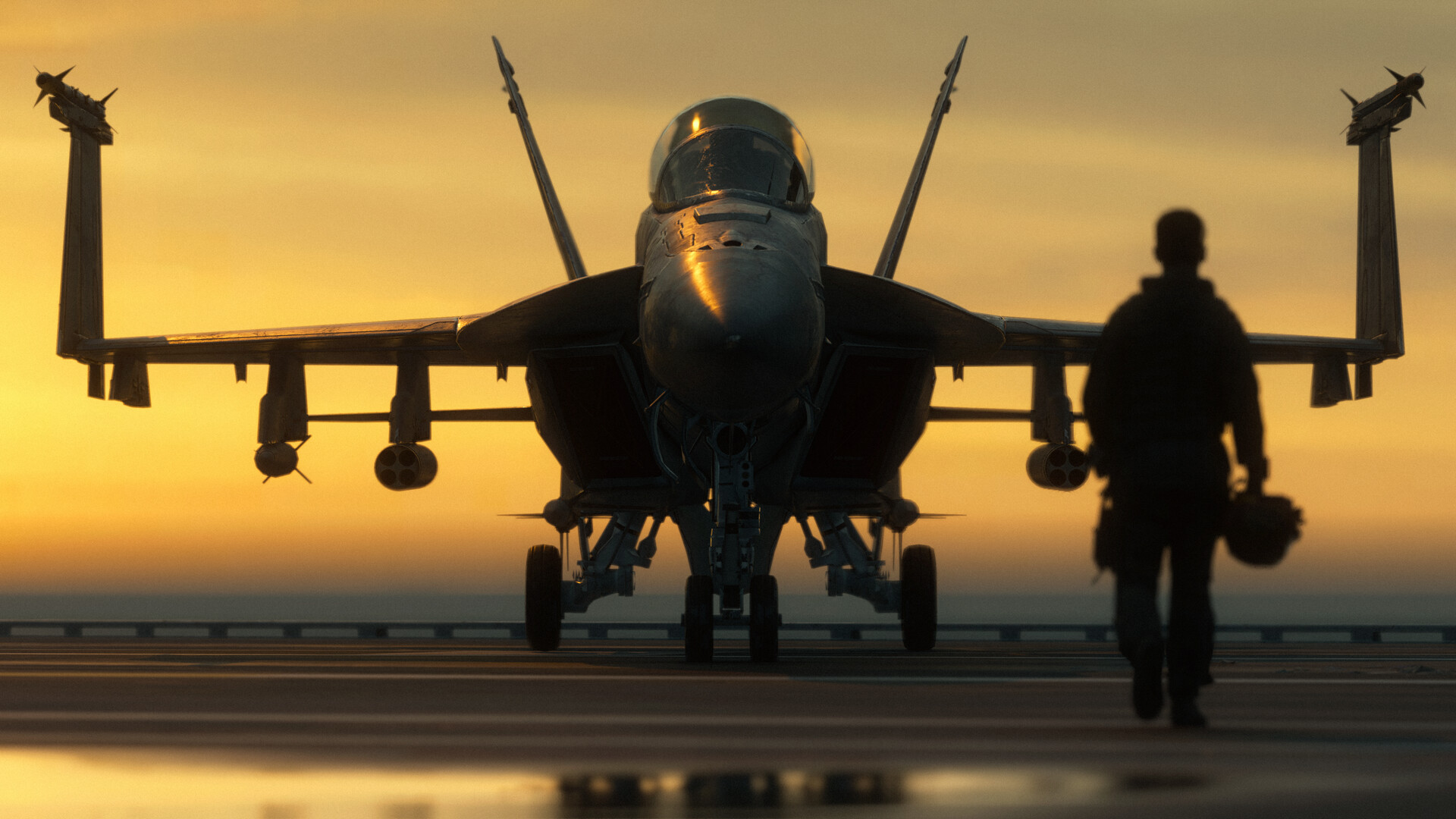
EA describes it in two words: the aircraft carrier is both your mobile HQ and the enemy's primary target. It includes a flight deck, from which planes take off to gain maximum altitude, an HQ spawn zone, and the M-COM relays inside.
Practical consequence: the interface isn't necessary to know how the match is going. When an aircraft carrier takes damage, it shows — smoke, hull damage, debris. Reading the enemy ship's state visually lets you anticipate the shift described below instead of being caught off guard by it.
Critical state at 50%: the moment the mode changes nature
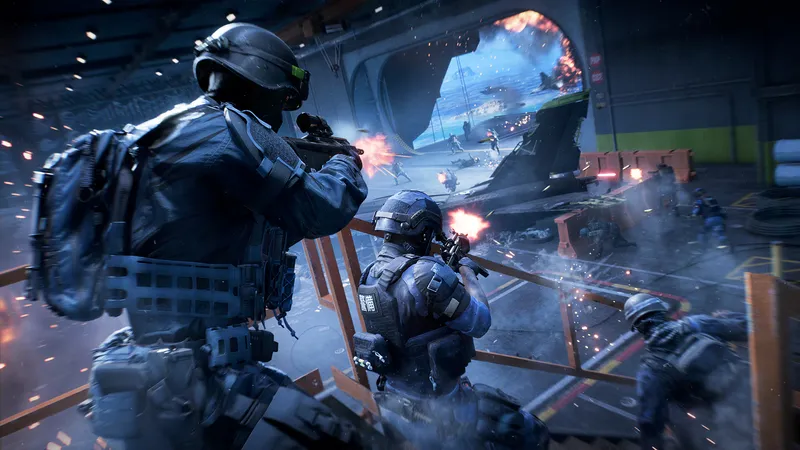
This is the pivot point of the match. When an aircraft carrier drops to 50% health, it enters a "critical state": an explosion rocks the deck, and the relay rooms become accessible from the water. The match was being played at a distance; it's now played inside the ship.
The boarding sequence is fixed, and you need to know it to avoid wasting time:
- A first relay room opens up for those invading from the sea.
- On the defending side, the HQ spawn point allows players to redeploy directly into the room after respawning.
- Once this first relay is destroyed, a set of armored doors opens toward the second relay, located in the main reactor room.
- Destroying both relays leads to the immediate defeat of their team, through the destruction of the reactor.
It's worth grasping what point 2 really means: the defenders respawn right there, while the attackers have to come from the water. Structurally, the interior assault is disadvantageous for the attacker if reinforcements arrive in a trickle. This is the part of the mode that demands the most coordination, and the least individual initiative.
On the attack: order of priorities
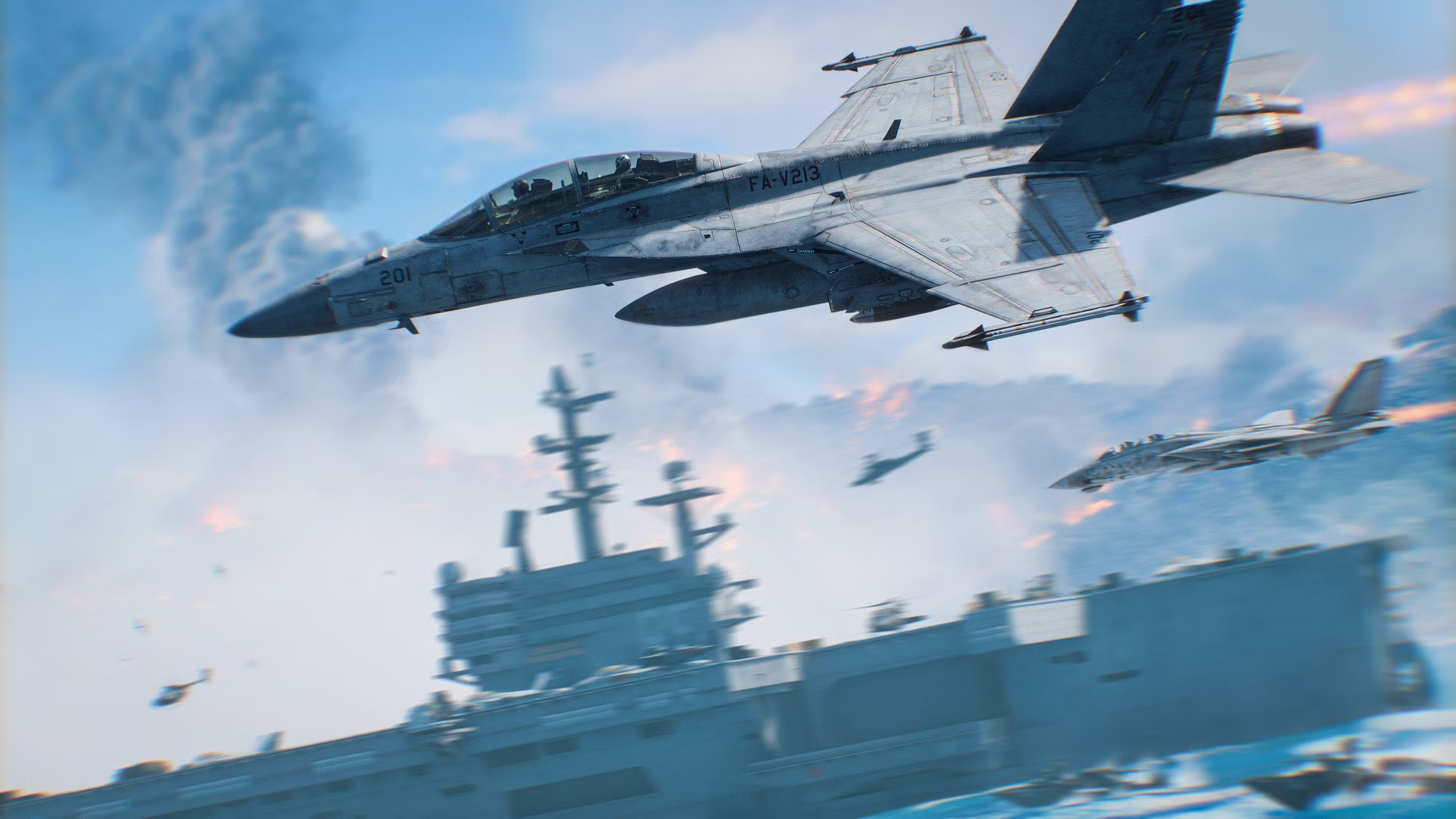
The number to remember above all others: fighter jet bombs deal as much damage as a missile from the surface-to-surface batteries. This is the data point that should dictate your team composition. EA states the advice bluntly and recommends assigning your best air-to-ground specialist a strafing run mission: a few good passes are enough to turn the tide of battle.
Direct damage doesn't stop there. Explosives, tank rounds, and portable launchers fired at the deck or hull of the enemy carrier all count, and they work before the critical state is reached. A tank posted on a coastline with sight of the opposing vessel is putting in work.
The second reflex concerns respawns. EA is explicit about this: unless you want to rely on the HQ and objective spawn points, you need to stay alive near the enemy carrier or deploy a spawn beacon there. Without a forward beacon, every death sends your squad back to the far end of the game's largest map, and the pressure drops off.
Finally, the mode is combined-arms by design: victories don't rest on infantry alone, you need to coordinate ground, naval, and air assaults to take the missile sites and work over the opposing deck.
On defense: play the reload timer and the balance
Defending isn't about camping your own deck. Three levers, in order of effectiveness.
Retake the batteries at the right moment. This is the mode's best effort-to-result ratio: a battery retaken just before its volley cancels out damage that would otherwise be unavoidable. A mobile squad moving between two contested sites does more for your carrier's health than a platoon dug in inside it.
Hold the majority for the anti-air guns. Since fighter bombs weigh as much as a battery missile, locking down the sky amounts to cutting off one of the two main sources of enemy damage. The automated anti-air guns unlocked by holding a majority of sites help you do this without tying up a player.
Watch for imbalance. This is the sharpest advice from the official guide: missile sites and direct damage both reduce health, while relays add an automatic win condition once the critical state is reached. If the opponent concentrates their resources on just one of these sources, attack where they lack defenses. Whoever puts everything into interior defense leaves their batteries exposed, and vice versa.
What to do this week
The calendar is working in your favor this weekend of Friday, August 21. The Top Gun event runs until September 15, 12:00 PM UTC, which leaves more than three weeks to rack up Elite medals via the Top Gun challenges. As for the free access window, it closes on Tuesday, August 25: until then, expect fuller servers and opponents who, in many cases, are on their very first matches in this mode.
Three concrete priorities, if you only have a few evenings:
- Learn the 15-second cycle. Watch a battery fire, count, and practice arriving before the next volley. This is arguably the mode's most rewarding reflex, and one of the least practiced.
- Plant a spawn beacon near the enemy carrier as soon as you achieve your first successful breakthrough, even before looking for kills.
- Don't overlook the critical state. From 50% onward, redeploy toward the water: it's the only way in to the first relay, and victory by relays completely ignores the damage score.
One last note on methodology, useful if you want to check the source yourself: EA's mode guide is indeed available in French at ea.com/fr-fr, but the roundup published on Steam on August 20, which confirms that the mode is active, only exists in English. EA's Steam feed isn't systematically translated: for Season 4, it's EA's French page that serves as the reference.
Share this article
Your number one priority on attack: damaging the carrier or capturing the batteries?
Frequently asked questions
How exactly do you win in this mode?
Two paths: reduce the enemy carrier to zero HP before the 30-minute mark, or destroy its two relays once it drops to 50% health. If neither condition is met, whoever has the most health remaining on their carrier wins the match.
Why does capturing the ground-to-ground batteries change everything?
Each battery fires every 15 seconds. When you capture it right before a volley, its timer resets and the strike is canceled. It's a massive defensive action that costs nothing but a presence on the field, not resources.
What changes when the carrier drops to 50% health?
The ship enters a critical state, its relay rooms open up from the water, and the match shifts: you can now win in two seconds by destroying two M-COMs, even if you were losing on damage before. This is the moment when coordination becomes crucial.
Do fighter jets really deal as much damage as the missiles?
Yes, fighter jet bombs deal exactly the same amount of damage as a ground-to-ground battery missile. That means your best air-to-ground pilot is as valuable as an entire battery — invest in that.
Do I absolutely need to defend my carrier, or is it better to play the batteries?
A mobile squad on the batteries does far more for your carrier's health than a platoon entrenched inside it. Defending starts with controlling the resources that can hurt it.
Key takeaways
- The five ground-to-ground batteries deal steady damage, but capturing them just before a volley cancels the strikes — it's your best defense.
- At 50% health, the carrier enters a critical state and its relays become accessible: the match shifts from a damage race to a trench assault.
- Fighter jet bombs deal as much damage as a battery missile — don't underestimate your best air-to-ground pilot.
- Holding three batteries unlocks automated anti-air guns and grounds enemy aircraft without tying up your players.
- Defending doesn't mean camping on your carrier's deck: a mobile squad on the batteries is worth more than a platoon entrenched inside.
Comments
No comments yet. Be the first to react!
Leave a comment
Similar guides

Latest articles








Your opinion counts
Rate Battlefield 6
Click a star to rate