


 Fabian Lainé
Full Guide
Baldur's Gate 3: the Dark Urge origin guide — Cloak of Death's Domain, Slayer form, and the final choice against Bhaal
In brief
Dark Urges impose a bloody price for every exclusive reward: the Cloak of Death's Embrace demands Alfira's death, the Ravager form demands Isobel's, and it all culminates at the Temple of Bhaal, where refusing Bhaal's legacy costs your life but grants freedom. This origin locks certain urges without any room for negotiation, turning every chapter into a moral compromise where the player's control disappears at times.
Spoiler warning: this article describes the complete narrative arc of Dark Urge, up to its resolution at the Temple of Bhaal. If you'd rather discover it controller in hand, close this page.
Dark Urge is the only origin in Baldur's Gate 3 that, at times, takes control of your own character away from you. You freely choose the race, class, and appearance — only the background is fixed. The rest is scripted: your protagonist is amnesiac, wracked with murderous urges, and some of these impulses are non-negotiable. They play out without a single dice roll, and claim characters that regular playthroughs keep alive.
It's also the only way to obtain two rewards that nothing else grants: the Cloak of Death's Embrace in Act 1, and the Slayer form in Act 2. Both come at the cost of a character's death. And everything converges toward one final exchange, at the Temple of Bhaal, where you decide whether to accept or reject the legacy of the Lord of Murder.
The origin locks in at character creation, with no way to switch to it mid-playthrough
Dark Urge can only be selected at the creation of the main character: it's impossible to adopt it in Act 2 on a whim, and equally impossible to encounter it as a recruitable companion, since the role is reserved for the protagonist. To play it, you have to start a new game.
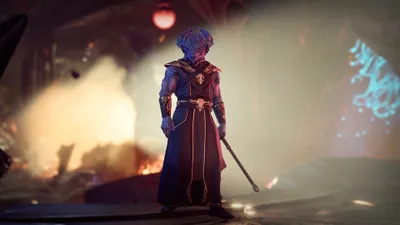
Good news compared to other special origins: you don't inherit a fixed character. Race, class, and appearance remain fully customizable; only the background is beyond your control. The character offered by default is a Dragonborn Sorcerer, described as albino by Millenium, but nothing forces you to keep it — and one class in particular gets a disproportionate benefit from the Act 1 reward.
Some urges can be resisted, others play out without asking your opinion
The principle rests on an alternative: give in or resist. Except the choice isn't always in your hands — some scenes trigger on their own, with no roll, and the tragedy simply happens. The acts that belong exclusively to this origin:
- Gale — the moment he reaches his hand out of the portal, you can cut it off. He dies and can never be recruited.
- The squirrel at the Druid Grove — simply speaking to it is enough: the urge cannot be resisted, and the animal is killed instantly.
- Alfira, the tiefling bard at the Druid Grove — helping her brings her to your camp, where you automatically murder her during the night.
- Minthara — after slaughtering druids and tieflings to recruit her, then spending the night with her, you can snap her neck.
- The Moonlantern Pixie — once freed, she can be killed.
- Isobel, priestess of Selûne — killable in Act 2, either directly or by pushing Shadowheart to kill Nightsong.
Larian itself highlighted these choices on August 4, 2026, in its three-year statistics: in Dark Urge, the most-killed NPCs are Isobel, Zevlor, Alfira, Wulbren, and Popper — a ranking distinct from that of regular playthroughs, which is dominated by Zevlor (12.3 million deaths) ahead of Rolan (8.6 million).
The Cloak of Death's Embrace costs Alfira her life, right from Act 1
Assassinating Alfira isn't a decision, it's a scene. You help her at the Druid Grove, she joins the camp, and when night falls your character kills her. The trade-off is one of the best cloaks in the game, complete with a servant.
The Deathstalker Mantle makes you invisible for two turns whenever you kill an enemy, once per turn. On an Assassin Rogue, the effect is devastating: every execution puts you right back into ambush position.
The trap isn't the one you'd expect: the mantle isn't lost if Alfira survives. By knocking her out with non-lethal damage at the Druid Grove before taking a long rest, she doesn't show up at camp — it's Quil Grootslang who takes her place in the scene, and the Deathstalker Mantle is awarded regardless (a method documented by Dexerto France and jeuxvideo.com). So what's being paid for isn't the reward itself, but the life of one or the other: the game demands a death, it just lets you choose whose. Millenium states that keeping her alive «requires being extremely creative», without detailing the trick. One lead is circulating — knocking her out with non-lethal damage before the long rest — but we couldn't verify it: take it as a lead, not as an established method.
The Ravager form unlocks by killing Isobel, and costs you Jaheira and Minsc
Second exclusive reward, second corpse. The Ravager form is a monstrous transformation, fearsome in melee, obtained by killing Isobel in Act 2 — either by striking her yourself, or by pushing Nightsong's killer, Marcus. The consequences are heavier than with Alfira: it generally becomes impossible to recruit Jaheira and Minsc.
And this power turns against you. Once the form is acquired, a later scene forces you to succeed a saving throw or kill your companion. The transformation isn't a cosmetic gadget: it installs a permanent threat within the party itself.
| Exclusive reward | Act | Price to pay | Effect |
|---|---|---|---|
| Deathstalker Mantle | 1 | The death of Alfira or Quil Grootslang (the scene also brings in a servant) | Invisible for two turns upon killing an enemy, once per turn |
| Ravager form | 2 | The death of Isobel, Jaheira and Minsc generally lost | Fearsome melee transformation; later saving throw or kill a companion |
Neither of these two rewards can be obtained any other way than through this origin.
At the Temple of Bhaal, accepting the blessing or rejecting your progenitor decides the ending
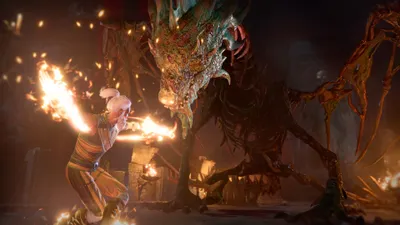
The whole arc finds its meaning here. Dark Urge is a Bhaalspawn, lord of murder, and contests with Orin the title of the god's chosen one. The confrontation takes place at the Temple of Bhaal, and the game offers you the chance to transform into a Ravager for the fight, if you have the form.
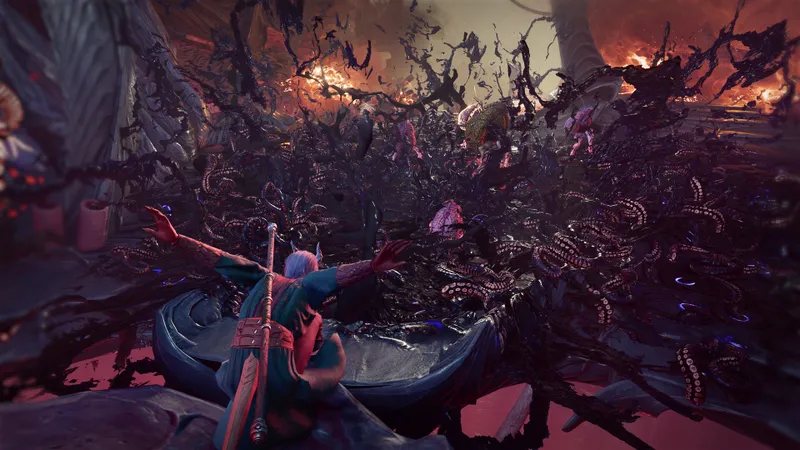
Once victory is secured comes the question that decides everything: accept Bhaal's dark blessing and take on the role of chosen one, or reject your progenitor. Refusing comes with an immediate cost: the rejection causes instant death. Withers then intervenes and resurrects the character, finally free. You become "normal" again, but the break isn't free of consequence: Minthara leaves the party if she was part of it.
The consequence carries through to the very last scene. Without freeing yourself from Bhaal's influence, the evil ending changes in nature: victory is dedicated to the god, not to your own name. Conversely, the ending for the freed character opens up several outcomes — death, imprisonment, or rebellion against the god. Our sources describe them without giving them an official title: we will therefore refrain from naming them.
The two achievements reserved for this origin, and their actual conditions
Two achievements are reserved for this origin. The first, "Embrace Your Urge" (Embrace Your Urge), a title noted on the French Steam achievements page. The second, "Sins of the Father" (Sins of the Father), earned by 3.2% of Steam players, rewards the path described at the end of the article: taking control of the brain in Bhaal's name. Since the French page does not publish achievement descriptions to avoid spoilers, this condition comes from English-language sources and remains to be confirmed hands-on; the French title, however, is certain. It is obtained by accepting Bhaal's gift at the end of the fight against Orin.
A useful clarification for anyone hesitating over sacrificing Isobel: according to the condition noted, the achievement does not require having killed her in Act 2. However, this condition comes from a secondary French source, whereas only the title is certified by Steam: a strong indication, not a guarantee.
What to decide before recreating a character
No countdown weighs on this choice: Baldur's Gate 3 is a finished game. Patch 8 remains its latest content update, and the most recent development concerns the Xbox version, which moved to Xbox Play Anywhere on August 3, 2026. Released on PC on August 3, 2023 and having sold more than 20 million copies, the game lends itself well to a fresh playthrough: this guide won't go out of date.
Three decisions, then, before finalizing your character:
- The class: nothing forces you to keep the default Draconic Bloodline Sorcerer, and a Rogue Assassin makes better use of the Cloak of Displacement than anyone else.
- The rewards or the companions: the cloak costs a life, Alfira or Quil Grootslang, and the Ravager form costs Isobel, Jaheira, and Minsc.
- The ending: accepting Bhaal's gift unlocks "Embrace Your Urge" and dedicates the victory to the god; rejecting it frees the character, but causes Minthara to leave.
Share this article
Faced with the Dark Urges' rewards, are you willing to sacrifice companions?
Frequently asked questions
Can you get the Cloak of Death's Embrace without killing Alfira?
Yes, by knocking her out with non-lethal damage before the long rest at the Druid Grove. She won't join the camp and Quil Grootslang will take her place in the scene, but you still get the reward. The game demands a death, it just lets you choose whose.
What are the direct consequences of killing Isobel to unlock the Ravager form?
You generally lose the ability to recruit Jaheira and Minsc, which creates a significant tactical gap. On top of that, a later scene forces a saving throw: failing it automatically causes your companion's death, turning the form into a permanent internal threat.
What happens if I refuse Bhaal at the Temple?
Refusing causes instant death, after which Withers steps in to resurrect you free of any divine influence. Minthara leaves the party if she was part of it, and the character's ending opens up onto several paths: final death, imprisonment, or rebellion against the god himself.
Are there automatic murder scenes with no way to resist?
Yes. The squirrel at the Druid Grove dies instantly as soon as you speak to it, with no roll involved. Alfira is automatically killed at night if she has joined the camp. These acts are completely beyond your control.
Is the Cloak of Death's Embrace really as powerful as people say?
On an Assassin Rogue, the effect is devastating: every enemy killed makes you invisible and puts you back into ambush position, allowing for a cascade of critical hits. On other classes, it remains genuinely useful but less explosive.
Key takeaways
- The Cloak of Death's Embrace and the Ravager form can only be obtained through the Dark Urges, by sacrificing Alfira and Isobel respectively.
- Some urges trigger automatically with no dice roll: sometimes you have no control at all over the murder committed.
- Refusing Bhaal at the Temple causes instant death, after which Withers resurrects you free of his influence, but Minthara leaves the party if she was part of it.
- The Cloak of Death's Embrace grants two turns of invisibility upon killing an enemy, a devastating effect on an Assassin Rogue who regains their ambush.
- Accepting Bhaal leads to an ending dedicated to the god, while breaking free opens up several alternate endings: death, imprisonment, or rebellion.
Comments
No comments yet. Be the first to react!
Leave a comment
Similar guides



Latest articles





Your opinion counts
Rate Baldur's Gate 3
Click a star to rate