

Big Walk Review: The Best Co-op Game in Years According to Gamespot
 Alexandre Jollier
In brief
Gamespot praises Big Walk as one of the best co-op games ever made. House House delivers a minimalist puzzle-adventure where you and your friends (from 2 to 12) play elastic creatures on an Australian island, solving environmental puzzles without any tutorial or intrusive interface.
If you have a group of 2 to 12 people ready to commit to a HUD-free experience, with no quest markers and no safety net, buy Big Walk with your eyes closed, says the Gamespot journalist. If you're looking for Lethal Company-style chaos or sabotage among friends, look elsewhere: this isn't the same game, and more importantly, not the same mindset.
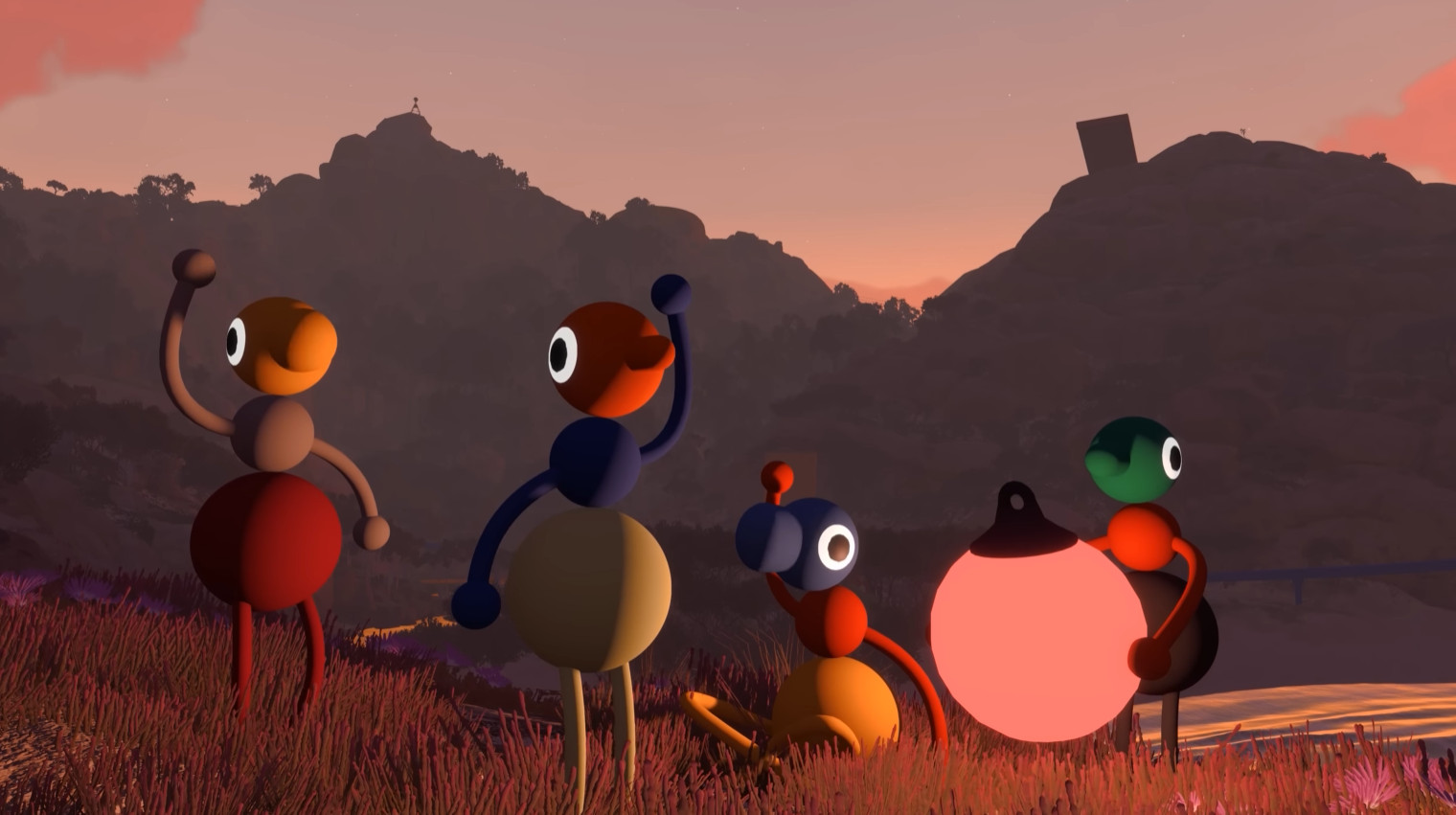
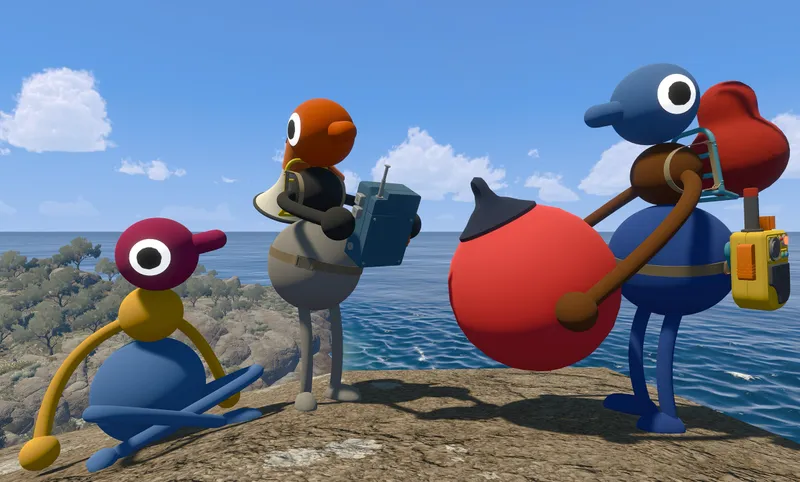
The pitch fits in one line: you and your friends play snowman-like creatures with stretchy limbs, dropped onto a giant island inspired by the Australian Outback. The objective: solve environmental puzzles to recover unnamed MacGuffins, without ever having a tutorial or lore text spell things out for you. After the minimalist tour de force of Untitled Goose Game, House House strikes again with a game that stubbornly refuses to explain anything to you - and that's exactly where its magic lies.
What works
The main strength of Big Walk is its fully diegetic approach: no arrows, no gauges, no on-screen prompts. Everything relies on observation, voice communication via proximity chat, and collective experimentation. The level design, entirely handcrafted (unlike a procedurally generated Peak), is packed with details designed to guide without ever feeling patronizing - from mountain switchbacks pointing toward a distant landmark to radio stations tucked away in the woods.
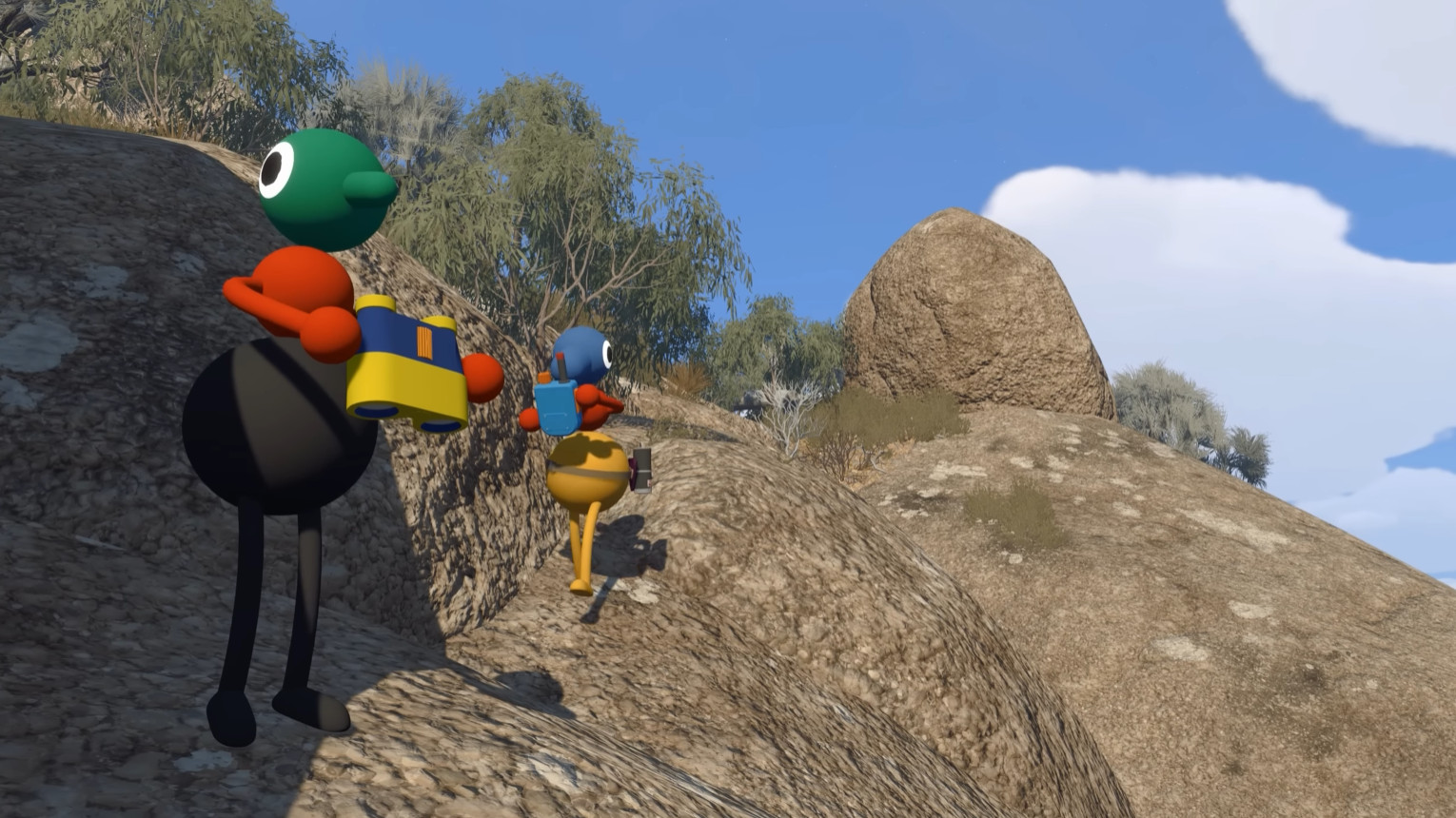
House House also manages to do a lot with a little: barely six to eight puzzle concepts form the backbone of the entire game, but each one is reworked with an inventiveness that avoids any repetition. The famous blinding helmet, reused later with completely different rules, perfectly illustrates this economy of means serving genuine depth. And the final act, which recombines everything you've learned into a conclusion that's both understated and moving, wraps everything up with rare game design intelligence.
What doesn't work
The game's only real flaw, according to Gamespot, comes down to a mechanic that can be foolishly bypassed: proximity chat. Switching to Discord or an external chat instantly defuses puzzles designed to play with the limits of in-game voice communication. Nothing technically prevents this workaround, but it's like watching a survival-horror game in broad daylight: it works, but you miss out on the essence of the experience.
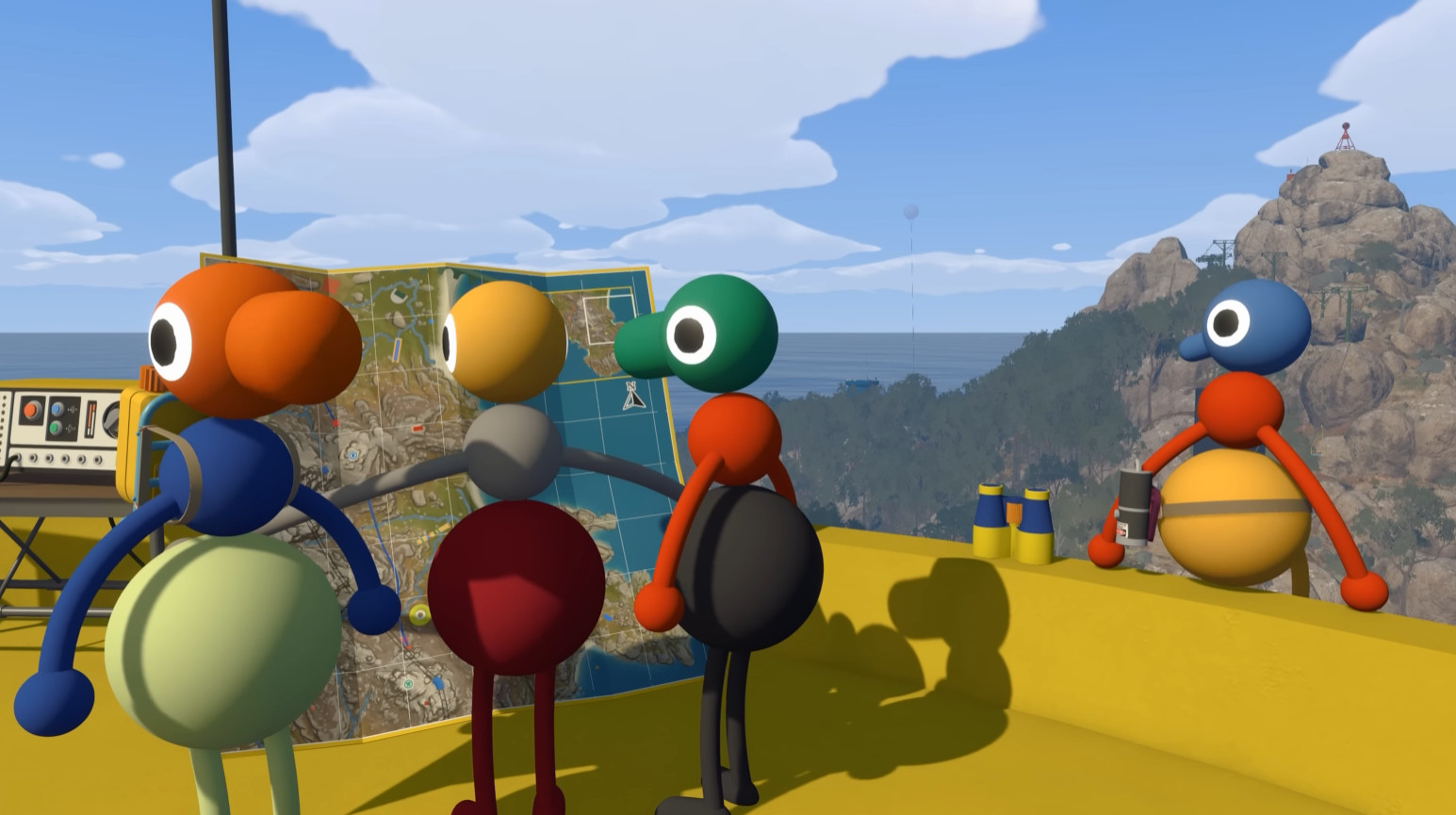
Also worth noting: Big Walk has a defined ending and clearly isn't designed for infinite replay, even though a new group configuration noticeably changes the journey. Compared to Peak or Lethal Company, Big Walk targets a different audience: less frantic, more contemplative, but just as addictive in a group. If you're looking for a co-op game to play with friends or family, without competition or gratuitous sabotage, this is probably what you've been waiting for for years.
Strengths
- A fully diegetic approach, with no HUD or quest markers, leaving all discovery to the players
- Handcrafted level design of remarkable precision, unlike Peak's procedural generation
- Smart reuse of a limited number of puzzle concepts, always kept fresh
- A final act that recontextualizes the entire journey with unexpected emotion
- Smoothly scalable from 2 to 12 players without losing design coherence
Weaknesses
- Bypassing proximity chat via Discord or Steam undermines much of the concept
- A limited-length experience, designed for a single complete playthrough per group
Verdict
A cooperative game of rare intelligence, betting everything on communication and discovery - and winning that bet hands down.
Share this article
Do you prefer contemplative co-op or chaotic co-op?
Frequently asked questions
Is Big Walk really made for 2 to 12 players?
Is there a tutorial or text explanations?
Can you replay Big Walk after finishing it?
How does proximity chat influence the gameplay?
How does Big Walk compare to Peak or Lethal Company?
Key takeaways
- No arrows, no gauges, no interface text: everything relies on observation and voice communication through proximity chat.
- The entirely handcrafted level design is packed with details designed to guide without hand-holding, from mountain switchbacks to hidden radio stations.
- Only six to eight puzzle concepts serve as the foundation, but each is reworked with an inventiveness that avoids repetition.
- Bypassing proximity chat via Discord or an external chat instantly disarms puzzles designed around the limitations of in-game communication.
- Big Walk targets a contemplative audience seeking pure cooperation, far from the chaos and sabotage of Lethal Company.
Comments
No comments yet. Be the first to react!
Leave a comment
Latest articles