

 Fabian Lainé
Full Guide
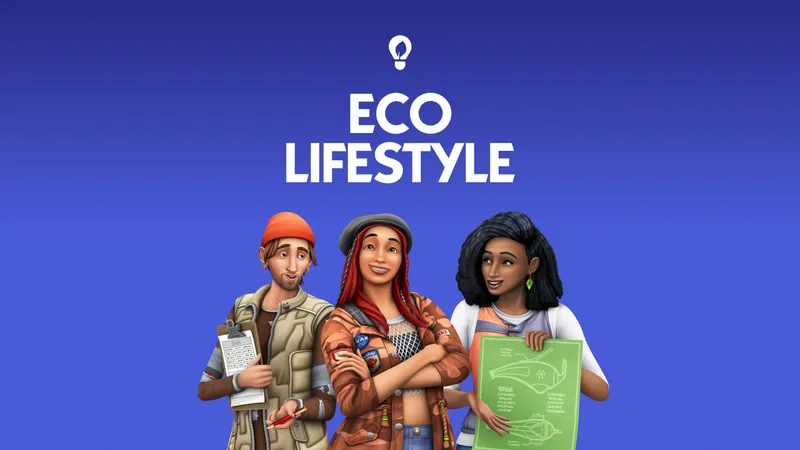
Sims 4 Eco Lifestyle: the guide to the Eco Lifestyle pack
In brief
Eco Lifestyle turns The Sims 4 into a true ecological simulator where every decision matters. Between the new world of Evergreen Harbor, a dynamic eco-footprint system that reshapes neighborhoods, and crafting/recycling mechanics that give real economic weight to sustainable choices, the expansion offers far more than a simple green theme: it's a gameplay overhaul.
Released on June 5, 2020, the expansion pack The Sims 4 Eco Lifestyle invites players to rethink their Sims' way of life. Gone are the days of simple suburban comfort: here, every action counts, from recycling an old couch to the weekly vote that will decide whether the neighborhood bans scented candles or plants community gardens. This guide covers the expansion's gameplay in full: the new world of Evergreen Harbor, the dynamic eco-footprint system, Neighborhood Action Plans, clean energy, brand-new skills, and the careers that will turn your Sims into sustainability heroes.
Evergreen Harbor: an industrial port waiting to be reinvented
The expansion introduces a brand-new coastal world, Evergreen Harbor, inspired by industrial ports of the American Pacific Northwest. It's a deliberately ambivalent map: wastelands, factory smokestacks, and rusted containers coexist with floating houses and community spaces ready to be reborn. Unlike the pastoral worlds of previous expansions, Evergreen Harbor demands to be shaped by the player.
Three neighborhoods, three destinies
Evergreen Harbor is divided into three neighborhoods with very distinct atmospheres, each starting out with a different eco-footprint:
- Grimsley Fields: a neighborhood that already looks lush and green, with a positive eco-footprint. Sims here breathe clean air and benefit from mood bonuses.
- Conifer Station: a neutral neighborhood, neither polluted nor especially green. It's the ideal blank slate for observing the real impact of your choices.
- Port Promise: an industrial neighborhood, saturated with toxic smog, visible litter, and factory noise. Your Sims will cough, feel unwell, and suffer from an oppressive setting until they tackle the problem.
The bet is clear: the world isn't static, it evolves with your actions. A cleaned-up Port Promise will eventually resemble a true green oasis, while a neglected Grimsley Fields can slide to the dark side.
The dynamic eco-footprint
A major new feature of the expansion, the eco-footprint isn't limited to Evergreen Harbor: it applies to nearly every world in the base game and expansions. Each neighborhood shifts between three states, visible both to the naked eye and in the HUD:
- Positive: dense vegetation, clear skies, visible wildlife, and a mood boost for Sims.
- Neutral: an ordinary neighborhood, with no particular effects.
- Industrial: persistent smog, litter in the streets, scorched vegetation, frequent coughing, and energy slumps.
Every lot has its own footprint, which adds up to determine that of the neighborhood. A lot crammed with old energy-hungry appliances will drag the whole neighborhood toward the red, while a well-kept garden will help green up the map.
This mechanic gives real weight to building choices: recycled materials, solar panels on the roof, a vegetable garden out front — every decision quietly feeds into the ecological balance. You end up looking at your lots with fresh eyes, almost like a city planner.
Neighborhood Action Plans (N.A.P.s)
The social heart of the expansion is the Neighborhood Action Plans, or N.A.P.s (Community Space Actions and Neighborhood Action Plans in the original version). Every week, a collective vote allows players to adopt or repeal policies that change the rules of life in the neighborhood, Sims' income, and even the look of the streets.
Voting and influencing decisions
Votes cost influence points, a new resource your Sims earn by taking part in local life: picking up litter, recycling, gardening, discussing environmental issues with neighbors, or advancing an eco-friendly career. The more involved you are, the more weight you carry in the weekly polls.
A catalog of around twenty policies
The pack offers a wide range of action plans, to be combined depending on the type of neighborhood you want. Among the most iconic:
- Green Initiatives: boosts vegetation, reduces visible litter, and shifts the footprint toward green.
- Candle Ban: reduces indoor air pollution, often adopted in already healthy neighborhoods.
- Waste Crackdown: penalizes food and energy waste, encourages neighbors to compost and recycle.
- Self-Sufficiency: encourages vegetable gardens and homemade production.
- Shared Community Space: turns a public lot into a recycling depot, farmers market, community garden, or creative workshop depending on the vote.
- Modernized City: conversely, steers the neighborhood toward a more industrial urban aesthetic, with economic bonuses but an ecological cost.
Community spaces are particularly interesting: the same empty lot can become, in turn, a market, a garden, or a workshop, depending on which policy wins out. It's a real narrative engine, giving the impression that the neighborhood lives on independently of the player.
Clean Energy and Water Management
Living green in The Sims 4 also comes down to the home. The expansion introduces fine-grained consumption management, with dedicated equipment to install on your lots.
Producing your own electricity
- Solar Panels: to be placed on roofs, with output depending on sunlight.
- Wind Turbines: bulkier but efficient, ideal for large lots or urban rooftops.
- Standard Grid: always available, but largely powered by fossil fuels, with an impact on your ecological footprint.
A well-equipped lot can achieve total self-sufficiency, or even sell off its surplus, which considerably lowers bills.
Collecting and filtering water
On the water side, two options are available to Sims mindful of their consumption:
- Dew Collector: captures moisture from the air, perfect for modest household use.
- Water Generator: a more powerful version, capable of supplying an entire household.
This equipment fits into the off-grid logic previously introduced by the Countryside Living pack: you can now build a home completely disconnected from utility networks, without sacrificing comfort.
Two new skills: Crafting and Fizzing
The pack adds two fresh skills to the roster, each with ten levels.
The Crafting skill
This is the expansion's flagship skill. The principle: retrieve abandoned items (from dumpsters, by rummaging through trash, or via generous neighbors), run them through the household recycler to obtain materials (scraps, fragments, pieces), then transform them using the Fabricator. The payoff: furniture, decorations, clothing made from recycled fabric, and even eco upgrade parts to boost existing appliances.
Making your own furniture radically changes household economics: no more need to buy new lamps or tables, a resourceful Sim can furnish their home almost for free using salvaged materials.
The Fizzling Skill
Lighter but fun, Fizzling lets you create sparkling drinks from fruits, vegetables, or more unusual ingredients via a dedicated fountain. At the highest levels, you unlock intriguing recipes, including the mysterious Fizzbucha, somewhere between homemade kombucha and a suspicious potion.
Careers: Civil Designer and Freelance Fabricator
Two brand-new career paths come with the pack, both directly tied to the eco-friendly themes.
Civil Designer
This classic career splits into two branches after level 3:
- Eco Technician: focused on crafting and tinkering, requiring high Logic and Fabrication skills. Your Sims produce eco upgrade parts daily from recycled materials.
- Municipal Planner: focused on action plans and community, with an emphasis on influence and charisma. Ideal for swaying neighborhood votes.
Freelance Fabricator
For Sims who prefer their independence, a job as a freelance fabricator lets you sell items made with the Fabrication Machine through customer orders. Free schedule, income proportional to the Fabrication skill: perfect for playing an eco-friendly artisan who works from their home workshop.
Tips for starting an eco-friendly life the right way
A few tips to get the most out of the pack from the very first hours:
- Start in Grim Career to enjoy a positive footprint and learn the mechanics without pressure.
- Install a home recycler and a composter very early on: these two objects alone are enough to generate an avalanche of free materials.
- Make dumpster diving a habit: recovered items can be repaired, sold, or recycled into components.
- Stack up solar panels and a dew collector as soon as possible to move toward self-sufficiency and cut down on bills.
- Invest your influence points in one or two flagship eco action plans rather than spreading them too thin.
The real joy of the Eco Lifestyle pack doesn't come from accumulating objects, but from the visible transformation of the neighborhood: watching Port Promise turn from gray to green over the weeks is probably one of the most satisfying gameplay payoffs in The Sims 4.
To go further
- Combine Eco Lifestyle with Cottage Living for a fully off-grid way of life.
- Create a 100% self-sufficient neighborhood with vegetable gardens, chicken coops, and the Fabrication Machine.
- Dedicated guide to the Civil Designer career: which branch to choose based on your playstyle.
Share this article
Which aspect of Eco Lifestyle appeals to you the most?
Frequently asked questions
Does the eco-footprint only work in Evergreen Harbor?
No, that's one of the pack's biggest strengths. The footprint applies to nearly every world in the base game and previous expansions. Each lot has its own footprint, which combines to define that of the entire neighborhood.
How do Neighborhood Action Plans really work?
Each week, a collective vote lets you adopt or remove policies that change the neighborhood's living rules, income, and appearance. Your Sims earn influence points by participating locally (cleaning, recycling, gardening, chatting), which increases their voting weight.
Can you really live completely off-grid in Eco Lifestyle?
Yes, with solar panels or wind turbines for electricity and water collectors or water generators for supply. A well-equipped lot can achieve total self-sufficiency and even sell its energy surplus.
Does Object Fabrication really change the way you play?
Absolutely. Instead of buying new furniture and decorations, your Sims collect abandoned items, recycle them into raw materials, then transform them using the Fabrication Machine. This completely redefines household economics.
What is Fizzing and what is it for?
It's a lighter skill that lets you create sparkling drinks from fruits, vegetables, or original ingredients using a dedicated fountain. At higher levels, you unlock intriguing recipes like the mysterious Grim's Reaper Kombucha.
Key takeaways
- The eco-footprint visually transforms neighborhoods in real time: a green Promise Point becomes an oasis, while a neglected Grimsley Manor turns smoggy.
- Neighborhood Action Plans give players real narrative power, voting each week to reshape the rules and appearance of the streets.
- Object Fabrication shakes up the economy: recycling furniture instead of buying it new completely redefines household resource management.
- Solar panels, wind turbines, and water collectors finally allow for total self-sufficiency, without relying on public utility grids.
- Two brand-new careers (Civil Designer and Freelance Crafter) offer life paths entirely rooted in ecological concerns.
Comments
No comments yet. Be the first to react!
Leave a comment
Similar guides
Latest articles





Your opinion counts
Rate The Sims 4
Click a star to rate