



 Fabian Lainé

Full Guide
Sims 4 Heritage and Royalty: the guide to dynasties, prestige, and dynastic perks
In brief
Dynasties in The Sims 4 Legacy and Royalty work like a multigenerational scoring system: you choose values and skills, gain prestige by upholding them, then spend your points on perks that boost the entire household. It's a game mode designed to last for dozens of hours, where every decision impacts the stability and trajectory of your lineage.
In The Sims 4 Legacy and Royalty, a dynasty isn't a label slapped on a family tree: it's a scoring system that tracks your lineage across multiple generations, hands out permanent bonuses to its members, and eventually passes on traits to babies born into it. Many playthroughs stall because the dynasty is founded in a hurry, with randomly chosen values, then loses prestige without anyone understanding where the leak is coming from.
Everything is managed from a single place: in Live mode, the Social Groups tab, in the bottom right. There you'll find View Dynasties and Found a Dynasty, then, once yours is created, the Dynasty Settings and Dynasty Details (the gear icon). Only young adult Sims or older can found one, and a Sim can only ever belong to one dynasty at a time.
The timing is good: this type of playthrough is played over dozens of hours in the same save, and the August 6, 2026 patch fixed the memory crash while traveling and the stuck school countdowns.
Founding, joining, leaving: the rules of entry
The pack already includes pre-established dynasties in Ondarion, with their ideals, history, and relationships: there's no obligation to start from scratch. If you found your own, spouse, family, and offspring join automatically, the default name is your family surname, and the coat of arms you design is displayed on the dynastic coat of arms shield, available in Build mode. A few rules then govern membership:
- No member limit, and several households are possible: no one is obliged to live on the same lot. Conversely, a single household can house Sims from different dynasties.
- You join through blood, marriage, adoption (the pack now allows adopting teens, young adults, and adults), or by becoming the child or stepchild of a member. The spouse's in-laws stay outside.
- Only the head of the dynasty can invite, accept, or exclude. An invitation can be declined: certain traits make a Sim incompatible with the displayed values.
- In the event of divorce, members with no blood ties and children from a previous union leave the dynasty.
A member can also leave to found a branch dynasty: it starts with a fraction of the parent house's prestige, but its values are free to choose. It's the cleanest way to fix a lineage that's gone off track, at the cost of guaranteed conflicts with the original.
Values: three skills, three ideals, not one more
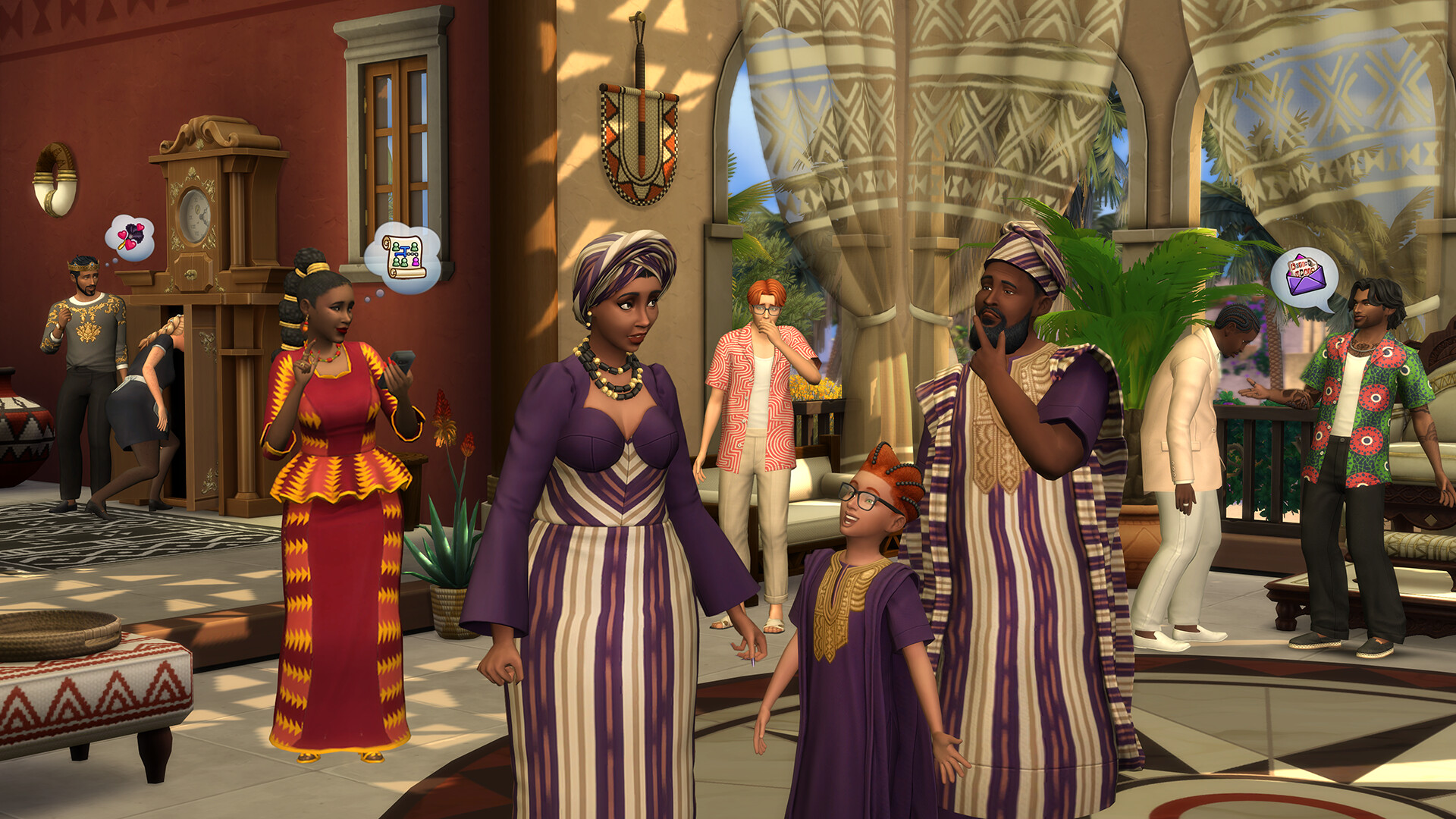
Values are the engine of prestige: they designate the activities and careers encouraged by the house, and those that are discouraged. A dynasty must display at least one and can combine up to three skills and three ideals. Skills are drawn from the base game as well as from any installed pack; some combinations are incompatible and mutually lock each other out.
Thirteen ideals are available:
| Ideal | What the dynasty values |
|---|---|
| Altruistic | Generosity, mutual aid, charity |
| Artistic | Music, reading, artistic creation |
| Diligent | Prestigious careers, studies, high income |
| Bold | Courage, adventure, new experiences |
| Diplomatic | Politeness, charm, mediation |
| Epicurean | Luxury and quality products |
| Erudite | Knowledge and scientific thought |
| Jovial | Games, entertainment, carefree living |
| Vicious | Ferocity and bluntness |
| Mysterious | Occult, celestial sciences, the beyond |
| Nature-loving | Nature, animals, ecology |
| Passionate | Romance and attentiveness to others |
| Sneaky | Mischief, cunning, cleverness |
Each member reacts to the values according to their traits and activity preferences: an Evil Sim hates the Altruistic ideal, a Creative Sim applauds the addition of the Painting skill. These reactions drive autonomous behavior: a member who disagrees will spontaneously do the opposite of what the household stands for and will make you lose prestige all on their own. Changing a value partway through triggers a fresh wave of reactions, and stacking up unpopular changes leads straight to a unity crisis.
The practical rule: choose values based on the traits already present in the household, not on the story you have in mind. An Erudite dynasty filled with Active Sims will spend its whole life in the red.
Prestige: what pushes it up to level 10
Prestige measures the household's influence and climbs up to level 10. Every member's actions count, but those of the head of the dynasty and their heir weigh significantly more, whether for better or worse.
What raises the counter:
- Activities and careers aligned with the values; the higher the career level, the bigger the gain.
- Good grades at school.
- New friendships, and later their progression into good friendships.
- Social events, whose score determines the gain.
- Marrying into another dynasty, forging an alliance, sparking a rivalry.
- Being friendly toward allies and mean toward rivals.
What makes it drop:
- Activities and careers that clash with the values, following the same reversed logic: a high-ranking member who betrays the line costs dearly.
- Breaking off an alliance or ending a rivalry.
- Scandals coming to light, proportional to their severity.
- The simple passage of time, which erodes the score continuously.
Two details change the equation. The gain or loss tied to a marriage, an alliance, or a rivalry depends on the other dynasty's prestige level: targeting a powerful household pays off far more than humiliating an unknown lineage. And the natural erosion of prestige can be turned off in the pack's settings. Finally, know that you can drop back down a tier: the advantage points and advantages already purchased are then lost.
Dynasty advantages: 31 lines, about fifteen real decisions
Each tier reached credits the head of household with dynasty advantage points, to be spent from the Dynasty panel. The catalog counts 31 entries — 9 Legacy advantages, 18 social advantages, and 4 hereditary traits — but most come in three tiers, which brings the actual choice down to about fifteen options. Only the head of household decides, and everyone benefits, except for outcasts.
| Category | Perks |
|---|---|
| Achievement | Improved Grade, Nepotism, Tutoring, Market Manipulation, Arrange a Promotion |
| Social | Hierarchical Respect, Discretion, Quality Event, Simplified Alliances, Matchmaking Agency, Friends in High Places |
| Hereditary Traits | Mental Affinity, Social Affinity, Physical Affinity, Creative Affinity |
The order in which you buy matters more than the content itself. Nepotism speeds up the household's job performance, and therefore careers, and therefore prestige: it's the most profitable loop of the early tiers. Friends in High Places comes right after: it speeds up friendships and slows the decay of relationships, which in turn feeds prestige and unity. Discretion is the only defensive perk: shortened scandals, secrets that are easier to uncover, and reduced fees with the Informediary.
Hereditary traits: the only investment that compounds
The four affinity perks — mental, social, physical, creative — don't benefit anyone right away: they mark the babies yet to be born to parents who are members of the dynasty. The first generation affected receives the trait in its light version, their children in the moderate version, and their own children in the strong version.
From the moderate tier onward, the Sim also produces higher-quality objects in the relevant skills. As a direct consequence, buy the affinity you're aiming for before the wave of births: a trait bought at prestige level 8, once the third generation has already been born, will never catch up on the lost tiers. This is the only decision in this guide that can't be corrected later.
Unity, ranks and outcasts: holding the household together
Unity measures how well members actually get along. When relationships are good, the dynasty is in stability and internal friendships form faster. When they get strained, a unity crisis sets in: relationships progress at a crawl, some members make demands, others threaten to leave. The two most common triggers are unpopular value changes and exclusions; the remedies are down to earth (time spent together, Encourage interactions with influential Sims, social perks).
The dynastic rank reflects the prestige each Sim individually contributes. A high rank brings positive moodlets and social bonuses with other members; a low rank marks the next candidate for outcast status. The details can be checked from the world's overview screen, and the associated titles are customizable.
An outcast remains part of the family but loses everything else: no more dynastic perks, very limited impact on prestige, no chance of becoming heir. The status is reversible, but some exiles go hunting for secrets to blackmail the person who cast them out.

Alliances, rivalries and power grabs
Two houses can ally with each other or declare themselves rivals, and both paths bring prestige — just not in the same way. Alliance requires a solid friendship between leaders and heirs on both sides and is hard to maintain, but it pays off big and smooths friendly interactions. Rivalry kicks in with no effort, pays off less, and turns every party into a battlefield: the slightest romance between the two camps can spiral into scandal. Values shape these relationships: two houses with incompatible values quickly slide into rivalry, while a Diplomat dynasty will more readily accept an alliance with a Diplomat or Altruistic house.
Then there's the internal throne. The person at the head of the dynasty keeps their position until death, defeat, or abdication — and to abdicate, they must first name an heir. There are two ways to unseat them:
- By rank: a member whose rank exceeds the leader's can demand to take control.
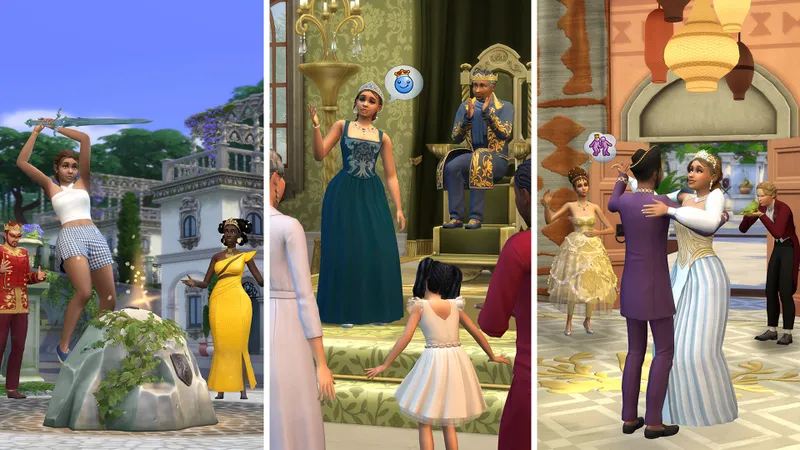
- By challenge, whose form depends on the dynasty's stated values: a duel if the dynasty values the Swordsmanship skill (once that skill reaches level 5), a chess match if it values Logic, or a brawl if it has adopted the Villainous ideal.
If the leader dies with no heir named, the game promotes the highest-ranked member who is not an outcast and is at least a teen. If no one remains, the dynasty disappears from the save file.
The three most costly mistakes
- Founding without reading your own Sims first, then playing against the game's autonomy for generations afterward.
- Putting off hereditary traits: social perks can be bought back later, missed generations cannot.
- Expelling someone in the middle of a unity crisis: fix relationships first, punish afterward.
A well-tuned dynasty requires little intervention: values match the Sims, prestige decay is turned off, an affinity has been running in the background since the first generation, and the heir is named before the leader becomes elderly. Everything else — alliances, scandals, duels before the court — stops being a system to tame and becomes a story again.
Share this article
How would you approach your first dynasty in Legacy and Royalty?
Frequently asked questions
Can I found a dynasty with a young adult Sim, or do I need to wait until later?
Only young adult Sims or older can found a dynasty. A Sim only ever belongs to one dynasty at a time, so choose your founder carefully.
What happens if I change my dynasty's values along the way?
Changing a value triggers a fresh wave of reactions from your members. Chaining unpopular changes leads straight to a unity crisis and a massive loss of prestige, so think carefully before doing so.
How exactly does prestige erosion over time work?
Prestige naturally and continuously declines, but this erosion can be turned off in the pack's settings. It's a setting to sort out from the start depending on your playstyle.
If I drop a prestige tier, what happens to the perks I've already bought?
Perk points and already purchased perks are lost. Dropping down really costs you, so it's better to maintain your prestige than let it fall.
Can hereditary traits be bought at any time, or is specific timing required?
Buy hereditary traits before the wave of births you're targeting, otherwise they'll only benefit generations too far down the line. It's a long-term investment, so timing is critical.
Key takeaways
- Dynasty values are key: choose them based on your household's existing traits, not on a fantasy, or you'll bleed prestige without understanding why.
- Prestige climbs up to level 10 and is managed from the Social Groups tab in Live Mode; it's the only place where everything is controlled.
- Nepotism and Well-Connected Friends are your first two priority purchases to kick off the prestige-career-wealth loop.
- Hereditary traits only benefit future generations, so buy them before planned births, or it's a waste of points.
- A member who disagrees with the values will spontaneously do the opposite and single-handedly tank your prestige, hence the importance of a coherent selection from the start.
Comments
No comments yet. Be the first to react!
Leave a comment
Similar guides



Latest articles








Your opinion counts
Rate The Sims 4
Click a star to rate