 Fabian Lainé
Full Guide
Pokémon Pokopia: the complete guide to the 5 regions and Developer Island (2026)
In brief
Pokopia divides its world into five official regions — Terrassec, Grisemer, Collinangle, Flotîles-Millefeux, and Ville-Nouvelle — plus the Developer Island, unlockable via secret code. Each biome imposes its own materials, signature Pokémon, and key abilities to progress, a logical interlocking of exploration that forces strategic back-and-forth. Our 2026 guide maps out the recommended order, the main quests, and above all how to crack the PXQC G03S code to access the hidden depot.
Four months after the release of Pokémon Pokopia on Switch 2, one thing has become clear to the French community: this title isn't played like a simple sandbox, it's explored region by region. The post-apocalyptic Kanto imagined by Koei Tecmo is divided into five distinct official zones — Terrassec, Grisemer, Collinangle, Flotîles-Millefeux, and Ville-Nouvelle — to which is added the famous Developer Island, that hidden deposit which unlocks with the code PXQC G03S. Here is our 2026 guide to understanding the layout of the world, the recommended order of exploration, the signature Pokémon of each biome, and above all, the steps needed to get the mysterious goggles, which are sold at the Pokémon Center shop in any area with an environment level of 3 or above.
The atlas of a Kanto in ruins: five biomes to bring back to life
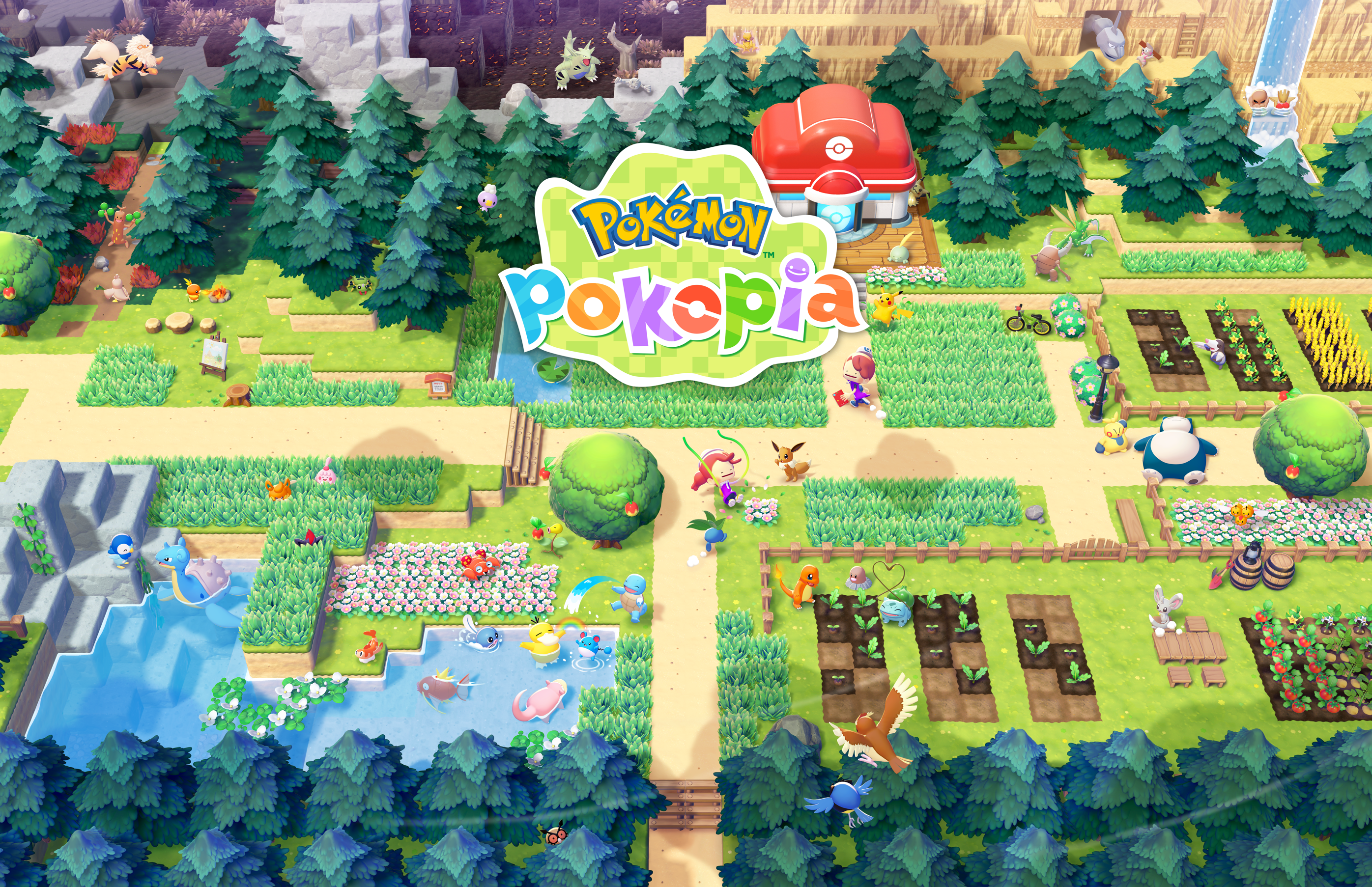
The premise of Pokopia can be summed up in one sentence: a Ditto wakes up amid the ruins of Kanto, takes on human form on the advice of Prof. Bouldeneu, and sets out to rebuild a habitat for the scattered Pokémon. The world is split into five regions, each modeled after a historic town from the first generation, but each warped by a different cataclysm. Each biome imposes its own materials, crops, berries, and unique helpers, so much so that no zone can be completed without at least occasionally visiting another.
The full map is not immediately accessible. You start out in Ville-Nouvelle, the hub region, then unlock the others as you learn key abilities from your Pokémon friends: Water Gun, Rock Smash, Cut, Cut, Rototiller, Rollout, Magnet Rise, Surf, and Fly. The Transform ability, inherited from your nature as a Ditto, serves as an all-purpose key for the later environmental puzzles.
Terrassec: the parched desert where Squirtle calls the shots
Inspired by Parmanie, Terrassec is described in-game as "an arid zone where it hasn't rained in a long time." In practical terms, the soil remains barren until you set up your first irrigation network there. It's the first post-tutorial region that most players unlock, and for good reason: the opening mission involves convincing Squirtle to lend you its Water Gun, essential for watering sprouts, filling ponds, and putting out certain lingering fires.
The local Pokédex is dominated by rock-dwelling and burrowing creatures — Geodude, Diglett, Onix, Zubat in the side caves — but as soon as you multiply the water sources, a second spawn cycle brings in Water-type Pokémon. On the agricultural side, Terrassec grows the hardy berries Nanab, Rasp, and Framby, which are especially profitable for kickstarting your stock of Poképuffs. This is also where the Moonlight Dance Statue is hidden, a massive monument that increases the nighttime appearance of several Fairy-type Pokémon.
Grisemer: the eternally veiled bay
Modeled on Vermilion City, Greymere presents itself as "an area covered in clouds where it's no longer daytime". Natural light is blocked there, which directly influences the mechanics: classic crops grow at a slower rate, daytime Pokémon desert the map, and Dark-, Psychic- and Ghost-type Pokémon swarm the ground. The abandoned port bordering the region unlocks a good chunk of the Aquatic content once you've laid a wooden pier with the help of Cut.
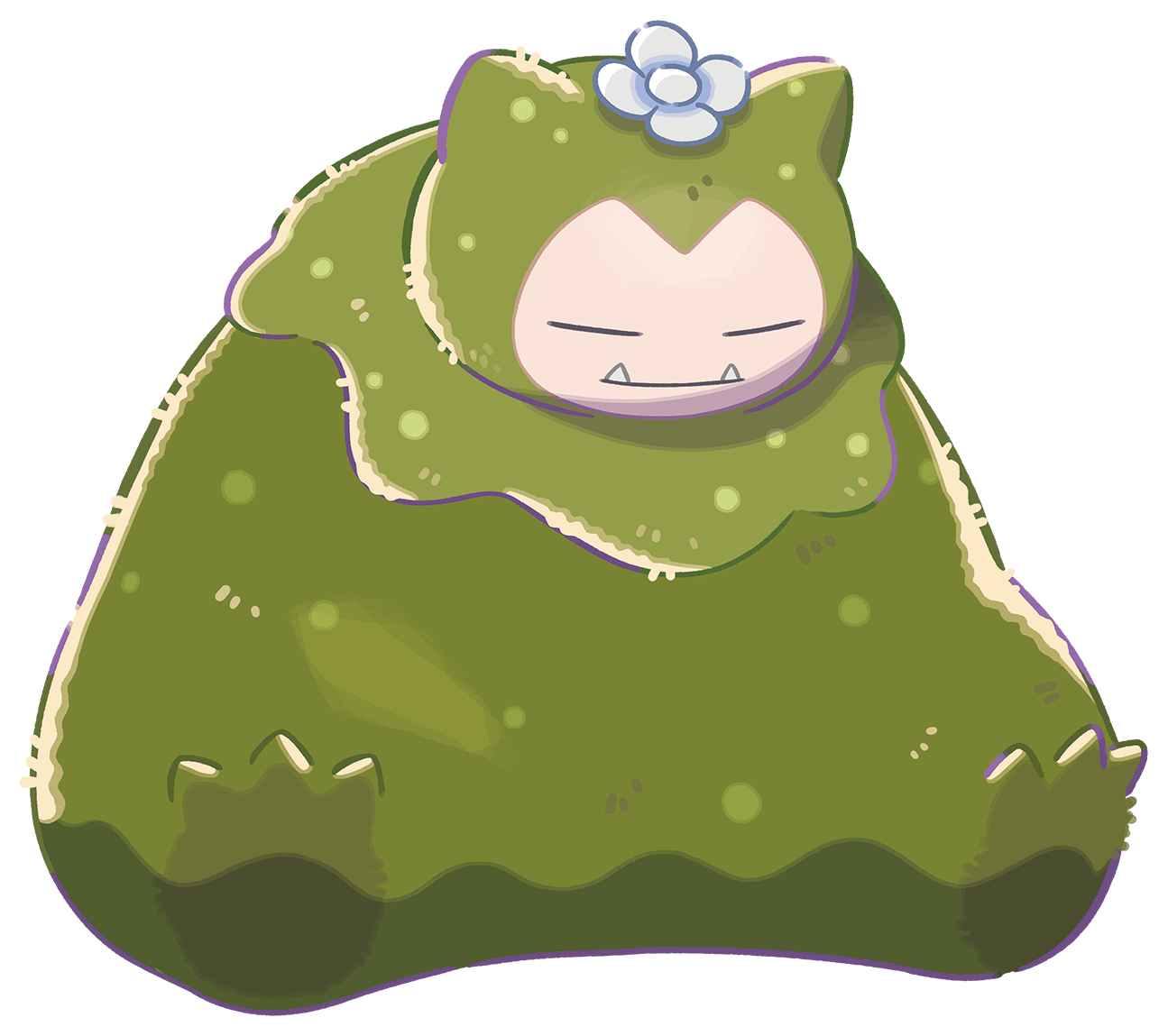
The area's unique helper is Mossy Snorlax, a Snorlax that stayed asleep for so long that a carpet of moss colonized its back. Once woken up — a quest centered on cooking Poké Blocks with Fraive Berries and Willia Berries — it becomes your best heavyweight for flattening areas to be cleared. Remember to quickly install a Pikachu Fountain in Greymere: its periodic electric charge partially dissipates the fog, temporarily increasing ambient light and the yield of vegetable gardens.
Anglehill: volcanic ash and the return of music
Built on the ashes of Pewter City, Anglehill is officially described as "an area devastated following a volcanic eruption". The surface is a patchwork of fractured basalt and hot springs, dotted with fumaroles that slowly regenerate your Ditto's energy. You won't unlock the area until you've learned Rock Smash from a Geodude in Groundtown — the regions' progression logic constantly overlaps.
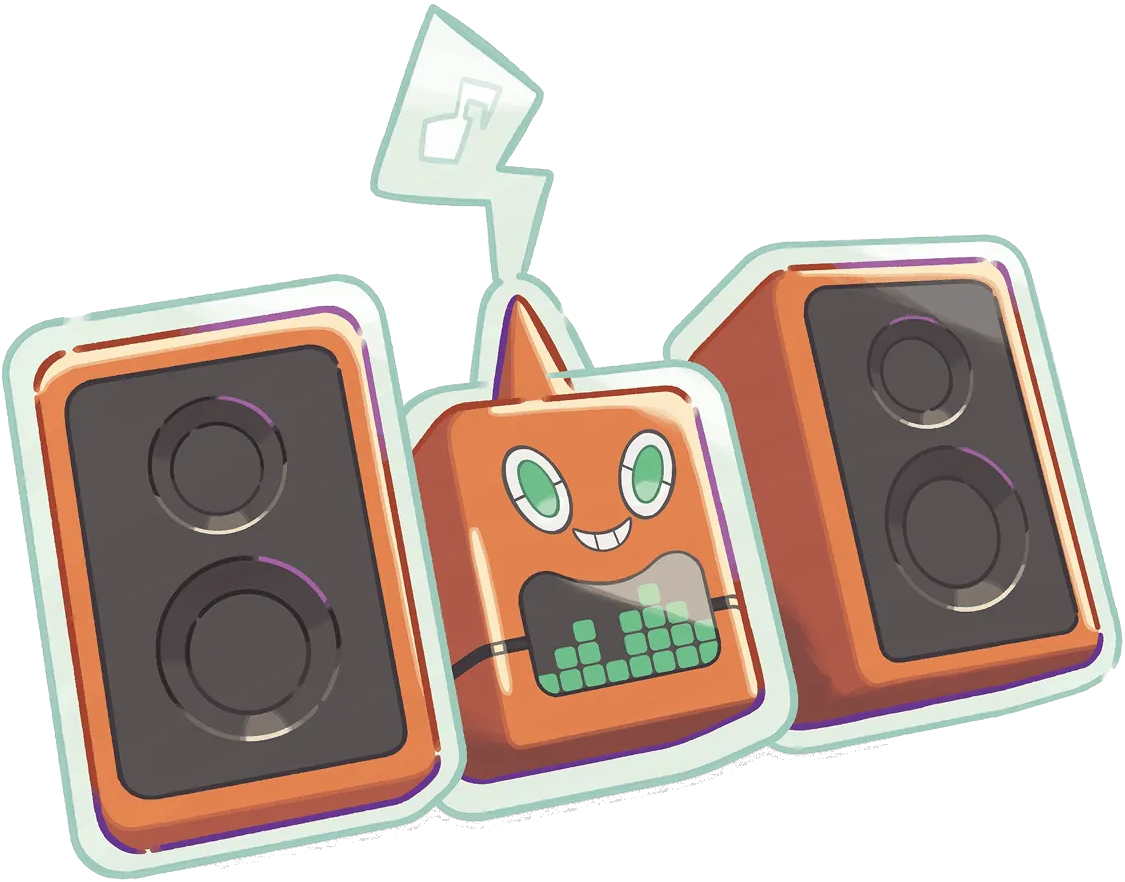
The local unique helper is DJ Rotom, a form of Rotom that has taken up residence in an old sound system forgotten in a studio in town. By recruiting it, you gain the ability to program soundscapes across the region: each track subtly alters the behavior and appearance rates of certain Fire- and Electric-type Pokémon. The quest to install the Ember Altar monument takes place in Anglehill and, once activated at sunset, unlocks an extended appearance cycle for Charmander and its evolutionary line.
Thousand-Cloud Isles: the cloud islands and the aerial metropolis
Combining Celadon City and Saffron City, Thousand-Cloud Isles is "an area divided into several islands floating in the skies". It's the most vertical region in the game: you move between the suspended chunks on the backs of Flying-type Pokémon — hence the importance of obtaining Fly from a Pidgeotto at the end of the New Town segment, then Magnet Fly from a Magneton for longer crossings. This is also where the famous Cloud Islands are built, personal platforms that you decorate freely to attract Wind-, Ice- and Psychic-type Pokémon.
The area's signature monument, the Twin Freeze, requires a long assembly process: two twin pedestals to be erected on opposite islands, with a temporary bridge to be built between them with the help of Chief Timburr — the Timburr in charge of the construction site. As a reward, the region switches to a temporary icy microclimate that causes Snorunt, Snover and a few rare Snowier to appear.
New Town: the mystery of Pallet Town
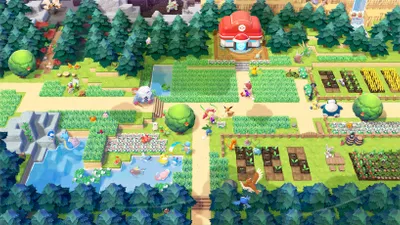
Narrative heart of the adventure, Ville-Nouvelle reuses the layout of Pallet Town in a version where "every trace of humanity has vanished". It's the starting point, the hub you continually expand — Prof. Bouldeneu's lab, Cheffelina's workshop, Rongragoût's restaurant, Maître Queulorior's tea room, Apireine's apiary. The final quest of the main storyline, unlocked after stabilizing the five regions, plays out on the remains of an Abandoned Power Plant on the northern edge of the town.
Unlike the other zones, Ville-Nouvelle has no dominant biome: it serves as a showcase for what you accomplish elsewhere. Stack up the decorations recovered from the other regions — the Mysterious Statue from Terrassec, the Pikachu Fountain from Grisemer, the Ember Altar from Collinangle — and you'll see Pokémon appear that would normally have no reason to be in Pallet Town.

The Developers' Island: how the PXQC G03S code works
The sixth zone, not marked on the base map, is the Developers' Island. It corresponds to a secret deposit that Koei Tecmo hid within the game's code and that Nintendo approved as shareable content via a code entered in-game. The process is locked behind a chain of precise steps:
- Complete Ville-Nouvelle's main quest to unlock access to the trade box.
- Obtain a Link Cable — the key item that symbolizes the inter-cartridge connection.
- Head to the hub zone's terminal, activate the "invitation" function, and enter the official code: PXQC G03S.
- Once the Island is generated, you can access it at will from your inventory.
Contrary to what is often written, the mysterious goggles are not a reward from the expedition: they are sold at the Pokémon Center shop in any area with an environment level of 3 or above, and they are what lets you visit a Cloud Island by entering its address. The island also houses several unique artifacts: Poké Metal to upgrade your Poké Ball stock, a Fountain Plaza Kit to deploy a ready-made central plaza, and a "developer" version of the Mysterious Statue that replaces certain ambient sounds with nods to the original Pokémon games.
Our recommended exploration order, region by region
The game allows a lot of freedom, but the experience from our cross-referenced playthroughs converges on a particularly smooth path. Here is the summary table we recommend to maximize your unlocks without ever getting stuck for lack of an ability.
| Order | Region | Ability to obtain before | Associated unique assistant | Signature monument |
|---|---|---|---|---|
| 1 | Ville-Nouvelle | Copie (native) | Prof. Bouldeneu, Cheffelina | Centrale abandonnée |
| 2 | Terrassec | Pistolet à O | Rongragoût | Statue Danse Lunaire |
| 3 | Grisemer | Coupe, Surf | Ronflex Moussu, Maître Queulorior | Fontaine Pikachu |
| 4 | Collinangle | Éclate-Roc, Roulade | DJ Motisma | Autel Braises |
| 5 | Flotîles-Millefeux | Vol Plané, Vol Magnétik | Apireine | Congélation Jumelle |
| Bonus | Île des Développeurs | Link Cable + PXQC G03S | — | "Developer" Mysterious Statue |
Three pitfalls to avoid when moving from one region to another
- Don't overbuild in Grisemer before Ronflex Moussu. Without it, the residual moss slows down your constructions and chokes the crops of Fraive and Willia. Wait until you've completed his quest before launching your major developments.
- Don't head up to Flotîles-Millefeux before stocking up on Combée's Poudre. It's the fuel that powers your cloud platforms, and you'll need it as soon as the second island. Apireine's hive, in Ville-Nouvelle, produces at a slow rate: plan ahead.
- Don't enter the PXQC G03S code without a Link Cable in your inventory. The terminal accepts the string, the animation plays, but the island doesn't anchor itself in your save. You'll then miss the meeting with Rongragoût that triggers the dedicated monument.
Verdict: Pokopia is a game of regions, not just a sandbox
What sets Pokémon Pokopia apart from other building games is the way its five regions respond to one another: Terrassec supplies the water, Grisemer hosts marine life, Collinangle sets the rhythm of the nights, Flotîles-Millefeux opens up the sky, and Ville-Nouvelle centralizes everything. Koei Tecmo's title rewards methodical players who alternate stays between two regions to farm, return to cook in Ville-Nouvelle, and set off again loaded with Pokéblocs suited to the targeted biome. Taking the time to understand this network — rather than lining up scenery without any logic — radically changes the feeling of progression: each monument placed in the right region triggers a cascade of Pokémon appearances that would otherwise be missing. And if you really want to push the experience all the way, don't leave without buying the mysterious goggles from the Pokémon Center shop in any area with an environment level of 3 or above: they are your passport to the Cloud Islands, and a good reason to finally enter the famous PXQC G03S code if you haven't already.
Share this article
Which region appeals to you the most on paper?
Frequently asked questions
What is the best order to explore the five regions?
Start with Ville-Nouvelle (the hub), then Terrassec to unlock the Water Gun. Grisemer and Collinangle can be done in parallel once armed with Rock Smash. Save Flotîles-Millefeux for last, once you've mastered Glide and Magnetic Flight. The order isn't locked, but the key abilities dictate the logic.
How exactly do you unlock Developer Island?
Finish the main quest at Ville-Nouvelle to access the trade box. Find a Link Cable (key item), go to the hub terminal, activate "invitation" and type in the PXQC G03S code. The Island generates within a few seconds.
Which assistant should you recruit first at Grisemer?
Snorlax Moss-Covered. Once woken up using Poképuffs made from Fraive and Willia, it becomes your best heavy-lifter for flattening areas to be cleared. Also quickly install a Pikachu Fountain to temporarily dispel the mist and boost crops.
What does DJ Motisma do in Collinangle?
DJ Motisma, housed in an old sound system, unlocks the programming of regional ambient tracks. Each track modifies the spawn rates of Fire- and Electric-type Pokémon, which directly influences the efficiency of your farm.
Can you finish Flotîles-Millefeux without Magnetic Flight?
No, it's impossible. Glide is enough for short distances between nearby islands, but Magnetic Flight from Magneti is mandatory for long crossings and for assembling the Twin Freeze.
Key takeaways
- Terrassec starts out dry but flourishes as soon as you give it Squirtle's Water Gun for irrigation.
- Grisemer requires a completely different approach: blocked light, slowed farming cycles, Dark-type Pokémon in charge.
- Collinangle only opens up with Rock Smash, proving that region progression is deliberately interlinked.
- Flotîles-Millefeux redefines verticality with its floating islands, forcing you to master Glide and Magnetic Flight.
- Developer Island, hidden behind the PXQC G03S code, first requires finishing Ville-Nouvelle and obtaining a Link Cable.
Comments
No comments yet. Be the first to react!
Leave a comment
Similar guides
Latest articles

Your opinion counts
Rate Pokémon Pokopia
Click a star to rate