

 Fabian Lainé
Full Guide
Fortnite Reload in 2026: the complete guide to the respawn mode — automatic reboot, rotations and climbing Ranked
In brief
Reload is Fortnite's condensed Battle Royale mode where 40 players face off on compact islands with automatic respawn as long as one ally survives. This guide breaks down the respawn system, rotation strategies, and the crucial adaptation to the end game when the reboot disappears.
While the Fractured Coast and the Chapter 7 Season 3 mythics are hogging the spotlight, another corner of Fortnite keeps pulling in millions of players every night: Reload mode. This fast-paced format, shorter and above all more forgiving than classic Battle Royale, has established itself in 2026 as the go-to training ground for players who want to jump straight into fights without spending twenty minutes looting. As the ecosystem has narrowed this year — Ballistic bowed out in the spring and Rocket Racing is set to shut down in the fall — Reload, for its part, is holding strong. Here's the complete guide to understanding its respawn system, optimizing your rotations and climbing in Ranked mode.
What exactly is Reload?
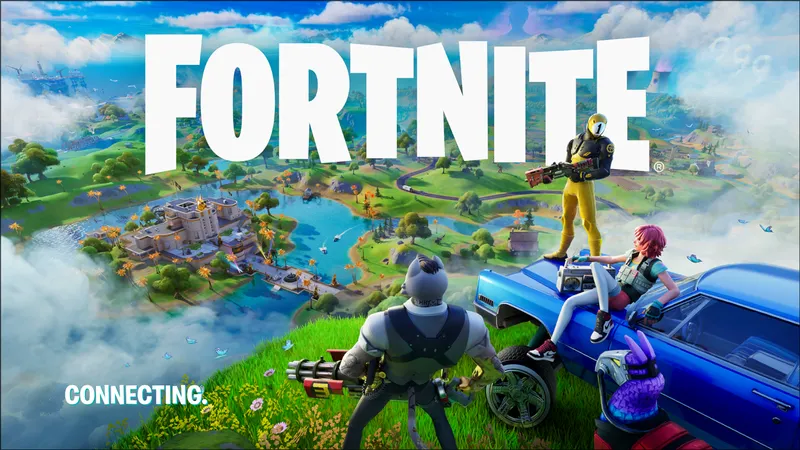
Launched in June 2024, Fortnite Reload is a condensed Battle Royale mode. Where the main Battle Royale pits 100 players against each other on a massive map, Reload brings together 40 players across a rotation of smaller islands, with a deliberately limited arsenal. The result: encounters are much more frequent, downtime is nearly nonexistent, and a match wraps up in a handful of minutes. The mode is playable solo, duo, trio or squad (one to four players), in both Build and Zero Build versions, and it has its own Ranked queue. Like the rest of Fortnite, it's free and cross-platform.
The big difference comes down to one mechanic: death isn't final as long as your team is still breathing. That changes everything, and it's the first reflex to build if you're coming over from traditional Battle Royale.

The heart of the mode: automatic respawn
In Reload, if you're eliminated, you automatically respawn after a few seconds — on one condition: at least one teammate has to still be alive. No need to run to a reboot van like in classic Battle Royale: the "reboot" kicks in on its own after a short countdown. You then land near your surviving allies to jump back into the fight.
This rule has two huge consequences for how you play:
- Aggression is rewarded. Losing an exchange doesn't cost you the match. You can take duels you'd otherwise avoid in Battle Royale, learn from your mistakes and come right back.
- Protecting the last survivor becomes a priority. If the whole squad goes down at the same time, no one can trigger the reboot anymore: that's elimination. So the worst mistake is charging headfirst into the same fight all together.
In short, you play fast, but never with everyone in the same spot at the same time. Always keep one player slightly held back, ready to "hold the team's life."
Reload vs. classic Battle Royale: the comparison
To pin down the mode precisely, nothing beats putting the two formats side by side. Here are the key structural differences to keep in mind before jumping into your first match:
| Criteria | Reload | Classic Battle Royale |
|---|---|---|
| Number of players | 40 | 100 |
| Map size | Compact islands (rotation) | One large map |
| Respawn | Automatic as long as an ally survives | Reboot vans only |
| Average duration | Short, very fast-paced | Long, with looting time |
| Arsenal | Deliberately limited | Full, season by season |
| End of match | Respawn cut off in the final moments | Permadeath from start to finish |
This table sums up why Reload is seen as more "arcade": you die more often but without consequence during most of the match, which shifts the whole stakes toward combat mastery and the famous final-stretch shift.
Build or Zero Build: which Reload should you pick?
Reload exists in both of Fortnite's historic philosophies. In the Build version, keyboard reactivity and the ability to slap up a wall or a ramp to cut off a line of sight make all the difference; mechanically strong players dominate here. In Zero Build, everything comes down to positioning, peeking and using the environment as natural cover.
Our advice: pick the queue that matches what you want to work on. If your goal is to improve pure aim and positioning, Zero Build is an excellent lab. If you want to sharpen your building reflexes before heading back to competitive Battle Royale, the Build version is unbeatable as a warm-up thanks to its relentless pace of fights.
Getting off to a good start: landing and looting
Since the map is smaller, hot zones fill up fast. Two schools of thought compete:
- The aggressive drop on a dense point of interest: you gear up in thirty seconds, look for a fight immediately, and use the respawn system to take more risks. Ideal for leveling up your gameplay.
- The edge drop: you secure a full loadout in peace, then converge toward the center with a gear advantage. Safer for beginners or for playing it for placement.
Since the arsenal is limited, the weapon hierarchy becomes obvious very quickly. Prioritize a reliable assault rifle for mid-range, a shotgun for close-quarters duels — unavoidable on such a tight map — and always keep healing and shield consumables on hand. Chests and ground loot get picked over fast: don't linger, the goal is to be combat-ready, not to have the perfect inventory.
A word on material economy, often overlooked in Reload. In the Build version, gather wood, stone and metal right from landing: on such a tight map, you'll end up building far more often than in Battle Royale, if only to recreate cover after every respawn. Also get into the habit of checking your ammo between fights — nothing worse than dropping back in after a reboot with an empty shotgun against an opponent who already has the upper hand. V-Bucks, on the other hand, have zero impact on the match itself: cosmetics aside, everything comes down to what you do with a controller or keyboard.

Rotations and storm management
The storm closes in faster than in the main Battle Royale, in keeping with the map's size. Never take the storm lightly just because you respawn: on a compact island, a badly anticipated circle leaves you exposed in the middle of enemies already dug in on high ground or behind cover.
A few rotation principles that work at every skill level:
- Move before the circle closes, not during. Arriving early in the next zone gives you time to pick your angle and your cover.
- Play the edges early on, the center late. This cuts down the number of directions you can get caught off guard from.
- Scout out high ground. Whether you build or not, controlling height still rules in Fortnite.
- Call out enemy rotations. In a squad, a simple ping on an enemy crossing your path prevents plenty of pincer eliminations.
The decisive moment: the respawn-free endgame
This is THE subtlety that separates good Reload players from the rest: in the final moments of the match, automatic respawn gets disabled. From that point on, it's pure Battle Royale rules again — death becomes permanent, and one elimination costs the whole team the win.
So radically adapt your playstyle as the match progresses:
- Early and mid-game: be aggressive, take duels, farm combat experience while the reboot has your back.
- Approaching the endgame: slow down, top off your heals and shield, reposition on solid cover. A full health and shield bar is worth its weight in gold when no one respawns anymore.
- Final circles: play patient. Let impatient teams wipe each other out, then clean up. A well-positioned third party wins an enormous number of endgames.
Plenty of players dominate the whole early game thanks to respawn, then panic once the safety net disappears. Anticipating that shift is already half the battle toward a Victory Royale.
One useful little ritual: as soon as the remaining player count drops below a certain threshold, warn your squad by voice or ping. That shared signal keeps an overexcited teammate from chasing an unnecessary duel right as the reboot cuts off. In practice, the best teams switch posture all at once, together, rather than player by player — and that synchronization is exactly what makes the difference in the most contested final circles.
Climbing Ranked mode in Reload
Reload's Ranked mode follows the same ladder as the rest of Fortnite: you climb from Bronze up to the most prestigious tiers by stacking up good results. The system rewards a balance between high placements and eliminations: surviving by dodging every fight will make you plateau, just as rushing without ever seeing the final circles will.
To climb efficiently:

- Favor consistency over heroics. Two or three solid, regular placements pay off more than one ten-elimination game followed by five early deaths.
- Play with a coordinated squad. In a coordinated queue, managing respawns — who reboots whom, who holds the team's life — becomes a real competitive edge.
- Analyze your endgames. That's where points are won and lost, so that's where you should focus your improvement efforts.
- Stick to the queue you master. Build or Zero Build, it's better to excel at one than to be average at both.
Reload in Fortnite's 2026 landscape
Reload's longevity is all the more notable given that Epic Games trimmed its mode lineup in 2026. Ballistic, the 5v5 tactical shooter launched in early access in late 2024, closed its doors earlier this year; Rocket Racing, the racing game from Psyonix, is also set to shut down in the fall. Against that backdrop, Reload confirms its place as a "core" format alongside classic Battle Royale, OG mode and Creative.
For players, the logic is simple: Reload is the best bridge between carefree fun and serious training. You work on your aim, your rotations and your endgame play in conditions close to Battle Royale, but with a pace that forgives mistakes — exactly what you need to improve quickly before switching over to the main mode or Ranked.
Five habits to take with you
- Never die all at once: keep one survivor alive to keep the reboot going.
- Play aggressive while respawn is active, then lock in during the endgame.
- Top off heals and shield as the final circles approach, once death becomes permanent again.
- Anticipate the storm: on a small map, a late rotation costs you dearly.
- In Ranked, aim for consistency: placement plus eliminations, not one without the other.
Reload rewards players who know how to switch gears: unleashed early, surgical late. Master this dual tempo, protect your squad's life until the very last possible reboot, and Victory Royales — as well as Ranked tiers — will follow. See you at the Battle Bus.
Share this article
What's your favorite strategy in Reload?
Frequently asked questions
What happens if the whole team dies at the same time?
That's a direct elimination. Automatic respawn only works if at least one teammate is alive. That's why never dropping all together in the same spot is crucial.
How do you choose between the Build and Zero Build versions?
Build sharpens your building reflexes for competitive Battle Royale thanks to the fast pace. Zero Build trains your positioning and peeking. Choose based on what you want to improve.
Does respawn work until the end of the match?
No, automatic respawn stops in the final moments. You then shift into pure Battle Royale mode where death is permanent and everything hinges on patience and positioning.
Do loot and materials really matter in Reload?
The deliberately limited arsenal makes looting fast. What matters is being combat-ready, not having the perfect inventory. In Build mode, gather materials as soon as you land, since you'll be building much more often than in Battle Royale.
Key takeaways
- Automatic respawn changes everything: aggression is rewarded early in the match as long as at least one teammate is still breathing.
- Keeping a player back and ready to 'hold the life' is a priority to avoid the full elimination of the squad.
- The storm closes in faster than in classic Battle Royale: plan your rotations before it closes, never during.
- In the late game, respawn deactivates and you shift into pure Battle Royale mode where death becomes permanent again.
- The weapon hierarchy is quickly apparent on a tight map: a reliable assault rifle and a shotgun for close-range duels are enough.
Comments
No comments yet. Be the first to react!
Leave a comment
Similar guides




Latest articles



Your opinion counts
Rate Fortnite
Click a star to rate