


 Fabian Lainé

Full Guide
Windrose: Builds and Talent Trees — The 2026 Guide to the 4 Perfect Pirate Archetypes
In brief
Windrose refuses to slap a class on you: it's up to you to build your pirate by shaping six stats and a talent tree with only 12 points. This 2026 guide breaks down the four major archetypes — Fencer, Crusher, Marksman, Toughguy — to turn every point spent into a real advantage against the fierce Caribbean.
After enough time scouring Windrose's jagged coastlines, we all end up asking ourselves the same question, usually at three in the morning staring at the death screen: what kind of pirate am I actually building here? Kraken Express Games' hardcore survival title doesn't lock you into a fixed class at character creation: six free stats, a talent tree with four branches, a level cap of 15, and above all a free reset. It's entirely up to you to sculpt your build, provided you accept the constraint: every point counts double. This complete 2026 guide breaks the game down into four clear archetypes — the Fencer, the Crusher, the Marksman, and the Toughguy — to help you choose your path, avoid the usual pitfalls of early Precision or Strength without stamina, and turn every skill point spent into a real advantage across Windrose's fierce Caribbean.
Understanding the framework: six stats, four branches, a low cap
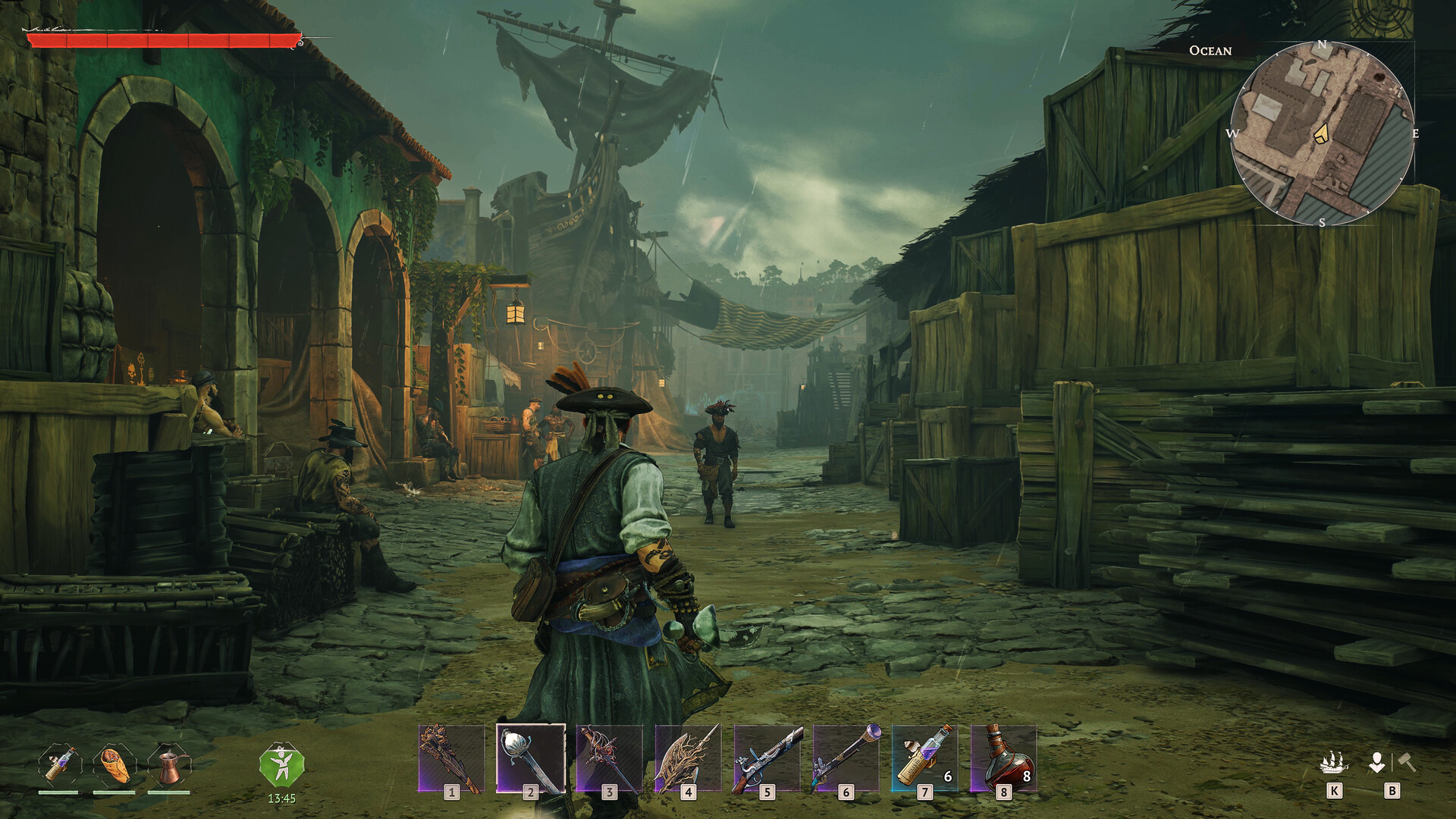
Before talking archetypes, we need to look at the foundation. Windrose features six attributes: Strength (STR), Agility (AGI), Precision (PRE), Mastery (MAS), Vitality (VIT), and Endurance (END). The current cap is level 15, which gives you 45 stat points and 12 talent points to distribute. Factor in a small additional margin from accessories and consumables — you're looking at roughly 95 effective points by the end of the curve. Watch out for the soft cap at 20 per stat: beyond that, each point returns much less. A 20/20/5 or 20/15/10 spread is almost always more efficient than dumping everything into a single stat up to 25.
The talent tree, meanwhile, is organized in concentric circles split into four diagonal quadrants (top, left, bottom, right). Each quadrant corresponds to a playstyle orientation: brute force, evasion, precision, resilience. Unlocking Tier 2 in a quadrant requires investing 3 points there; Tier 3 demands 7 cumulative points in that same branch. With only 12 points available at most, you'll be forced to choose: two Tier 3s across two branches, or a single deeply invested Tier 3 with flexibility elsewhere. It's this constraint that gives the four archetypes below their distinct identity.
The Fencer — the mobile swordsman who thrives on evasion
The Fencer is the theatrical pirate: Rapier of a Thousand Cuts in one hand, possibly a Cutlass or Dueling Saber, and a rhythm built around parries, backward hops, and counterattacks. It draws on two combined strengths: Precision to scale the rapier and saber, and Agility to sustain constant dodging without running out of stamina. Rapiers also come with a nice defensive perk: three posture shields that absorb exchanges before your guard breaks, compared to zero for maces and halberds.
Sample build: 15 PRE / 15 AGI / 10 VIT / 5 END for a solid solo Fencer. On the talent side, aim for AGILE (up to −40% stamina cost on dodges), MARATHON RUNNER (+50 maximum stamina at Tier 3), and JUST A FLESH WOUND to convert temporary damage into a recoverable pool. The Fencer thrives on attrition: rapier bleeds, crisp retreats, a rush the moment the enemy drops their guard. Against inland archers and ruin guards, it's one of the most reliable playstyles once your AGI bar is stabilized.

The Crusher — the posture breaker that targets the guard
Facing a steel-gauntleted opponent, breaking posture — the famous shields under the health bar — remains the most reliable way to interrupt them. That's the Crusher's specialty, the game's most "elite killer" archetype. Its favorite toys: the Mace (Strength scaling), the two-handed Halberd (exceptional reach, heavy hits) and above all the Executioner Halberd, one of the game's seven epic "relic" weapons, capable of climbing up to 50% critical chance in a dedicated build.
Its main weakness? No parry possible with halberds and maces: it's dodge or nothing. So you need to pair Strength with a bit of Agility and, above all, plenty of Endurance. A proven template: 20 STR / 10 END / 10 AGI / 5 VIT. On the talent side, the critical path is built around MARATHON RUNNER, AGILE and EXECUTIONER'S GRACE, the latter regenerating 10 to 20 HP per second for 20 seconds after each execution. Put on a Privateer's or Flibustier's set to balance defense and stamina, and you'll have a steamroller that dispatches bosses and Bosuns in two or three combos.
The Marksman — the sharpshooter who keeps a sword as backup
Windrose keeps telling you that firearms are "a trap early on," and it's true: Precision scales poorly if you don't invest in it, and every shot consumes ammunition that must be crafted at the Workbench. Once past that phase, the Marksman becomes fearsome. Three families: Pistols (two shots before reloading, perfect as a finisher), Muskets (pure precision, single target, massive damage) and Blunderbusses (spread-fire gun, two rounds per shot, king of corridors). The classic combo remains pistol + melee weapon, often the Cutlass or the Rapier of a Thousand Cuts, so you're never disarmed in close combat.
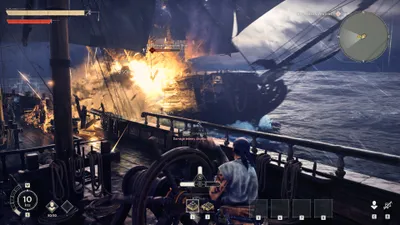
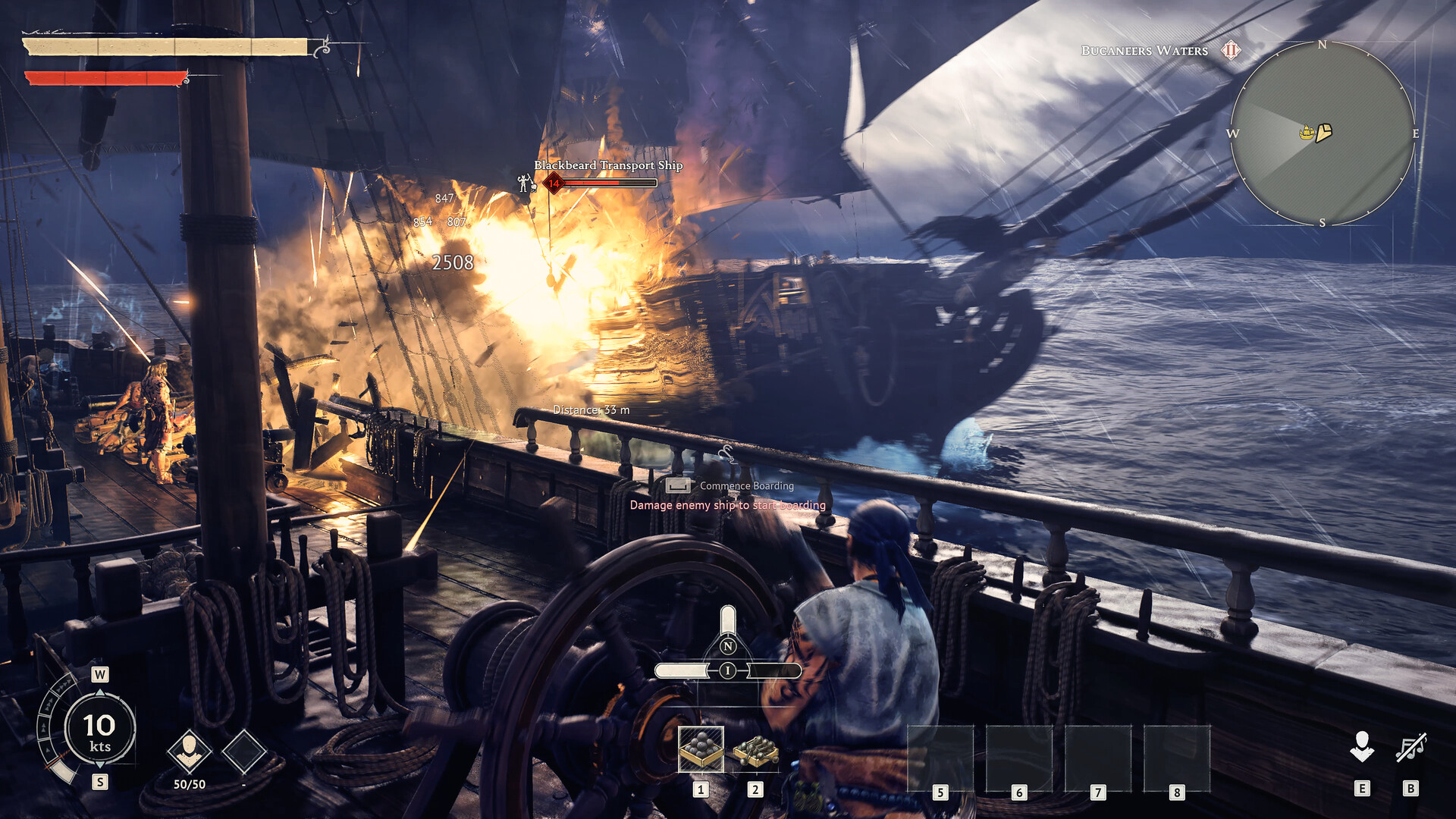
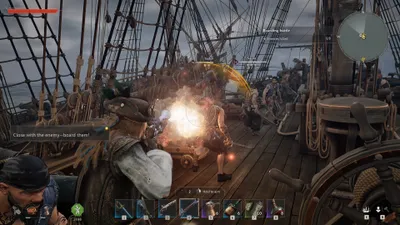
Prioritize 20 PRE / 10 AGI / 10 VIT / 5 END. On the talent side, go for nodes that boost the critical window and reload speed, without neglecting MARATHON RUNNER: Precision doesn't fill the stamina bar, and a Marksman out of breath is a dead Marksman. During enemy ship boardings, your value skyrockets: a few well-placed musket volleys can drop a captain before the first exchange of sabers.
The Toughguy — the posture wall that soaks up damage for the crew
The Toughguy isn't a true "tank" — Windrose has no aggro or taunt mechanics. He's more the pirate who simply refuses to die. He puts everything into Vitality (health bar and food bonuses), Endurance (posture, stamina, passive resistance) and converting temporary damage into actual recovery. His absolute signature move: TOO ANGRY TO DIE, a Tier 3 talent that revives you once every 16 minutes. As the community sums it up, "a one-point talent" that has saved more than one expedition in the Swamps.
Add RETRIBUTION (up to 100% of temporary damage converted into permanent HP) and you get a sponge capable of going to wake up a Kraken, tank the first hit, and let the Marksman finish the job. Typical distribution: 20 VIT / 15 END / 10 STR to avoid collapsing on damage. The Toughguy is particularly valuable in 8-player co-op, the maximum party size supported by the game: its presence frees up the other archetypes, which can finally take a few risks.
Talents you shouldn't miss, regardless of archetype
Some nodes transcend archetypes. With only 12 talent points, every pick has to count. Here's the universal short-list:
- MARATHON RUNNER — +20 to +50 maximum stamina. Useful for everyone, but vital for Strength or Precision builds that don't naturally raise their pool.
- AGILE — up to −40% stamina cost on dodge. The talent that alone defines quality of life in combat.
- RETRIBUTION — converts temporary damage into permanent HP. An endurance multiplier on long boss fights.
- TOO ANGRY TO DIE — Tier 3 life insurance. Pick it up as soon as possible for any deep exploration run.
- EXECUTIONER'S GRACE — 10 to 20 HP/s for 20 s after a kill. The dream pick for a crit build clearing camps.
- JUST A FLESH WOUND — increases the temporal health window, the core of Fencer and Toughguy builds.
Ascension, Tumbaga, and Weaponsmith: maximizing after level 10
A build is also written at the forge. Past level 10, your weapons and armor can climb a rarity tier at the Weaponsmith Workshop, by feeding in Tumbaga Ingot, an exotic material recovered from ruins. Each ascension unlocks an additional ability and improves scaling — this is where a Fencer's Rapier of a Thousand Cuts really starts to bleed, and where a Crusher's Executioner Halberd crosses its critical threshold. Remember to visit the Jewelry Table (unlockable in the second biome) for a ring or necklace that will fill a stat gap, such as the Minor Prospector Ring.
On the basic crafting side, the stations to prioritize upgrading remain the Workbench (bandages, ammunition, kits), the Alchemy Table (food-based potions and elixirs), and of course the Shipwright's Workshop for naval upgrades. An archetype with a solid crafting chain is always two levels ahead of an archetype with good gear but no consumables.
Free reset, hybridization, and Piastres → Guineas progression
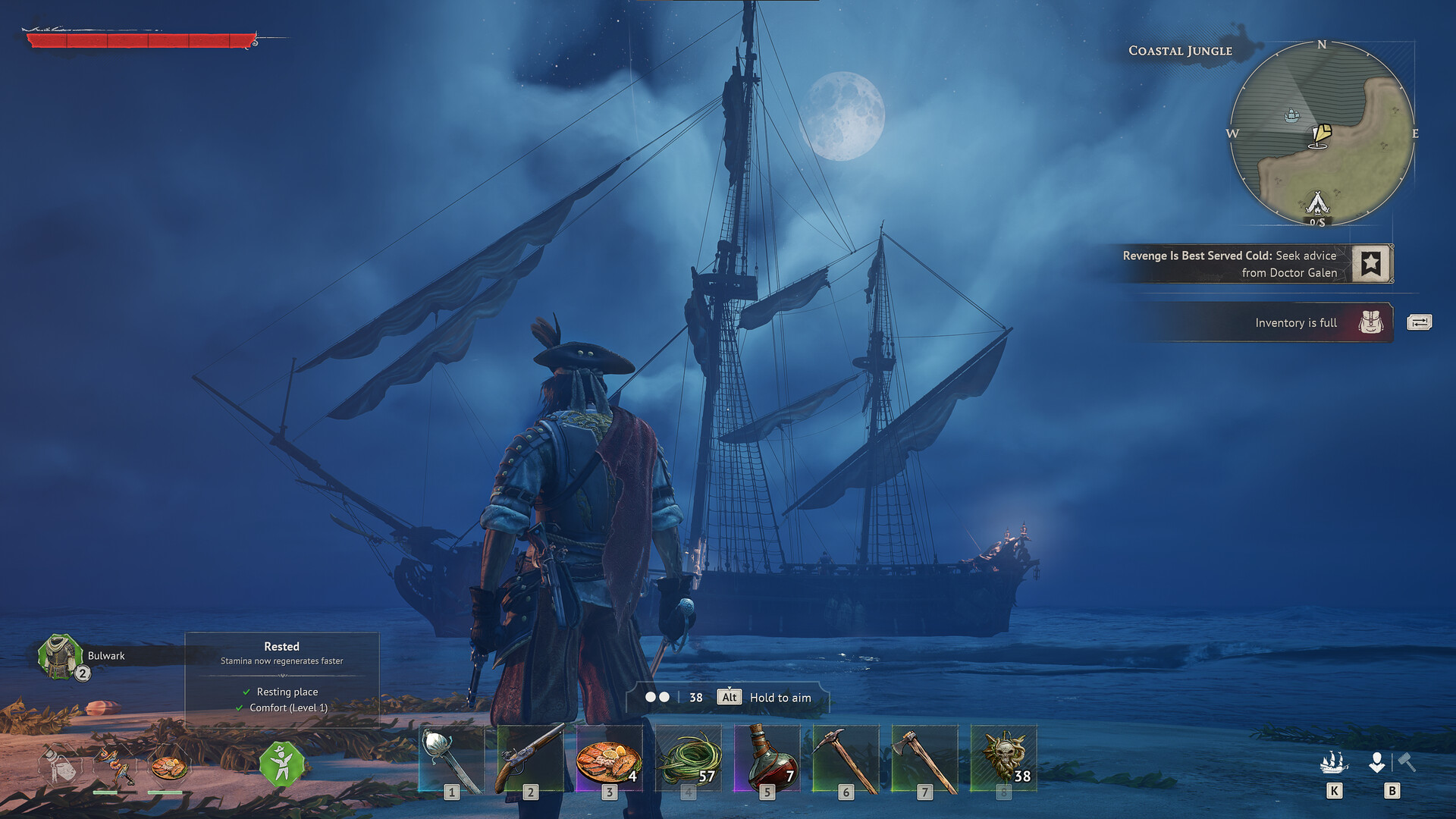
Windrose's great flexibility lies precisely in this free reset of stats and talents, available at will from the right NPC. So there's no reason to stay stuck in a build that's been frustrating you for ten hours: try one out for two full sessions, completely rebuild the character, cross a Fencer with a Marksman to end up with a formidable hybrid Precision/Agility "corsair," test out a Crusher-Toughguy berserker-style build that simply refuses to die. The only real cost is the time it takes you to get your reflexes back after switching main weapons.
Economic progression follows exactly the same logic of methodical patience: you'll first accumulate Piastres (the currency of taverns and stalls) by selling off loot, animal heads and minor jewellery, before gaining access to Guineas, which unlock genuinely high-tier gear and the best epic relics. Remember that Windrose revolves around four factions with conflicting interests — People of Tortuga, Brethren of the Coast, Rogue Buccaneers, Smugglers of Port Royal — and that your archetype directly influences which contracts will pay off the most: the Marksman rakes it in on ranged targeted bounties, the Crusher on raids against hostile islands where you need to crush three camps in a row, the Toughguy on merchant ship escorts that take hours, and the Fencer on the codified honour duels that the Brethren of the Coast particularly favour.
Final word: choose, but stay flexible
Windrose's strength lies in not forcing you to choose "for life". Our four archetypes — Fencer, Crusher, Marksman, Toughguy — are all starting points. Start with one for your first twenty hours, push a Tier 3 build to its limit, then experiment. The real good build is the one that matches how you naturally read fights: if you parry instinctively, go Fencer; if you prefer to break the guard, smash things as a Crusher; if you enjoy landing a musket shot from thirty metres away, embrace the Marksman; and if you're the pirate who shouts "I've got this" before every boarding, the Toughguy is waiting for you. Fair winds — and above all, save your stamina.
Share this article
Which of these four archetypes tempts you the most for your first real run?
Frequently asked questions
Which archetype should I choose if I'm starting out?
The Fencer offers the best early comfort thanks to dodges and the rapier's scaling. The Toughguy forgives tactical mistakes. The Crusher and the Marksman demand more precision (in the metaphorical sense) and punish improvisation more heavily.
Do I really need to hit the soft cap at 20?
Yes, at least on your two main stats. Beyond 20, each point returns much less: a 20/20/5 spread will always outperform 18/18/9 in raw efficiency. This mechanic is what forces specialization.
Can you respec your talents and stats?
Yes, resetting is free. This means testing all four archetypes costs nothing except the farming time needed to regain your levels. Take advantage of this to explore before committing to a single direction.
Is the Marksman actually viable, or a trap when playing solo?
It's a trap until level 5-6, when you finally unlock enough damage. Past that threshold, it becomes fearsome during naval boarding. In deep exploration, always carry a melee weapon as backup: a disarmed Marksman dies very quickly.
How do you play the Crusher without heavy armor?
Balance it out with Endurance to sustain stamina, then look for the Privateer's or Flibustier's sets, which give good defense without sacrificing mobility. The Crusher is about discipline, not zerg tanking.
Key takeaways
- The soft cap at 20 per stat makes a balanced spread far more cost-effective than dumping everything into a single stat up to 25 points.
- Each archetype demands a precise pairing between main stats and talents: Fencer looks for Precision + Agility, Crusher aims for Strength + Endurance, Marksman stacks Precision + Stamina.
- The universal talents MARATHON RUNNER, AGILE and RETRIBUTION transcend builds and justify the strategic investment on their own.
- The Toughguy shines in co-op: their presence frees up the other archetypes by soaking up the first hits.
- After level 10, the Tumbaga Ingot becomes the real multiplier: forget stats if you're not upgrading your weapons and armor at the Weaponsmith.
Comments
No comments yet. Be the first to react!
Leave a comment
Similar guides
Latest articles





Your opinion counts
Rate Windrose
Click a star to rate