

 Fabian Lainé
Map
Valorant: the 23 official Abyss callouts, back in Competitive — and why Riot leaves them in English in the French version
In brief
Abyss returns to Competitive in patch 13.04, replacing Breeze. This guide details its 23 official callouts — which remain in English in the French version, a deliberate choice by Riot — and explains what makes this map unique: a deadly void at the center, destructible doors, and vertical circulation dominated by four rope ascenders.
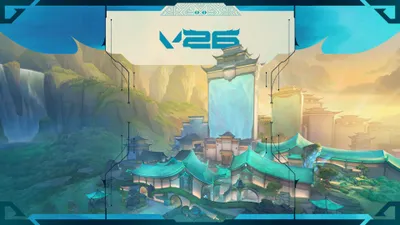
The 13.04 patch on August 18 brought Abyss into the Competitive and Deathmatch map pools, replacing Breeze. Riot wrote nothing more than these two swaps, in capital letters, one for Abyss's entry and the other for Breeze's exit. Two lines for a map that most players haven't touched in months, and which remains the most atypical in the game.
This guide starts from the 23 official callouts, as named by the client — not as streamers call them — and from the structure they describe.
Why Abyss's callouts stay in English in the French version
This is the first thing to know before opening a voice chat: Riot doesn't translate map callouts. This isn't an oversight, it's a choice, and it can be verified.
The map data published by Riot shows, for the same map, fields that are translated and fields that aren't. Abyss's tactical description reads « Sites A/B » in French, « A/B Sites » in English, « Areale A/B » in German: localization works. The 23 callouts, however, are strictly identical across all three languages. Bridge stays Bridge, Nest stays Nest, Vent stays Vent.
The practical consequence is simple: if your team says "the conduit" or "the nest" in French, no one will know what you're talking about on a multilingual ladder. The client displays Vent and Nest. That's the nomenclature that holds as the reference.
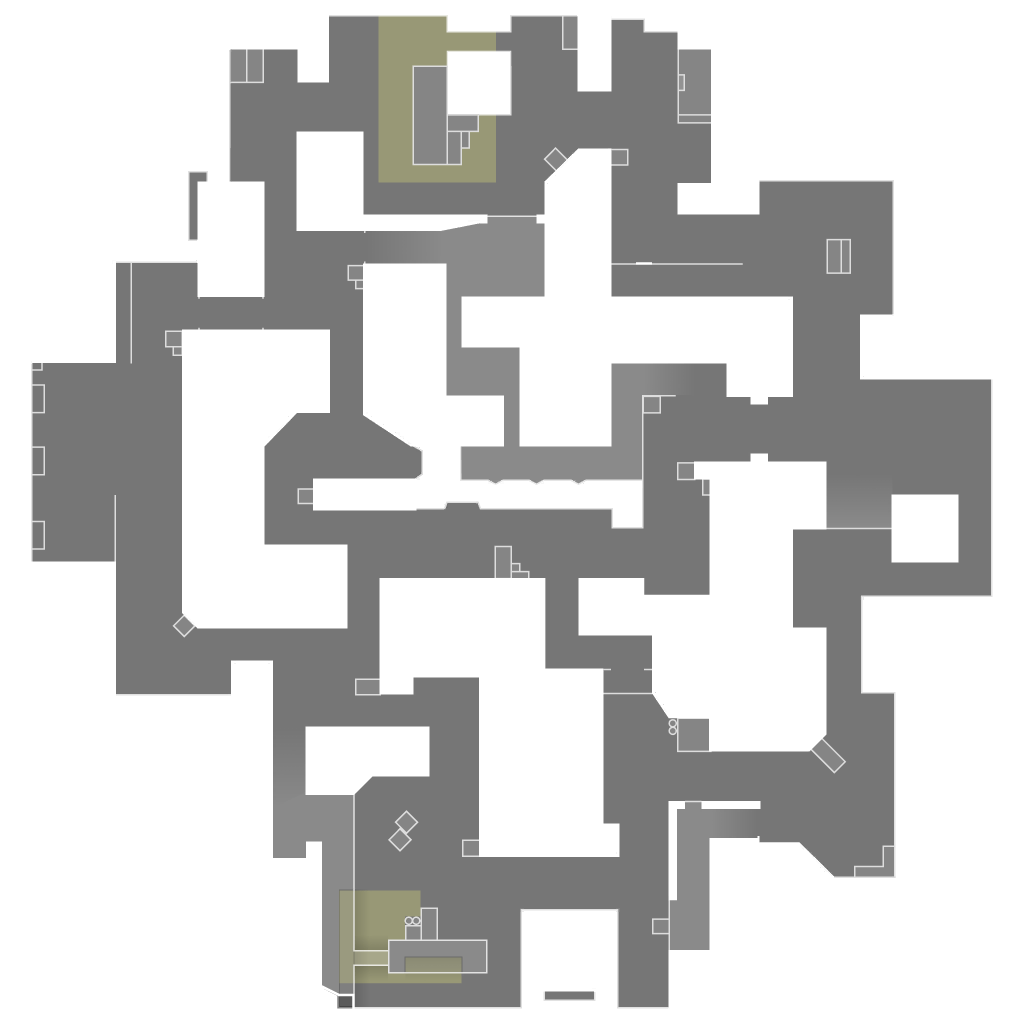
The 23 official callouts of Abyss
Riot sorts them into five zones. Here's the complete list.
| Zone | Official callouts | Number |
|---|---|---|
| A | Bridge · Link · Lobby · Main · Secret · Security · Site · Tower · Vent | 9 |
| B | Danger · Link · Lobby · Main · Nest · Site · Tower | 7 |
| Mid | Bend · Bottom · Catwalk · Library · Top | 5 |
| Attacker spawn | Spawn | 1 |
| Defender spawn | Spawn | 1 |
Two observations drawn from this list alone. First, A and B each have a Tower, a Link, a Lobby, and a Main: without a site prefix, a call is ambiguous. Say "A Tower," never just "Tower." Second, Mid alone concentrates five callouts — Top, Bottom, Catwalk, Bend, and Library — and three of them carry a height indication in their name. Abyss reads as much vertically as horizontally.
What makes Abyss unique: there are no edges
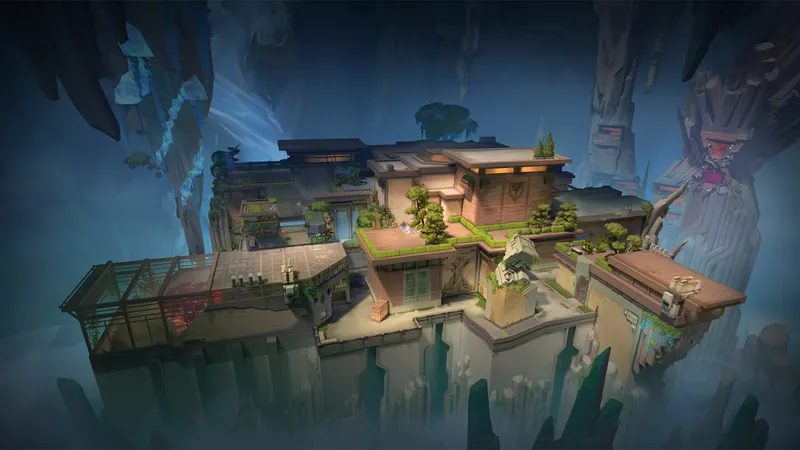
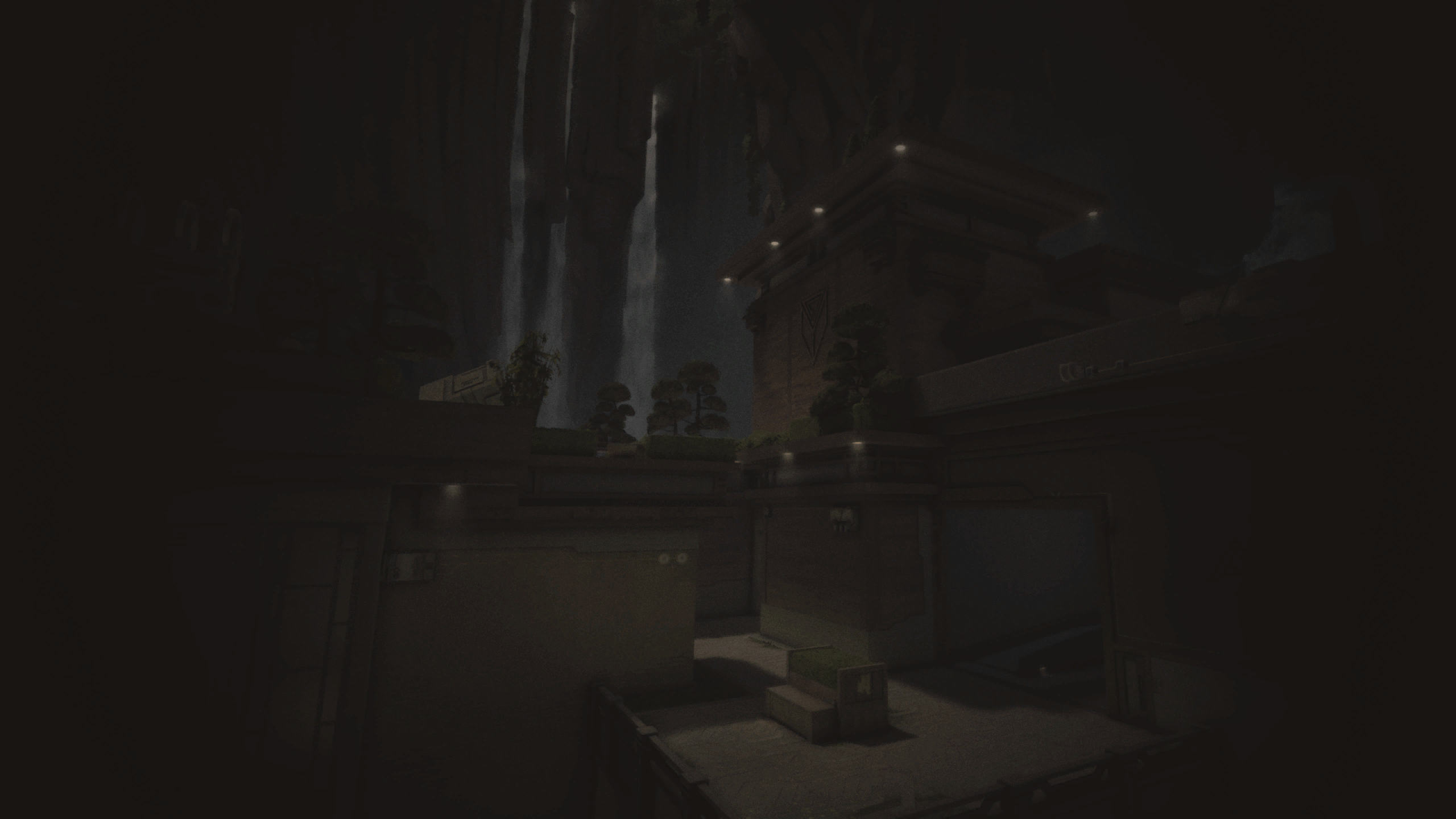
Abyss is, according to Riot's official documentation, the first Valorant map without outer boundaries, with a deadly void in the middle. You fall in, and you die. It's not scenery: it's a mechanic.
Three consequences, all documented by Riot:
- Danger (B) and Secret (A) are narrow ledges set on the outer edge of the map. They serve as jump shortcuts. Their name isn't decorative.
- Catwalk can only be reached by jumping over the Mid gap, from Top or Library, to grab a rope ascender. There's no other direct access.
- If the spike falls into the void, it respawns at B Danger — a fix Riot had to make, and one worth knowing: it's not a lost round.
In other words, half of Abyss's aggressive angles come at the cost of a fall. A duelist who fumbles an entry on Secret doesn't fall back: they die.
The four rope ascenders
Riot documents four of them, and they map out the entire vertical circulation of the map:
- from A Site to A Tower;
- from B Main to Mid Bend;
- one in the attacker's spawn;
- the one on Catwalk, accessible only after jumping over the gap.
The second is the most underrated: it links B lane directly to the middle of the map. A B → Mid rotation doesn't necessarily go through a Link.
The Vent doors: 120 HP, and a color code
The two entrances to Vent, on the A side, are closed off by destructible doors that absorb damage and gunfire as long as they hold. The official numbers:
- 120 HP per door;
- a color indicator that shifts from blue to yellow then to red as it takes damage;
- once destroyed, the passage stays open for the rest of the round.
This is the most exploitable piece of information on the map, for two opposite reasons. On attack, opening Vent early costs bullets and makes noise, but creates a second lane onto A for the rest of the round. On defense, a door's color is a free sensor: a door that's turned yellow tells you someone's working on it, without any teammate having to look.
Where Abyss fits in, and since when
Abyss is the eleventh standard map added to Valorant, released into the game on June 11, 2024. Its official structure: three lanes, two sites. Its narrative setting places it at the Elder Grotto, beneath the island of Jan Mayen, Norway — a Scions of Hourglass base reclaimed by the VALORANT Protocol.
Riot's official presentation, published in English, sums up what you're meant to look for here better than any analysis: it invites players to use the deadly falls to invent new ability tech, or to push an opponent into the void, and warns that the high risk only pays off if the execution lands. The wording is the publisher's; the translation is ours.
Three habits to pick up in your first Episode 5 games
- Prefix all your calls. Four landmarks exist in duplicate between A and B (Tower, Link, Lobby, Main). A call without a letter is a lost call.
- Check the color of the Vent doors before turning. Blue, no one has come through. Yellow or red, someone is working on your flank.
- Only take Secret and Danger with a planned exit. These are ledges, not angles: there's nothing behind you.
A clarification on the rest of the pool
Riot only publishes the rotation's entries and exits, never the full pool. Patch 13.04 states that Abyss is coming in and Breeze is going out, and nothing more: any list of the seven Act 5 maps circulating elsewhere is a reconstruction, not official communication. What is certain is that Abyss is playable in Competitive, and that Breeze no longer is.
Share this article
Are you going to relearn Abyss now that it's back in Competitive, or did you drop it before for a good reason?
Frequently asked questions
Why do Abyss's callouts remain in English in the French version?
Riot does not translate map nomenclature; it's a deliberate and documented choice. On a multilingual ladder, everyone needs to speak the same language for callouts. The client displays Bridge, Nest, Vent — this nomenclature is authoritative, regardless of your game language.
What makes Abyss unique compared to other maps?
It's the first Valorant map without outer boundaries: there's a deadly void at the center of the map. You can fall into it and die, which turns callouts like Secret, Danger, and Catwalk into tactical traps as much as jump shortcuts.
How do the Vent doors work?
They absorb 120 damage points each and change color in real time: blue (intact), yellow (damaged), red (critical). Once destroyed, they remain open until the end of the round. Their color serves as a free sensor for the defense.
How many rope ascenders are there on Abyss, and where?
Four in total: A Site to A Tower, B Main to Mid Bend, one in the attacking spawn, and the most important one, the Catwalk ascender, only accessible by jumping over the void from Top or Library.
Are Secret and Danger normal strategic angles?
No, they're narrow ledges positioned on the outer edge of the map. They serve as jump shortcuts, but there's nothing behind you. A duelist who whiffs their entry doesn't fall back: they die. Only take them if you have a planned exit.
Key takeaways
- Abyss's 23 callouts remain systematically in English, even in the French version, because Riot never translates map nomenclature — it's a choice, not an oversight.
- Abyss is the first Valorant map without outer boundaries: you can fall off it and die, which turns Secret, Danger, and Catwalk into tactical traps as much as shortcuts.
- The Vent doors absorb 120 damage points and change color (blue → yellow → red) in real time, becoming a free sensor for the defense.
- Four rope ascenders structure vertical mobility, notably the one connecting B Main directly to Mid Bend without going through a Link.
- Every call must be prefixed with its letter ("A Tower," never just "Tower") because Tower, Link, Lobby, and Main exist in duplicate across both sites.
Comments
No comments yet. Be the first to react!
Leave a comment
Similar guides


Latest articles







Your opinion counts
Rate Valorant
Click a star to rate