

 Fabian Lainé

Tips
PUBG: why reading the circles no longer works since 42.1 — the new blue zone explained
In brief
PUBG's 42.1 update completely overhauled the blue zone system, shifting from a distance-based penalty to a penalty based on cumulative time spent outside. Combined with the removal of the land-prioritization algorithm and shortened phases, this overhaul has made the historic "circle reading" strategy that was the strength of the best teams obsolete.
There's a reason your matches have been going worse since the start of summer, and it's probably not your aim. It's the blue zone. The 42.1 update, rolled out on June 16, 2026, overhauled the rules governing it, and two months later, most players are still applying reflexes inherited from the previous system.
The subject just came back into the spotlight with the PGS 7 recap, published on August 13 by Krafton. The findings are blunt: the teams known for their zone reading and positional play struggled the most. When organizations like DN SOOPERS, Team Vitality, or Team Falcons find themselves on the brink because their strong suit no longer works, that's not a tournament fluke: it's a sign that the skill itself has changed in nature.
The four changes in 42.1, and what they mean
Let's go over what actually changed.
- The duration of the early and final phases has been shortened. You have less time at the start to gear up, and less time at the end to maneuver.
- The overall size of the safe zones has been reduced. At an equivalent phase, you're playing tighter than before.
- Blue zone damage no longer depends on distance, but on cumulative time spent inside it. This is the change with the heaviest consequences.
- The land prioritization algorithm has been completely removed. The game no longer makes an effort to have zones land on playable terrain.
Taken separately, each one seems minor. Together, they demolish the strategy that had structured high-level play for years.
The point that changes everything: cumulative time damage
Before, the blue zone punished you based on your distance from the circle. Staying at the edge cost little; venturing far cost a lot. That system allowed for a perfectly rational tactic: hug the outer edge of the zone, take a bit of controlled damage, and reach opponents from an angle they weren't watching.
That's no longer true. The system is now cumulative over time. What you pay for isn't distance anymore, it's the total duration spent outside the zone. Three practical consequences follow.
First, the zone edge is no longer a cheap shelter. Hugging the border "just a little" costs exactly the same hourly rate as a deep round trip. The game no longer rewards you for staying close.
Second, mistakes are paid for later. Zone time accumulated early in the match can't be made up for: the counter doesn't reset. A team that lingered at the first contraction will play the entire endgame with a depleted healing reserve.
Finally, healing items change roles. Syringes and med kits are no longer insurance against damage taken in combat: they've become movement consumables. They need to be budgeted like fuel.
The removal of land prioritization, or the end of predictions
This is the second pillar of the overhaul, and the most misunderstood.
Until 42.1, safe zone generation was assisted by an algorithm that favored land portions. This bias was not officially documented but was perfectly identified by experienced players: on a map with a strong maritime component, everyone knew that a circle had little chance of landing mostly on water, and this mechanically reduced the field of possibilities.
That crutch has disappeared. The draw has become much closer to pure randomness, which produces situations that were once improbable: final zones straddling water, contractions toward terrain with no cover, circles that completely ignore towns.
"Circle reading" — anticipating the next contraction to occupy the ground before others — relied entirely on this bias. Without it, anticipation is no longer a skill, it's a gamble.
What to do instead
The replacement for the gamble is coverage. Not guessing where the zone will land, but positioning yourself so that no contraction is catastrophic.
Aim for the center earlier than before. This used to be a beginner's reflex, mocked by advanced players: you lost value by piling up in the middle. With smaller zones, shorter phases, and a now-unpredictable draw, the central position has once again become the least risky one — it guarantees you'll be within reach of the next zone regardless of the draw's outcome.
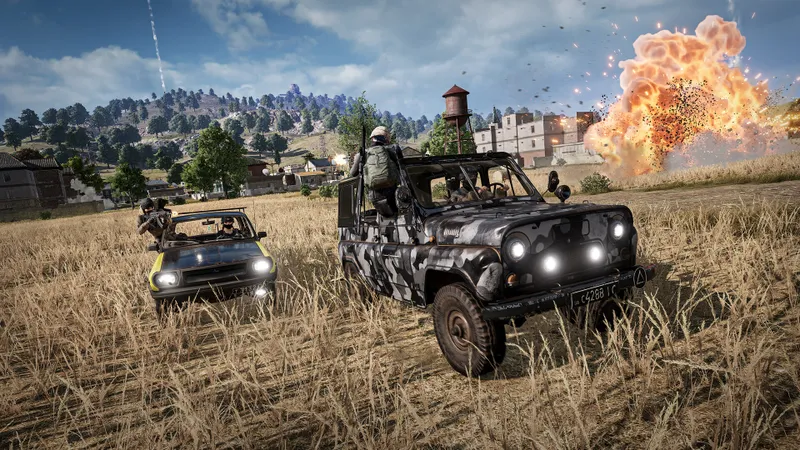
Treat vehicles as priority gear. Shortened phases mean shortened movement windows. A vehicle is no longer for traveling comfortably, it's for not accumulating zone time. As a squad, keep one for the end game even if you have no immediate use for it.
Carry more healing and fewer bullets. The math has changed. A hundred extra rounds will rarely serve you; two extra medkits will serve you almost every time. Make the trade-off when looting.
Give up the zone edge as an approach route. This used to be the favorite angle for flanking a team. It now costs more than the tactical gain it provides, except for a very short and perfectly prepared push.
The special case of ranked matches
In Ranked, the overhaul doubly penalizes players who camp the periphery to survive for rank points.
The traditional reasoning — avoid fights, hug the zone edge, climb the rankings through survival — relied on low zone damage at the periphery. With a cumulative scale, every contraction survived by the skin of your teeth consumes part of your resources without giving anything back. You reach the final third alive but stripped bare: no heals, no vehicle, and often no position.
The passive survival strategy hasn't disappeared, but it now requires being in the zone early, not being on the margins late. It's a nuance that decides a lot of endgames.
This week's schedule to know
If you want to see these principles applied by those who understood them before everyone else, the circuit is currently underway in Shanghai. The PUBG Global Series' Circuit 3 runs from August 5 to 23, with 24 teams and a $500,000 prize pool. PGS 8 is at its Survival Stage today, August 14, and will follow with its Final Stage on August 15 and 16. PGS 9 will follow from August 20 to 23, with $300,000 on the line.
All matches in this circuit, outside of the PGS 7 group stage, start at 10:00 AM UTC, which is 12:00 PM in France. And a detail that matters for the rest of the season: since the start of Circuit 3, each series is worth twice as many PGS points as in the first half of the year. What you're watching right now counts double in the race for PGC 2026.
Share this article
Since 42.1, do you prefer to play…
Frequently asked questions
Why have the best teams been underperforming since 42.1?
They relied on their ability to "read" circles and hug the edge to catch opponents from behind. This system rested on two pillars that are now gone: a distance-based zone penalty and an algorithm favoring land. Without these two elements, their main competitive advantage has evaporated.
What exactly changed with zone damage?
Before, you paid based on your distance to the circle. Now, you pay based on the total time spent outside the zone, with no reset. This means every second outside costs the same rate, no matter where you are on the edge.
Is "circle reading" completely dead?
Yes, as a predictable strategic skill. Before, experienced players exploited an informally documented algorithm bias. Now, the draw is too random to reliably anticipate. It's become a gamble rather than a know-how.
Do I really need to give up the edge-of-zone strategy?
Except for short, prepared plays, yes. The zone time cost now outweighs the tactical gain. Positioning yourself in the center earlier provides coverage against any contraction and minimizes cumulative damage.
How does strategy change in Ranked?
Edge camping for passive survival is penalized twice over: each contraction drains your resources without regenerating them. You now need to be in the zone early, not on the fringe late, to survive Ranked effectively.
Key takeaways
- Zone damage is now calculated by cumulative time, not distance: hugging the edge no longer costs less.
- The algorithm that favored land has disappeared, making final zones unpredictable and killing "circle reading".
- Positioning yourself in the center becomes the lowest-risk strategy, even if it overturns years of competitive reflexes.
- Heals become fuel for movement, not insurance against fights.
- In Ranked, passive edge survival no longer works: you need to be in the zone early, not on the fringe late.
Comments
No comments yet. Be the first to react!
Leave a comment
Similar guides
Latest articles





Your opinion counts
Rate PUBG: Battlegrounds
Click a star to rate