

 Fabian Lainé
Full Guide
Pokémon Pokopia: the field abilities guide — which Pokémon to clear each obstacle (2026)
In brief
Pokémon Pokopia revolutionizes exploration by replacing generic tools with abilities tied to your recruited Pokémon. Every obstacle — rocks, bushes, cliffs, bodies of water — requires a specific Pokémon and its field move to be overcome. This guide walks you through all the essential field moves, what they unlock, and the best Pokémon to recruit to dominate each region.
Across Pokémon Pokopia's five ravaged regions, it's not your tools that unlock the terrain: it's your Pokémon. Every rock blocking a path, every overly thick bush, every cliff and every body of water is waiting on a specific ability — and therefore on the species capable of using it. Your Metamorph, the avatar you play as, learns these moves by observing the Pokémon it recruits, much like it copies their appearance. This guide sorts it all out: here are all of Pokopia's field abilities, what they unlock, and the Pokémon to bring along for each type of obstacle.
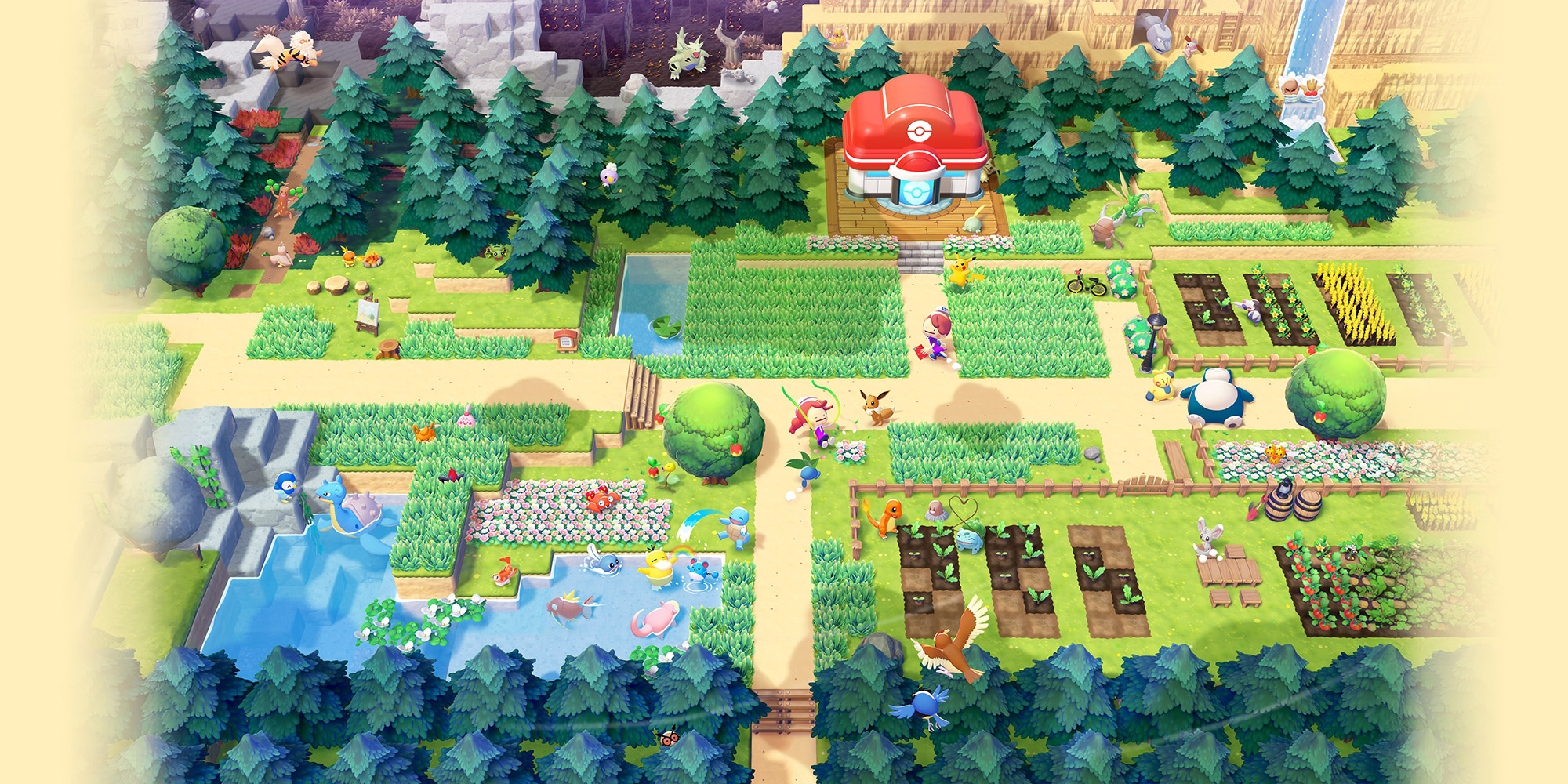
Field abilities, how they work
A field ability isn't a battle move: it's an environmental action your Metamorph triggers to change the scenery. In Pokopia, you don't "fix" the map with a generic pickaxe swing: every interaction is tied to a Pokémon present in your party or settled on the island. Recruiting the right species means permanently unlocking an action — breaking rock, climbing a waterfall, gliding from one plateau to another. The game even warns you when an obstacle requires an ability you don't have yet: a small icon appears on the stubborn rock or bush.
The logic rewards exploration: the more different species you come across while traveling through Terrassec, Grisemer, Collinangle, the Flotîles-Millefeux and Ville-Nouvelle, the more your set of abilities grows. Many of these moves share familiar names from the Pokédex — Rock Smash, Cut, Surf — but here their use is entirely geared toward development and reconstruction, not battling.
How do you actually unlock an ability? By bringing the relevant species into your life on the island: a Pokémon that's recruited, fed and settled eventually teaches you its field know-how. That's why recruitment is never an end in itself in Pokopia — every newcomer potentially expands the range of possibilities on the map. Some species share the same ability, which lets you choose between several Pokémon for the same need: keep whichever one's look or personality you like best, the function stays the same. And nothing is lost if you rework your team: a learned ability stays learned, as long as you keep a Pokémon capable of using it within reach.
Rock Smash: clearing rocks and rubble
This is the first major clearing ability. Rock Smash shatters cracked rocks and stone blocks that block passages and bury resources. Without it, entire stretches of Terrassec, the arid region, remain out of reach. The go-to Pokémon is Tygnon, whose fists work wonders on rock; the Fighting- and Rock-type Pokémon you'll encounter later offer alternatives.
- What it unlocks: cracked rocks, rockfalls, embedded ore veins.
- Where it's essential: the canyons of Terrassec and the cave entrances of Collinangle.
- Tip: look out for lighter-colored, cracked rocks — they're the ones most likely to be hiding building materials.
Cut: clearing the vegetation
Where Rock Smash tackles stone, Cut handles vegetation: thick bushes, fallen trunks, hedges blocking a path. It's the ability you'll use most on a daily basis to clear a plot before building on it. Scizor, with its blades, is the archetype for this, but any recruit with a good edge will do the job once the ability is learned.
Think of Cut as your brush cutter: before placing a monument or laying out a field, a quick pass clears the area and yields wood, a basic resource for most building kits. It's also the ability that makes the greenest regions truly navigable: without it, Collinangle and its wooded slopes quickly turn into a maze of hedges. Get in the habit of cutting as you go rather than forcing your way through — you'll avoid backtracking and gather materials to stock your workshop along the way.
Copy: the Ditto signature move
Here's the most singular ability in the game, and it fits your nature as a Ditto perfectly. Copy lets you take on the appearance — and sometimes the function — of nearby objects. It's as much a puzzle tool as a wink to the player: your character is a Ditto who woke up in human form, and this mimicry runs through the entire identity of Pokopia. It's often linked to Zorua, master of illusion, whose events also punctuate the post-launch calendar.
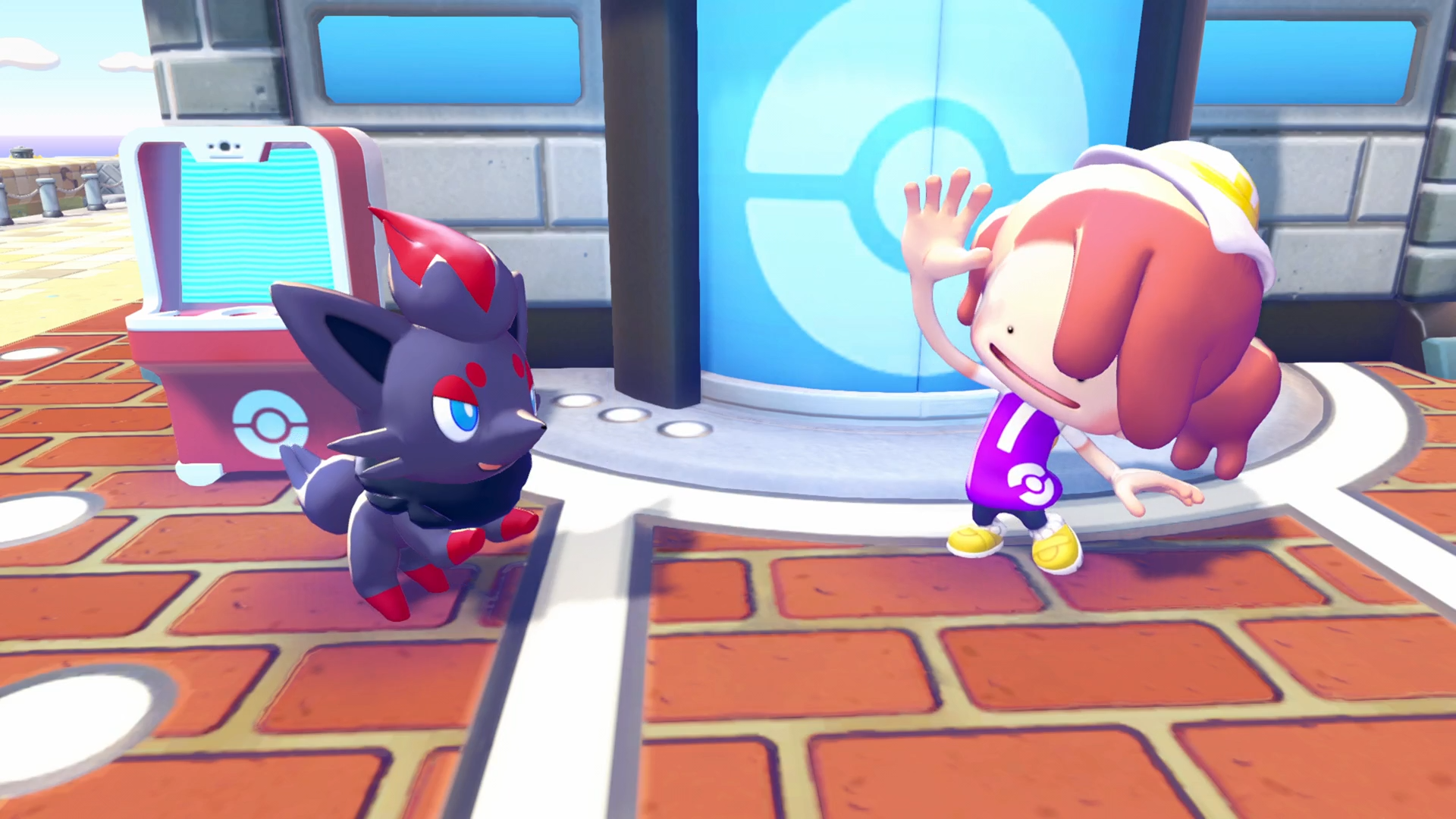
In practice, Copy is used to get around obstacles that have no "brute force" solution: blending into the scenery, imitating a missing element, solving layout puzzles. It's the ability that best reminds us that Pokopia is a creative rebuilding game before it's an action game. Where Rock Smash or Strength solve a problem through power, Copy solves it through observation: you have to look at the scenery, understand what's missing, then take the right form. It's a slower mechanic, but often the only key to the trickiest passages in New Town.
Magnet Lift: building up high, carrying through the air
Moving heavy materials over short aerial distances is the role of Magnet Lift. This ability, tied to magnetic Pokémon like Magneton, lets you lift and reposition elements while floating — invaluable for placing a structure in just the right spot without having to tear everything down. Where regular flight simply carries you, Magnet Lift adds handling: it's your construction crane.
- Typical use: repositioning blocks and scenery pieces at a slight overhang.
- Bonus: very useful on Collinangle's rugged terrain, where the ground is never flat.
Glide: connecting plateaus and islands
On the Millefeux Skyisles, the game's floating archipelago, moving from one landmass to another would be impossible without Glide. This ability lets you soar through the air from a high point down to a lower destination, crossing gaps and ravines. It's naturally attributed to large flying Pokémon such as Dragonite. It's the key to Pokopia's verticality: once unlocked, Glide radically transforms how you move through the game's hilly regions.
A useful reflex: always gain altitude before gliding. The distance covered depends on your starting point, and a high plateau will take you much farther than a simple hillock. Glide also changes your relationship with play time: trips that used to take long minutes on foot are wrapped up in a matter of seconds, which makes going back and forth between your various work sites much less of a chore. Many players make it their top priority to unlock as soon as they reach the high-altitude areas, precisely for this reason.
Water: Water Gun, Surf, Waterfall, and Dive
Water shapes the entire Greystone region, and several abilities work together around it. They cover both farming and exploration:
- Water Gun (around Squirtle): hydrates the soil and waters crops — a gardener's gesture before it's an explorer's gesture.
- Surf (with Lapras): crosses bodies of water to reach isolated shores and islets.
- Waterfall (with Gyarados): climbs waterfalls to access upstream areas.
- Dive: the ability that opens up the depths, added in the wake of content updates, to explore beneath the surface.

Together, these four moves make water a complete playground: you water your berries in the morning, surf to an islet in the afternoon, and dive to dig up materials that the land map doesn't provide.
Grass Growth, Strength, and Plow: the work site abilities
Not all abilities are meant to clear a spectacular obstacle; some are the beating heart of reconstruction. Grass Growth, associated with Bulbasaur, grows grass and vegetation where the ground was bare — ideal for greening a plot before settling residents there. Strength, in the tradition of Fighting-type Pokémon like Machoke, moves the big blocks that no other ability can budge, often to clear a passage or activate a mechanism. As for Plow, it turns over the soil to prepare your fields: it's the prerequisite for any serious berry farming.
These "background" abilities are easy to overlook in the rush of the early hours, but they're the ones that determine how fast your island takes shape. A good habit is to always keep at least one clearing Pokémon (Cut or Rock Smash) and one landscaping Pokémon (Grass Growth or Plow) in your team. The difference is especially noticeable when a resident makes a request of you: preparing a plot, adding greenery to a corner of the street, or setting up a specific decoration becomes a matter of moments if you already have the right species on hand, versus a long recruitment expedition if you're starting from scratch. Anticipating your field abilities means saving precious time across the whole reconstruction loop.
The recap table: which Pokémon for which obstacle
To never get stuck in front of a rock or a cliff again, keep this cheat sheet handy. Every obstacle has its ability, and every ability has a go-to Pokémon to recruit.
| Obstacle encountered | Field Move | Reference Pokémon |
|---|---|---|
| Cracked rock, rubble | Rock Smash | Tyrogue |
| Thick bush, fallen trunk | Cut | Scyther |
| Object puzzle, scenery to mimic | Mimic | Zorua |
| Heavy element to reposition in the air | Magnet Rise | Magnemite |
| Gap between two platforms or islands | Fly | Dragonite |
| Body of water to cross | Surf | Lapras |
| Waterfall to climb | Waterfall | Gyarados |
| Dry land, crop to water | Water Gun | Squirtle |
| Bare ground to make green | Leech Seed | Bulbasaur |
| Large block to push | Strength | Machoke |
| Field to prepare | Tilling | Diggersby |
| Seabed to explore | Dive | Dedicated water Pokémon |
Building the right field team
You can't bring everyone everywhere, so tailor your team to the day's region. In Terrassec, rely on Rock Smash and Cut to clear the way; in Grisemer, prioritize the aquatic trio of Surf, Waterfall, and Dive; on the Flotîles-Millefeux, never leave without Fly. Ville-Nouvelle, being more urban, places greater value on Mimic and fine-tuned landscaping moves.
One last piece of advice: don't think of these moves as simple one-use keys. Many of them combine — clearing a rock with Rock Smash can reveal a body of water to Surf across, which leads to a waterfall to climb, itself opening onto a platform to reach with Fly. It's this chaining, more than each move taken in isolation, that gives Pokopia its layered sense of exploration. Recruit widely, test every new species against the obstacles that resist you, and your island will soon know no more boundaries.
Share this article
Which field move do you think is the most crucial for playing well?
Frequently asked questions
If I swap a Pokémon out of my team, do I lose its field moves?
No. Once learned, a field move remains unlocked as long as you have a Pokémon capable of using it either in your team or settled on the island. So you can rotate your recruits without worrying about losing progress.
Which Pokémon should I absolutely recruit first?
Start with Machop for Rock Smash (essential for Onix) and Scyther for Cut (you'll use it daily). Then aim for a Flying-type Pokémon with Fly as soon as you reach the higher-altitude areas — it completely changes your mobility.
How do I know which Pokémon can use which move?
The game displays icons on obstacles to indicate a missing ability. As you explore, you'll quickly spot patterns: Fighting-types use Rock Smash, Flying-types offer Fly, and Water-types handle water-based moves. Type is usually a good indicator.
Do I need to complete special quests to unlock certain moves?
No, recruiting is enough. The more you explore the five regions and catch different Pokémon, the more your set of moves naturally grows. No move requires a post-game event or hidden quest — free exploration is king here.
Do multiple Pokémon share the same move?
Absolutely. Several Fighting-type species can use Rock Smash, for example. This gives you the freedom to keep whichever one you like best visually or in terms of personality — the function stays the same, only the Pokémon changes.
Key takeaways
- Field moves are learned by recruiting Pokémon and stay unlocked even if you swap out your team — there's no permanent loss
- Rock Smash and Cut are your everyday tools: they clear rocks and vegetation respectively to make the map passable
- Fly transforms the game at altitude and should be a priority as soon as you reach elevated areas to save time
- Mimic, Ditto's signature move, solves puzzles through observation rather than brute force — it requires really looking at your surroundings
- Water unlocks four complementary moves: watering crops, surfing, climbing waterfalls, and diving deep
Comments
No comments yet. Be the first to react!
Leave a comment
Similar guides

Latest articles





Your opinion counts
Rate Pokémon Pokopia
Click a star to rate