

 Fabian Lainé
Build
Hearthstone Verr'Minh (Mug'Zee): 100% Minion and 100% Spell Shaman decks in August 2026
In brief
Verr'Minh dominates the August 2026 Standard meta with two radically opposed archetypes: an aggressive tempo deck built 100% around minions with a 54.4% win rate, and a control deck built 100% around spells with a 52.5% win rate. This Legendary forces you to choose right from deckbuilding, since a single card of the wrong type cancels all its benefits — here are the two Legend lists and how to play them depending on your collection.
Since the release of Escape from Vault Purpura on July 7, only one outlaw has truly reshaped the Standard ranking: Mug'Zee, the shaman's legendary outlaw. As of August 8, 2026, the archetype built around his second hero power boasts a 54.4% win rate and takes first place in tier 1 on Meta Stats for the Platinum–Legend bracket; its "spell" twin follows at 52.5%. No other class places two archetypes this high at the same time.
The 36.2 patch on August 4 changed nothing about that. It brought only one adjustment to Constructed play, the reversal of Voidscale Brute's Battlecry on the demon hunter side. The shaman came through the update completely unscathed, and the lists that were climbing to Legend in late July are exactly the ones sitting at the top in early August.
The catch is that Mug'Zee isn't a card you simply "add" to a deck. It's a deckbuilding constraint: it forces you to pick a side right from the deck creation screen, and a single card too many cancels out the entire benefit. Here's what its two powers actually do, the two up-to-date Legend lists with their codes, and which one to aim for depending on your collection.
Mug'Zee: two hero powers, never both at once
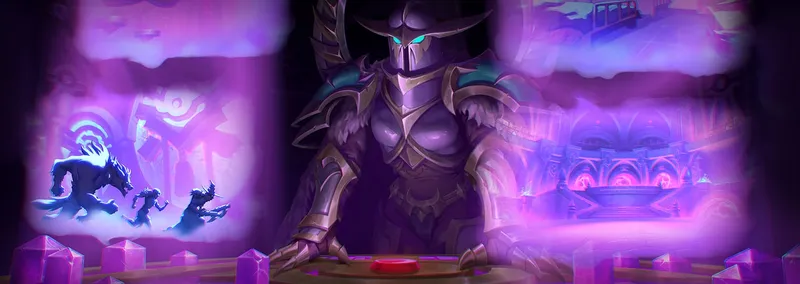
Mug'Zee is a legendary minion costing 6 mana, 6/7, whose text triggers at the Start of Game — so even before you draw it, as long as it's in your deck. The official English wording is unambiguous: "Start of Game: If your deck has no other minions, gain Mug's Hero Power. If it has no spells, gain Zee's!"
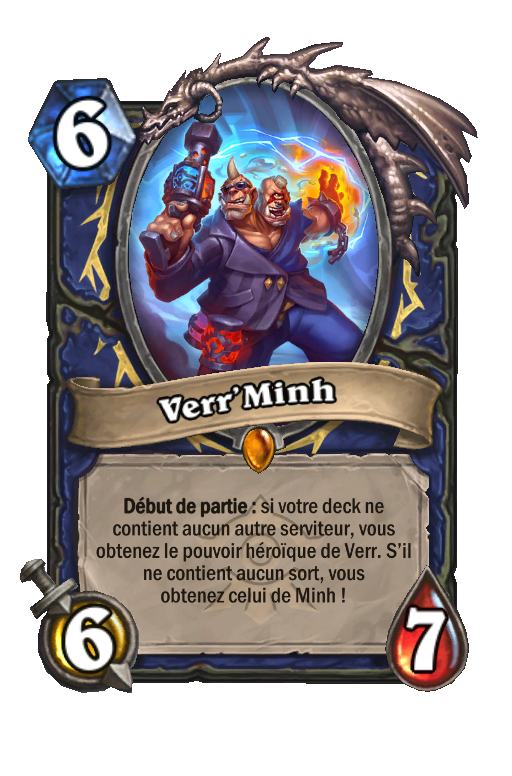
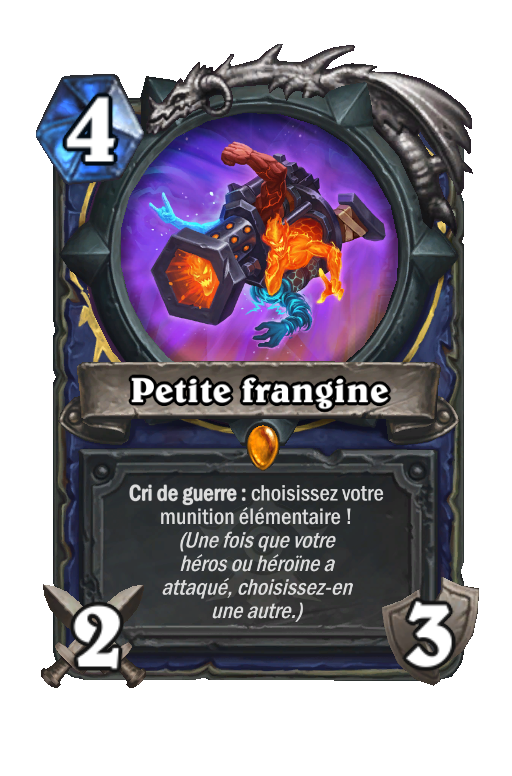
Both powers are passive: they permanently replace the shaman's base hero power, at no mana cost and with no click required.
| Power | Condition | Effect (EN text) |
|---|---|---|
| Mug's Hero Power | No other minions in the deck | Your first minion each turn costs (2) less. |
| Zee's Hero Power | No spells in the deck | Every 5th minion you play triggers its Battlecry twice. |
Zee's Hero Power counter is displayed on the hero power itself, showing "X more!" and then "Ready!". It doesn't reset between turns, so you can set up the fifth minion for a specific turn, which is the real skill cap of the archetype.
The deckbuilding rule half the players get wrong
The restriction applies solely to minions on one side and to spells on the other. Everything else is allowed in both cases, and both reference lists take advantage of this:
- weapons — Little Sister, the expansion's second shaman legendary, is played in both decks;
- locations — Minimum Security Wing appears in the no-minion version;
- hero cards — Deathwing, Mad Aspect's Hero Card is neither a minion nor a spell, so it fits smoothly into the no-spell version.
Another subtlety: minions generated during the game — discovered, summoned, or transformed — don’t break anything, since the condition is checked against the starting deck. That’s the whole point of the Verr version, which plays minions… without having a single one in its list.
Minh version: the 100% minions shaman
This is the #1 list on the ladder. Meta Stats credits it with a 57.65% win rate over 1,686 games for its best-optimized variant, and 56.72% over 2,863 games for the second one. The list below is jakeyp0096's, Legend rank 33 with a 14-2 score, published on August 4 on Hearthstone-Decks.
| Cost | Card | Qty |
|---|---|---|
| 0 | Witch's Apprentice | 2 |
| 1 | Radiant Acolyte | 2 |
| 1 | Flametin | 2 |
| 1 | Gallagio Thug | 2 |
| 1 | Glacial Shard | 1 |
| 1 | Ornithosaur | 2 |
| 2 | Cult Neophyte | 2 |
| 2 | Sacred Egg Bearer | 2 |
| 2 | Ticket Vendor | 2 |
| 2 | Skyfin Sentinel | 2 |
| 2 | Maiev Shadowsong | 1 |
| 4 | Hacked Security Bot | 2 |
| 4 | Little Sister | 1 |
| 5 | Envoy of the End | 2 |
| 5 | The Curator | 1 |
| 6 | Verr'Minh | 1 |
| 6 | Ultraxion | 1 |
| 8 | Al'Akir the Windlord | 1 |
| 10 | Deathwing, Mad Aspect | 1 |
Deck code: AAECAaoICNOeBvSqB9C/B4LUB5vUB9DbB4jdB9/lBwue1ATQngbt5gbXlwfgnQftrAePvgfJwAfJ2wfI5Qfm/QcAAA==
The plan is a two-stage tempo build. Turns 1 to 3 are used to chain cheap Battlecries, with two amplifiers: as long as it's alive, Gallagio Thug gives +1/+1 to every minion with Battlecry played after it, and Maiev Shadowsong grants +3/+3 to every minion played in exchange for a turn of Dormant. On a 1-mana 1/2, that +3/+3 completely changes the trade.
The second stage is the Convoke package inherited from Cataclysm. Skyfin Sentinel, Envoy of the End, and Ultraxion convoke and upgrade the Al'Akir's Soldier, which gives attack to adjacent minions; Ultraxion also reduces the cost of Deathwing, Mad Aspect. A detail many miss: The Curator draws a Beast, a Dragon, and a Murloc, and the only Dragon in the list is precisely Ultraxion. So it's a disguised tutor for your cost reducer.
As for Minh's Might, it primarily targets high-impact Battlecries: Hacked Security Bot (+1/+1 to your other minions), The Curator (up to six cards drawn at once), and above all Al'Akir the Windlord, whose doubled Battlecry yields four 1-mana minions.
Verr version: the 100% spells shaman
Same legendary, opposite philosophy: a control deck where Verr'Minh is the only minion, which makes every generated minion notably cheaper. The list featured here is Norwis135's, rank 1 Legend, published on August 6.
| Cost | Card | Qty |
|---|---|---|
| 0 | Static Shock | 2 |
| 1 | Flame Imbued | 2 |
| 1 | Low Security Wing | 2 |
| 1 | Mountain Card | 2 |
| 1 | Sands of Time | 2 |
| 1 | Voltaic Burst | 2 |
| 2 | Ritual of Power | 2 |
| 2 | Thunder Crash | 2 |
| 3 | Hex | 2 |
| 3 | Molten Gold | 2 |
| 4 | Ascendance | 2 |
| 4 | Little Sister | 1 |
| 5 | Frostcrusher | 2 |
| 6 | Verr'Minh | 1 |
| 7 | Stormrage Fury | 2 |
| 9 | Muradin's Last Stand | 2 |
Deck code: AAECAaoIAtDbB9/lBw6vnwTTvgbRmwfwqgf8rQe8sQfLtgfDwAfTwAf3wAfH2wfK2wfN2wfa3wcAAA==
The engine here is the three Escape from Crimson Keep spells that carry the line "Cast 3 spells to transform this spell into a minion!" Once the counter is reached, Molten Gold becomes a 3/3 Molten Gold Elemental, Frostcrusher a 5/5 Frostcrusher Elemental, and Stormrage Fury a 7/7 Stormrage Fury Elemental, each keeping the spell's effect as a Battlecry. So you're putting bodies on the board while keeping a deck without a single minion in it — and Verr's Magic knocks 2 mana off if it's your first minion of the turn.
Watch out for one rules detail: the cost reduction applies to minions played from hand. The sparks from Voltaic Burst land directly on the board and therefore don't consume the turn's reduction; the 1/1 Elementals from Ritual of Power, on the other hand, land in hand and do consume it. Always play your biggest generated minion first in the turn.
Low Security Wing (a location) and Mountain Card feed your hand with minions, Ascendance turns your minions into pricier versions that resummon the originals when they die, and Muradin's Last Stand draws two cards for a cost that drops by one mana every time a friendly character attacks — Little Sister, who strikes every turn, makes it playable very early.
Dust cost: the Verr version is notably more accessible
Counting 1,600 dust per legendary, 400 per epic, 100 per rare, and 40 per common, and excluding cards from the Core Set (unlocked for free by leveling up your classes) as well as Sands of Time, distributed during an in-game event:
- Verr version (100% spells): around 6,760 dust, with only 2 legendaries — Verr'Minh and Little Sister, both from Escape from Crimson Keep.
- Minh version (100% minions): around 10,320 dust, with 6 legendaries to craft (Verr'Minh, Little Sister, Maiev Shadowsong, Ultraxion, Al'Akir, and Deathwing the Destroyer). The Curator, meanwhile, comes from the Core Set.
In other words: if your crafting budget is limited, start with the Verr version. The two legendaries it requires are prerequisites for the other list anyway, so nothing is wasted if you later move up to the Minh version.
Mulligan and Common Mistakes
On the Minh side, the ideal hand is a seamless 1-to-3 curve: keep Gallagio Grunt and Sky-Wall Sentinel almost every time, and Maiev Shadowsong on the coin. Don't reflexively discard Ornithoscar: its immediate card draw more than makes up for the card lost to Deathrattle when the tempo is right. The costliest mistake is burning your fifth minion of the counter on a Radiant Acolyte instead of waiting one more turn.
On the Verr side, the mulligan revolves around 0- and 1-mana spells: Static Shock, Voltaic Burst, and Lowlight Wing keep you alive against Face Hunter, the second most played archetype on the ladder at a 52.76% win rate. Keep Thunder Crash against anything that floods the board, and remember that every spell cast advances all three transformation counters at once: a turn with three small spells can unlock all three of your Elementals in one go.
Which One to Play This Month
If your goal is to finish your weekly quests and the reward track as fast as possible, the Verr build is currently the best dust-to-results ratio, with control games that punish the prevailing aggression. If you're aiming for the top of the Legend ladder, the Minh build stays ahead: it's the only list in the format to break 57% win rate over a sample of more than a thousand games.
One caveat, though. An archetype that sits alone at the top of tier 1 for several weeks is a natural candidate for the next balance pass, and Blizzard fully refunds the dust for nerfed cards during the two weeks following an adjustment. If you're on the fence about investing 10,320 dust, keep that refund window in mind: it turns a bad bet into a simple round trip.
Share this article
Which of the two Verr'Minh versions appeals to you most?
Frequently asked questions
Why doesn't a single minion generated during the match break Verr'Minh's condition?
Because the "Start of Game" effect only checks your starting deck, not cards created during the match. That's the whole point of the Verr version: it contains no minions written in its list, but plays creatures transformed from its spells.
What's the real difference between Verr's Magic and Minh's Strength?
Verr's Magic (minions) reduces the cost of your first minion each turn by 2 mana, creating raw tempo. Minh's Strength (spells) stacks with every minion played and triggers the fifth Battlecry twice — it's a power that rewards multi-turn planning.
Can you play Little Sis in both decks?
Yes, it's a weapon, not a minion or a spell. It fits into both versions and changes ammo with every hero attack, making it versatile in both archetypes.
Which deck should I prioritize if I'm just starting out?
The Verr version (100% spells) costs about 3,000 dust less than Minh. It's also more accessible strategically: its game plan is more linear (stack 3 spells to transform, play your Elementals). Minh requires more resources and better mastery of positioning and the timing of Minh's Strength.
Key takeaways
- Verr'Minh imposes a strict construction constraint: zero other minions OR zero spells, never both at once.
- The Minh version (100% minions) plays an explosive tempo game where every fifth minion triggers its Battlecry twice.
- The Verr version (100% spells) turns its spells into minions via cards from the Crimson Fort's Escape, reducing their cost by 2.
- Weapons, locations, and hero cards are allowed in both versions — they're the construction loopholes.
- The Verr version costs around 6,760 dust, about 3,000 less than Minh: it's the option to start with.
Comments
No comments yet. Be the first to react!
Leave a comment
Similar guides

Latest articles





Your opinion counts
Rate Hearthstone
Click a star to rate