

 Fabian Lainé
Full Guide
The International 2026 kicks off today in Shanghai: full schedule, the 16 teams, and where to watch
In brief
The International 2026 kicks off today in Shanghai with its Swiss format group stage running from August 13 to 16, followed by the main double-elimination event from August 20 to 23. Sixteen teams will fight for a $2.8 million prize pool, with a six-hour time difference to keep in mind for European viewers, who will likely prefer catching up on matches via replay.
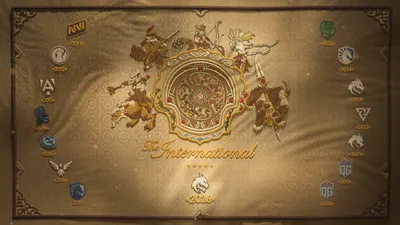
It starts today. The International 2026 group stage runs from August 13 to 16, and the main event follows from August 20 to 23, at the Oriental Sports Center in Shanghai.
We've already broken down the scoring mechanics of the Swiss format and explained why finishing third has nothing to do with finishing fourth. This guide answers the other, more practical question: when, where, and who to watch.
The schedule in two blocks
The tournament plays out in two clearly separated stretches, with a three-day break between them:
- August 13 to 16 — group stage, in Swiss format.
- August 20 to 23 — main event, in double elimination.
This three-day breather is good news for European viewers: it means they can catch up on the group stage on replay without missing anything from the bracket.
The format, explained simply
Sixteen teams compete in the group stage, and every match is played as a Bo3 — a detail that matters, since it considerably reduces the element of luck compared to a Bo1.
Advancing from the group stage happens in two waves:
- The top three advance directly to the playoffs.
- Teams ranked from 4th to 13th place play an elimination round, whose five winners join the final bracket.
Total: eight teams at the main event. Which means that half the field is eliminated before August 20 — the group stage isn't a warm-up, it's already a cutoff.
The main event is played in double elimination, with a grand final in Bo5.
The sixteen teams
The lineup brings together seven direct invites and nine regional qualifier winners:
- Aurora, BB Team, 1w Team, Team Falcons
- Team Liquid, Team Yandex, Xtreme Gaming, Team Spirit
- PVISION, Nigma Galaxy, HULIGANI, Team Resilience
- Vici Gaming, OG, GamerLegion, LGD Gaming
Two names catch the eye for a French-speaking audience. OG, two-time world champion, returns to the stage that built its legend. And Team Spirit remains, as every year, the team nobody wants to run into too early.
The tournament is being held in Shanghai, which gives a considerable crowd advantage to the Chinese organizations — Xtreme Gaming, Vici Gaming, and LGD Gaming will play in front of their supporters.
The prize pool
The base prize pool is $1.6 million, boosted to around $2.8 million thanks to in-game purchases. The champion will walk away with at least $1.2 million.
These amounts are nowhere near the tournament's records from the Compendium era. This is the result of a deliberate choice made by Valve over the past several years: bringing The International back down to a sustainable scale rather than sustaining an escalation funded by players. The debate on this point isn't settled within the community, but the numbers themselves have stayed stable year after year.
Where to watch
Official broadcasts are available on Twitch, YouTube, and Facebook. On the Chinese side, the tournament airs on DouYu, Huya, and Bilibili.
One organizational point to plan around: Shanghai is at UTC+8, while Paris is at UTC+2 in August. That's a six-hour difference, and in the wrong direction for Europe: a day of competition that starts in the morning in Shanghai kicks off in the middle of the night in France.
Practical consequence: if you don't plan on staying up, check each day's start time the evening before and plan to catch up with the replays instead. Since Valve hasn't published detailed schedules at the time of writing, it's best not to rely on schedules reconstructed by third parties.
How to follow without spending all day on it
Four days of Bo3 across sixteen teams adds up to a volume of matches that no one watches in full. A few pointers to help sort through it:
- The first two days serve to separate the top and bottom of the standings. This is where the teams contending for the top 3, and thus direct qualification, start to emerge.
- August 16 is the decisive day: it sets the final standings and sends ten teams into the elimination round.
- The elimination round is the best part of the tournament in terms of pure stakes: five spots for ten teams, with no second chances.
- If you only watch one thing, make it the grand final on August 23, played in Bo5.
What to keep in mind about the Swiss format
One last point that changes how you should read the matches, and explains why the group standings matter so much. Unlike a classic group-stage bracket, the Swiss format pairs teams based on their record: the more you win, the tougher your next opponents get.
This produces a counterintuitive effect that casual viewers often miss: a team that loses its first match isn't doomed, it simply faces a more manageable opponent in the next round. Conversely, a team that starts off very strong can end up facing one heavyweight after another.
This is also what makes the top 3 cutoff so brutal, and we devoted a separate piece to it: between direct qualification and going through the elimination round, the gap in fatigue and risk is considerable, even though only a single spot separates them in the standings.
The schedule to remember
- Thursday, August 13 — opening of the group stage.
- Sunday, August 16 — final day of the group stage, which sets the standings.
- August 17 to 19 — break, no official matches.
- Thursday, August 20 — start of the main event, with eight teams.
- Sunday, August 23 — grand final, in Bo5.
Note that this edition runs alongside a busy week for Dota players: the Diretide is still going in-game, with its tickets, candy, and discount coins. If you're following the tournament live, this is a good time to make progress on it between matches — the objectives fill up in regular matches.
Share this article
Will you watch the matches live or via replay?
Frequently asked questions
Why is it so important to finish in the top 3 of the groups?
Because the top 3 go straight to the playoffs, while places 4 through 13 face a tight elimination round where only five teams survive. In the Swiss format, that single-place difference creates a massive gap in terms of fatigue, risk, and unpredictability.
What time should you watch from France?
Shanghai is six hours ahead of Paris, so matches that start in the morning there begin in the middle of the night in France. It's best to check the exact schedule the day before and plan to catch up via replay on Twitch, YouTube, or Facebook.
How many matches do I need to watch to really follow along?
The first two days (August 13 and 14) show who's climbing the standings. August 16 is decisive. If you're short on time, focus on the 16th and the elimination round: that's where the stakes overshadow everything else.
Is there an advantage to playing in Shanghai?
Yes, a massive one: Xtreme Gaming, Vici Gaming, and LGD Gaming will play in front of their home crowd, creating a real momentum that foreign teams won't have.
Who are the favorites with OG and Team Spirit in the lineup?
OG returns to the stage that made it legendary as a two-time world champion, but Team Spirit remains the team nobody wants to face too early. The three Chinese teams also benefit from home-field advantage.
Key takeaways
- The group stage already eliminates half the field: only the top three teams qualify directly, while the rest must go through an elimination round.
- The Swiss format means winning teams face tougher opponents while losing teams get more accessible matchups: it's counterintuitive but brutal for the standings.
- Shanghai is UTC+8, six hours ahead of France in August, making live streams essential for night owls and replays a must for everyone else.
- August 16 decides everything: it's the last day of the group stage, determining the ten teams sent to the elimination round and the three that advance directly to the playoffs.
- If you only watch one thing, save it for the Bo5 grand final on August 23: that's where the world champion title is truly decided.
Comments
No comments yet. Be the first to react!
Leave a comment
Similar guides

Latest articles





Your opinion counts
Rate Dota 2
Click a star to rate