


 Fabian Lainé

Full Guide
Subnautica 2: Getting Started Guide and Early Hours in 2026
In brief
Subnautica 2 plunges up to 4 players into a new alien ocean populated by unpredictable creatures and vertically layered biomes. Between fundamental survival, modular base building, and cooperative exploration, the first few hours require mastering oxygen, hunger, thirst, and above all: never engage a leviathan without preparation.
Nine years after the cult classic Subnautica and six years after Below Zero, Unknown Worlds plunges us back underwater with Subnautica 2. Published by Krafton, the game launched into early access on May 14, 2026 on PC (Steam and Epic Games Store) and Xbox Series X|S, available from day one on Game Pass. The studio plans about two to three years of development in Early Access before the 1.0 release. Here's everything you need to know to survive your first hours on this new ocean planet.
Forget 4546B: Subnautica 2 takes place in a brand-new star system, on an unknown aquatic planet whose depths are far more expansive and vertical than those of the first game. You play as a member of an Alterra scientific team whose ship was destroyed in orbit. Your goal: survive, understand the local ecosystem, and find the other survivors scattered across the biomes.
The big new feature of this sequel can be summed up in one word: cooperation. The game supports up to 4 players online, but the solo experience remains the studio's showcase, just as tense and contemplative as the first Subnautica. Co-op is completely optional and can be turned on or off at any time.
The first minutes: escaping the crash
Your playthrough begins in a Life Pod shaken by explosions from the mothership. Three things to do in the first ten minutes:
- Put out the fire using the extinguisher mounted on the wall, then search the lockers for nutrient bars, water bottles, and spare batteries.
- Craft the Scanner and the Survival Knife at the fabricator: these are your two essential tools. The scanner unlocks blueprints as soon as you scan an object, plant, or creature.
- Gather titanium, copper, and kelp around the pod. These three resources are absolutely essential for all your early crafting, from the knife to the flashlight.
Whatever you do, don't head out to explore before you have a knife and a bottle of filtered water. The new engine pushes fatigue, hunger, and dehydration even further, and you can die very quickly from a single failed round trip.
Oxygen, hunger, thirst: the three gauges to watch
The series' classic trio is back, with a few tweaks designed for co-op:
- Oxygen: 45 seconds to start, up to several minutes with upgraded tanks. Always resurface with at least a third of your reserve left.
- Hunger: cooked fish remains the best source of calories. Be careful: local wildlife is toxic by default.
- Thirst: filtering seawater costs a lot of energy; it's best to set up a Water Filtration Machine in your base as soon as possible.
Key tip: quickly look for the Purple Tree, a glowing alien structure in the Shallow Reefs. Interacting with it updates your DNA so you can digest local food without taking damage. This is probably the top priority objective of your first two hours.
Mapping the starting biomes
Subnautica 2's map is vertically stratified: each depth range has its own resources and dangers. As in previous games, there's no mini-map — placing beacons is essential.
- Shallow Reefs (0–50 m): starting biome, sunny, rich in titanium, copper and kelp. Low danger.
- Coral Gardens: new pastel biome home to Biolabs — essential for progression.
- Thermal Spikes (50–150 m): hot springs spewing sulfur. Silver and gold can be found here, but watch out for thermal damage.
- Crystal Caves (150–300 m): diamonds and lithium, but near-zero visibility and lurking predators.
- Deep Trenches (300 m and beyond): uraninite, magnetite… and leviathans. Do not approach without a serious submarine.
Building an efficient modular base
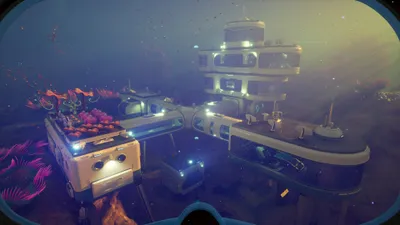
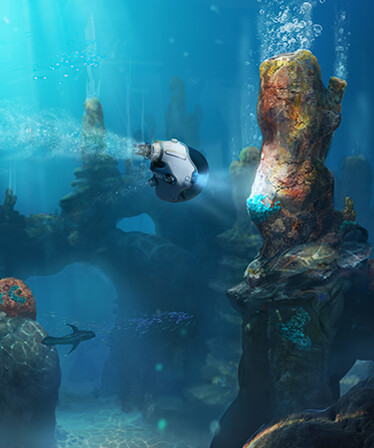
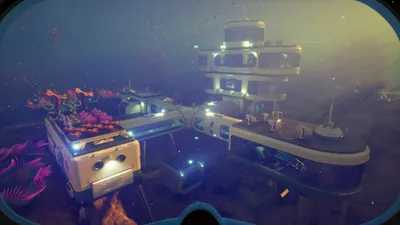
The habitat builder has been overhauled and is now noticeably more permissive: curved walls, panoramic windows, multiple airlocks, watertight compartment bulkheads. For a solid first base near the Shallow Reefs, aim for this minimal shopping list:
- 2 T-tubes, an airlock, a multipurpose room.
- A Fabricator, a Battery Charger and a Power Cell Charger.
- A Water Filtration Machine and an Exterior Growbed for food.
- 2 to 3 solar panels paired with an energy storage module — output drops to almost zero at night.
- A Biolab once unlocked: it's the new skill tree.
Don't forget hull reinforcements as soon as you go below 100 meters, and plan for a modular extension for co-op play: in a 4-player game, everyone appreciates being able to attach their own workshop or bedroom to the shared base.
Vehicles and deep exploration
You can't stay stuck in the Reefs forever. Submarines unlock true exploration:
- The Wake Maker (new personal propulsion device): your first mobility boost, available right after the first session. Collect its three scattered blueprint fragments around the pod.
- The next-gen Seamoth returns, faster and more modular, down to around 400 m depth.
- The Cyclops 2 acts as a mobile base: several players can live in it, build inside it, and take turns piloting it.
A small reminder that's costly to ignore: find the vehicle repair tool as quickly as possible. A submarine destroyed to zero HP is lost for good, along with all the resources on board.
Predators: the doctrine of flight
Another major philosophical shift: in Subnautica 2, you do not kill leviathans or any hostile fauna. The game stays true to its ecological DNA and offers non-lethal tools instead:
- The Sonic Resonator temporarily stuns a creature and breaks apart large mineral deposits.
- The Survival Multi-tool triggers flinch animations on predators — a precious one-to-two-second window.
- The floating decoys, deployable from the Seamoth, can divert a leviathan's attention so you can slip past.
The leviathan AI has been overhauled: they patrol, hide in canyons, react to the noise of your engines, and adapt their aggressiveness to the number of players present. A 4-player raid in the Trenches doesn't play out like a solo descent.
4-player co-op: what it really changes
Co-op, the most requested feature by the community for ten years, is now here — and well integrated:
- Private personal inventory for each player, but shared lockers and discoveries at the base level.
- Each player can build their own annex base, with their own biolab and their own vehicles.
- Story progression is shared: PDA scans, main quests, and unlocks apply to the group.
- Recommended role distribution: an explorer, a gatherer, a builder, a deep diver.
Update 1.1, already deployed in June 2026, added coordinated predator stuns, very useful with 3 or 4 players facing a leviathan.
PDA, biolab, and main quests
The PDA has been redesigned to avoid unwanted automatic playback — audio logs now trigger manually. It centralizes blueprints, the map of scanned zones, and Alterra archives.
The Biolab, unlocked in the Coral Gardens, serves as a skill tree: scan fauna and flora to unlock passive perks such as Dash (underwater acceleration), Path Tracer (creature tracks), or extended stamina.
As for the main storyline, without spoilers: joining the Reception Center, restoring the Ruins of Axum, and investigating the Metal Farms make up the three major arcs of the Early Access version.
To go further
Our detailed multiplayer guide is coming soon on playnews.gg, with the list of shared blueprints and tips to avoid progression loss during co-op sessions. In the meantime:
- The official Unknown Worlds page for patch notes and the roadmap.
- The community wiki for biome coordinates.
- Guides from Breakflip and French-language videos from Bazar du Grenier or Ponce, who document their Early Access run.
Subnautica 2 will remain in early access for about two to three years, with content added every quarter. It has never been more worthwhile to take the time to learn the biomes gently: each update can shake up the map, add a leviathan, or rework the balance of a tool. Happy diving — and above all, never go down into the Deep Trenches alone, even equipped with the best submarine in the game.
Share this article
Solo or 4-player co-op — how are you planning to tackle Subnautica 2?
Frequently asked questions
How do you quickly unlock the Biolab and the skill tree?
The Purple Tree in the Shallow Reefs should be your absolute priority: interact with it to update your DNA. The Biolab itself is located in the Coral Gardens. Once scanned, it unlocks perks like Dash, Path Tracer, and extended stamina — real game-changers for exploration.
Do you really need to install a Water Machine in your base right from the start?
Yes, absolutely. Filtering seawater by hand costs a huge amount of energy and slows down progression. A Water Machine plus solar panels removes this bottleneck within a few hours and frees up your energy for the real projects.
What's the maximum depth before things really turn deadly?
The Reefs (0–50 m) are safe. The Thermal Spikes (50–150 m) require hull reinforcements and thermal protection. The Crystal Caves (150–300 m) are dangerous even when well equipped. The Trenches (300 m+) are hardcore territory — an armored Cyclops is mandatory.
What happens if my Seamoth or Cyclops gets destroyed?
It's gone for good. A vehicle destroyed at zero HP is permanently lost along with everything it was carrying. Always keep the repair tool within reach and bring your vehicle back to base before damage piles up.
How does inventory work in co-op? Are resources shared?
Each player has their own personal inventory, but lockers, PDA discoveries, and story progression are shared across the group. You can also build private side bases with your own vehicles and biolab.
Key takeaways
- Craft the Scanner and the Multi-tool before any exploration, then find the Purple Tree to digest local fauna without getting poisoned.
- The three gauges (oxygen, hunger, thirst) kill faster than any predator — surfacing with a third of your O₂ reserve left is non-negotiable.
- Build a base at the Shallow Reefs with a fabricator, water machine, and solar panels, then unlock the Biolab for the skill tree.
- In 4-player co-op, splitting roles (explorer, gatherer, builder, deep diver) avoids bottlenecks and frustration.
- Leviathans can't be killed — you stun them, lure them, or flee, because losing a submarine means permanently losing all the resources aboard.
Comments
No comments yet. Be the first to react!
Leave a comment
Similar guides
Latest articles







Your opinion counts
Rate Subnautica 2
Click a star to rate