 Fabian Lainé
Full Guide
Pokémon Pokopia: 2026 starter guide on Switch 2
In brief
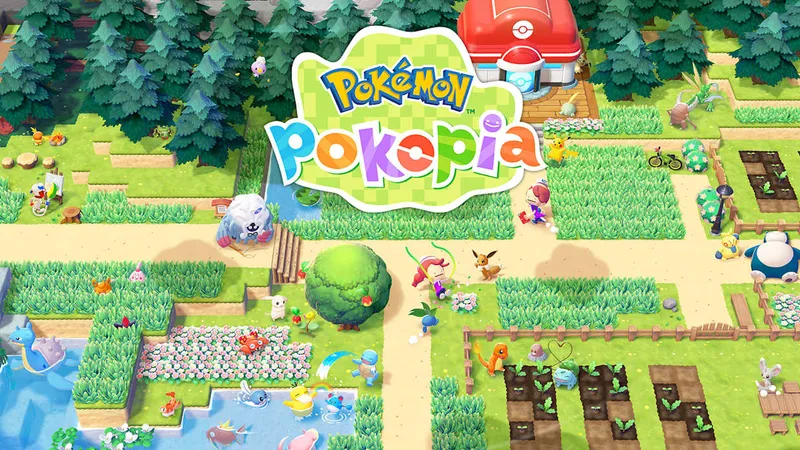
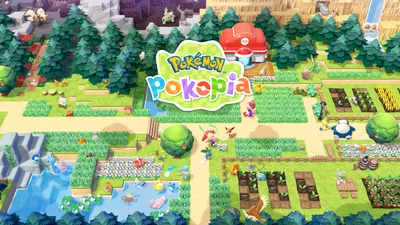
Pokémon Pokopia, available since March 5, 2026 exclusively on Switch 2, is a cosy game by Omega Force and Game Freak that completely reimagines the Pokémon universe. You play as a humanized Ditto tasked with restoring abandoned villages in Kanto by building relationships with creatures, with no mandatory battles. This guide will help you get off to a strong start by optimizing your first steps, your Ditto transformations, and your village construction.
Pokémon Pokopia has been available since March 5, 2026, exclusively on Nintendo Switch 2, and the cozy spin-off from Koei Tecmo (Omega Force division) and Game Freak has quickly won over the community. Far from traditional training, the title has you play as a Ditto who has taken human form, tasked with bringing abandoned Kanto landscapes back to life. After several weeks of play and dozens of hours spent clearing land, planting, and winning over our future neighbors, here is our complete guide to getting started in this deliberate blend of Animal Crossing, Stardew Valley, and the Pokémon universe.
Pokémon Pokopia at a glance
Before diving into the mechanics, here's a reminder of the essential information you need to know about the game:
- Release date: March 5, 2026, worldwide.
- Platform: Nintendo Switch 2 exclusive (Game Share compatible).
- Development: Omega Force (Koei Tecmo) and Game Freak.
- Publishing: Nintendo internationally, The Pokémon Company in Japan.
- Genre: life-sim / cozy life simulation, with no mandatory combat.
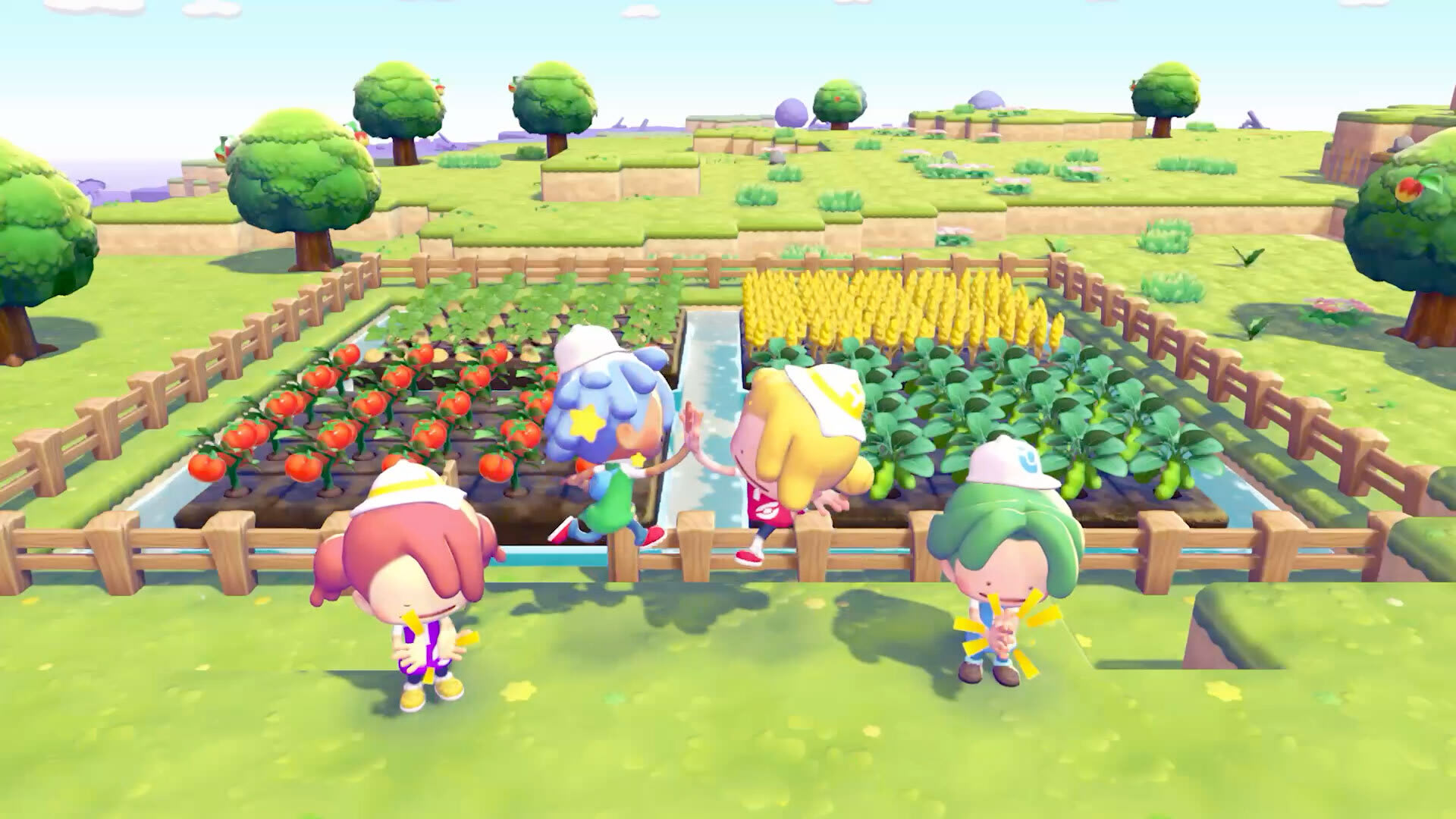
- Multiplayer: cooperative for up to four players, online or local.
- Available Pokémon: around 300 species at launch, supplemented by seasonal events.
Expect around thirty hours to complete the main storyline, but a completionist player will easily surpass 100 hours thanks to collectibles, costumes, and the expansions already announced via the Expansion Pass.
A cozy game from Omega Force and Game Freak
Pokopia was born from an unusual collaboration: Game Freak brings the Pokémon sensibility (creature design, behaviors, emotional reactions), while Omega Force, better known for its Musou games, puts its expertise in managing large maps and crowds to use in bringing the hamlets to life. The result is a surprisingly relaxed title: no timers, no combat constraints, no game over. Every activity can be carried out at your own pace.
"We wanted a place where Pokémon and humans could share the same everyday life, without battles or competition." — excerpt from the official presentation shown during the last Pokémon Presents before release.
This approach translates into a gentle art direction, a soundtrack by Junichi Masuda, and a presentation style that favors small slice-of-life moments over big narrative reveals.
First steps: arriving as a Ditto
The adventure begins on a neglected piece of land. Your Ditto discovers an old Pokédex lying on the ground and, through mimicry, takes on the appearance of the former Trainer pictured inside it. This opening scene sets the game's rule: you are a benevolent imitator, able to learn from other Pokémon in order to transform the world around you.
After a short tutorial, you're free to:
- gather the available materials (wood, stones, berries) with your bare hands;
- set down your first item, the tent, which serves as a save point;
- go and explore the immediate surroundings to spot wild Pokémon;
- unlock your first workshop from Professor Bouldeneu, an elderly, solitary Pokémon who acts as your mentor.
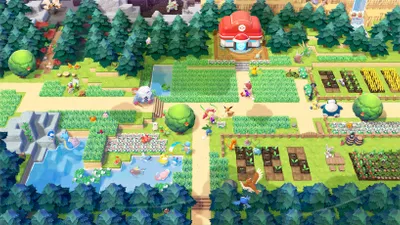
We recommend that you don't rush into building. Spend your first session exploring the starting area (Terrassec, inspired by Parmanie): every plant, every rock, and every Pokémon cry could be hiding a resource or a future resident.
Unlocking Pokémon and learning their abilities
The heart of the game lies in the relationship you build with wild Pokémon. Each species has a friendship gauge with five tiers; reaching tier 4 ("Close Friend") unlocks the associated Ditto Transformation, as well as its corresponding utility ability.
A few key examples to aim for in the first few hours:
- Bulbasaur — Leafage ability: grow fresh grass on withered areas.
- Squirtle — Water Gun ability: water crops and fill water points.
- Scyther — Cut ability: chop down trees and tall grass.
- Onix — Rock Smash ability: break rocks blocking access to new areas.
- Magnemite — Magnet Lift ability: lift and move metal objects.
- Lapras — Surf ability: cross bodies of water to reach Grisemer.
- Dragonite — Glide ability: travel quickly between unlocked regions.
You can only equip three transformations at once, a limit raised to five once "Ditto Mastery" is unlocked at the end of the first area. Remember to switch between them depending on your goals for the day: building, exploring, or pampering your residents.
A field tip: cook dishes made from each species' favorite berries. A Bulbasaur fed daily goes from tier 1 to tier 4 in under a week of real time, compared to more than two weeks without special attention.
Building and bringing your village to life
The building side of things is more nuanced than it appears. Each Pokémon has its own preferences (climate, scenery, neighbors), all reflected in a comfort gauge. The higher the comfort rating, the longer your residents stay, the more rewards they offer, and the more new visitors they attract.
To maximize this gauge from the very first hours:
- Create themed districts rather than a patchwork: Grass Pokémon thrive near irrigated crops, Rock Pokémon enjoy mineral outcrops, and Water Pokémon prefer shorelines.
- Alternate between wild areas and developed areas: a village that's too built-up will scare off timid creatures like Eevee.
- Add at least one light source per district before nightfall — lower light levels cause comfort scores to drop.
- Repair paths and bridges before placing too much furniture; residents won't settle in an inaccessible area.
The game also features a day/night cycle synced to the console's clock, along with a dynamic weather system. Certain quests (and certain rare Pokémon) only appear in the rain, in the snow, or at dusk.
NPCs you should know from the first few hours
Unlike other cozy games, Pokopia almost entirely does without human characters. The key roles are played by Pokémon with strong personalities. Here are the ones to spot first:
- Professeur Bouldeneu — mentor and giver of main quests.
- Cheffelina — specialist in building plans, essential for unlocking new buildings.
- Maître Queulorior — expert in painting and aesthetic customization.
- Pikapâle — a mysterious Pikachu whose glow lights up dark areas.
- DJ Motisma — in charge of the village's soundtrack and festive events.
- Rongragoût — a chef Snorlax who teaches you homemade recipes.
Each NPC has their own progression and unlocks additional services (shops, workshops, mini-games) as you complete their personal requests.
Quests, resources, and the progression loop
The gameplay loop rests on three pillars: quests, gathering, and expansion. Quests are divided into three categories:
- Main quests, given by Professeur Bouldeneu, structure the storyline and unlock the game's five regions — Terrassec, Grisemer, Collinangle, Flotîles-Millefeux, and Ville-Nouvelle, all inspired by Kanto's historic towns.
- Resident quests ask you to feed, decorate for, or accompany a specific Pokémon; their reward often takes the form of comfort points or exclusive outfits.
- Seasonal quests, tied to the real-world calendar, bring back rare Pokémon at fixed dates (such as Dragonite during the summer period).
On the resource side, always keep a minimum stock of wood, stone, plant fibers, and berries. Rare resources (crystals, energy ores) mainly appear in areas unlocked via Rock Smash and Surf. Remember to stop by the community resource box set up by Cheffelina every morning: resident Pokémon regularly leave donations there.
Our tips for a good start in 2026
After several weeks spent on the game, here's the advice we wish we'd had before starting:
- Don't neglect the built-in camera: many quests require photos of Pokémon in specific poses.
- Prioritize Bulbasaur and Squirtle as your first transformations: they unlock farming, the main source of food and money.
- Systematically explore at night once Pikapâle is recruited: several nocturnal Pokémon (Nidorino, Gastly) only come out after sunset.
- Save before every major weather event: storms and tempests can damage your unsheltered buildings.
- Try co-op mode as early as possible: a friend can bring in Pokémon learned on their end and speed up your progress.
- Keep an eye on the expansion pass announced by Nintendo, which will add new regions and creatures in the coming months.
To go further
Pokopia is the kind of title that reveals itself over time. Once the five regions are open, the real question becomes: what kind of village do you want to build? A sanctuary for rare Pokémon, a seaside resort in Grisemer, or an artistic capital inspired by Maître Queulorior? Each of these directions unlocks specific architecture, clothing, and Pokémon.
To dig deeper, we recommend:
- the official page on pokopia.pokemon.com, updated with every seasonal event;
- the full article from Poképédia, which lists the 300 species available at launch and their preferences;
- the French-language reviews published by Nintendo-Difference and Gamergen for a detailed opinion on the final version.
Finally, there remains the question of the long term: Pokémon Pokopia is probably the first link in a new cosy branch of the franchise. If your village grows, it will grow even faster in 2027 with the announced expansions. Take your time, get to know your neighbours, and let the village breathe: it's probably the first Pokémon game of which one can say, without irony, that it plays better in small doses than as a marathon.
Share this article
What's your main goal when starting Pokopia?
Frequently asked questions
How long does it take to finish the main storyline?
The main storyline can be completed in around thirty hours, but a completionist player will easily surpass 100 hours thanks to collectibles, costumes, and the already-announced Expansion Pass.
Do I have to battle Pokémon to progress?
No, there are no mandatory battles in Pokopia. The game favors peaceful relationships and building, with no timer or game over: you progress at your own pace.
Why won't certain Pokémon settle in my village?
Each creature has specific preferences (climate, scenery, neighbors) grouped under a comfort gauge. Create themed districts suited to each type (Grass Pokémon near crops, Water Pokémon near shores) and make sure the areas are accessible and well lit.
How many Pokémon are available at launch?
Around 300 species are available at launch, complemented by rare Pokémon that only appear during seasonal events or under specific weather conditions.
Can I play with others?
Yes, Pokopia offers a co-op mode for up to four players, online or locally on Switch 2.
Key takeaways
- Unlock the three essential transformations (Bulbasaur, Squirtle, Scyther) before exploring: they grant access to critical resources.
- The friendship gauge with each Pokémon rises much faster if you feed them their favorite berries every day.
- Organize your village into themed districts rather than a patchwork to maximize residents' comfort and attract new inhabitants.
- Prioritize exploration and scouting the terrain during your first session rather than frantic building.
- Equip three different transformations depending on your goal for the day: building, exploring, or pampering residents.
Comments
No comments yet. Be the first to react!
Leave a comment
Similar guides

Latest articles



Your opinion counts
Rate Pokémon Pokopia
Click a star to rate