

 Fabian Lainé
Full Guide
Palia: the complete starter guide to get off to a good start in 2026
In brief
Palia is the ideal cozy MMO to get started with in 2026: free, combat-free, and 100% focused on life skills (farming, cooking, fishing, hunting, mining, foraging). This guide shows you how to install the game, organize your plot, unlock the right quests, and live as part of a community without pressure.
Palia is the kind of MMO you didn't see coming and now can't put down. Released in early access in late 2023 by Singularity 6, upgraded to version 1.0 in 2024 and launched on PS5 in May 2025, the game remains in 2026 one of the best entry points for fans of cozy worlds, with no combat or pressure. Here's our complete starter guide to settling into Kilima Village under the best conditions.
Palia in 2026: an update on Singularity 6's cozy MMO
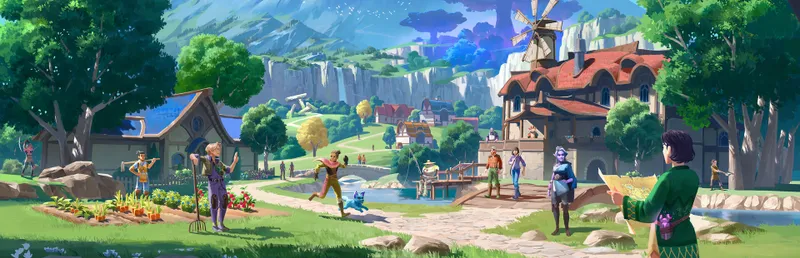
Palia bills itself as a free-to-play community MMO: no subscription, no barrier to entry, and progression built entirely around life skills. The American studio Singularity 6, founded by former Blizzard and Riot developers, has built a world inspired by cozy fantasy titles like Stardew Valley, transposed onto a map shared between 25 and 30 players per instance. On PC (Steam and the official launcher), on Nintendo Switch, and since 2025 on PlayStation 5, the gameplay loop stays the same: you play as a human returning to a forgotten world, ready to farm, cook, fish, hunt, and build your house.
The title is fully translated into French — interface, dialogue, and subtitles included — which makes learning the game much more comfortable than it was back in early access. The major 2025 updates (Version 0.190, then 1.5) added new regions, the seaside region of Elderwood, a seasonal community pass, and a much more flexible multi-plot housing system. In 2026, Palia is a mature game, richer than at launch, and above all free to try with no time limit.
Palia isn't played against others, it's played with others. All the richness of the title comes from shared moments, from a night of fishing to a group mining trip.
Downloading Palia and creating your character
To install Palia, there are two options depending on your platform:
- PC: download the client from Steam or directly from palia.com. A single Palia account links your progress between the two clients.
- Nintendo Switch and PS5: free download from the e-shop or the PlayStation Store, using the same Palia account to find your character.
On your first login, the appearance editor lets you adjust body type, hairstyle, complexion, outfit, and voice. Take your time: these settings can still be changed later at Zeki's, the merchant in Kilima, but it's better to start with an avatar you like. Finally, choose a unique username — this is what other players will see on the map.
Your first steps in Kilima Village
After the introductory tutorial in the ruins of Bahari Bay, you land in Kilima Village, the hamlet that will serve as your home base. The very first minutes are guided by the mayor Kenli and by Einar, your first building supervisor. Our advice: take the time to explore the village before rushing into quests.
- Locate the central hall, home to the essential merchants: Zeki (bazaar), Badruu (seeds), Reth (cooking), Ashura (hunting), and Hodari (woodcutting).
- Open the map with the M key and take note of the points of interest: your plot, the Bahari mine, the Kilima Valley region, and later areas such as the Thornweave Ruins.
- Pick up your starting tools from Einar: an axe, a pickaxe, a watering can, a fishing rod, and a bow — each tool is tied to a skill.
Unlocking your house and planning your plot
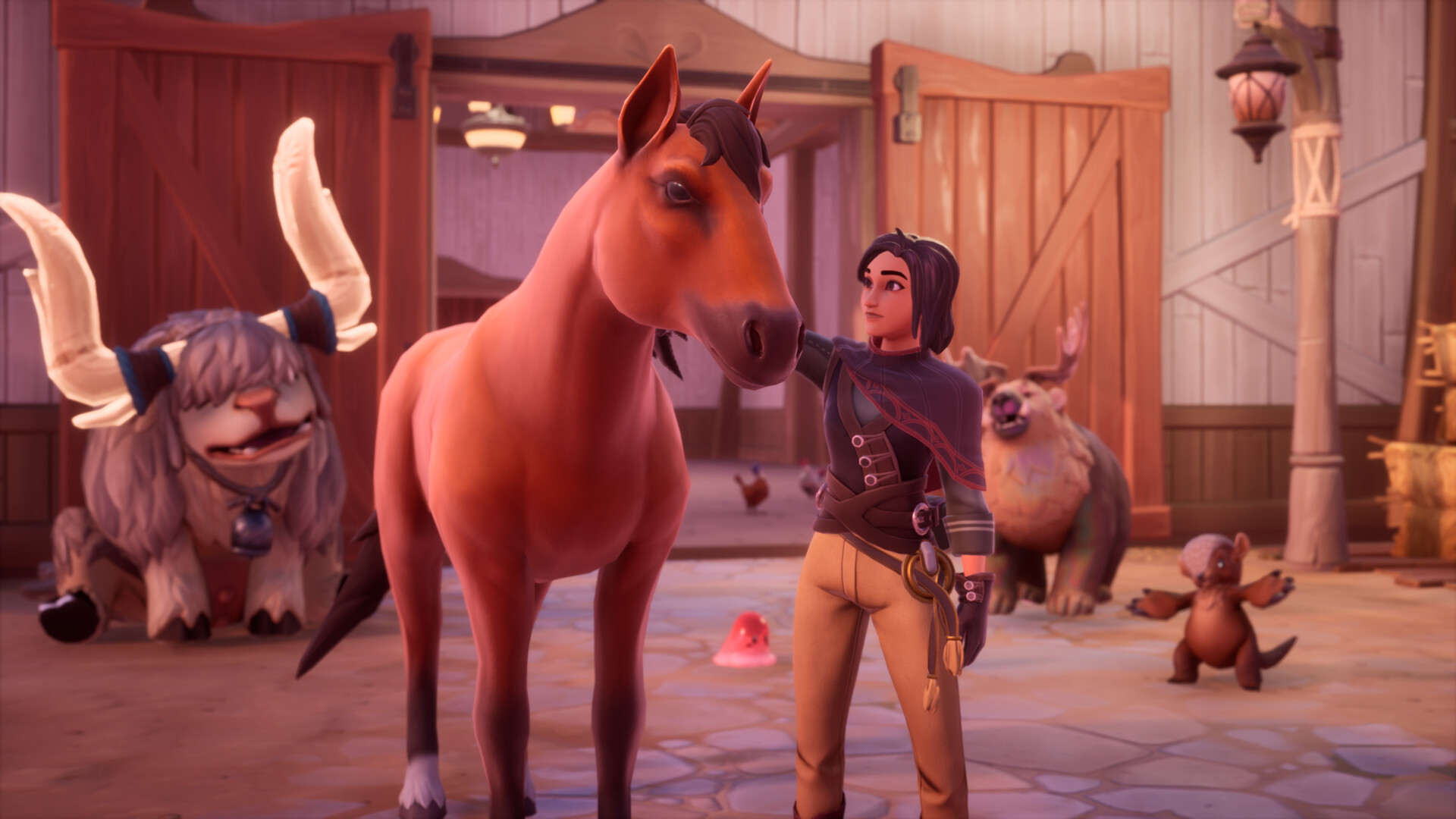
A little later in the introductory quest, Einar gives you a personal plot located at the entrance to the village. This is your sandbox: house, vegetable garden, workshops, decorations, everything goes here.
Our priorities for the first few weeks:
- Set up three to four crop plots (wheat, tomatoes, onions): crops feed cooking and bring in coins.
- Place crafting stations nearby: carpentry table, cooking stove, fusion furnace and seed maker. You'll save precious time.
- Reserve a tree area: plant apple trees and pines for passive wood and fruit income.
Don't overload the plot at the start. Palia lets you unlock several additional plots in Bahari Bay and Kilima Valley as you progress through quests, with much more generous sizes. Plan your setup in stages.
A well-planned plot saves more hours than any tutorial: keep harvest zones close to the stations that consume them.
The main quests you shouldn't miss
Palia mixes several types of quests that progressively unlock content:
- Main quest — a narrative investigation into the ancient ruins, the Majiri, and humanity's past. This is what opens up new regions.
- Villager quests — each NPC offers a personal chain that improves your friendship relationship and unlocks exclusive recipes.
- Weekly contracts with Mayor Kenli: a steady source of coins and rare materials.
- Seasonal events — the Nightcloak Festival at Halloween, the Winter Solstice Festival, the Spring Festival... all opportunities to get exclusive cosmetics and furniture.
Our advice: push the main quest until you unlock Bahari Bay, the second map, then alternate with villager quests to smooth out progression. The narrative chain "The Forgotten Temple" and the "Legacy of the Ancestors" arc only unlock after building friendships with several NPCs, which encourages you not to play everything solo. Always keep at least one active quest from each category in your journal: it's the best way to avoid downtime.
The six skills to master
Palia is built around six skills that level up through practice. Each tier unlocks new recipes, improved tools, and passive bonuses.
- Farming — vegetable garden, fruit trees, fertilizer. The pillar skill for the economy and cooking.
- Cooking — increasingly complex recipes, to prepare alone or with others at specialized stations.
- Fishing — rods, bait and fishing spots in rivers, lakes and oceans. Rare fish unlock at night or in the rain.
- Hunting — bow and specialized arrows to track sernuks, muujins and larger prey. Yields sought-after hides and meats.
- Mining — pickaxe to upgrade in order to extract ores and gemstones in the caves of Bahari.
- Woodcutting — axe and a variety of tree species, from fir to flamewood.
Two small additions worth knowing: bug catching (free, tied to farming) and decorative gardening around the house, which also grant experience.
Living the community: socializing and romance
Palia is an MMO: at any time you'll cross paths with other players on the map. Joining a party is done with a right-click on their avatar. It gives you a real boost, especially for:
- Group hunts for rare prey (Golden Chapaa, Royal Sernuk).
- Nighttime fishing sessions to catch legendary fish.
- Mining expeditions in the deep caves, where shared nodes level up the skill faster.
On the NPC side, the villagers of Kilima and Bahari each have their own preferences when it comes to gifts and dialogue. Nine of them — Jina, Hassian, Kenyatta, Reth, Nai'o, Tamala, Tish, Auni and Eshe — are romanceable. Expect several months of regular play to reach the maximum "Heart" rank.
Treat each villager as a mini narrative game in its own right: their personal quests tell a story different from the main plot, often more touching.
Our tips for getting started
- Don't chase performance: Palia rewards consistency, not marathons.
- Sell little at first: every resource is useful in a recipe or a villager request.
- Join a French-speaking Discord server to find players to trade cuttings, fish and ores with.
- Turn on event notifications in the menu: seasonal festivals are time-limited.
- Invest early in silos and chests: inventory space runs out very quickly.
To go further
- Official Palia website (fr) — news, patch notes, roadmap.
- Official wiki (en) — the most up-to-date resource on recipes and NPCs.
- PaliaMMO.fr — active French-speaking community, Discord and guides.
- JeuxOnLine Palia — news and guides in French.
Palia has no ending: it's a digital garden that grows with you. Take your time, try every skill, chat with your neighbors in Kilima. See you on the map.
Share this article
What draws you most to a cozy MMO like Palia?
Frequently asked questions
Is Palia really free in 2026?
Yes, it's completely free-to-play, with no subscription or entry barrier. You can play indefinitely without spending a cent. There's an optional cosmetic shop, but no progression content is locked behind it.
Which platform should I play Palia on?
Take your pick: PC via Steam or the official launcher at palia.com, Nintendo Switch, or PlayStation 5 since 2025. Your progress follows your Palia account across all devices.
How long before I unlock my house?
Just a few minutes after the introductory tutorial. Einar gives you a personal plot right from your first steps in Kilima Village. You can immediately place crops, workshops, and decorations on it.
Is there combat or real difficulty in Palia?
No, zero traditional combat. Hunting is done with a bow on docile creatures, with no risk of death. The "difficulty" lies in optimizing your plot and managing your resources to fulfill contracts and quests.
Do I have to play with other players?
No, but Palia is brilliantly designed to nudge you toward it: groups offer real bonuses (more lucrative hunts, more efficient night fishing), and villager quests become more meaningful when discussed with others.
Key takeaways
- Start by exploring Kilima Village and scouting out the merchants before rushing into quests.
- Plan your plot by grouping crops near crafting stations to save real time.
- Alternate between the main quest and villager quests: they unlock each other and offer exclusive recipes.
- Join groups for rare hunts and night fishing, that's where Palia truly becomes a community experience.
- Progress at your own pace: Palia has no time limit, and every day played counts just as much as a thousand hours in a marathon session.
Comments
No comments yet. Be the first to react!
Leave a comment
Similar guides




Latest articles







Your opinion counts
Rate Palia
Click a star to rate