



 Fabian Lainé
Full Guide
Palia: Building Your Dream House — Blueprints, Decor, and Garden (2026)
In brief
Palia has turned home decorating into a true simulator: with 3,500 objects per plot and plots connected to two zones, you need to master Blueprints, priority materials, and above all garden layout to unlock companion planting synergies. This guide covers strategic purchases from merchants, resource optimization, and editor techniques to finally build that showstopping house.
In Palia, your plot is much more than just a patch of countryside: it's your workshop, your vegetable garden, your gallery, and your calling card with other players. Since the building cap was raised to 3,500 items per plot (build 0.191) and the massive influx of new Landscapes throughout 2026, Singularity 6 has turned the game's housing component into a genuine decorating simulator. This guide covers everything: where to place your house between Kilima Village and Bahari Bay, how to get the best Plans (Blueprints) from Tish, Zeki, and other merchants, which materials to farm first, and how to structure a clear, readable garden around the Harvest House.
Two worlds, one plot: Kilima and Bahari Bay
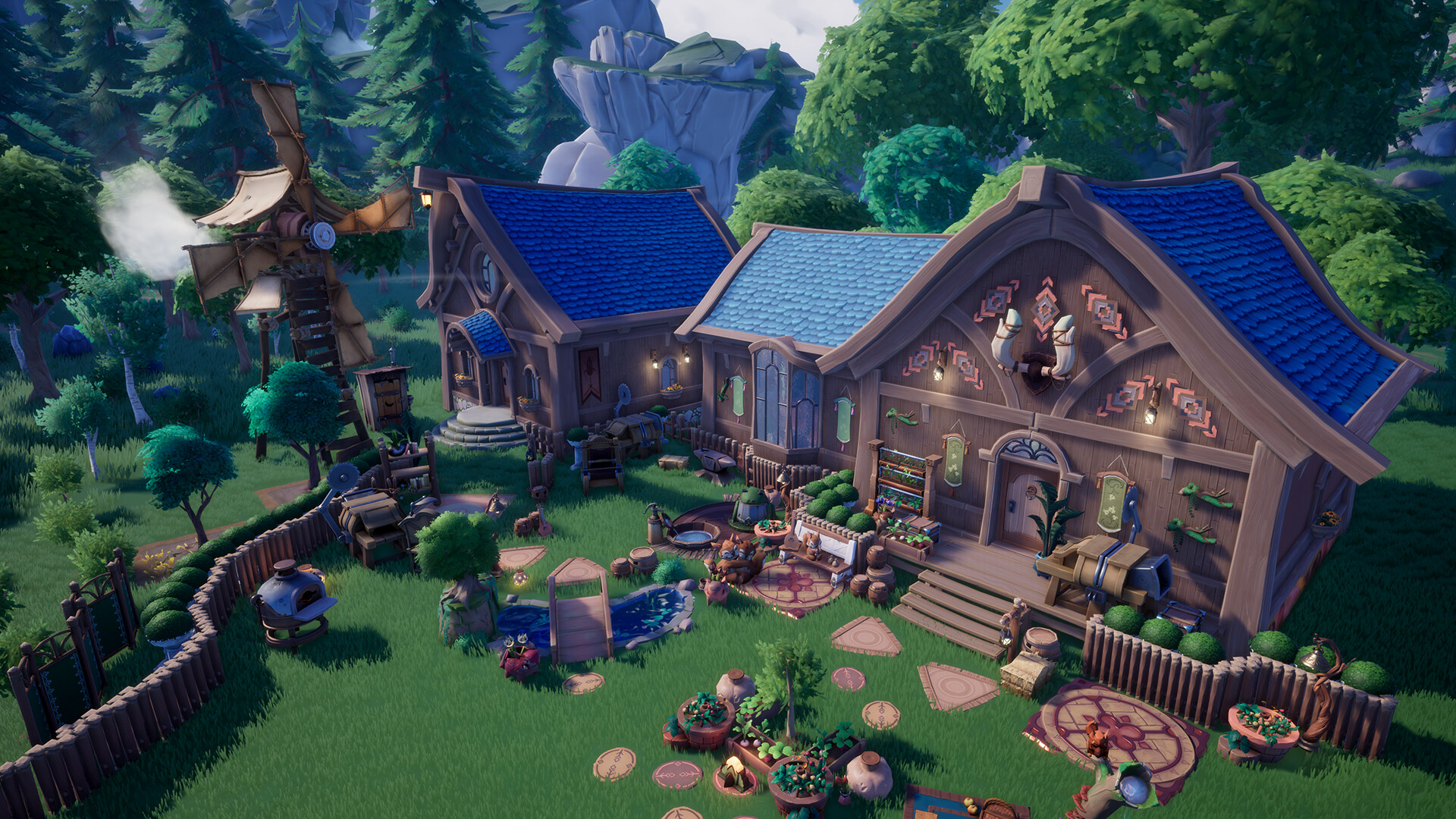
Since version 0.177, every plot has two entrances: one opens onto the northeast of Kilima Village (head up the path that climbs behind the town's fast travel point), the other opens onto Bahari Bay, right next to the Outskirts sign. This isn't a binary choice: the same plot connects both areas. In practice, you can farm flame wood in Bahari Bay in the morning, come home to empty your bag, then head straight into a commission in Kilima in the afternoon without going through a fast travel menu.
Every account starts with a default plot and can unlock up to eight additional plots, purchasable starting at 50,000 gold coins, with an extra cost of 25,000 coins for each subsequent plot. These alternate plots aren't just "bigger new plots": they're independent, each with its own Harvest House and its own Landscape, which lets you dedicate one slot to a furniture workshop, another to a vegetable garden, a third to a medieval-themed build, and so on.
Understanding Blueprints and the building inventory
In the game's terminology, what's called Blueprints in English refers to the Plans: the recipes that unlock the crafting of a piece of furniture, a house module, or a fence. The building inventory, opened with the H key, groups six clearly separated tabs: Preview, Building, Makers, Fence, Decor, and Blueprints, plus a Blocks tab for modular bricks.
A Blueprint can be unlocked in four ways:
- Direct purchase from an NPC merchant (Tish, Zeki, City Hall) or from a guild;
- Reward from a main quest or friendship storyline;
- Inspiration: when crafting a piece of furniture from a set for the first time, you have a chance to unlock the Blueprint of a related item for free;
- Recovery from a Chapaa pile or a draw from Zeki's Wondrous Machine using Lucky Coins.
Tish, Zeki, and friends: the merchant map
Three NPCs hold most of the useful Blueprints for the early and mid-game. Here's the table to memorize before you go spend your gold coins.
| NPC | Where to find them | What they sell | Currency |
|---|---|---|---|
| Tish | Furniture shop, Kilima Village | Furniture plans by set (Kilima, Chic Urban, Bellflower…), rugs, wallpapers | Gold + Furniture Making Medals |
| Zeki | General store, Kilima Village | Rotating black market, Wondrous Machine, rare decor and flooring | Gold + Lucky Coins |
| Sifuu | Forge, next to the Inn | Recipes for tools and metal materials useful for building | Gold |
| Badruu | Farm south of Kilima | Garden plots (max 9 per player), seeds and fertilizer | Gold |
| City Hall | Kilima Town Hall | House modules (Harvest House, Small Room…), plot expansion Writs | Gold |
Tish remains the essential stop: her recipes unlock as you level up the Furniture Making skill. Also keep an eye on her Weekly Challenges (reset Monday at 4 AM UTC), which respectively reward 40, 30 and 30 medals for crafting five pieces of furniture, three uncommon pieces, and one rare piece or better.
Materials: wood, plaster, brick and stone
House Plans require four families of raw materials that you'll need to keep feeding in a loop. Optimizing your harvesting runs is essential if you don't want to end up spending 50,000 gold coins at Zeki's to make up for shortages.
- Wood (Sapwood, Heartwood, Flow-Infused): axe chopping in Bahari Bay for the higher-tier types;
- Plaster: crafted at the Workbench from sand and lime, two resources more abundant on the beach;
- Brick: firing clay at the Brick Oven, one of the first Crafter Plans to unlock;
- Stone and ores (Palium, Flow-Infused Palium): mining nodes in Bahari Bay and especially in the Royal Highlands.
A pacing tip: dedicate each housing session to one dominant resource rather than switching between them. You'll save on back-and-forth travel time and free up space in the General Storage, which is the only place Workbenches will draw from (the Safe Storage chest is ignored by crafters).
House modules: dimensions and connections
Palia uses a puzzle system: each module has four connection points, one per side. The Harvest House (11 × 11 m) serves as the hub; you then attach specialized rooms to it.
| Module | Dimensions | Role |
|---|---|---|
| Harvest House | 11 × 11 m | Core of the house, mandatory |
| Grand Harvest House | 25 × 15 m | Two-story version with a porch |
| Small Room | 7 × 7 m | Extra bedroom, workshop |
| Medium Room | 9 × 9 m | Living room, dining room |
| Large Room | 11 × 11 m | Large multipurpose room |
| Hallway Section | 3 × 3 m | Connecting corridor |
| Conservatory / Gazebo / Kilima Pavilion / Windmill | Variable | Open and decorative structures |
The structural limit is strict: 30 modules per plot. Good news, though: attachments (chimney, Kilima door, bay window, Kilima porch) do not count toward this cap. Use plenty of them to add character without eating into your add-on budget.
Placing, rotating, stacking: mastering the editor
The building editor is triggered with the H key. The shortcuts you absolutely need to remember:
- Scroll wheel: rotate the selected object in 15° increments;
- Shift + scroll wheel: fine rotation;
- Ctrl + click: eyedropper tool to duplicate an already placed object (Blueprint must be known);
- Alt + click: store the object in the building inventory without destroying it;
- F: toggle between free placement and snapping to the 0.5 m grid.
The Plot Settings tab lets you enable Free Placement (free overlapping) and disable collisions between decor items. This is the number one trick for building well-stocked shelves, cushion piles, or convincingly set tables.
Finally, within each plot, only a small buildable area is unlocked at the start. To push back the limits, you need to buy Writs at the Town Hall. Each Writ opens up an additional square of land, which you'll see appear highlighted when you open the editor. Set aside several tens of thousands of gold coins to reach the maximum footprint: it's an investment to prioritize if you're aiming for an expansive garden or a courtyard with several modules.
Creating a coherent garden and attracting wildlife
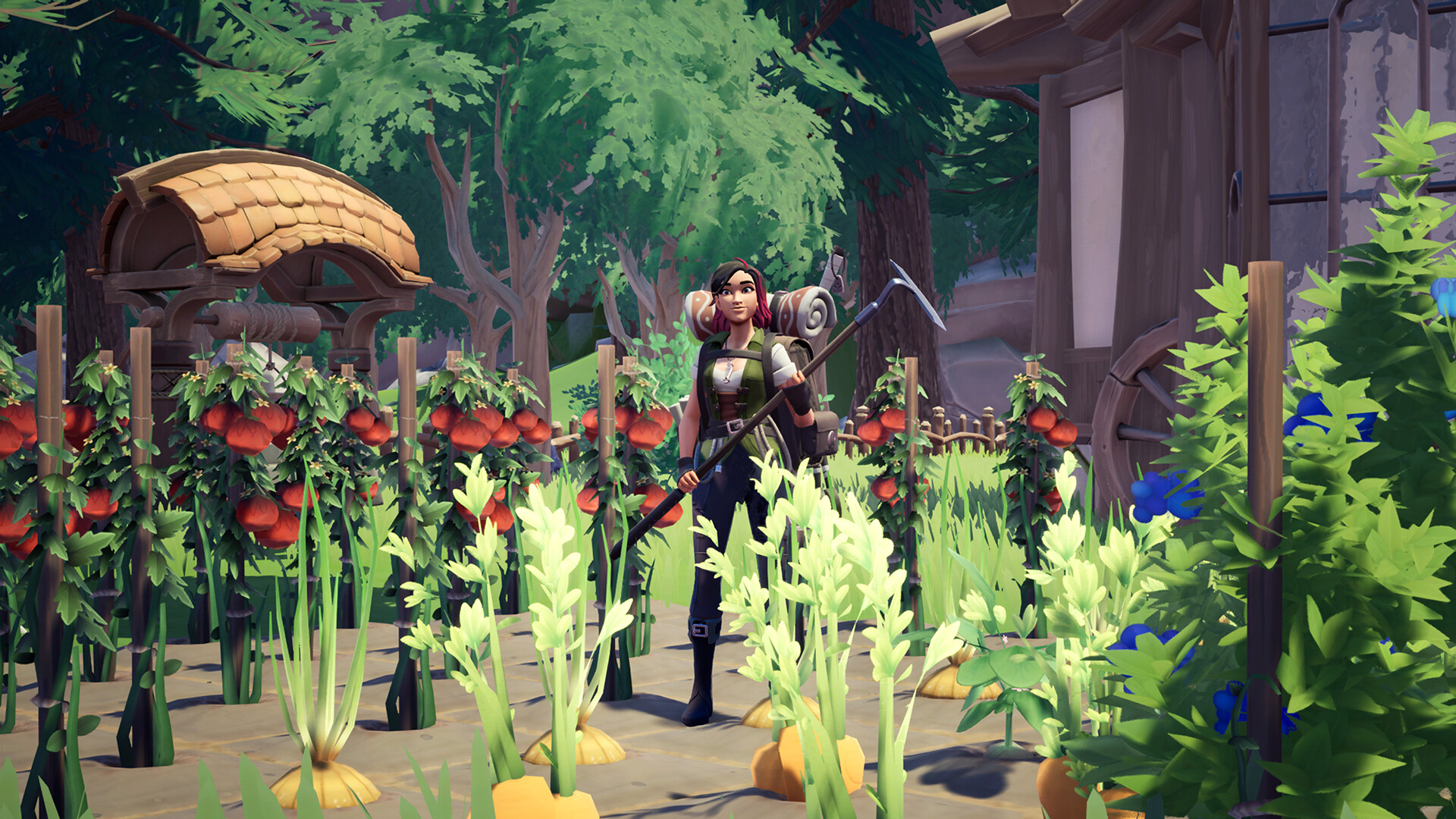
Palia's garden system is built around the soils sold by Badruu. Each soil is placed on your plot and then subdivided into square plots to be prepared with a hoe. You can own a maximum of nine soils, which is enough to cover the full needs of an optimized garden.
The real lever for yield is companion planting: each crop can apply a bonus to its neighbors if planted correctly. A few pairings worth knowing:
- Tomatoes + wheat: tomatoes automatically watered by neighboring wheat;
- Carrots + leeks: increased chances of multiple harvests;
- Potatoes + rice: protection against stunting;
- Cotton + sunflower: accelerated growth.
Use the community's Palia Garden Planner to lay out your grid before spending your seeds: the tool calculates the buffs that apply to each tile and helps you avoid poor placements. On the aesthetic side, a legible garden surrounds the Harvest House on three sides, with a central path of stone tiles and Kilima Fence pieces to neatly mark out the zones.
To bring this garden to life, Feeder Boxes are Blueprints you come across fairly early on through Hodari's quests. Once placed and filled with the right food, they attract wildlife directly onto your plot:
- Chapaa Feeder: baited with berries or corn, attracts Chapaa to the rummage piles;
- Sernuk Feeder: attracts Sernuks (deer), useful for hide and antlers without tracking Bahari;
- Muujin Feeder: attracts Muujins, a source of fiber and fur;
- Bug House: a visual lure that increases the spawn of rare insects in the early morning.
It's an excellent way to combine naturalist garden aesthetics with daily farming profitability, without having to head out on expeditions.
Landscapes: change the mood on demand
Landscapes are premium outdoor backdrops that redefine the entire perimeter of your plot: mountains in the background, waterfalls, autumn forest, shipwreck… They're purchased with Palia Coins (premium currency) in the shop and can be changed from the plot settings. Each plot can have its own: your workshop can bask in a mystical mist while your vegetable garden enjoys a sunny meadow.
| Landscape | Cost (Palia Coins) |
|---|---|
| Wooded Grove | 425 |
| Autumn Acres, Unknowable Expanse, Wol Mailbox | 850 |
| Kilima Heights, Halcyon Heights, Plush Park | 1,275 |
| Serenity Falls, Elderwood variants | 1,700 |
| Aurora Peaks, Galewind Sanctuary, Shipwreck Isles, Seagrass Gardens | 2,550 |
Be careful: Landscapes do not resize your buildable land, they only replace the visual dressing. Some seasons bring back old limited-time backdrops (like the Hollow Grove), so keep an eye on official announcements so you don't miss out.

Roadmap for a successful first plot
To stay focused, here's the recommended order of action for your first serious plot:
- Complete House, Sweet House (introductory quest) to place the Harvest House;
- Level up Furniture Making to level 3 to unlock the Kilima set from Tish;
- Buy five to six Writs to expand the buildable area before planting the garden;
- Craft two Brick Ovens and one Worktable to start production in parallel;
- Lay nine plots of soil on the south side (best exposure), respecting companion planting pairs;
- Install the Sernuk and Chapaa feeders to secure your daily materials;
- Save up 1,275 Palia Coins for your first themed Landscape.
Conclusion
Building in Palia in 2026 means juggling three parallel economies: gold coins for Plans and Writs, guild medals to unlock premium sets from Tish, and Palia Coins for cosmetic Landscapes. By securing your wood, plaster, and brick supply chains early, respecting the 30-module limit, and organizing your vegetable garden around companion planting, you turn a simple plot into a true centerpiece of your game. The natural next step: aim for a second plot dedicated to a radically different theme — a Log Cabin in Bahari Bay, for example — to multiply your showcases without overloading your main plot.
Share this article
What type of specialized plot would you build first in Palia?
Frequently asked questions
How many plots can I own in total in Palia?
You start with one free plot and can unlock up to eight more, purchasable starting at 50,000 gold. Each additional plot costs an extra 25,000 gold. Every plot is independent and has its own Harvest House and Landscape, letting you specialize each slot (workshop, garden, decoration, etc.).
What's the maximum cap on objects I can place on my plot?
The cap is 3,500 objects as of build 0.191. There's also a strict limit of 30 housing modules (Harvest House, Small Room, etc.) per plot, but attachments (fireplace, door, window) don't count toward this budget, leaving you room for customization.
How can I quickly unlock furniture Blueprints early in the game?
Level up your Furniture Crafting skill by crafting: this gradually unlocks Blueprints from Tish. Also complete her Weekly Challenges (resetting Mondays at 4 a.m. UTC) to earn Crafting Medals quickly. Getting Inspired while crafting sets can also reveal adjacent Blueprints for free.
Which material should I prioritize farming for building?
Wood, plaster, brick, and stone are your four pillars. Wood (Sapwood, Heartwood) is harvested at Bahari Bay with an axe, plaster is crafted at the Workbench from sand and lime, brick comes from the Brick Oven using clay, and stone/ore mostly comes from the Royal Highlands with a pickaxe. Break up your sessions: one resource per session avoids unnecessary back-and-forth.
Why is companion planting important in my garden?
Each crop can apply a powerful bonus to its neighbors: tomatoes + wheat grant auto-watering, carrots + leeks boost multi-harvests, potatoes + rice prevent wilting, and cotton + sunflower speeds up growth. Use the community Palia Garden Planner to visualize buffs before planting and maximize your yield.
Key takeaways
- Each plot connects Kilima Village and Bahari Bay: you save on fast travel and double your farming potential.
- Blueprints unlock from Tish (furniture), Zeki (rare decor), Badruu (flooring), and City Hall (housing modules) — memorize this hierarchy before spending your gold.
- Wood, plaster, brick, and stone require targeted harvesting runs: dedicate each session to one dominant resource rather than switching between them, saving time and inventory space.
- Companion planting between crops (tomatoes + wheat, carrots + leeks) creates decisive bonuses: use the community Palia Garden Planner before planting.
- The Free Placement tool and plot expansion Writs are your best allies for pushing past visual and structural limits.
Comments
No comments yet. Be the first to react!
Leave a comment
Similar guides






Latest articles







Your opinion counts
Rate Palia
Click a star to rate