
 Fabian Lainé

Full Guide
NTE Neverness to Everness: characters and combat in 2026
In brief
NTE: Neverness to Everness officially launched on April 29, 2026, as a free-to-play, cross-platform title. With 19 playable Espers and a combat system built around elemental reactions and precise parries, Hotta Studio's title takes a radically different approach from its competitor ZZZ: a seamless urban open world rather than an instanced hub, and individual mechanical depth over team synergy.
NTE: Neverness to Everness, where do things stand in summer 2026?
After three successive beta waves (Chinese beta in November 2024, global "Containment Test" in July 2025, then "Co-Ex Test" in February 2026), NTE: Neverness to Everness officially launched on April 29, 2026 worldwide (April 23 in China). The title from Hotta Studio, a subsidiary of Perfect World Games, is available free-to-play on PC, PlayStation 5, macOS, iOS and Android, with full cross-play and progression shared across platforms.
Since launch, the content schedule has been steady: version 1.2 is already deployed this summer and has just added several Espers to the starting roster. There are now nineteen playable characters: thirteen women and six men, split between S-Class and A-Class. It's a good time to take stock of who's playing what, and how the action combat system the studio has been promoting since 2024 actually holds up.
Hethereau, a playground for the supernatural
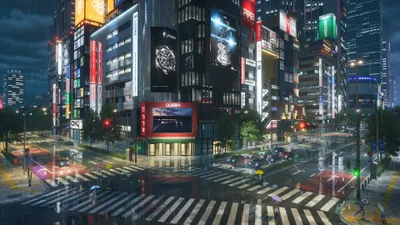
The game's setting is Hethereau, a nocturnal megacity inspired by futuristic Tokyo-like atmospheres and contemporary urban fantasy. The Espers, young people endowed with supernatural powers, are employed there to investigate the anomalies disrupting the city. A narrative pitch that vaguely evokes the Persona formula, but transposed into a "seamless" open world with no loading times.
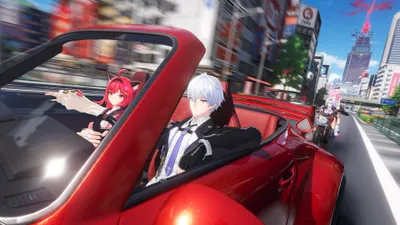
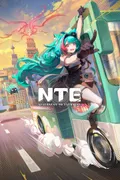
Unlike Zenless Zone Zero, where the city of New Eridu serves as a static hub between instanced missions (the famous Hollows accessed via the TV grid), Hethereau is fully explorable. Wall-running rooftops, customizable and drivable cars, an apartment to buy and decorate, anomaly events popping up as you move through the districts: the world runs on a day-night cycle and dynamic weather. This "dense, living open world" approach is the title's first major differentiator.
Espers: an overview of the playable characters
Zero, the dual protagonist
Zero is the main Esper, selectable in a male or female version from the prologue onward. S rarity, Cosmos element, Damage role. This is a fully free character given to all players, often played as burst DPS thanks to their Redirect Skill and their ultimate, both amplified by the Doomrain Arc.
The S-Class launch roster
- Nanally: red-haired catgirl, Anima element. Melee combat with lightning attacks fired from her fingers. The community now considers her the strongest character in version 1.0 in pure melee DPS.
- Baicang: flagship male character, Incantation element, Bose Arc. Hybrid style blending martial arts and ranged spells, a rare playstyle that appeals to players looking for flexibility between melee and magic.
- Daffodil (Jonquille in the French localization): Chaos element, Liquid Arc. Extreme burst damage, often cited as the best single-target DPS in the game.
- Chiz: Cosmos element, Gas Arc. Ranged DPS obtained for free by reaching rank 18 in the City Tycoon progression.
- Sagiri: Psyche element, Buff role. Considered the best support in the game thanks to her powerful attack buffs and very fast energy generation.
- Aurelia: Psyche element, Plasma Arc. Ranged DPS, given on the third day of daily login.
- Shinku, Hathor, Hotori, Jiuyuan and Lacrimosa round out the S-Class roster with varied profiles (main burst DPS, support, Break specialist).
The A-Class core
- Mint: A-Class DPS unlocked at the end of the prologue.
- Adler: Incantation element, Bose Arc, Survival role. The reference tank of the starting roster.
- Haniel: A-Class support obtained from the very first pull on the standard banner.
- Edgar: Cosmos element, Liquid Arc. Healer accessible without any investment.
- Skia: another serviceable A-Class, geared toward secondary burst.
Perfect World has already teased several Espers for upcoming patches: Akane, Alphard, Blackbird. Most should join the roster before the end of 2026, following the usual pace for gachas of this scale.
Action combat: Esper Cycle, Arc and reactions
A six-branch elemental wheel
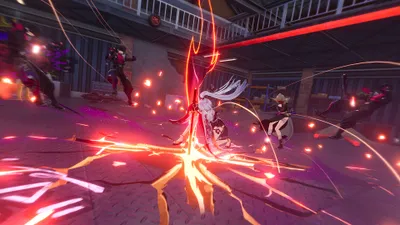
The heart of NTE's combat system rests on six elements: Chaos, Incantation, Psyche, Cosmos, Lakshana and Anima, arranged on a circular wheel called the Esper Cycle Wheel. The key rule: only elements adjacent on the wheel can react with each other. An adjacent pair triggers nearly permanent elemental reactions in combat; conversely, a team made up of scattered elements generates almost no synergy.
Team building therefore doesn't consist of stacking colors as in Genshin or ZZZ, but of drawing a "connected arc" on the wheel. Two or three contiguous elements form the optimum; beyond that, you lose the benefit of the reactions.
The Esper Cycle gauge
Each character has an Esper Cycle gauge that fills up with normal attacks, skills, and especially perfect parries. Once full, it allows another Esper adjacent on the wheel to perform a swap-in with a spectacular elemental reaction. This is the central mechanic of the game feel, a cousin of ZZZ's switch system but far more dependent on timing and the incoming element.
Arcs and Arc Compatibility
Each Esper has an « Arc type »: Solid, Liquid, Bose, Gas, or Plasma (an explicit reference to states of matter). Arc Compatibility determines which equipment and boosts are accessible to the character. The system is similar to ZZZ's W-Engines or Genshin's artifacts, but with a role-play twist: Zero's Doomrain Arc, for instance, boosts his Cosmos damage and amplifies the Cycle Intensity of his skills.
Three main roles: Damage, Buff, Survival
The roster is organized into three categories that cover the entire Esper lineup:
- Damage: main DPS, burst dealers, follow-up attackers, Break specialists.
- Buff: offensive supports who boost allies' damage.
- Survival: tanks and healers such as Adler or Edgar.
Players familiar with ZZZ will recognize a familiar vocabulary (Break, anomaly, ultimate), but with a different tactical reading: individual skill ceiling comes first in NTE, with each Esper boasting a very distinct mechanical playstyle.
Compared to Zenless Zone Zero: the real differences
Exploration. ZZZ is structured around its TV grid and instanced zones. NTE bets everything on an open world you can traverse on foot, by car, or via wall-running, with daily-life activities (fishing, mini-games, apartment management) woven into the main loop.
Combat. ZZZ runs on chain attacks and building up daze through attribute anomalies. NTE instead focuses on precise parries and chaining swaps on the Esper Cycle wheel. Where ZZZ favors team synergy and collective tempo, NTE values individual mastery and in-depth knowledge of each Esper.
Gacha. This is the point that generated the most buzz at launch: NTE has no 50/50 system. Every guaranteed pull on a limited banner directly targets the character, with a maximum pity of 90 pulls, compared to up to 180 in the worst cases on ZZZ's side. Login rewards are also more generous, and an S-Class selector is offered right from launch.
Format. Both titles are cross-platform and free-to-play, but NTE better embraces its urban social side (mini-games, apartment, daily-life events), whereas ZZZ retains a more arcade-like, vertical tone.
Who NTE is for
Players who find ZZZ's instanced hub too restrictive and dream of a contemporary urban Genshin; those who enjoy carefully reading their matchups in action combat; and those who were put off by Hoyoverse-style gacha's 50/50. Conversely, if you're looking for a tight, fast-paced tactical shooter like ZZZ, NTE's slower, more contemplative loop, more about « living in Hethereau », might feel diluted to you.
Three months after its global launch, NTE delivers on its promise of an open-world urban action RPG. Patch 1.2 has strengthened the roster and fixed several imbalances noted at launch. The rumor of a narrative expansion dedicated to Hethereau's port district for patch 1.3, expected in fall 2026, is the next big thing for fans to watch out for.
Share this article
What appeals to you most about NTE compared to ZZZ?
Frequently asked questions
Is there really an explorable open world like in Genshin?
Yes. Hethereau is entirely seamless, with no instances or loading times. You can customize a car and use it to get around, explore rooftops via wall-running, and even buy an apartment to decorate. This is the first major differentiator compared to Zenless Zone Zero.
Which free character should I prioritize farming?
Zero (S-Class) is given at the start and plays as a solid burst DPS. Chiz (free S-Class at City Tycoon rank 18) and Aurelia (S-Class on the 3rd login day) round out the initial setup nicely. Adler remains the go-to tank.
How does the combat system work compared to ZZZ?
NTE relies on precise parries and chained swaps via the six-element Esper Cycle wheel. Only adjacent elements react with each other, which forces a tactical 'connected arc' team composition. It's much more individual and less based on passive synergy than ZZZ.
Is NTE right for me if I like ZZZ?
Not necessarily. If you love ZZZ's fast-paced arcade rhythm and short fights, NTE will feel too slow and too contemplative for you. On the other hand, if you find ZZZ's static hub cramped and dream of a contemporary urban Genshin, you'll have a blast.
Key takeaways
- NTE has no 50/50 in its gacha: guaranteed pity within a maximum of 90 pulls, far more generous than the competition.
- The Esper Cycle wheel forces you to build teams using adjacent elements, rather than randomly stacking colors.
- Hethereau can be freely traversed via wall-running or a customizable car, with no loading times, unlike ZZZ's instanced zones.
- The skill ceiling relies on perfect parries and chaining precise swaps, not on passive team synergy.
- Nanally and Daffodil dominate pure DPS, while Sagiri stands out as the must-have support in version 1.2.
Comments
No comments yet. Be the first to react!
Leave a comment
Similar guides
Latest articles




Your opinion counts
Rate NTE: Neverness to Everness
Click a star to rate