

 Fabian Lainé
Full Guide
Ghost of Yotei Legends: the complete guide to the co-op mode in 2026 — classes, difficulties, Incursions and Raid
In brief
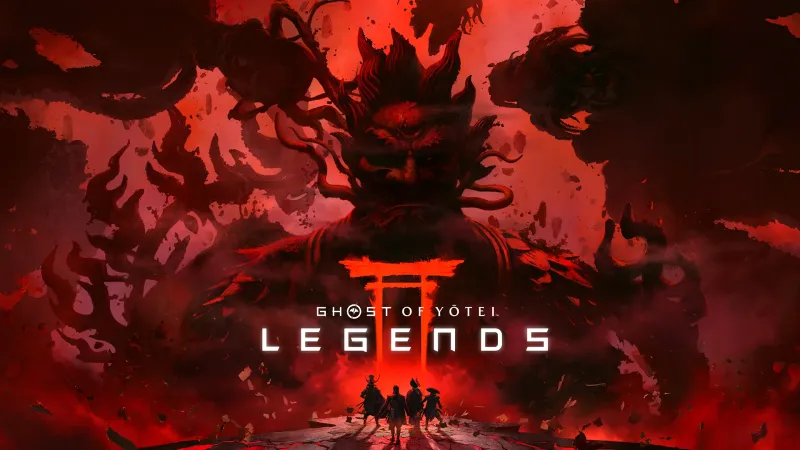
Ghost of Yotei Legends has finally been stable since April 2026: four asymmetric classes, three regular content loops, four difficulty levels, and a completed Raid. This guide covers the reality of the mode as of August 6, 2026, not that of launch — the Samurai got a rework, matchmaking has changed, and the Ki curve is the only true progression lever.
The Ghost of Yotei Legends co-op mode arrived on March 10, 2026 as a free update for all game owners, and it received its last major addition — the Raid — on April 10. Since patch 1.602 on April 24, Sucker Punch has closed the construction site: the content is complete, the balancing is locked in, and the servers are still running. So this is the ideal time to dive in, without worrying that an update will wipe out your build the following week.
The problem is that nearly all the French-language guides date from launch week and describe a mode that no longer quite exists: back then, the Raid had no matchmaking, the Samurai was underperforming, and "Hell Mode" didn't exist. This guide is based on what is actually playable as of August 6, 2026.
The summary fits in one line: four classes, three regular modes (Story, Raid, Survival), four difficulty tiers (Bronze, Silver, Gold, Platinum), a two-part Raid against the Dragon then Lord Saito, and a single true power curve, Ki. Everything unlocks through play: there is nothing to buy.
Launching Legends: requirements and first things to know
Legends is built into patch 1.5 and opens from the main menu. It requires an internet connection, a PlayStation account, and a PlayStation Plus subscription. There is, however, no requirement to have finished Atsu's campaign: Legends is a mythologized retelling of the same events, recounted by a storyteller generations later, where the Six of Yōtei are no longer warlords but four-meter-tall demonic creatures.
Two details that save time from the very first session:
- Since patch 1.512, certain cosmetics unlocked on a New Game+ save file from the single-player campaign are automatically available in Legends.
- The lobby isn't just a simple waiting room: you can play Zeni Hajiki with friends there, there's a bamboo-striking minigame with a leaderboard, and, most importantly, a free training area to work on your perfect parries. Patch 1.600 even added the Watanabe mode there.
The four classes and what they really bring
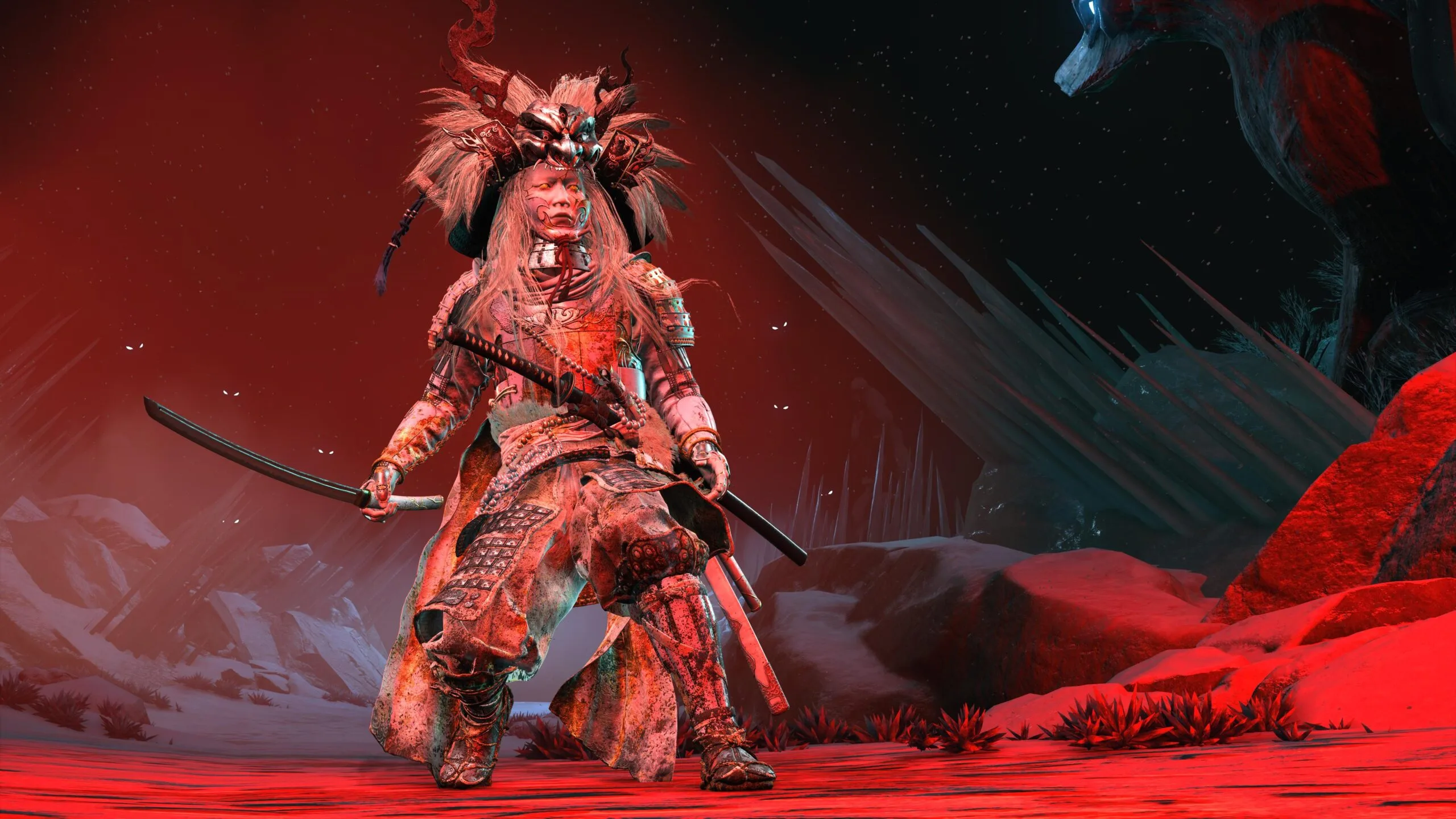
Each class has a katana and a ranged weapon by default, plus a signature secondary weapon around which part of its skill tree and equipment is built. Here are the official English-language descriptions, not to be confused with the rough translations circulating online:
| Class | Secondary weapon | Specialty |
|---|---|---|
| Samurai | Ōdachi | Access to the widest range of ranged weapons |
| Hunter | Yari (spear) | Can carry an additional ranged weapon |
| Ronin | Dual katana | Set of utility-focused abilities |
| Assassin | Kusarigama | Several stealth skills |
Important point: no one is locked into their signature weapon. A team of four Samurai can clear the entirety of the regular content. The class shapes the playstyle, not the matchmaking.
The March hierarchy is no longer today's. Patch 1.600 gave a serious boost to the Samurai: reduced cooldowns on its class abilities, extended effect duration, increased stagger damage, ultimate resource gain on stagger, more effective healing received. Conversely, long-range archery was scaled back — a heavily reduced resource gain for the True Aim Yumi, weaker tanegashima headshots, a firearm less effective against bosses — while the hankyu gained more ammo and damage. The conclusions of a March guide on the classes are therefore outdated.
Story, Raid, Survival: the progression loop
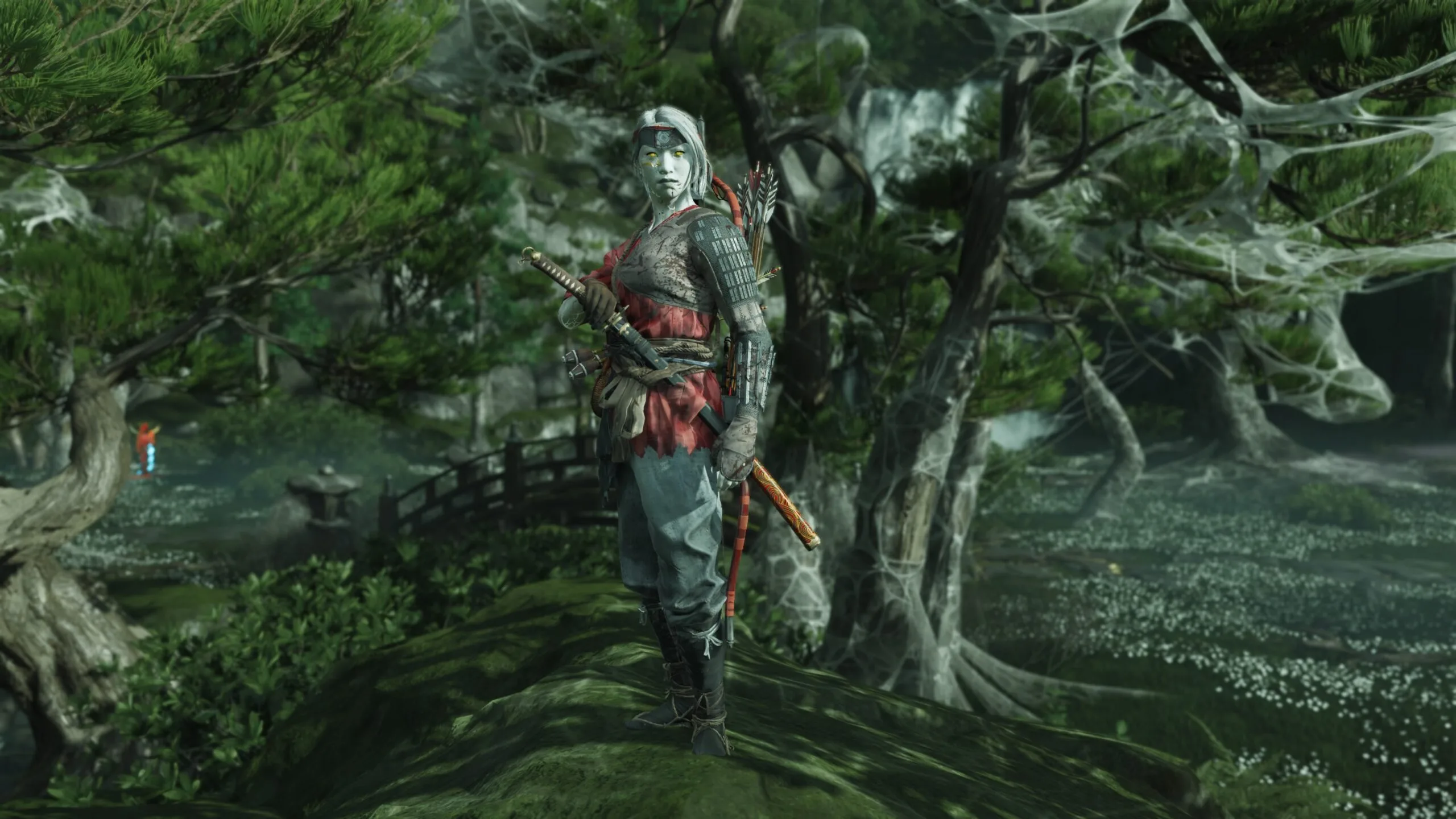
Story is played by two people and includes twelve missions. Every three missions completed, you unlock a Raid: a four-player assault on the stronghold of one of the Six of Yōtei, ending with a boss fight against their supernatural form. Four Raids in total, one per available boss: the Spider, the Oni, the Kitsune, and the Snake.
Each boss brings its own faction and thematic sub-bosses. The Kitsune is accompanied by an elite soldier, the "Snow Woman," who inflicts frost and cold; the Snake is backed up by a summoner. It's these units that tip a mission into Gold or Platinum territory, not the boss itself.
Survival is played by four people across four maps. The premise: hold three zones against waves of enemies. As long as you control a zone, you can trigger a blessing (summoning a bear spirit, fire spirits that attack enemies); if you lose it, a curse falls upon you. Two maps are named explicitly in the official patch notes, River Village and Frozen Valley; community reports add Broken Castle and Hidden Temple. Sucker Punch only publishes its patch notes in English, hence these labels being kept as is.
On top of all this come the weekly Nightmare missions, accessible from the challenges menu, with the leaderboard resetting every week. Patch 1.601 added a matchmaking option to fill empty slots, and 1.600 made them far more rewarding: they now grant quickplay rewards and count toward the associated objectives (quickplay feats).
Bronze, Silver, Gold, Platinum: when to move up a tier
Each mission can be replayed across four difficulty modes. The higher the tier, the greater the enemy variety, the faster experience is earned, and the better the loot. The game displays a recommended gear level for each tier and warns you if you launch a mission too far above your means — but it lets you proceed anyway.
Two nuances stemming from the March patches, often missing from launch guides: patch 1.512 introduced a mandatory minimum Ki for matchmaking and rebalanced the recommended Ki values to better match actual difficulty. So you can still push into Platinum with a group of friends, but not through the public queue. The same patch reworked the vitality skills (Vitality I and II) across all classes to grant more health points earlier in progression: the Bronze → Silver step is significantly less steep than it was at launch.
Ki and gear: the only curve that matters
Ki is the level of a piece of equipment; your total Ki is the average of the seven equipped slots. It increases your outgoing damage and slightly reduces damage taken. Class rank, on the other hand, only serves to unlock techniques: at rank 24, all of a class's technique slots are open, and you can then equip a second legendary item instead of just one.
Rarities follow a simple color code:
- White (common): starting equipment, no properties.
- Green (uncommon): one property.
- Blue (rare): one property and one perk.
- Purple (epic): two properties and one perk, with access to rerolls.
- Orange (legendary): two properties, one perk, and a unique legendary ability, with higher percentages at equivalent grade.
Properties carry a grade from D- to S. This is the most misunderstood point of the mode: rerolling a property changes its effect, never its grade. To raise the grade, you need to run an upgrade on an epic or legendary piece, then earn 3,600 experience points in a mission — both properties then jump a tier all at once. Practical consequence: prioritize keeping pieces graded at least B on both properties, and dismantle without hesitation an A- / D- piece, which will cost far more to bring up to S.
Once a piece is perfect, patch 1.601 added "Gear Retirement": you spend currency to retire it permanently. No gameplay advantage, but a counter visible to other players and fireflies that surround you when you greet someone. It's the mode's only prestige content.
The Raid: the Dragon, Lord Saito, and Hell Mode
The Raid opened on Friday, April 10, 2026, and pits players against the last two members of the Six of Yōtei. It's split into two encounters, the Dragon then Lord Saito, separated by labyrinthine fortresses combining hordes of enemies and cooperative puzzles. It requires four players, no exceptions, and the studio designed each mission to introduce beforehand the mechanics of the boss fight that concludes it.
On the Dragon, expect giant bō-hiya missiles — introduced earlier in the mission — followed by a rain of bombs that track players. Each player then becomes a mobile danger zone, including for their teammates: spread out, and never cut across the path of a fleeing ally. The most elegant counter comes from the Shinobi: vanishing interrupts the bombs following them, and having the whole group vanish simply ends the aerial attack outright. Sucker Punch admits it didn't anticipate this synergy.
On Saito, two dangers structure the fight. His giant sword is nearly impossible to dodge — only an ultimate attack in progress allows you to escape it, otherwise you have to take the hit — and he summons dark warriors that must be called out loud as soon as the animation begins. Good news: equipment can be changed right at the start of this fight, so after each collective failure. Adjust your build between attempts, prioritizing bonuses tied to perfect parries and a reliable way to heal yourself or absorb his big explosive attacks.
Three important changes from patch 1.601, released after the wave of launch articles: matchmaking is now active on Raid missions, an option lets you jump straight to the boss fight for both the Dragon and Saito, and "Hell Mode", an additional difficulty tier on boss fights, is now live — it unlocks exclusive class cosmetics. If you had given up on the Raid back in April for lack of a group, that obstacle is now gone.
Where to start today
A marching order that works: level up a single class to rank 24 by chaining Story mode on Bronze then Silver, switch to Gold as soon as your gear allows, then use Survival and the weekly Nightmare missions as a loot tap while you rank up your epic pieces. The Raid comes last, once your build is stable — and Hell Mode after that, for the cosmetics.
The fact that Legends is finished isn't bad news: no season invalidates your progress, no item disappears, and the builds tested by the community remain valid. The only real constraint is human. With no new content since April, the queue mostly fills up in the evenings, and a Hell Mode Raid comes together faster on a dedicated Discord server than through matchmaking. Plan your time slots: the content, for its part, will be there.
Share this article
Which mode appeals to you most in co-op?
Frequently asked questions
Do you need to finish the single-player campaign to start Legends?
No. Legends can be launched from the main menu with just an internet connection, a PlayStation account, and a Plus subscription. It's a mythologized retelling of the same events, not a direct sequel.
Can I play the same class four times in co-op?
Yes, without restriction. The class shapes the playstyle, it's not a matchmaking lock. Four Samurai can clear all the regular content without any issue.
When should you move from Bronze to Silver? At what Ki?
The game displays the recommended Ki per tier and warns you if you launch a mission that's too hard, but lets you go ahead anyway. Patch 1.512 readjusted these thresholds to match the actual difficulty and made the Bronze → Silver jump noticeably less steep than at launch.
What is the class rank for if it's not a damage multiplier?
It only unlocks techniques. At rank 24, all slots are open and you can equip two legendary items instead of one — that's the only real power jump.
I have an A- / D- piece. Should I really scrap it?
Yes, without hesitation. Rerolling a property only changes the effect, never the grade. Upgrading that piece will cost far more to pull it up to S than a B / B piece would from the start.
Key takeaways
- The Samurai is no longer a support but a tank able to hold the line thanks to the buffs from patch 1.600.
- Keep your gear graded at least B on both properties: an A- / D- will cost more to perfect than it's worth.
- Legends requires a PlayStation Plus connection, but zero cosmetic purchases: everything unlocks through play.
- Weekly Nightmare missions now pay out as much as a quickplay and count toward battle pass objectives.
- Platinum matchmaking requires a minimum Ki — you can ignore this limit in a private group of friends, not in the public queue.
Comments
No comments yet. Be the first to react!
Leave a comment
Similar guides




Latest articles






Your opinion counts
Rate Ghost of Yotei
Click a star to rate