



 Fabian Lainé
Full Guide
Dota 2: The International 2026 lands in Shanghai — the complete guide to the biggest tournament of the year (August 13-23)
In brief
The International 2026 returns to China in Shanghai from August 13 to 23, with sixteen teams competing for the Aegis of Champions and a $1.6 million prize pool. Between a Swiss-format group stage and a double-elimination main event, discover the format, the favorites, and how to follow the biggest Dota 2 championship of the year.
Every summer, the planet Dota holds its breath: The International (TI), Dota 2's official world championship organized by Valve, returns to crown the best team of the season. A special 2026 edition: the tournament returns to China, in Shanghai, from August 13 to 23, 2026. Whether you're a rift veteran or a complete newcomer curious about why your friends are going to disappear for ten days straight, here's everything you need to know about the event, its format, its teams, its meta, and how to follow it live.
What The International is and why it matters
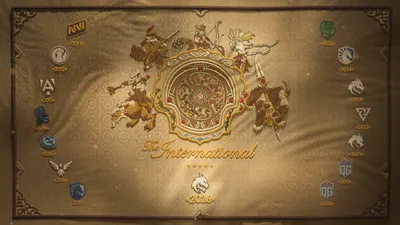
The International is not a tournament like any other. It's the founding event of modern esports: back in 2011, Valve put up a million dollars in prize money, an unprecedented sum at the time, propelling Dota 2 and competitive video games into the spotlight. Since then, the TI has remained the absolute pinnacle of the season, the event where the Aegis of Champions is on the line — the shield handed to the winning team, engraved with the name of every crowned player. Winning the TI means entering legend; some organizations wait a decade without ever managing it.
For the general public, The International is also the best gateway into Dota 2: the casting explains the action, the productions are spectacular, and top-level matches condense everything that makes the game exciting. No need to master all 120-odd heroes to get hyped over an improbable comeback.

Dates, venue, and format: how Shanghai 2026 will unfold
After several traveling editions, TI 2026 sets up shop in Shanghai, at the massive Oriental Sports Center. The schedule is split into two distinct phases:
- Group stage (August 13-16): in Swiss format, the 16 teams face off in best-of-three series (first to two wins). The Swiss system pairs teams according to their record, so that each round pits together teams with similar results. The best qualify for the next stage, the worst are eliminated.
- Main event (August 20-23): time for the big double-elimination bracket. A first loss sends a team to the lower bracket, a second one eliminates them for good. The grand final is played in best-of-five format (first to three wins), potentially more than three hours of high-tension gameplay.
This structure rewards consistency in the group stage while, during the main event, giving a second chance to favorites who stumble — hence the epic comebacks that remain etched in memory, with a team that started from the lower bracket having already claimed the title in the past.
The 16 qualified teams and how to make it to The International
Sixteen teams compete for the Aegis. The selection combines direct invitations, sent to the best teams of the competitive season, and regional qualifiers open to all others around the world (Europe, China, North America, South America, Southeast Asia). This dual path guarantees truly global representation: more than thirty nationalities will be present in Shanghai.
Among the expected names are invited heavyweights such as Team Falcons, Team Liquid, and Xtreme Gaming, alongside prestigious regional qualifiers such as Team Spirit, OG, and LGD Gaming. Two organizations carry a particular aura: OG, the only team to be back-to-back champions (2018 and 2019), and Team Spirit, crowned in 2021 and again in 2023. Seeing these giants go through qualifiers is a reminder of just how much tighter the competition has become.
| Path of entry | Principle | Example teams |
|---|---|---|
| Direct invitations | Reserved for the season's top-performing teams | Team Falcons, Team Liquid, Xtreme Gaming |
| Regional qualifiers | One or more tickets per region of the world | Team Spirit, OG, LGD Gaming, GamerLegion |

The prize pool: the end of the record era?
For a long time, The International held the record for the biggest payout in esports history: over $40 million in 2021, fueled by the community Battle Pass, a portion of whose sales boosted the pot. That model is now a thing of the past. Since then, Valve has significantly tightened the purse strings: TI 2026 starts with a base prize pool of $1.6 million.
The amount is sparking debate within the community, which remains nostalgic for the eye-watering prize pools of the past. But it reflects a deliberate choice by Valve: to refocus the event on sport and prestige rather than the race for a jackpot, while better distributing revenue across the entire competitive circuit throughout the year. For the players, lifting the Aegis remains the real reward regardless.
It's also worth remembering that the announced prize pool is only a starting point: the distribution among teams heavily favors the finalists, so much so that a spot on the podium can radically change an organization's financial season. And beyond the prize money, a standout performance in Shanghai is worth its weight in gold in terms of visibility, sponsorships, and transfers for the following year.
A record that carries weight: the great TI champions
Understanding the stakes of 2026 requires a quick look back. Over fifteen editions, only a handful of organizations have managed to lift the Aegis, and two of them dominate the tournament's history. OG pulled off the unique feat of retaining its title, champion in 2018 and then in 2019 — a double that no one has matched since. Team Spirit, carried by their prodigy Yatoro, won the 2021 edition before doing it again in 2023, establishing themselves as the new benchmark.
This track record fuels very real pressure on the favorites: at every TI, the question isn't just who will win, but whether a dynasty will be written or broken. For underdogs, on the other hand, The International remains the only place where a single week of brilliance can transform an entire career and turn an unknown team into a legend of the game.
Understanding a game of Dota 2 in five minutes
If you're new to the game, here's the essential rundown. Two teams of five players face off on a map divided into two sides, the Radiant and the Dire, separated by a river. The objective: destroy the opposing Ancient, a protected structure at the heart of the enemy base. Three paths (the "lanes") connect the two sides, lined with defensive towers that must be brought down in order to advance.
Each player controls a unique hero, chosen during a draft phase where characters are picked and banned. A hero gains levels and gold by eliminating minions ("creeps"), enemy heroes and structures, then buys items that multiply their power. A match lasts on average 35 to 45 minutes and is played as much on pure mechanics as on collective strategy.
Dota 2's great strength is its depth: more than 120 heroes, hundreds of items and near-infinite interactions mean no two games are alike. This richness can be intimidating at first glance, but it's precisely what makes high-level play so fascinating to watch — a single decision, a spell dodged at the last second or an item bought at the right moment can turn around an encounter that seemed settled.
Roles, heroes and vocabulary: the spectator's lexicon
To follow the commentary without getting lost, a few terms keep coming up. The five players split into roles numbered according to their resource priority:
- Carry (position 1): the team's damage carrier, weak early game but devastating once equipped. They're often the one who wins the decisive fights.
- Mid (position 2): the player on the middle lane, generally a high-impact hero who gains a level advantage.
- Offlane (position 3): stationed on the "hard" lane, they soak up damage and create space for their carry.
- Support (position 4) and hard support (position 5): they protect the cores, buy vision ("wards") and sacrifice their gold for the team.
On the items and stats side, remember the Aghanim's Scepter, an iconic item that unlocks or upgrades the ultimate ability of many heroes — its upgrade, the Aghanim's Shard, is just as closely watched. Finally, the acronym MMR (Matchmaking Rating) refers to a player's numerical ranking: TI pros all operate at very high MMR, a symbol of a skill level that most players will never encounter in ranked matches.
Patch 7.41d: the meta the tournament will be played on
A Dota tournament is always played on a precise snapshot of the balancing. TI 2026 will be contested on patch 7.41d, the latest iteration of version 7.41 rolled out in late March 2026 and refined since then by a series of adjustments (7.41a in March, 7.41b in April, 7.41c in May, then 7.41d in early June). These successive fixes, between hero balancing and item tweaks, have had time to stabilize the meta before the event.
In concrete terms, this means teams arrive in Shanghai with a mature read on strong heroes, draft combos to favor and traps to avoid. Expect to see certain characters systematically banned as soon as the draft opens: in a format where every round counts, the pick phase is already a battle in itself.
Storylines to follow in Shanghai
Beyond the numbers, it's the stories that make TI exciting. Several narrative threads are taking shape for 2026:
- The return to China. Chinese audiences are among the most passionate in the world; a TI in Shanghai means a boiling arena atmosphere and maximum pressure on local teams like Xtreme Gaming or LGD.
- The veterans. Some players are competing in their ninth or tenth International. Their experience with the scene and the pressure can make all the difference in a breathtaking best-of-five.
- The dynasties versus the new generation. Can OG and Team Spirit join the exclusive circle of multiple champions, or will a new generation overturn the hierarchy?
Where and how to watch The International 2026
Good news: following the TI costs nothing. Matches are streamed for free on Twitch and YouTube, as well as through the Dota 2 client itself, which offers a spectator mode with live stats. Official broadcasts are available in English, Russian, Chinese, and Spanish; for French-speaking audiences, many streamers and talents offer casts in French on Twitch throughout the competition.
Watch out for the time difference: Shanghai is several hours ahead of France, so plan for mornings or late nights in front of the screen, or catch up with the replays. Our advice for making the most of the event: start with the group stage (August 13-16) to spot the up-and-coming teams, then don't miss the main event (August 20-23) and its grand best-of-five final for anything in the world. Whether you're here for the strategy, the spectacle, or simply the atmosphere, The International 2026 promises to be the gaming event of the summer.
Share this article
Do you think Team Spirit or OG will claim TI 2026 in Shanghai?
Frequently asked questions
Why does The International matter so much in global esports?
Since 2011, TI has been the founding tournament that thrust Dota 2 and competitive esports into the spotlight by putting up a million dollars, an unprecedented sum at the time. Winning the Aegis of Champions remains the ultimate achievement that forever cements a team's place in the game's legend.
How exactly does the TI 2026 format work?
The groups (August 13-16) pit the 16 teams against each other in Swiss-format best-of-three matches: each round pairs teams based on their record, rewarding consistency. The main event (August 20-23) shifts to double elimination, where a first loss sends a team to the lower bracket and a second eliminates them for good, while the grand final is played as a best-of-five.
Which teams are favorites for Shanghai 2026?
OG and Team Spirit dominate TI history: OG won two consecutive titles (2018-2019), while Team Spirit triumphed in 2021 and 2023. Invited teams like Team Falcons, Team Liquid, and Xtreme Gaming are among the favorites, but regional qualifiers such as LGD Gaming, GamerLegion, and others should never be underestimated.
Is the TI 2026 prize pool really smaller than in previous years?
Yes, $1.6 million represents a significant drop compared to the $40 million of 2021. Valve deliberately tightened the purse strings to refocus the event on sporting prestige rather than the jackpot race, while better distributing revenue across the entire annual competitive circuit.
Do I need to be an expert player to enjoy The International?
Absolutely not. Commentators explain the action live, Valve's productions are spectacular, and the matches condense everything that makes Dota 2 exciting: improbable comebacks, strategic drafting battles, and moments that thrill even without mastering the game's 120+ heroes.
Key takeaways
- TI 2026 takes place in Shanghai across two acts: groups (August 13-16) in Swiss format, then the main event (August 20-23) in double elimination.
- Sixteen teams selected through direct invites and regional qualifiers will fight for the Aegis, including OG and Team Spirit, the tournament's two historic dynasties.
- The $1.6 million prize pool marks a turning point: Valve now favors sporting prestige over the race for financial records.
- Dota 2 revolves around two teams of five players aiming to destroy the enemy Ancient by orchestrating strategic drafts, a three-lane progression, and unpredictable team fights.
- Watching TI without being a hardcore player remains accessible: commentary explains the action and spectacular comebacks transcend the raw gameplay experience.
Comments
No comments yet. Be the first to react!
Leave a comment
Similar guides


Latest articles






Your opinion counts
Rate Dota 2
Click a star to rate