



 Fabian Lainé

Full Guide
Diablo 4: the Season 15 PTR guide (August 4–11, 2026) — how to access it, Spiritual Shards, mythic overhaul, and returning uniques
In brief
The Season 15 PTR (August 4-11, 2026) tests the major overhaul of the item system with spiritual shards — powerful bonuses offset by real drawbacks — and the new mythic itemization split. A critical week to check whether your current builds will remain viable in September.
The public test realm for Season 15 of Diablo IV opens its doors on August 4, 2026 and remains accessible until August 11. One week, not a day more, to test what looks set to be the most far-reaching overhaul of the item system since the arrival of mythic uniques.
And this time, there's a real reason to go rather than waiting for the launch guides: patch 3.2.0 touches mythic crafting, meaning the very heart of the endgame economy. If Blizzard sticks to the announced rules, some of your current farming habits will become obsolete.
How to access the PTR (and what you need to know beforehand)
The test realm is PC-only, via the Battle.net app. Here's how to proceed:
- Open Battle.net and select Diablo IV from the list of games.
- In the dropdown menu above the launch button — the one that displays the region — choose “Public Test Realm” instead of the regular client.
- Install the PTR client. This is a separate download: it doesn't replace your normal installation, but it does take up the corresponding disk space.
- Launch the game and create a character. The PTR provides pre-configured high-level test characters, which means you don't have to replay the entire campaign to test endgame content.
Three important points before you jump in:
- Progress made on the PTR is never transferred to the regular realms. Nothing you earn there will carry over.
- The Vessel of Hatred expansion is enabled for all participants for the duration of the test, including those who don't own it.
- The tested content is not final. Balance numbers almost always change between the PTR and the actual release.
Spiritual shards: bonuses paid for with real drawbacks
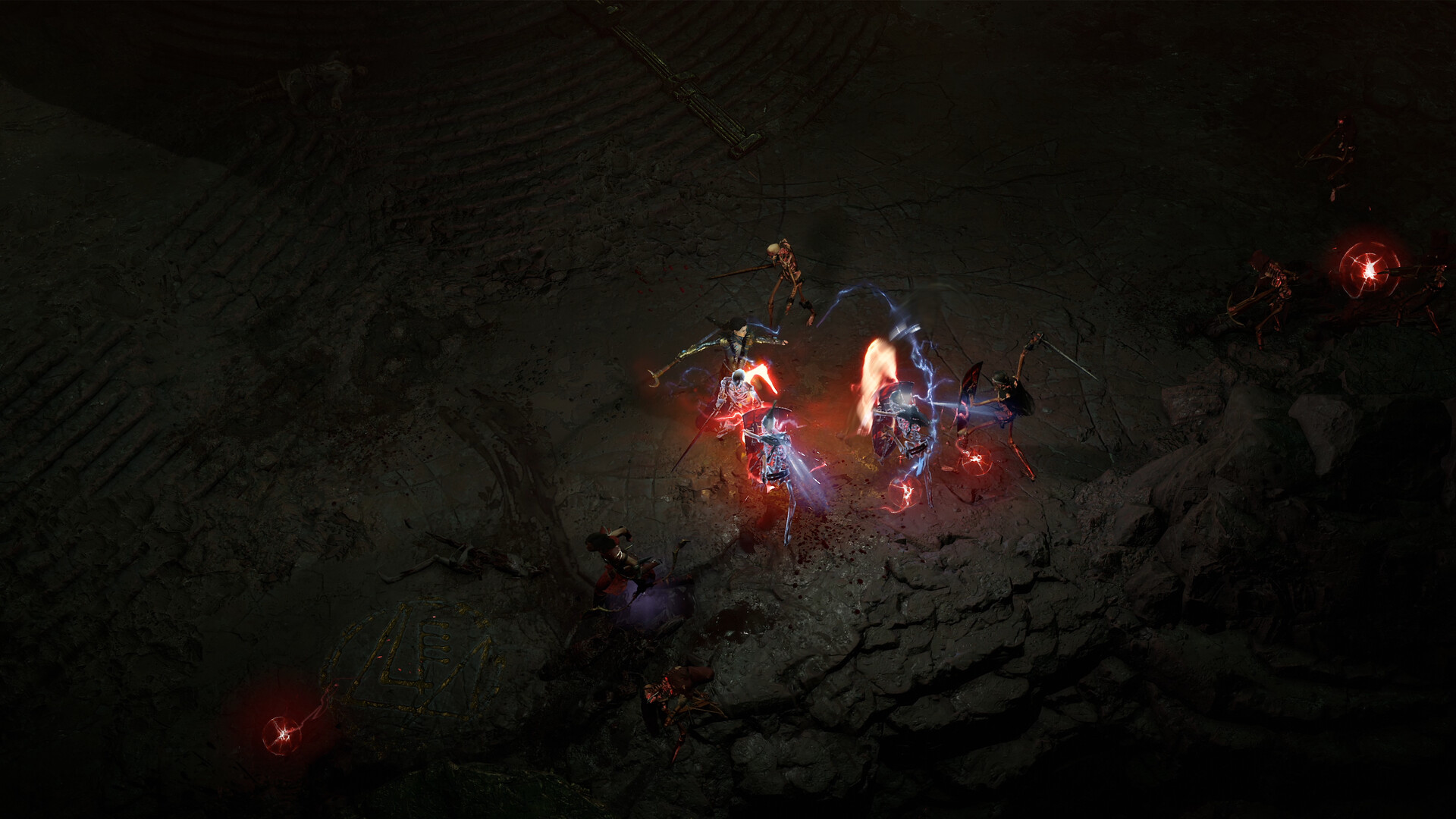
This is the patch's most defining new feature. Accessories — amulets and rings — can now receive spiritual shards, which grant a significant bonus paired with a genuine drawback.
Two announced examples set the tone:
- Up to 35% attack speed, in exchange for an increase in the resource cost of your skills.
- Up to 40% maximum life, in exchange for a reduction in your maximum resource pool.
The concept is interesting because it breaks with Diablo IV's usual logic, where optimizing means stacking bonuses with no downside. Here, every shard raises a question: can your build tolerate this specific drawback?
What should be tested first on the PTR: resource-hungry builds. A Barbarian or Sorcerer already limited by their regeneration will handle a cost increase very poorly, even in exchange for 35% attack speed. Conversely, builds that depend little on their resource — summons, damage-over-time — can take the attack speed shard almost without consequence. This is exactly the kind of thing a spreadsheet won't tell you, but a week of testing will.
The mythic unique overhaul: now two paths
The change with the heaviest consequences concerns the crafting of mythic uniques. The system now splits into two distinct paths:
The cube path — an upgrade that preserves the stats of your existing item and turns it into a Mythic. This is the big new feature: no more need to sacrifice a perfectly optimized item in the hope of getting a Mythic with mediocre values. In exchange, only one item obtained this way can be equipped at a time.
The forge path — classic crafting now produces random Mythics, but several can be equipped simultaneously.
The trade-off is elegant: either a tailor-made but unique Mythic, or several Mythics you have to make do with. This should put an end to the current situation where a badly rolled Mythic is simply a disappointment, while also avoiding a scenario where everyone runs around with six perfect Mythics.
Absolutely worth checking during the PTR: the actual material cost of the cube path. That's the parameter that will determine whether this system is accessible to the average player or reserved for those who farm fifteen hours a week — and it's traditionally the number Blizzard adjusts the most between the test and the release.
Nine historic uniques return
Blizzard is reintroducing nine uniques from previous entries in the series, including two names any Diablo II veteran will immediately recognize:
- Stone of Jordan, the franchise's most famous ring, once the unofficial currency of Diablo II.
- Harlequin Crest, the iconic helm of the Skeleton King.
Beyond the nostalgia factor, the real question is whether these items will actually be competitive or remain mere collector's pieces. The PTR is the chance to find out before spending time hunting them down in September.
Challenge dungeons, charms, and ambushes
The rest of the patch rounds out the endgame loop:
- Challenge dungeons grant up to three additional Torment levels. For those pushing through the Pit, that's a new rung on the difficulty ladder — and therefore on the rewards ladder.
- Sixteen new charms are joining the game, expanding the customization space opened up by this system.
- Ambushes are getting a difficulty boost, with encounters noticeably more punishing than they currently are.
Timeline: the PTR isn't the season
Be careful not to mix up the two dates. The PTR runs from August 4 to August 11, 2026. Season 15 itself is expected around September 15, right after BlizzCon 2026 — Blizzard hasn't officially confirmed this date yet, and the event should bring additional details about the seasonal content.
So you have about six weeks between the end of the test and the launch. That's the window during which Blizzard will fine-tune the numbers based on feedback — all the more reason to take part if you have strong opinions about spirit shards or the cost of Mythics.
Is it worth jumping in?
If you play Diablo IV casually and only join in for a couple of weeks at the start of each season, the PTR won't offer you much: everything you'd see there will be fully documented by September anyway.
On the other hand, if you're seriously pushing the Pit or building your own builds, the question of compatibility between spirit shards and your favorite archetype alone is worth the week of testing. It's the kind of information that can't be deduced from patch notes, and it will decide your first build of Season 15.
Share this article
Which aspect of the Season 15 PTR intrigues you the most?
Frequently asked questions
How do I access the Season 15 PTR?
The PTR is PC-exclusive via Battle.net. Open the app, select Diablo IV, then choose "Public Test Realm" from the dropdown menu before launching. The PTR client downloads separately and doesn't affect your normal installation.
Will my PTR progress carry over after the test?
No, absolutely nothing you earn on the PTR transfers to the normal realms. It's an isolated test environment, but all participants have access to the Vessel of Hatred expansion, even without owning it.
What exactly is a spiritual shard?
It's a major bonus granted to accessories (rings and amulets) paired with a concrete drawback. For example, up to 35% attack speed but increased resource cost, or 40% maximum life but a reduced resource pool. The idea is that every build must decide whether it can tolerate the downside.
How does the new mythic crafting work?
Two paths coexist: the cube upgrades an existing item into a mythic while keeping its stats, but you can only equip one; the forge creates random mythics, but you can stack several. It's a trade-off between unique perfection and quantity.
When exactly does Season 15 launch?
The PTR closes on August 11, but Season 15 itself is expected around September 15, 2026, right after BlizzCon 2026. Blizzard hasn't officially confirmed this date yet.
Key takeaways
- Spiritual shards impose a trade-off: 35% attack speed against increased resource consumption, which calls low-regeneration builds into question
- Mythics split into two paths: the cube guarantees perfection but limits you to one item, the forge produces multiple random mythics
- Nine legacy uniques return, including the legendary Ring of Jordan and Leoric's Crown, but their competitive viability remains to be proven
- The material cost of the cube path will decide whether the system is accessible to average players or reserved for intensive grinders
- Six weeks separate the end of the PTR from the actual launch in September: this is the window during which Blizzard will adjust the balance based on feedback
Comments
No comments yet. Be the first to react!
Leave a comment
Similar guides


Latest articles






Your opinion counts
Rate Diablo IV
Click a star to rate