

 Fabian Lainé
Full Guide
Apex Legends: The Complete 2026 Starter Guide — Legends, Classes, Weapons and First Steps in Battle Royale
In brief
Apex Legends remains a technical, free-to-play Battle Royale where movement comes first: sliding, climbing and vertical abilities dominate the game. This guide covers the essentials for getting started in Season 29: Ranked mode mechanics, ideal Legends to learn with, must-have weapons and the ping system that revolutionizes team communication without a mic.
Seven years after its surprise launch, Apex Legends remains one of the most technical and generous Battle Royales on the market. In this Season 29, Respawn Entertainment's free-to-play title is even riding on a much-talked-about collaboration with the Cyberpunk: Edgerunners universe, proof that the game continues to attract newcomers and veterans alike. If you're setting foot on the Outlands for the first time, the learning curve can seem steep: dozens of Legends, weapon jargon, shields that evolve, a demanding Ranked mode... This guide covers everything from the very beginning, lays out the official terminology, and gives you a clear method to survive your first matches and, very soon, start winning.
Apex Legends in 2026: a Battle Royale that's still alive
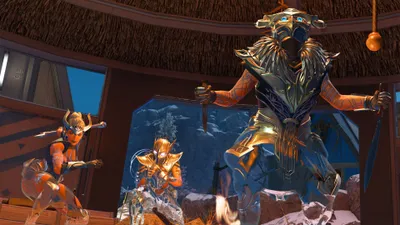
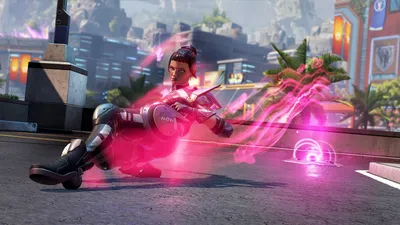
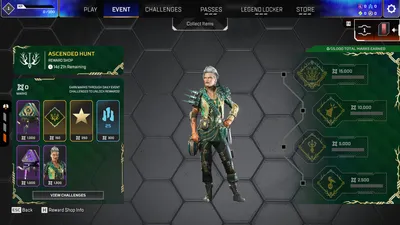
Apex Legends is a team-based Battle Royale where movement is king: sliding down slopes, wall climbing, zip lines and movement abilities unique to each character make the fights far more vertical than the competition. Season 29, titled Overclocked, extends this philosophy and came with a crossover event with the Cyberpunk: Edgerunners series, launched in early July 2026, featuring cosmetics inspired by David and Lucy. Good news for newcomers: the game is entirely free, and most of the competitive content is accessible without spending a cent. All you need is an account and a decent connection to join the 60 players in a match.

Understanding the Battle Royale format
The main mode pits 20 squads of three players against each other, or sixty competitors dropped onto the same map. The principle is classic: you land, gather gear (the famous loot), eliminate the other squads, and try to be the last team standing to claim victory as the Apex Champion. A Duos mode, for two players, also exists for those who prefer tighter matches.
The mechanic that paces every round is the ring. A play zone shrinks regularly; staying outside it inflicts continuous damage that increases with each phase. The ring forces survivors closer together and drives the decisive late-game fights. Learning to anticipate its closing — and never being caught on the wrong side at the last moment — already makes you a better player than the average beginner.
- Landing: choose a quiet area at the start to gear up without dying within ten seconds.
- Rotation: move toward the center of the ring before it closes.
- Positioning: height and cover are often worth more than a frontal duel.
Another detail that trips up beginners: a match isn't a race to eliminations. Many veterans play patiently, let two squads weaken each other, then clean up the survivors. Understanding this tempo — knowing when to engage and when to hold back — will win you far more rounds than raw aim alone. Also keep an eye on the number of squads still alive, permanently displayed on screen: it tells you how close the endgame is.
The Legends and their classes
Each player controls a Legend, a character with three abilities: a passive (permanent), a tactical (short cooldown) and an ultimate (long charge time, but powerful). Legends are split into five classes that determine their role and class perks:
- Assault (Assault) — offensive fighters, access to bonus weapon crates.
- Skirmisher (Skirmisher) — specialists in mobility and repositioning.
- Recon (Recon) — scouts able to spot enemies and survey beacons.
- Controller (Controller) — Legends who lock down an area and hold a position.
- Support (Support) — healers and Legends who revive the team.
No need to unlock everything at once: start with the free characters offered when you create your account, and focus on one or two profiles before expanding your roster.
Five Ideal Legends for Beginners
Some Legends forgive mistakes more easily and teach good instincts. Here are five safe bets for your first hours:
| Legend | Class | Why start with them |
|---|---|---|
| Lifeline | Support | Her healing drone patches up the team and her ultimate drops a care package: perfect for learning how to survive. |
| Bloodhound | Recon | Their scan reveals nearby enemies and helps you avoid ambushes; ideal for learning where opponents are hiding. |
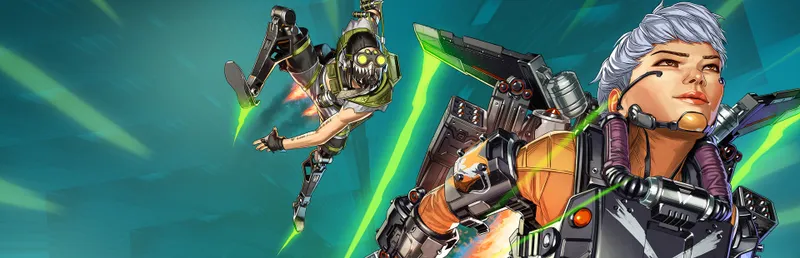
| Octane | Skirmisher | His stim boosts running speed and his jump pad opens up quick rotations; fun and forgiving. |
| Pathfinder | Skirmisher | The grappling hook and zipline naturally teach the vertical movement that defines Apex. |
| Wraith | Skirmisher | Her "Into the Void" phase offers a safety net for retreating; popular and versatile. |

Weapons and Loot Vocabulary
On the ground, all equipment has a color-coded rarity, from most common to rarest: common (white), rare (blue), epic (purple) and legendary (gold). The higher the color tier, the better the attachments and protective gear. Pick up, compare, replace: a good beginner quickly learns not to stick with a rifle fitted with white attachments when a purple one is lying right next to it.
As for weapons, a few reliable picks show up in almost everyone's hands:
- R-301: an accurate and easy-to-control assault rifle, the perfect weapon for learning to aim.
- VK-47 Flatline: a heavy-hitting assault rifle with more noticeable recoil.
- R-99: a submachine gun with an ultra-fast fire rate, fearsome in close combat.
- Wingman: a heavy, high-damage pistol that rewards accuracy.
- Peacekeeper: a devastating shotgun at short range.
Also keep ammo types in mind: each weapon uses a specific type (light, heavy, energy, shotgun shells, sniper), so you need to pick up the right rounds. A well-rounded loadout usually pairs a mid-range weapon with a close-quarters weapon to cover every distance.
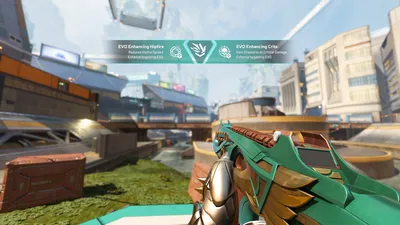
Don't forget attachments: sights, extended magazines, grips, and barrel stabilizers turn an ordinary weapon into a formidable tool. An R-301 fitted with a purple magazine and a suitable sight vastly outclasses the same rifle found bare on the ground. So get into the habit of searching crates and enemy bodies: a defeated opponent drops all their loot, often better equipped than what you'll find lying around. This quick "looting" reflex, between exchanges of fire, quickly separates effective players from the rest.
Shields, respawning, and replicators
Survival isn't just about health. Every Legend wears an Evo Shield, armor that levels up—and thus gains extra protection points—as you deal damage. In other words, the more you fight, the tougher you become: don't be afraid to engage in order to level up your armor. The survival shield, meanwhile, partially protects you once you're knocked down, giving an ally time to come revive you.
Because in Apex, being "knocked down" isn't the end. A teammate can revive you on the spot. And if you're finally eliminated, all is not lost: your partner picks up your banner, carries it to a respawn beacon, and brings you back into the game. Replicators, finally, let you craft healing items or recover gear in exchange for materials collected on the map. Mastering this trio—Evo armor, respawning, and the replicator—radically changes how long you last in a match.

Pinging: communicating without a mic
This might be Apex Legends' best idea, and a blessing for beginners: the ping system. With a single button, you can alert your squad to an enemy, a coveted item, a direction to retreat, or a rally point, all voiced aloud by your Legend. The result: you can play effectively as a team without ever speaking into a mic. Get into the habit of pinging threats you spot and gear you don't need—your teammates will return the favor. A squad that communicates, even without a word, will crush one playing solo.
Pinging actually goes further than a simple marker: flagging "enemy here" and then "I'm heading there" builds real coordination. You can also signal that you're low on ammo or heals, request a specific type of attachment, or suggest a rally point. Take a few minutes in the menus to find the button and its variants (a single press, a held press): it's the most worthwhile investment you can make early on.
Ranked mode: understanding the climb
Once you're comfortable, Ranked mode offers structured competition across tiers, from lowest to highest:
- Bronze
- Silver
- Gold
- Platinum
- Diamond
- Master
- Apex Predator
In every match, you earn ranked points based on your final placement and the number of eliminations, while paying an entry cost that increases with your tier. The lesson is simple: in Ranked, surviving longer often pays off more than rushing in headfirst. The best players combine smart positioning with eliminations, never sacrificing one for the other. The Ranked map changes throughout the seasons, cycling through iconic locations like Kings Canyon, World's Edge, Olympus, Storm Point, or Broken Moon: take the time to learn the current one, its hot zones and its rotations.

Our tips to get started
Let's sum up the reflexes that will make a difference from your very first matches:
- Stick together. A lone player is a dead player; stay with your squad and fight as a trio.
- Land calmly. Avoid crowded areas until your aim is reliable, and gear up first.
- Ping everything. Enemies, loot, directions: passive communication instantly makes you more useful.
- Watch the ring. Anticipate its closing and move early, never at the last moment.
- Evolve your armor. Dealing damage upgrades your Evo shield: engage wisely.
- One Legend at a time. Master a character fully before switching to another.
Conclusion: launch your first match
Apex Legends can be intimidating due to its density, but it all comes down to a few fundamentals: moving, staying with your team, communicating through pings, and managing the ring. Start with unranked matches using a support or recon Legend like Lifeline or Bloodhound, learn to recognize loot by color, get into the habit of picking up and reviving your allies, then move on to Ranked mode once these habits are second nature. Don't get discouraged if your first matches end in quick defeats: Apex rewards repetition, and every round teaches you a bit more about a map, a weapon, or a reflex. Set yourself simple goals — survive three rings, revive an ally, win a duel — rather than aiming for victory right away. Season 29 and its Cyberpunk crossover offer an ideal context to jump in: download the game, choose your Legend, and head to the Outlands.
Share this article
When discovering Apex Legends, which Legend would you be most tempted to start with?
Frequently asked questions
How long does it take to become competitive in Apex Legends in 2026?
Expect around thirty matches to master the basics: landing, looting, rotating against the ring and positioning. The vertical mechanics require more practice, but the class system and the ping speed up the learning curve compared to other Battle Royales. After about a hundred matches, you're already approaching real skill.
Do you need to spend real money to progress?
No, the game is entirely playable for free: cosmetics, the season pass and packs are accessible without paying. Only skins, emotes and cosmetic trackers require purchase. Legends can be unlocked with in-game currency or real money, but you already have some available for free when you create your account.
What's the best weapon duo for a beginner?
R-301 for mid-range plus R-99 for close-quarters combat, or R-301 plus Peacekeeper if you prefer a shotgun. These combos offer ranged coverage and responsiveness in close combat. Avoid running two long-range weapons: you'll be vulnerable when rushed.
What exactly does the Evo Shield do?
It's armor that levels up as you deal damage: the more you fight, the more extra protection points you gain. Unlike other games, staying passive weakens your long-term survivability, which is why it's important to engage in fights to upgrade your defensive layers.
How do you master rotations and avoid getting caught by the ring?
Constantly check the map in the top right corner: it shows the center of the current ring and the next one. Start moving at least one or two phases before it closes, never at the last moment. Explore vertical routes (climbs, zip lines) for shortcuts that many players still don't know about.
Key takeaways
- Apex Legends prioritizes verticality and movement: sliding, climbing and constant repositioning make far more of a difference than simple shooting skill.
- Starting out with Lifeline, Bloodhound, Octane, Pathfinder or Wraith helps you avoid common pitfalls and teaches you the right class reflexes.
- The shrinking ring forces fights: learning to anticipate its closures and never getting caught on the wrong side is worth more than a hundred early eliminations.
- The ping system allows for team coordination without a mic: flag enemies, items and rotations with a single button press—it's veterans' secret weapon.
- Good gear changes everything: a bare R-301 on the ground is worthless; add a purple magazine and a suitable sight, and it becomes formidable.
Comments
No comments yet. Be the first to react!
Leave a comment
Similar guides

Latest articles






Your opinion counts
Rate Apex Legends
Click a star to rate