



 Fabian Lainé


Recipes
Palworld: Complete Guide to Cooking and Hunger Management
In brief
In Palworld, hunger is a merciless mechanic: starving Pals work at a crawl and your hero loses health every minute without food. This guide shows you how to structure your food chain from the very first hours by mastering four essential pillars — campfire, cooking pot, plantations and ranch — so you never run short on resources and keep your workers at 100% morale.
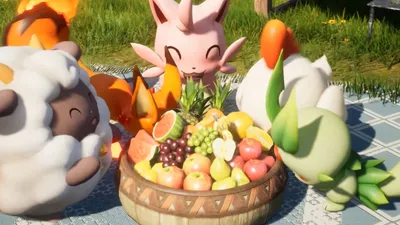
In Palworld, an empty stomach comes at a steep price: your Pals work at half speed, fall ill, and your own hero watches their health bar drain with every minute spent without eating. The good news is that the game's food chain comes together very early and rests on four simple pillars: campfire, cooking pot, crop plots and ranch. Here's how to structure your kitchen from the very first hours so you never run short of grilled meat or fresh salad on the Palpagos archipelago.
The campfire, your first cooking station
As soon as you reach technology rank 2, the Campfire becomes available. It only costs 10 wood logs and can be placed anywhere in your base. It's your first cooking station and will be used for the most basic recipes: Baked Berries, Fried Egg, Cooked Mushroom, Grilled Meat and Bread.
Place it out of the rain, under a roof or inside an enclosed room: a soaked fire goes out immediately and halts all production. Then assign a Pal with the Kindling skill — Foxparks, Rooby or Flambelle all work perfectly — and it will automatically relight the fire whenever a cooking order comes in, with no intervention needed on your part.
Tip: until you've captured a fire Pal, you can manually light the campfire by interacting with a torch. It's tedious but it'll get you through your first survival nights, when a single grilled meat can save your life.
The cooking pot, the real culinary unlock
The Cooking Pot arrives at technology rank 17 and unlocks almost the entire recipe book: Salad, Mushroom Stew, Jam-Filled Bun, Boiled Egg, Sandwich and above all the famous Cake, essential for breeding. It requires a bit of iron, wood planks and stone, but the investment is unavoidable once you want to boost your workers' morale.
Later on, you'll be able to switch to the Electric Kitchen (rank 41) and then the Grand Kitchen (rank 49), the latter allowing several cook Pals to work in parallel. But for your first thirty hours, the cooking pot is more than enough to cover all your nutritional needs.

Basic ingredients and where to grow them
A good kitchen starts with a good pantry. Here are the crop plots to set up in your base as soon as possible:
- Red Berry Plantation (rank 5): the absolute staple, an ingredient in everything from baked berries to cake.
- Wheat Plantation (rank 15): used to grind flour, itself essential for bread and cake.
- Tomato Plantation (rank 22): the heart of salads and sandwiches.
- Lettuce Plantation (rank 27): the mandatory complement to fresh salad.
Each plot needs a Planting Pal to sow, a Watering Pal to irrigate and a Gathering Pal to bring in the crops. A trio of Lifmunk, Fuack and Cattiva solves the problem from the mid-early game onward. Also remember to build a Mill to convert your wheat into flour, without which your wheat ears remain useless.
The ranch, your permanent pantry
The Ranch, unlocked very early (rank 5), costs a few logs, some stone and a bit of fiber. Place up to four compatible Pals there and they'll drop off resources on a loop, with no intervention needed:
- Chikipi — lays eggs at regular intervals.
- Lamball — produces wool, the base of textiles and warm clothing.
- Mozzarina — gives fresh milk, essential for cake.
- Cinnamoth and Beegarde — secrete honey.
- Woolipop — drops candy, very handy for restoring the morale of tired Pals.
Note: the ranch is the true turning point of your playthrough. Without it, you'll have to hunt down Chikipi and Mozzarina on the fly to get eggs and milk, which becomes unsustainable once you're mass-cooking cakes for breeding.
Essential recipes for the early hours
Here are the eight dishes to know by heart for your first twenty hours of play:
- Baked Berries — 1 red berry, at the campfire. An almost free recipe, modest satiety but a perfect stopgap.
- Cooked Mushroom — 1 mushroom, picked up everywhere in grassy areas.
- Grilled Meat — 1 red meat. Hunting Vixy or Rushoar quickly builds up a stock.
- Fried Egg — 1 egg. Simple, calorie-rich and well liked by your worker Pals.
- Bread — 2 flour. Very filling and keeps better than meat.
- Jam-Filled Bun — 2 flour and 3 red berries. Excellent nutrition-to-morale ratio.
- Fresh Salad — 2 lettuce, 1 tomato and 1 red berry, at the cooking pot. The best food for your workers: around 85 satiety points and 11 morale points.
- Stew — mushrooms and red meat, at the cooking pot. A very filling hot dish, ideal for winter in cold zones.
And of course, the pivotal mid-game recipe:
- Cake — 5 flour, 8 red berries, 7 milk, 8 eggs and 2 honey. It's not an everyday food: it triggers breeding at the ranch, at a rate of one cake per mating.

Feeding your Pals: the Feed Box
Every base should be equipped with a Feed Box, unlocked as early as rank 4. Your Pals will help themselves automatically once their hunger gauge drops below 50%. Stock it with at least two types of food: your Pals eat whatever is in the leftmost slot first, which lets you force consumption of a specific dish.
Tip: whatever you do, don't fill the box with only berries. They keep your Pals from starving, but never fill their gauge to 100%. The result: they eat constantly, lose morale and end up burned out. A mix of berries, bread and salad solves the problem for good.
Then add a Cooler Box (rank 13) to prevent spoilage. It requires a Cooling Pal assigned to your base — Pengullet, Jolthog Cryst or Foxcicle — to function. Without it, your cakes and stews will go to waste within a few in-game days, and that's a real shame given how rare ingredients like milk or honey can be.
Managing your own hunger and mental health
Your character has the same orange hunger gauge as your Pals. When it empties, you take continuous damage and your sprinting and jumping abilities collapse. Always keep a stack of bread or baked berries in your inventory: they're the lightest foods to carry on expeditions.
Full meals like salad, stew or sandwich also grant SAN bonuses (mental health). A Pal in good spirits works up to 30% faster; conversely, an underfed Pal may flee the base, get injured, catch gastroenteritis or simply desert. A bad diet, then, costs you as much as a lost battle against a tower boss.

Optimization tips to cook without even thinking about it
A few habits that save hours of micromanagement:
- Place the campfire and cooking pot right next to the Feed Box: your Pals will drop their dishes off directly, with no unnecessary back-and-forth.
- Always assign two cook Pals per base: one sleeps while the other cooks, so your production never stops.
- Cook in large batches at night, while your worker Pals sleep, so the stations aren't tied up during production phases.
- Place the ranch in the shade: bovine Pals like Mozzarina suffer in the heat and slow their production down above 40°C.
- Always keep an emergency stock of 10 breads in your chest: you'll use them during Syndicate Tower raids, when no fire can be lit on site.
Going further
Once your cooking routine is running smoothly, follow up with the related guides on the site: our Palworld starter guide for your first 15 hours to set up your base properly, the Pal tier list to choose your cooks and workers, our article on the optimal base and worker Pals to arrange your stations, the breeding and raising feature to turn your cake stockpile into a giant nursery, and finally the dedicated guide to Palworld illnesses in case a poorly fed Pal ends up at the infirmary anyway. Enjoy your meal on the Palpagos archipelago!
Share this article
How do you manage your Palworld kitchen?
Frequently asked questions
My Pals keep eating nonstop and become gloomy. What should I do?
You're filling your Food Box only with berries: a classic mistake. Berries alone never fully saturate the gauge to 100%. Mix berries + bread + salad to force true saturation and stop the compulsive snacking that ruins morale.
Do I really need to build a Cooler Box?
If you're planning to stockpile cakes and stews for breeding, yes. Without it, your milk and honey spoil within a few in-game days. That's a real waste of rare ingredients, so set it up at rank 13.
How do I keep my cooking production from ever stopping?
Assign two cook Pals to each station (Campfire or Cooking Pot) with staggered rest cycles: while one sleeps, the other cooks. That gives you continuous production without interruption.
What is the Cake and why is everyone talking about it?
The Cake is the only recipe that triggers breeding at your ranch: you need one per mating. It's a major mid-game milestone requiring 5 flour, 8 berries, 7 milk and 8 eggs per unit.
Which Pal should I absolutely prioritize putting on the ranch?
Mozzarina above all: milk is critical for breeding cakes. Then Chikipi for eggs. Lamball, Cinnamoth and Beegarde round out the team depending on your needs for wool, honey and candy.
Key takeaways
- The Campfire (rank 2) kicks off your cooking production: grilled meat, fried egg, basic bread. Shelter it from the rain and assign a fire Pal so it relights itself automatically.
- The Cooking Pot (rank 17) unlocks complex recipes, including the Cake essential for breeding: this is your real turning point.
- The Ranch (rank 5) turns four Pals into a passive factory: Chikipi lays eggs, Mozzarina gives milk, Cinnamoth secretes honey without you lifting a finger.
- Fresh Salad (2 lettuce, 1 tomato, 1 red berry) remains the best nutrition-to-morale ratio for feeding your workers en masse.
- Two cook Pals per base and a rotating rest schedule guarantee round-the-clock production without ever bottlenecking your food chain.
Comments
No comments yet. Be the first to react!
Leave a comment
Similar guides





Latest articles







Your opinion counts
Rate Palworld
Click a star to rate