



 Fabian Lainé


Full Guide
Heartopia: The 2026 Cooking Guide — Cauldron, Recipes, and Villager Preferences
In brief
Cooking is the economic and social engine of Heartopia: it multiplies affinity points, funds your progression, and unlocks seasonal quests. This 2026 guide explains how to unlock the pot and counter, stock your kitchen through four supply channels, master basic recipes, and decode villagers' preferences to turn every dish into a profitable gift.
Among the six pastimes highlighted by XD Entertainment on the Steam page for Heartopia, cooking is probably the most cross-cutting: it empties your garden of its vegetables, uses up your fishing basket, warms up your winter mornings and, above all, fuels the most profitable friendship mechanic — offering food to villagers. A month out from the summer 2026 batch and while the Sea Fishing Cup is shaking up the village, keeping the pot going is no longer just a simple pleasure: it's the lever that unlocks Builders' Association tiers faster, fills the Weekly Requests and grows the nest egg you leave with Ka Ching every evening. Here's our complete 2026 guide to turning your kitchen corner into a little cosy empire.

Cooking in Heartopia: why this skill changes everything
Unlike other life sims where cooking is optional, Heartopia makes it the central link in its friendship economy. Each villager has a taste profile that weighs the gifts they receive: giving a cooked dish often earns two to three times more affinity points than a raw ingredient. Over time, this means that a well-prepared village round — one dish per NPC in your pocket — is worth several days of ordinary chatting. Recipes also serve as a bargaining currency: Ka Ching's shop accepts prepared dishes at prices well above the sum of the ingredients, and Albert Jr, the travelling merchant, occasionally offers targeted baskets that only pay off their trip in finished dishes. Finally, cooking supports seasonal events: the Sea Fishing Cup, harvest festivals and weekly collections regularly require specific dishes to be delivered within 48 hours. In short: without a pot on the boil, you'll quickly hit a ceiling.
Unlocking the pot and the cooking counter
The pot isn't provided by default: it's unlocked after the first week of play, when the Builders' Association tutorial validates your first home and suggests you furnish the living room. Two options then present themselves: go through build mode to place a cooking counter bought from Bob (the handy grandfather who runs the furniture workshop), or pick up the pot given during the village chef's introductory quest. We strongly recommend doing both: the counter lets you prepare starters and desserts that don't need an open flame, while the pot is essential for anything that simmers — soups, stews, winter slow-cooked dishes. Plan for a room of at least 3×3 tiles to fit the pot, counter, fridge and a worktop: that's the threshold beyond which quality-of-life bonuses apply without getting in each other's way.
The village's culinary mentor and their lessons
The village chef plays the same educational role as Bob for DIY or Blanc for gardening: they teach you basic recipes as you meet them, offer daily lessons paid in skill points and unlock the weekend Chef's Choice. Regulars of life sims like Palia or Moonlight Peaks will recognise the pattern: each level gained adds an ingredient slot to the pot, improves the perfect-timing window on the preparation mini-games and increases the chance that a recipe will be made at "Excellent" quality. Our tips for levelling up fast:
- Take at least one class per day, even when you're not in a cooking phase — points accumulate offline in the journal.
- Visit the mentor on Mondays and Thursdays, days when he often offers a bonus recipe tied to a seasonal ingredient.
- Don't waste rare recipes — those costing 3 stars or more — on dishes you're going to give to a resident who hates the main ingredient.
Where to find ingredients: garden, fishing, foraging, animal pen
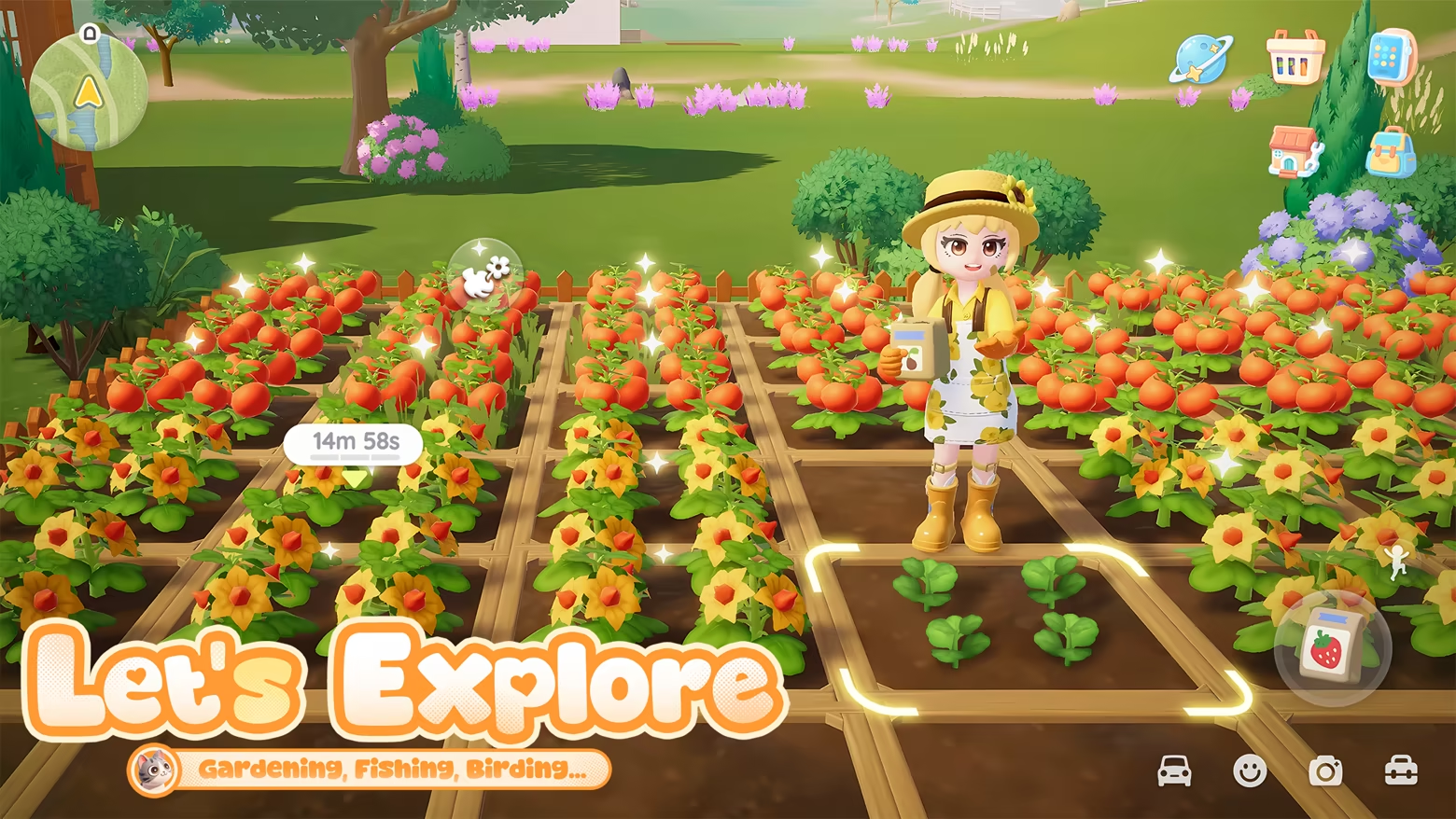
An efficient kitchen relies on a diversified supply chain. Here are the four sources that should run in parallel, along with the key to each channel:
| Source | Typical ingredients | Contact point | Key tip |
|---|---|---|---|
| Garden | Vegetables, aromatic herbs, shrub fruits | Blanc, gardening mentor | Alternate fast crops (3 days) and profitable crops (7+ days) on the same plot. |
| Fishing | River, lake, and sea fish, seaweed, shellfish | Village fishing spots + the Sea Fishing Cup event | Always keep two small fish in stock: they form the base of tutorial recipes. |
| Foraging and forest | Mushrooms, wild berries, nuts, edible flowers | Trails outside the village early in the morning | Do a round before 9am: spawns run dry once other players show up in multiplayer. |
| Animal pen | Eggs, milk, basic processed products | Mrs. Joan and the pet enclosures | Feeding each animal once a day is enough to maintain base production. |
Don't overlook Ka Ching's shop: as a backup, it offers the essential ingredients you haven't produced yet — salt, sugar, oil, spices — at a stable price. Use it as a safety net, not as a main source, otherwise your margin evaporates.
Starter recipes to master quickly
Over your first twenty hours of play, four recipes come up constantly in the Weekly Requests and in gifts given to residents. These are Heartopia's cook's "Swiss Army knives":
- Fresh salad — a leafy vegetable + an aromatic herb. No cooking required, prepared on the counter. A neutral gift well received by almost every resident.
- Seasonal soup — two seasonal vegetables + a simple broth. A scalable recipe: each season changes the ingredients, but the structure stays the same. Ideal for using up surplus.
- Grilled fish — a river fish + a pinch of salt. Profitable to resell at Ka Ching's when you overfish, and very popular with coastal residents.
- Fruit tart — a shrub fruit + flour + an egg. The basis for more "emotional" gifts, very effective on soft-natured residents.
Cook a batch every morning before heading out to explore: three starter dishes in your pocket turn a stroll into a productive affinity tour.
Intermediate and advanced recipes
Once you've cleared mentor level 5, recipes become more complex and require finer combinations. At this point, it becomes worthwhile to specialize instead of learning everything half-heartedly. Three rewarding paths:
- The seafood track — seafood platters, rare fish chowders and sushi. Ideal if you regularly take part in the Sea Fishing Cup, since competition rewards get recycled into high-end ingredients.
- The pastry track — sponge cakes, mille-feuilles, artisanal ice cream. Very profitable in summer and loved by most of the female NPCs in the Builders' Association. Requires securing a stable supply of eggs and milk through Mrs. Joan's pet shop.
- The world cuisine track — slow-cooked dishes inspired by international traditions, often featured during seasonal festivals. Requires investing in rare spices, so it's better to wait until you have a well-established garden.
A cross-cutting tip: never "spam" the same advanced recipe to sell. Prices at Ka Ching's and Albert Jr's drop when the same dish floods the market — vary your daily production to maintain your margin.
Villager preferences: which dish to give to whom
The real return on investment from cooking comes down to choosing who to give what. The established villagers in the village's ecosystem in 2026 — Bob, Mrs. Joan, Blanc, Albert Jr, Ka Ching, alongside a dozen others — each have their own profile. In the absence of an exhaustive official chart, here are the trends observed by the community that remain stable patch after patch:
- Bob — the tinkering grandfather prefers hearty, rustic dishes: stews, slow-cooked meals, fresh bread. Avoid overly elaborate sweets.
- Mrs. Joan — the pet shop mentor appreciates anything that showcases farm produce: quiches, filled omelets, fresh cheese gratins.
- Blanc — the gardening mentor has a soft spot for light vegetarian dishes that highlight the herbs he grows himself.
- Ka Ching — the general store merchant receives so many dishes on consignment that he values rare, well-executed preparations rather than any particular category.
- Albert Jr — the traveler enjoys travel food: preserves, dry dishes, energy biscuits.
A useful reminder to avoid any editorial slip-up: Heartopia does not include any marriage or romance system in 2026 — giving dishes builds friendship and unlocks additional dialogue, but does not open up a romantic storyline like in Palia or Moonlight Peaks.
Cooking, the Sea Fishing Cup and Weekly Requests
Recurring events are where your cooking pays off fastest. The Sea Fishing Cup turns sea catches into competition points, but also into ingredients to cook on the spot: take advantage of the spawn peak to prepare several seafood platters, sell them at the counter dedicated to Ka Ching, and stack up contribution medals. Weekly Requests, meanwhile, set a list of dishes to deliver within 48 hours each week: check them first thing Monday morning, note down the missing ingredients, and weigh up home production against topping up with purchases. Finally, seasonal festivals — the spring festival, the autumn market, winter's night — reward the preparation of themed dishes with batches of Contribution Medals, Wishing Stars, and sometimes limited recipes that can't be unlocked anywhere else.
Making your cooking profitable at Ka Ching's and Albert Jr's
Cooking isn't just for making gifts: it's the most reliable way to fatten your purse. Three routines to set up:
- The evening routine — every end of day, clear your inventory of perishable ingredients by turning them into the cheapest dishes, and drop the lot off at Ka Ching. Modest but steady margin.
- The traveler routine — when Albert Jr comes through the village, prepare two or three dishes in advance that match the baskets he announced the day before. His buying prices are 15 to 30% higher than Ka Ching's.
- The event routine — during the Sea Fishing Cup or festivals, overproduce a specific dish to maximize conversion into Contribution Medals, even if it means dropping the other channels for 48 hours.
Over a well-managed week, a mature kitchen can cover the entirety of your furniture spending at Bob's and free up your fishing and your garden to fund the Builders Association's big milestones.
Mistakes to avoid: never cook blind — every dish has an optimal season, and ignoring the calendar means underselling your effort. Don't overload the fridge: fresh ingredients stay good longer there, but a fridge that's too full leaves no room for your next catches. Don't give a dish below "Good" quality to a resident you want to progress quickly with — the affinity gained is too small to justify the ingredient spent. Finally, don't overlook the Collection Points earned by discovering each recipe for the first time: they unlock small decorative items that spruce up the kitchen, along with a slight passive bonus.
Conclusion: your pot, your village
In Heartopia, cooking isn't a skill to tick off between quests: it's the common thread that ties together Blanc's garden, Mrs. Joan's pet shop, Sea Fishing Cup fishing, and trades with Ka Ching and Albert Jr. Get into the habit of cooking every morning, varying your dishes to maintain your margins, tailoring your recipes to residents' preferences, and aligning your production with the week's events. By the end of the summer 2026 batch, a regular cook had climbed several tiers of the Builders' Association, stockpiled a supply of Contribution Medals, and built affinity with every resident — without ever needing a marriage system to justify time spent at the pot.
Share this article
Which culinary path appeals to you most for progressing in Heartopia?
Frequently asked questions
How do you unlock the pot at the start of the game?
The pot is obtained after your first week of play, through the village chef's introductory quest. First complete your starter home with the Builders' Association tutorial, then visit the chef to receive the free recipe. Don't forget to also buy a counter from Bob for no-cook dishes.
What's the best source of ingredients for beginners?
Start with the garden (fast-growing vegetables ready in 3 days) and fishing (basic fish), then add morning foraging and the pet shop once you've unlocked the pens. Use Ka Ching as a safety net for salt, sugar, and oil, not as your main source.
Is giving the same recipe to several villagers a problem?
No, but it's inefficient: vary your daily production instead of spamming the same advanced recipe, since prices drop when a dish floods the market. Learn individual preferences to really optimize your affinity gains.
Is it better to grow everything or specialize?
After mentor level 5, specialization pays off more: choose between the sea-focused path (for the Sea Fishing Cup), baking (highly prized in summer and among female NPCs), or world cuisine (for seasonal festivals). You can always go back to multitasking, but focusing your efforts speeds up profitability.
How many times a day should I take a lesson with the mentor?
At least once a day, even if you're not actively playing: skill points accumulate offline in your journal. Prioritize Monday and Thursday, days when they often offer a bonus recipe tied to a seasonal ingredient.
Key takeaways
- Giving a cooked dish earns two to three times more affinity points than a raw ingredient.
- Unlock the pot and counter as early as your first week, then set up a room of at least 3×3 tiles for quality-of-life bonuses.
- Diversify your supply chain: garden, fishing, foraging, and the pet shop should all run in parallel to avoid shortages.
- The four starter recipes (Fresh Salad, Seasonal Soup, Grilled Fish, Fruit Pie) are enough to make your first 20 hours profitable.
- Specialize starting at mentor level 5: the sea-focused path, baking, or world cuisine each offer different returns depending on your playstyle.
Comments
No comments yet. Be the first to react!
Leave a comment
Similar guides



Latest articles







Your opinion counts
Rate Heartopia
Click a star to rate