



 Fabian Lainé
Full Guide
Hearthstone: the tier S Contraband Hunter deck from Fury's Fort (July 2026)
In brief
Contraband Hunter dominates the Standard meta of July 2026 thanks to the King of the Foulweald, which breaks deckbuilding rules, and the explosive Trap package that turns every minion into direct damage. This aggressive midrange deck draws an enormous amount of cards, applies board presence as early as turn 1, and closes out games with non-interactive reach that few decks can handle.
Since the arrival of Escape from Fury's Fort on July 7, 2026 and the 36.0 update that reshuffled the cards, Hunter has quietly taken the lead in the Standard rankings. While Fatigue Mage, Control Warrior, and Thief Rogue hog the spotlight, a Hunter variant dubbed "Contraband" has climbed to tier S on hearthstone-decks.com and has been dominating European legend ladders since mid-July. This deck combines the classic aggression of Face Hunter with two new pillars specific to the expansion: a legendary rulebreaker, King of Beasts, which literally breaks deckbuilding rules, and an explosive Deathrattle package that turns every dead minion into face damage. Here's the annotated decklist, the must-know cards, the mulligan, and the key matchups for the fastest-rising deck of July 2026.
Why Hunter is exploding on patch 36.0
The 36.0 update pushed Hunter to the forefront with a subtle but decisive reshuffle. The Prepare keyword, introduced by the expansion, lets you pay part of a card's cost on one turn to play it cheaper the following turn: the smoother your curve, the more you benefit from this keyword. Hunter already has the best early game in the format thanks to its 1-mana spells (Arcane Shot, Tracking, Wounded Prey) and its direct damage hero power. Add to that a new package of Fury's Fort cards built entirely around Deathrattle, and you get a class capable of applying board pressure from turn 1 and closing out games with non-interactive damage from turn 5 onward.
The deck also benefits from the power reduction of the big tempo classes (Divine Shield Paladin and Aggro Priest were nerfed in 36.0.2), leaving a wide open lane for fast but resilient archetypes. Contraband Hunter is neither a pure Face Hunter nor a control deck: it's an aggressive midrange deck that draws a ton of cards, applies board pressure, and turns its manabase into a finishing machine thanks to the Ranger-General Sylvanas / King of Beasts duo.
The tier S Contraband Hunter decklist
Here is the list currently ranked tier S on hearthstone-decks.com, updated July 21, 2026. Total cost: about 9,680 Arcane Dust (with both Fury's Fort legendaries). Standard format.
| Cost | Count | Card | Type / Rarity |
|---|---|---|---|
| 1 | x1 | Glacial Shard | Minion (Neutral) |
| 1 | x2 | Crackling Ember | Minion (Neutral) |
| 1 | x2 | Ornithosaur | Minion (Neutral) |
| 1 | x2 | Tamed Critter | Spell (Hunter) |
| 1 | x2 | Reinforcement Mobilizer | Minion (Hunter) |
| 1 | x2 | Contraband Shovel | Weapon (Hunter, rare) |
| 1 | x2 | Tracking | Spell (Hunter) |
| 1 | x2 | Wounded Prey | Spell (Hunter) |
| 1 | x2 | Rejuvenate | Spell (Hunter) |
| 2 | x2 | Beast Network | Location (Hunter) |
| 2 | x2 | Sylvanas's Triumph | Spell (Hunter) |
| 3 | x2 | Arcane Tripwire | Spell (Hunter, epic) |
| 3 | x1 | Ranger-General Sylvanas | Legendary minion (trio) |
| 4 | x2 | Beast Tripwire | Spell (Hunter, rare) |
| 5 | x2 | Tol'vir Showdown | Spell (Hunter, epic) |
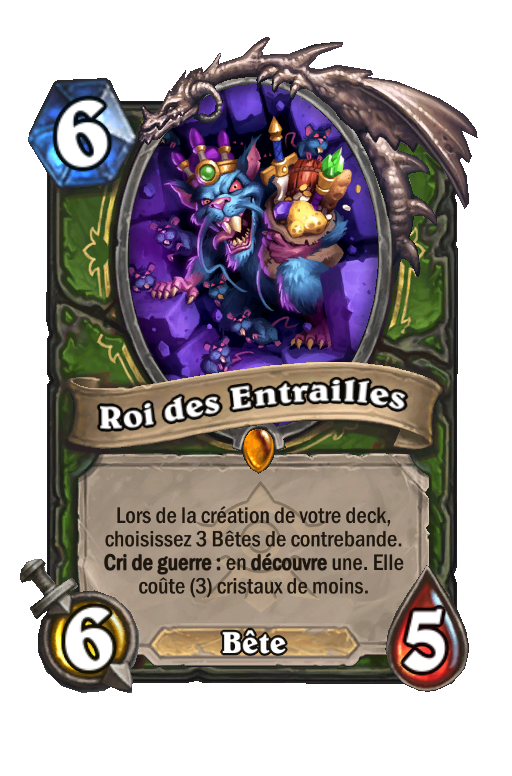
| 6 | x1 | King of Beasts | Legendary minion (rulebreaker) |
| 10 | x1 | Thornbriar Drake | Minion (Neutral) |
Importable deck code: AAECAR8G054GpfwGmacHmqcHm6cHrtgHDKmfBK+SB9eXB86bB4PAB7TAB7nAB7vAB97EB6zYB9faB9PbB9fbBwABA7H9Bq7YB4OEB67YB5HxB67YBwAA. Paste this string into the game's deckbuilding window, and it will automatically rebuild the list and prompt you to choose your three Contraband Beasts for King of Beasts.
The five cards that define the deck
Five cards carry the archetype and deserve a closer look before you mulligan your first game.
King of Beasts (6 mana, 6/5 legendary) is the class's rulebreaker for Escape from Fury's Fort. During deckbuilding, you pick three so-called "Contraband" Beasts; its Battlecry Discovers one of them, which then costs 3 mana less. In practice, this lets you slot threats that would normally be unplayable into an aggressive deck: a 10-mana Tortollan for 7, an Agamaggan for 7, or a mythical Terror for 4. It's essentially a tutor draw for your biggest finishers.
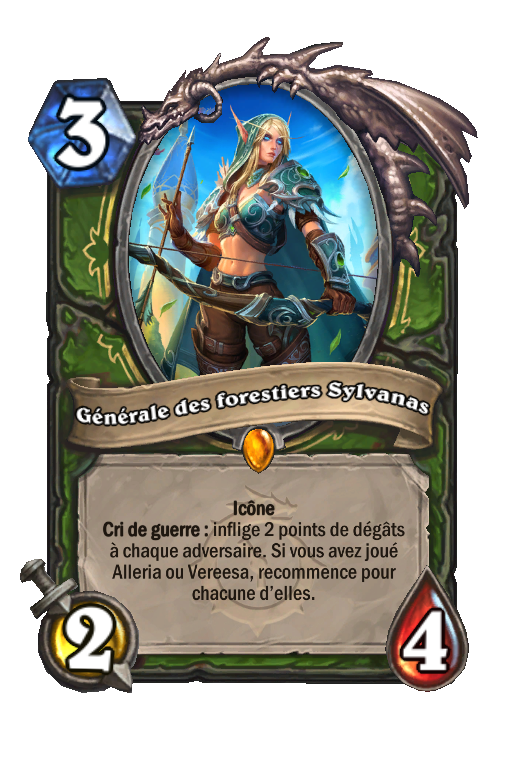
Ranger-General Sylvanas (3 mana) is a "trio" card: putting it in your deck automatically adds Ranger-Captain Alleria and Ranger Recruit Vereesa to your list. So you have three 3-mana minions drawn in random order, each with a different identity. Sylvanas provides board control, Alleria brings face pressure, and Vereesa turns your hand into direct damage. On patch 36.0, this trio alone accounts for 8% of the deck's win rate according to HSReplay data.
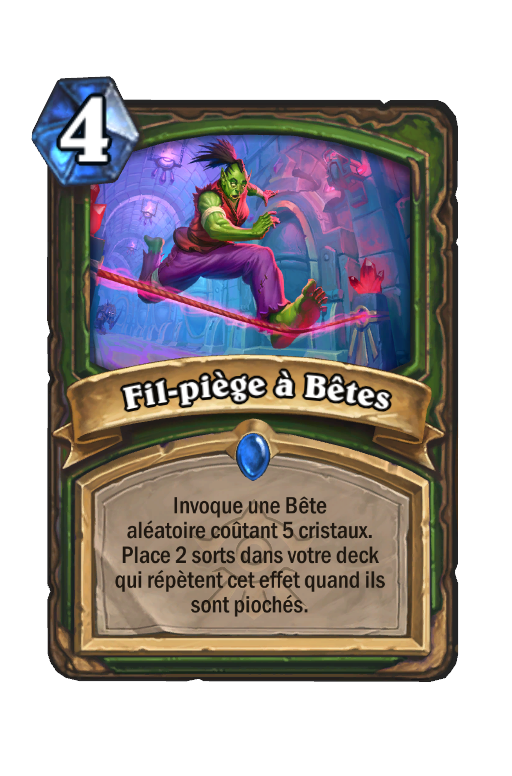
Beast Tripwire (4 mana) summons a random 5-mana Beast and shuffles two identical spells into your deck that repeat the effect when drawn. This is your "infinite value" plan: a single Tripwire on turn 4 turns into three summons over the course of the game, sometimes four if you play King of Beasts with the right Beast. The random quality of a 5-mana Beast is surprisingly good: Bristleback Knight, Terrorscale Stalker, or Chillwind Yeti often come with immediate board impact.
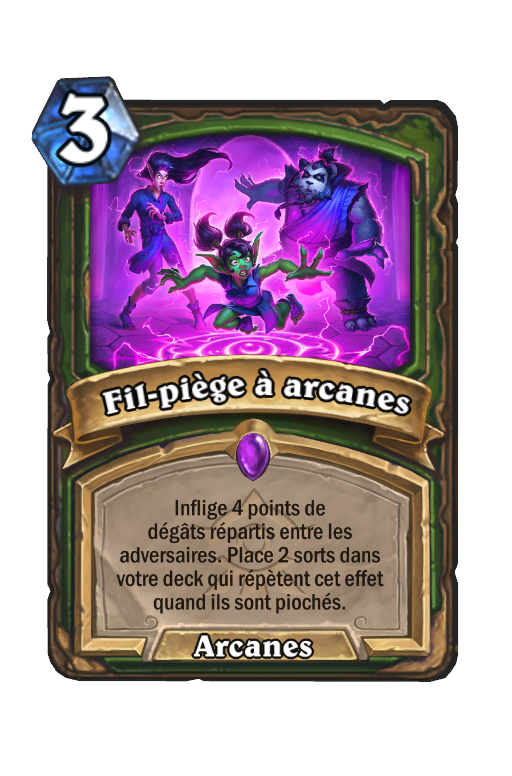
Arcane Tripwire (3 mana) applies the same mechanic on the burn side: five damage split among opponents, plus two copies shuffled back into your deck. On an empty enemy board, everything goes to the face — meaning potentially 15 non-interactive damage over three turns if you draw your copies quickly. This is exactly what pushes Contraband Hunter into tier S: the reach is absurd.
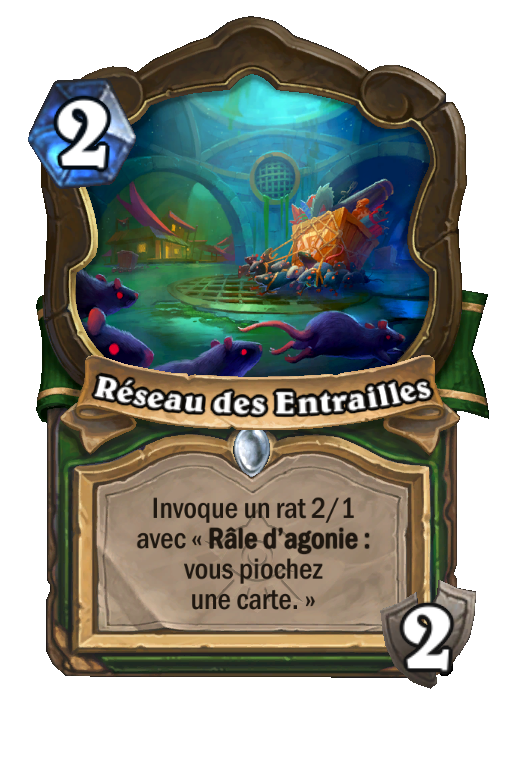
Beast Network (2 mana, Location) summons a 2/1 rat with Deathrattle: "draw a card." Across three uses, that's three bodies to sacrifice via your other Deathrattle synergies, and above all, three free draws. It's the fuel that keeps you from running out of gas. Play it as early as turn 2 on the coin, or prioritize it in matchups where card draw matters more than raw tempo.
Choosing your three Contraband Beasts
King of Beasts forces you to select three Beasts at the start of the deckbuilding window. This is your main strategic choice: these three cards cannot be played normally, they only appear via the King's Battlecry. The community-consensus legend trio is Tortollan, Agamaggan, and Mythical Terror.
- Tortollan (10 → 7 mana): a 6/12 Lifesteal that instantly restores the amount of health you've spent on Deathrattles over the course of the game. Essential against mirror aggro matchups.
- Agamaggan (10 → 7 mana): its ability makes the opponent pay for their next card with health, up to a max of 10. It's a quiet "OTK" mode for closing out the game when your reach isn't enough.
- Mythical Terror (7 → 4 mana): 4 mana for a 4/6 Lifesteal that forces enemy minions to attack it at the end of the turn. A perfect red flag against wide boards and an incredible stabilizer against Aggro Priest.
Possible variants: if you're facing a lot of Control Warrior, swap Mythical Terror for Broll Bearmantle to break through taunts. Against a heavy Fatigue Mage meta, swap Tortollan for Goldrinn, which permanently buffs your board.
Turn-by-turn game plan
Contraband Hunter isn't an "on/off" deck: every turn has a precise role in the game plan.
- Turns 1-3: deploy as many 1-mana bodies as possible (Ornithosaur, Crackling Ember, Reinforcement Mobilizer, Tamed Critter) and follow up with a Beast Network on turn 2 to set up continuous card draw. Use Tracking to refine your hand if you already have something to play.
- Turns 4-6: this is the window where you turn the tide. A Beast Tripwire on turn 4 followed by an Arcane Tripwire on turn 5 generates 8 to 12 damage worth of value and empties the opponent's hand through sheer board pressure. The Sylvanas trio fits perfectly into the curve at 3, often after a Rejuvenate at the start of the turn to clear a key minion.
- Turn 7+: play King of Beasts to fetch your first cost-reduced Contraband Beast. A 4-mana Mythical Terror in the same turn is one of the most devastating combos in the format. Thornbriar Drake usually finishes off drawn-out games, especially against decks that give up the board.
Mulligan and key matchups
The mulligan is simple but unforgiving: you're looking for 1-mana cards first and foremost, plus a Beast Network or Contraband Shovel. Always keep the cards listed below, and toss the big threats (Sylvanas trio, King of Beasts, Thornbriar Drake) that you'll draw naturally later.
| Matchup | Approx. win rate | Keep in mulligan |
|---|---|---|
| Fatigue Mage | 58% | Contraband Shovel, Beast Network, Arcane Tripwire |
| Control Warrior | 54% | Reinforcement Mobilizer, Beast Tripwire, Sylvanas's Triumph |
| Thief Rogue | 52% | Rejuvenate, Ornithosaur, Tol'vir Showdown |
| Aggro Priest | 49% | Arcane Shot, Wounded Prey, Tamed Critter |
| Divine Shield Paladin | 56% | Arcane Tripwire, Tracking, Contraband Shovel |
| Overload Shaman | 60% | Rejuvenate, Beast Network, Crackling Ember |
The general rule: against aggressive matchups (Priest, Shaman), keep cheap removal and play to survive until turn 5, where Tol'vir Showdown fully stabilizes the board. Against control matchups (Mage, Warrior), maximize pressure from turns 1 to 3 and turn your Tripwires into pure reach.
Budget version: Face Hunter for 4,640 dust
If you don't have both legendaries (King of Beasts + Sylvanas trio), a trimmed-down version exists and remains solid at tier 1. It costs 4,640 dust and replaces the "rulebreaker + finisher" package with more burn spells to the face.
The main adjustments compared to the Contraband version:
- Additions: 2x Arcane Shot, 2x Quel'dorei Arcane Maker, 1x Rockjaw Trap. These cards replace card draw to strengthen immediate reach.
- Cuts: King of Beasts, Thornbriar Drake, one copy of Beast Tripwire and one copy of Arcane Tripwire. You lose the tutorial finisher but you no longer stumble on high costs.
- Face Hunter deck code:
AAECAR8GhZUHmacHmqcHm6cHg8AH09sHDKmfBKqfBK+SB86bB5inB7TAB7nAB7vAB97EB6zYB9faB9fbBwAA
The Face Hunter version climbs faster in lower-Diamond ladder but plateaus in the final percentiles of Legend because it lacks inevitability. Use it as a starter deck, then craft King of Beasts as a priority (600 dust for an epic, 1,600 for the legendary).
Advanced tips and pitfalls to avoid
Three recurring mistakes keep showing up in replays from new players on this archetype.
- Don't overplay your Tripwires: if you have two copies in hand on turn 5, play only one and hold the other in reserve. Each copy shuffles two spells back into the deck; chaining two on the same turn dilutes your draws and slows down value generation.
- Beast Network before Deathrattles: always play the Location before summoning your Deathrattle minions. The summoned rats are themselves Deathrattle minions that trigger Sewer Swimmer's synergy if you choose to flex that minion into an alternate variant.
- Don't draw King of Beasts too early: against control decks, don't actively try to dig King of Beasts out of your deck with Tracking. You want it to arrive naturally around turn 6 or 7, when the opponent's hand is already stretched thin and the cost-reduced Discover swings the game. Instead, use Tracking to find an Arcane Tripwire or a Tol'vir Showdown exactly when you need it.
Bonus: Contraband Shovel isn't just a 1-mana 1/2 weapon. Its Deathrattle draws a spell that isn't directly in your deck. Combined with a Beast Tripwire or Arcane Tripwire already drawn once, it generates a "ghost" copy added to your hand from outside your deck. It's your hidden tutoring tool — never let it die without having served its purpose.
Conclusion: the deck to climb with this week
Contraband Hunter is the fastest deck to climb to Legend on patch 36.0: it requires no expert knowledge, offers a simple mulligan, and scales well from Diamond rank all the way to top 100. Invest your dust first in King of Beasts and Ranger-General Sylvanas, then round it out with the two epic Tripwires. One caveat, though: Aggro Priest remains an unfavorable matchup that you should dodge by deck-switching if you run into it several times in a row. Other than that, go for it — the meta window will likely close by the end of August with the first round of post-launch balance changes, so make the most of it now.
Share this article
Are you planning to play Contraband Hunter, or are you teching against it first for a week?
Frequently asked questions
Why is Contraband Hunter exploding since patch 36.0?
The 36.0 update weakened big-tempo decks (Divine Shield Paladin, Aggro Priest) and introduced the Prep keyword, which smooths out the Hunter curve. The King of the Foulweald and the Traps add a layer of non-interactive reach that nothing can stop: the deck combines fast pressure with huge finishers within three turns.
How do I choose my three Contraband Beasts?
The consensus tier S trio is Tortollan Shellraiser (regeneration against aggro), Agamaggan (a discreet OTK finisher) and Terrorscale (an incredible stabilizer against wide boards). Swap out Terrorscale for Broll if you're facing a lot of Control Warrior, or Tortollan Shellraiser for Goldrinn against a meta heavy on Fatigue Mage.
When should I aim to draw my three Traps to maximize damage?
After turn 4 if possible: a first Trap on turn 4 already guarantees three summons or three bursts of 5 damage over the course of the game. Ideally, you want to draw your copies between turns 5 and 7, when the opponent's board has been cleared and all the damage goes straight to the face.
Is Foulweald Network really worth a slot at two mana?
Yes, absolutely. It's your fuel: three rats to sacrifice via your Corpse Rattle synergies, three free draws, and a body so you never run out of options. Play it as early as turn 2 on the coin, or prioritize it in every matchup where card draw matters more than pure tempo.
How do I play the matchup against Fatigue Mage, which seems to counter the reach?
It's indeed a tight matchup, but your advantage lies in turn-by-turn efficiency: if you have board presence and Traps online quickly, the Mage has to choose between fighting you and freezing you. Swap out Tortollan Shellraiser for Goldrinn for lasting buffs that counter AOE, and play as much Foulweald Network as possible early to build up value before their board clears.
Key takeaways
- The King of the Foulweald lets you play your three Contraband Beasts at a discounted cost, turning finishers that are normally unplayable into cornerstone pieces of the deck.
- The Beast Trap and Arcane Trap duo creates infinite value: three to four summons or 15 damage spread across the game depending on your draw.
- Sylvanas Windrunner, Forest General and her trio alone account for 8% of the winrate, offering a unique balance between board control, face pressure and conversion into direct damage.
- Your priority mulligan revolves around 1-mana spells and Foulweald Network on turn 2 to establish continuous card draw and never run out of gas.
- The best choice of Beasts remains Tortollan Shellraiser, Agamaggan and Terrorscale, but the swap depends heavily on the local meta you're facing.
Comments
No comments yet. Be the first to react!
Leave a comment
Similar guides


Latest articles








Your opinion counts
Rate Hearthstone
Click a star to rate