 Fabian Lainé

Beginner's Guide
WoW TBC Classic Anniversary: getting off to a good start in 2026
In brief
TBC Anniversary just switched over in February 2026 to the Anniversary Realms, offering a living version of the expansion with a young economy and a community starting fresh. It's the ideal window to start in 2026: you have time to level a character, progress through Outland at your own pace, and discover the raids without feeling left behind. This guide lays out all the basics for choosing your race, your class, and your path.
Since February 5, 2026, the Anniversary Realms opened in November 2024 for World of Warcraft's 20th anniversary have gone through the Dark Portal. In other words: the real Burning Crusade Classic is back, at an accelerated pace, and it's the only version of TBC officially active on Blizzard's servers this year. If you were hesitating to jump in, or if you're looking for a clean entry point between Classic Era, the seasonal progression of Mists of Pandaria and this Anniversary Edition, this guide is for you.
Why TBC Anniversary is the version to join in 2026
A quick reminder of the context so you don't get lost. Blizzard currently has several versions of WoW Classic coexisting: the permanent Classic Era servers, frozen on Vanilla; the seasonal progression, which has already moved on to Mists of Pandaria; and finally the Anniversary Realms, opened for the game's 20th anniversary, which, as planned, switched to TBC this February. It's this last path that puts you in a living TBC Classic in 2026, with a community starting fresh from scratch.
The Anniversary Realms follow a quarterly pace: content opens, gets digested, then we move on to the next phase. No fresh start to wait two years for: you're right in the perfect window.
In practice, this means the servers are populated, the economy is young, guilds are reforming, and there's still plenty of time to level up a character, tackle your first heroic dungeons and discover the raids tier after tier, without feeling overwhelmed.
Creating your character: original races and two new factions
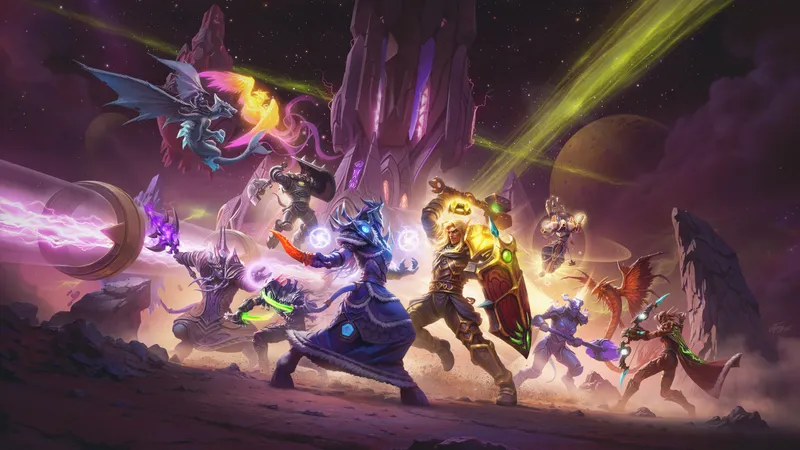
Big new addition compared to Classic Era: TBC adds two brand-new races, one per faction. The Horde gets the Blood Elves, based in Silvermoon in the northern Ghostlands, and the Alliance welcomes the Draenei, stranded on the Azuremyst Isle. Each comes with its own dedicated starting zone, quests and distinct atmosphere.
Blood Elf (Horde)
This is THE race that made the Horde's popularity explode back in the day. On the Horde side, it unlocks a class that was previously Alliance-exclusive: the Paladin. Blood Elves also have access to Mage, Rogue, Priest, Hunter, Shaman and Warlock.
Draenei (Alliance)
Symmetrically, on the Alliance side, the Draenei unlock the Shaman, which was previously reserved for the Horde. They can also play Warrior, Paladin, Priest, Mage and Hunter. A nice little bonus: their racial aura provides a passive boost to profession success rates and spell hit chance, which is very much appreciated in groups.
Direct consequence: for the first time, each faction has its two pillars of raiding, Paladin and Shaman. That's a real shift in balance compared to Vanilla.
Which class should you choose in 2026?
TBC remains an expansion where not all specs are equal in PvE. Here are the big classics to consider if you're jumping in with no preconceptions, keeping in mind that Blizzard has applied a few modern quality-of-life adjustments.
- Elemental or Enhancement Shaman (Elem / Enhance): the Windfury Totem on the Alliance side, or Wrath of Air Totem — well, actually Water Shield / Wisdom on the Horde side, makes them an essential raid member. Well rated for leveling and end-game.
- Destruction Warlock: very solid burst DPS, easy threat management thanks to the Fear mechanic for solo survival. The dedicated pet also turns leveling into a walk in the park.
- Retribution Paladin (Ret): the spec that exploded back in the day. Melee DPS thanks to Judgment of the Crusader, with the added bonus of being able to tank in HL and heal in a pinch. An excellent all-round choice.
- Combat Rogue: very competitive melee DPS, especially with slow 2H weapons specific to TBC.
- Shadow Priest or Marksmanship Hunter: two comfortable choices, with room in raid thanks to unique group buffs.
A little big-brother advice: don't pick your class based solely on PvE tier lists. TBC is also about PvP, arenas, professions, the feel of the game. The best character remains the one you're actually going to enjoy playing.
From 60 to 70: heading to Outland
The level cap goes from 60 to 70. The big milestone happens around level 58 when you step through the Dark Portal, heading to Outland, what remains of the planet Draenor after the explosion caused by Ner'zhul. The Anniversary Realms keep TBC Classic's boosted XP rate, which makes leveling very comfortable, even for a late return.
Seven zones to discover in their natural order:
- Hellfire Peninsula (58-63): the entry point, with the Hellfire Ramparts dungeon.
- Zangarmarsh (60-64): bio-luminescent biome, big quest hub and two dungeons.
- Terokkar Forest (62-65): Cenarion Refuge, with Shattrath's Sha'tar in the background.
- Nagrand (64-67): THE flagship zone, floating-islands aesthetic, Kurenai and Mag'har reputation quests.
- Blade's Edge Mountains (65-68): Ogri'la to unlock later for dailies.
- Netherstorm (67-70): the leveling end-game, Consortium and Sha'tari Skyguard — actually, Ethereum, sorry — Consortium and Netherwing reputation quests.
- Shadowmoon Valley (67-70): the final rush, with the Black Temple's vestibule in the background.
Another major novelty: flying mounts. Unlocked at 70 after purchasing Expert Riding, they completely transform exploration. Then aim for Netherwing to get the matching drake, one of the most sought-after cosmetic goals of TBC.
Arenas, heroic dungeons and other novelties
TBC introduces three pillars that remain iconic:
- Arenas in 2v2, 3v3 and 5v5, with a rating system and seasonal rewards. Season 1 begins as soon as raids open.
- Heroic dungeons, a harder and better-loot version of level 70 dungeons, unlocked via reputation with local factions.
- 60% mounts from level 30 (versus 40 in Vanilla), a quality-of-life improvement already in place.
Finally, professions gain Jewelcrafting, very profitable early in the expansion. The other professions remain useful, with exclusive recipes obtained through reputation, particularly in Shattrath, the neutral capital of Outland.
Shattrath deserves its own chapter. It's the expansion's central city, each faction has its own quarter there, its hearthstone-recall portals and its reputation vendors. Set your hearthstone there on your first visit: you'll be coming back a hundred times.
Exploration achievements and reputation with the Netherwing, the Sha'tar, the Aldor or the Scryers (exclusive choice, be careful) also shape life at level 70. Remember to work on them as you level up: each quest turned in to the right questgiver can bump your reputation by several thousand points at once.
The 2026 roadmap at a glance
Blizzard unveiled the full roadmap during the State of Azeroth on January 29, 2026. Here's the consolidated schedule:
- Phase 1 - February 5, 2026: Outland opens, leveling 60-70, dungeons and heroics.
- Phase 1 raids - February 19, 2026: Karazhan, Gruul's Lair and Magtheridon's Lair. Start of Arena Season 1.
- Phase 2 - May 14, 2026: Serpentshrine Cavern, the Eye, Ogri'la and Sha'tari Skyguard factions. Arena Season 2.
- Phase 3 - summer 2026 (estimated July 23): Black Temple and the Battle for Mount Hyjal, Netherwing dailies. Arena Season 3.
- Phase 3.5 - fall 2026 (estimated October 1): Zul'Aman, the 10-man raid with its time-limited bear mount run.
- Phase 4 - late 2026 (estimated December 10): Sunwell Plateau and Isle of Quel'Danas. Arena Season 4.
Only Phases 1 and 2 have officially confirmed dates from Blizzard. The following ones are estimates based on the roughly quarterly pace announced. Basically: if you start in July 2026, you'll have the whole Black Temple window ahead of you and two-thirds of the content still to come.
Big brother tips to get started right
- Pick a populated realm: check the population before rerolling, the social life in TBC (guilds, heroic PUGs, arena) makes all the difference.
- Aim for a guild early: Karazhan is a 10-man, the ideal training raid. Don't miss the window.
- Take two complementary professions: Engineering + Mining remains a great classic, Jewelcrafting + Mining too. Alchemy is profitable as always.
- Build your reputations while leveling: the Consortium, Sha'tar, and Kurenai reps need to be planned ahead. You'll save weeks at 70.
- Keep track of your keys: several heroic dungeons and Karazhan require lengthy key quest chains. Do them as soon as possible.
Going further
Once you've found your footing, several projects will be waiting for you:
- The Karazhan quest chain and Medivh's ring: the first big level 70 quest chain to complete right from Phase 1 to open the castle's doors.
- The Exalted Outland reputations: the full Aldor / Scryers path, with its exclusive shoulder and head rewards.
- Preparing for the Netherwing drake: one of the finest mounts in the game, to unlock before Phase 3 to make the most of it.
You've got all of 2026 ahead of you to experience TBC Classic under the best conditions. Take your time, pick a race you truly like, and don't forget: in Outland, you never run alone for very long.
Share this article
Are you going to jump back into TBC Anniversary this year?
Frequently asked questions
What's the difference between Classic Era, Season of Discovery progression, and the Anniversary Realms?
Classic Era is frozen on Vanilla 1.12 forever. Progression realms move gradually through all the expansions, already on Mists of Pandaria. The Anniversary Realms, on the other hand, launched in Vanilla in November 2024 and switched over to TBC in February 2026, following a quarterly pace. It's the only active official TBC version in 2026.
What's the best class choice to start with in TBC 2026?
Honestly, Elemental Shaman (brings Windfury or Wisdom to the raid), Retribution Paladin (DPS + tank + emergency heal), or Destruction Warlock (solo burst and ultra-comfortable leveling with the pet) dominate. But don't just pick based on tier lists: go with what you'll actually enjoy playing. TBC is also about arenas and PvP, and how it feels to play matters just as much as the numbers.
When can I actually start raiding?
Karazhan opens on February 19, 2026 (two weeks after content launch), it's a 10-player raid and it's the perfect training raid. Subsequent phases (Serpentshrine Cavern in May, Black Temple in July) arrive progressively, so you have plenty of time to level up, farm reputation, and get ready.
Do you really need to join a guild right away?
Yes, and really early. Karazhan is 10-player, so a good guild can form its own groups without waiting on massive resources. TBC's social life (chill runs, arenas, group farming) depends 90% on this. Without a guild, you miss out on a big part of the game.
Do Blood Elves and Draenei really change something in TBC?
Enormously. For the first time, both factions have access to Paladins AND Shamans, which shifts the entire balance of raids and arenas. It's not just cosmetic, it's mechanically fundamental for group composition and PvP strategy.
Key takeaways
- Blood Elves (Horde) and Draenei (Alliance) finally open up Paladins and Shamans to both factions, completely changing the balance.
- Leveling from 60-70 follows an accelerated pace on the Anniversary Realms, with seven progressive zones and flying mounts at 70 to transform exploration.
- Heroic dungeons, 2v2/3v3/5v5 arenas, and Skettis dailies kick off a real end-game life right from Phase 1.
- Shattrath is your central hub: reputation vendors, exclusive factions (Aldor vs Scryers), recall portals — absolutely essential to lock in.
- The roadmap runs through the end of 2026 with Black Temple and the Battle for Mount Hyjal in summer: enough content for three to four months of smooth progression.
Comments
No comments yet. Be the first to react!
Leave a comment
Latest articles




Your opinion counts
Rate World of Warcraft Burning Crusade Classic Anniversary Edition
Click a star to rate