



 Alexandre Jollier

Equipment
Subnautica 2 Hydraulic Turbine: How to Craft It
In brief
The hydraulic turbine is an efficient renewable energy source in Subnautica 2 that harnesses ocean currents to produce 12 energy units per second. This guide shows you how to locate the 4 blueprint fragments scattered around the lifepod and craft this sustainable turbine using titanium, copper, and silver.
In Subnautica 2, the hydraulic turbine is an efficient renewable energy source. This article will explain how to craft said turbine.
The hydraulic turbine for dummies
It uses ocean currents to produce energy. Unlike other energy sources, it doesn't consume depletable resources, which allows you to turn it into a sustainable supply source.
Hydraulic turbine blueprint locations
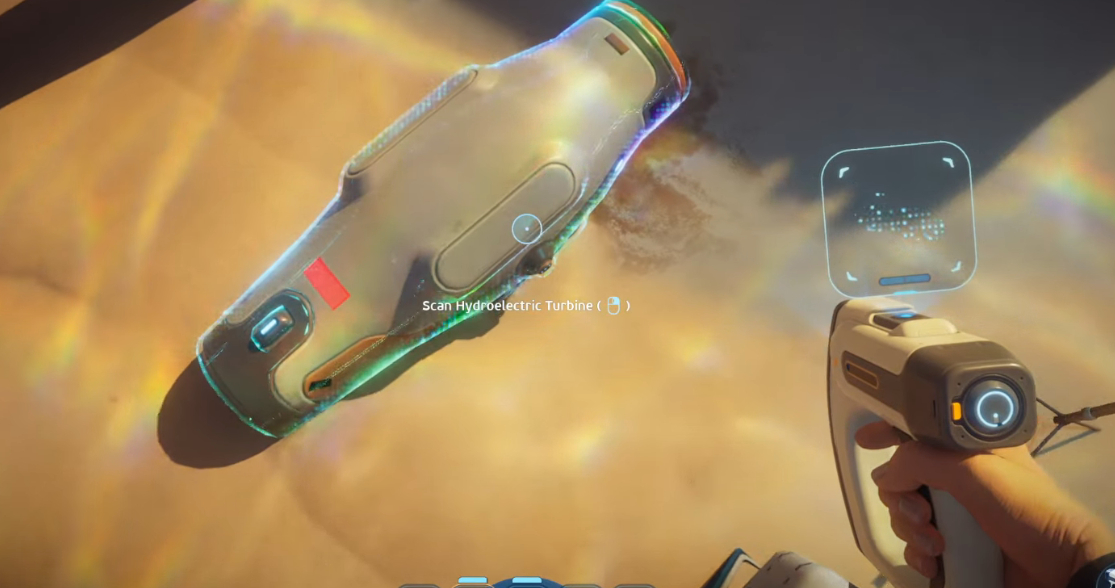
To build the hydraulic turbine, you must first locate and scan several blueprints:
Hydraulic turbine fragment 1
- Location: About 280 meters east-northeast of the escape pod.
- Warning: Beware of the powerful currents in this area. The fragment was spotted near a crate, close to a piece of tadpole equipment.
Hydraulic turbine fragment 2
- Location: Roughly 340 meters north-northeast of the escape pod.
- Tips: Follow the current to reach the old base. The fragment is located on a small ridge surrounded by various equipment.
Hydraulic turbine fragment 3
- Location: Roughly 360 meters north-northeast of the escape pod.
- Tips: Look at the top of the ridges where the large jellyfish stand. Another current also passes through there.
Hydraulic turbine fragment 4
- Location: Roughly 410 meters north-northeast of the escape pod.
- Tips: The fragment is located on a metal platform near the giant jellyfish and Camp One.
Crafting the hydraulic turbine
To build a hydraulic turbine, you will need:
- 3x Titanium
- 3x Copper
- 3x Silver
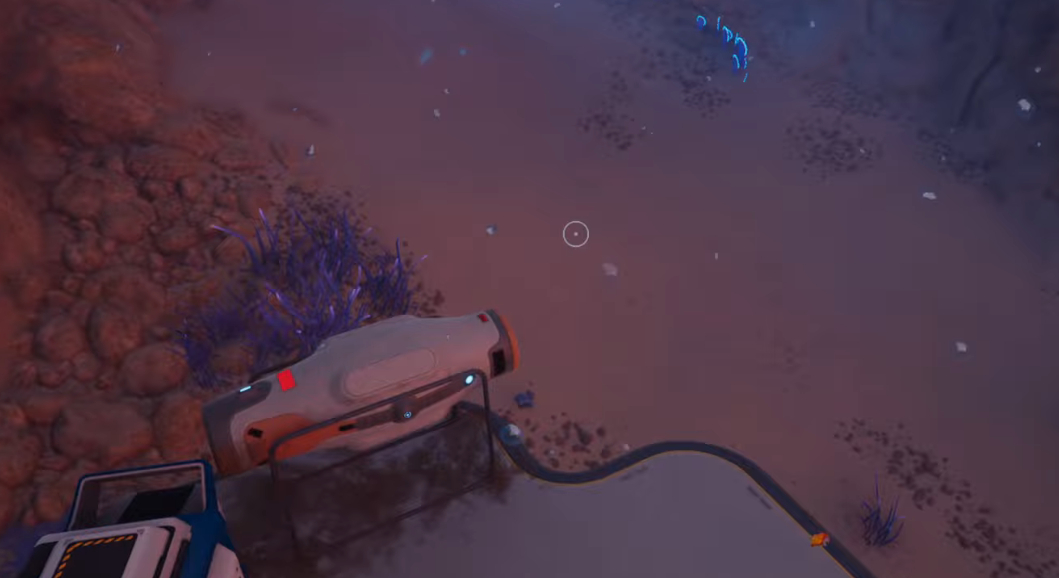
To assemble the turbine, use the Habitat Builder. Place it in an area where there is an ocean current.
How the hydraulic turbine works
The turbine produces 12 units of energy per second, as long as it is submerged in a current. If it is far from your base, power transmitters are there to help you supply your base with energy. Each transmitter requires 1x Titanium and 1x Copper.
Tip
If you come across multiple currents, consider placing several turbines to increase your energy production! Use transmitters to connect your base to all your turbines and thus ensure your energy supply.
Share this article
Will you use the hydraulic turbine as your main energy source?
Frequently asked questions
Where can you find the hydraulic turbine blueprint fragments?
The 4 fragments are located between 280 and 410 meters from the lifepod, mainly to the north-northeast. The first is found near a crate at 280 meters, the second on a ridge at 340 meters, the third at the top of the ridges with the large jellyfish at 360 meters, and the fourth on a metal platform near Camp One at 410 meters.
What materials are needed to craft a hydraulic turbine?
You'll need 3x Titanium, 3x Copper, and 3x Silver. Crafting is done via the Habitat Builder once all the blueprints have been scanned.
How can I increase my energy production with turbines?
Install multiple turbines in areas where several ocean currents intersect, then connect them all to your base with power transmitters (1x Titanium and 1x Copper per transmitter) to ensure optimal energy supply.
How much energy does a hydraulic turbine produce?
A hydraulic turbine produces 12 energy units per second as long as it remains submerged in an active ocean current.
Key takeaways
- The hydraulic turbine produces 12 energy units per second without consuming depletable resources
- You need to scan 4 blueprint fragments located between 280 and 410 meters from the lifepod
- Crafting it requires 3x Titanium, 3x Copper, and 3x Silver via the Habitat Builder
- It must be placed in an area with an active ocean current to function
- Install multiple turbines and use power transmitters to maximize your energy production
Comments
No comments yet. Be the first to react!
Leave a comment
Similar guides

Latest articles







Your opinion counts
Rate Subnautica 2
Click a star to rate