



 Fabian Lainé

Economy
Rust: the recycling guide after Power Trip — red recycler at 75%, nerfed green at 50%
In brief
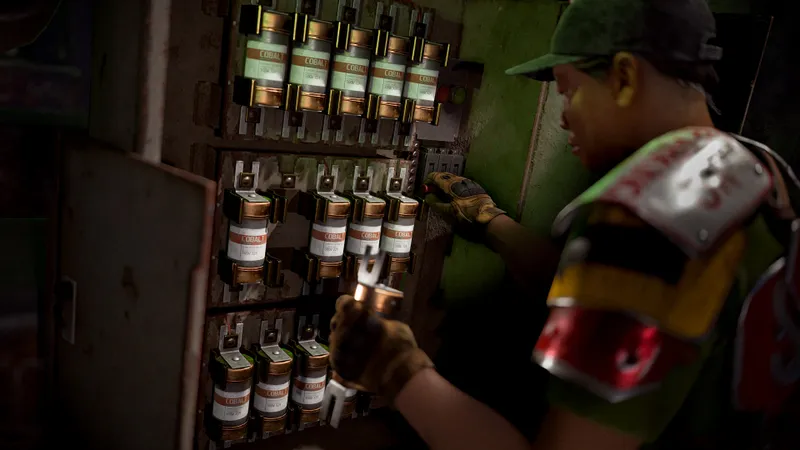
Since Power Trip in August 2026, recycling in Rust depends on the state of the power grid. The red recycler at Power Plant reaches 75% efficiency (the best on the map), while green recyclers outside safe zones have dropped to 50% by default and only climb back to 60% if the grid is powered. A stack of Tech Trash is worth 500 extra Scrap at the red compared to an unpowered green.
Since the force wipe of August 6, 2026, and the Power Trip update, how much scrap you get from recycling no longer depends only on which monument you're standing at: it depends on the state of the island's power grid. Facepunch has dropped green recyclers, the ones located outside safe zones, to 50% base efficiency. They only climb back to their historic 60% if the Power Plant receives enough Heavy Fuses to power the grid.
In exchange, a single red recycler has been added to the Power Plant. It runs at 75% efficiency, the best on the entire map, but only when the Power Plant is running at maximum power. In concrete terms: a full stack of Tech Trash yields 800 Scrap in a safe-zone yellow recycler, and 1,500 in the red recycler. Almost double, for exactly the same loot.
Here are the exact yields, machine by machine and component by component, along with the two other changes from August 6 that are affecting your Scrap economy.
The four Rust recyclers in August 2026
The game now distinguishes between four machines. Three already existed, but the green recycler splits in two: the game treats it as two different entities depending on whether the grid is dead or alive.
| Recycler | Where | Efficiency | Cycle | Condition |
|---|---|---|---|---|
| Yellow | Safe zones: Outpost (×3), Bandit Camp (×2), floating cities (×3 each) | ≈ 40% | ≈ 8 s | None — unchanged by Power Trip |
| Green | 21 monuments outside safe zones | 50% | 5 s | Grid off (default state at the start of a wipe) |
| Powered green | Same locations | 60% | 5 s, then 4.5 s at maximum power | Power Plant sufficiently powered |
| Red | Power Plant only (×1 on the entire map) | 75% | 4 s | Power Plant at maximum power |
Facepunch doesn't publicly specify the Heavy Fuse threshold that unlocks the "60%" tier, nor what counts as maximum power: the studio only writes "with enough power" and "at maximum power." Community data published since the wipe places the top tier at around eighteen fuses installed simultaneously. A Heavy Fuse lasts about 2 hours 40 minutes before burning out and cannot be recovered: keeping the red recycler online is teamwork, not luck.
How much Scrap per component, recycler by recycler
The table below gives the guaranteed Scrap yield for one unit of each component. Rust resolves fractions through a random roll — which is why some rows don't progress evenly.
| Component | Yellow | Green | Powered green | Red |
|---|---|---|---|---|
| Circuit boards (Tech Trash) | 16 | 20 | 24 | 30 |
| Electric Fuse | 16 | 20 | 24 | 30 |
| Heavy Fuse | 16 | 20 | 24 | 30 |
| Rifle Body | 20 | 25 | 30 | 37 |
| SMG Body | 12 | 15 | 18 | 22 |
| Gears | 8 | 10 | 12 | 15 |
| Metal Spring | 8 | 10 | 12 | 15 |
| Sheet Metal | 6 | 8 | 9 | 12 |
| Metal Pipe | 4 | 5 | 6 | 7 |
| Road Signs | 4 | 5 | 6 | 7 |
| Metal Blade | 1 | 2 | 2 | 3 |
Scrap isn't the only variable. High Quality Metal follows exactly the same scale, and it's often what makes the difference late in a wipe: Tech Trash, Metal Pipe, Road Signs and Metal Spring only give their guaranteed unit of High Quality Metal from the green recycler onward. On a yellow one, it's only an 80% chance. The red one, meanwhile, adds a 50% chance of a second unit on those same components. Same logic on the Metal Fragments side: one Sheet Metal returns 80 on yellow, 100 on green, 120 on powered green and 150 on red.
The math that decides your trips
Take a full stack of 50 Tech Trash, the most Scrap-dense component in the game. In a safe zone, it's worth 800 Scrap and about 40 High Quality Metal. In a green with the grid down, 1,000 and 50. Powered grid, 1,200 and around sixty. In a red: 1,500 Scrap and about 75 High Quality Metal.
The gap between an unpowered green and a red is therefore 500 Scrap per stack. A heavy raid or a good locked crate will easily net you two or three stacks of high-end components: we're talking about gaining over a thousand Scrap, just by choosing the right machine. That's more than an entire session of barrels brings in.
Where to recycle: the actual map of the machines
Twenty-one monuments house at least one green recycler. Three of them have several, which changes how you plan an end-of-session run:
- Power Plant: three greens, plus the only red. It's the obvious destination, but also the most watched monument on the map since August 6.
- Airfield and Sewer Branch: two greens each. Handy when the Power Plant is held by a clan.
- A single green at Oxum's Gas Station, the Abandoned Supermarket, the Junkyard, the Train Yard, the Military Tunnel, the Launch Site, the Dome, the Satellite Dish, Radtown, the Water Treatment Plant, the Mining Outpost, the Giant Excavator Pit, both harbors, the Sea Terminal, the Lighthouse, the Arctic Research Base and the Jungle Ziggurat.
The corollary boils down to one sentence: never recycle a component in a safe zone again. The yellow recycler at the Outpost is now the worst machine in the game, even compared to an offline green one, and its cycle is noticeably slower. It only remains useful for emptying an overloaded bag without risking getting killed, or for converting worthless junk before heading out.
Is the red recycler worth the trip?
Not for everything. A single machine, in a green-card monument that everyone is watching, forces you to sort what you bring there. Rank your components by absolute gain per unit, comparing red to offline green: Rifle Body +12, Metal Blade (Printed Circuit Board) +10, Tech Trash (Electric Fuse) +10, SMG Body +7, Gears and Metal Spring +5, Sheet Metal +4. At the bottom of the list, Metal Pipe and Road Signs only gain 2 Scrap, and Metal Blade just one.
In other words, driving ten minutes to recycle Road Signs at the red recycler is a waste of time; showing up with a bag of Rifle Bodies, Tech Trash, and Electric Fuses looted from a raid, on the other hand, means several hundred extra Scrap. Also note that a Heavy Fuse recycles for 30 Scrap at the red machine: if you find one and the grid is already running at full power, converting it is a legitimate option rather than letting it sit in a box — it loses its charge anyway once inserted.
One last argument in favor of making the trip: the update added an extra loot room to the Power Plant, accessible only when there's enough power. One trip, two rewards.
The two other changes affecting your Scrap
The first concerns the Recycle Bin workbench upgrade, which randomly refunds up to 10% of the ingredient cost of your crafted items. It now has its own inventory, accessible by interacting directly with the bin. All bonuses returned by the upgrade land there automatically, instead of being scattered around. Note that the container is read-only: you can take items out, but not put them in. In practice, this fixes the old issue of lost refunds when mass-crafting with a full inventory.
The second is more drastic. Well vendors used to have their stock capped at 10 units with restocking every 2 minutes. It is now 2 units and 10 minutes, with prices staying the same. Facepunch openly states the goal: players could get ten Jackhammers and ten Advanced Teas just a few hours after the wipe, which completely bypassed the intended progression through farming and planting. The well remains a occasional boost, no longer an alternative to farming.

Adapting your farming routine in five points
- Check the grid's status before recycling. The power poles along the roadside are the quickest indicator: if they're carrying current, the Power Plant is running, and your greens are at 60% instead of 50%.
- Stockpile instead of burning. On a server where a clan is maintaining the Power Plant, holding onto your components for two more hours is mechanically worth 20% more Scrap. That's a bet on server behavior, not on luck.
- Sort before heading up to the Power Plant. Take the top of the pile with you — Rifle Body, Tech Trash, Electric Fuse, SMG Body — and recycle the rest on the spot, at the monument where you picked it up.
- Stop relying on the Recycler for your tools. Two units per 10-minute cycle means planning a regular run or falling back on the Chainsaw and farming.
- Slot in the Workbench Upgrade: Early Recycling. Now that it stockpiles its refunds, it works for you even when you're batch-crafting without keeping an eye on your inventory.
The real shift in Power Trip isn't the nerf to greens: it's that recycling yield has become a collective variable. On a populated server where several groups are keeping the Power Plant fed, you get 60% back at all times without lifting a finger. On a dead server or right at the start of a wipe, you're stuck with 50% and there's nothing you can do about it alone. So keep an eye on those power poles the way you keep an eye on the next cargo ship's timer: it's become the same economic information.
Share this article
Since Power Trip, where do you prefer to recycle?
Frequently asked questions
How many Large Rechargeable Fuses are needed to power Power Plant and unlock the 75% red rate?
Community data places the threshold at around eighteen Large Rechargeable Fuses installed simultaneously. Facepunch doesn't officially specify the lower tier (60% for greens), simply stating "with enough power".
Is every component worth recycling at the red recycler, or should you sort first?
No, sorting is essential. A Rifle Body or Tech Trash at the red gains ten Scrap per unit compared to an unpowered green; Road Signs only gain two. Driving ten minutes for junk items is a waste of time.
Why not recycle at Outpost or other safe zones?
Because the yellow safe-zone recycler shows around 40% efficiency, slower than an unpowered green and even a powered one. It's only useful for emptying an overloaded bag in a dangerous situation or safely converting junk items.
Does High Quality Metal output change depending on the machine?
Yes, enormously. Tech Trash, Metal Pipe, Road Signs and Metal Spring only give their guaranteed unit at green. At yellow, it's an 80% chance. At red, you gain a 50% chance of a second unit.
Is it worth recycling a Large Rechargeable Fuse at the red recycler if you found one during a raid?
If the grid is already running at full power and you have a surplus, yes: it's worth 30 Scrap at the red and will lose its charge anyway once inserted. It's an honest conversion rather than letting it sit unused.
Key takeaways
- The single red recycler at Power Plant shows 75% efficiency, the best on the entire map, but requires the power to be at maximum.
- Green recyclers outside safe zones have fallen to a 50% base rate, a massive nerf that only grid power offsets, bringing it up to 60%.
- Never recycle in a safe zone again: yellow has become the worst machine in the game, even compared to an unpowered green.
- A full stack of Tech Trash yields 1,500 Scrap at the red versus 1,000 at an unpowered green — thirty minutes of profit in a single visit.
- Keeping the red online is teamwork: eighteen Large Rechargeable Fuses are needed simultaneously, with a refresh every 2 hours and 40 minutes.
Comments
No comments yet. Be the first to react!
Leave a comment
Similar guides




Latest articles








Your opinion counts
Rate Rust
Click a star to rate