

 Fabian Lainé

Rust: the guide to the August 6, 2026 Force Wipe — Heavy Fuse, monument power grid, and the 5 phases that change the map
In brief
The Force Wipe of August 6, 2026 introduces the Heavy Fuse and the Power Plant's shared electrical grid, an unprecedented collective progression system that unlocks bonuses in phases based on the number of active fuses. Between the drastic increase in the cost of Auto Turrets, the climbable transformers, and the five tiers that restructure an entire server's economy, this wipe completely reshapes your first 48 hours and long-term defensive strategy.
Rust's monthly Force Wipe lands on Thursday, August 6, 2026, at around 7:00 PM UTC, or 9:00 PM Paris time. As on every first Thursday of the month, all official servers start from scratch: maps regenerated, blueprints reset, bases wiped clean. But this time, Facepunch isn't just resetting the counters: the studio is adding a layer of server-wide collective progression that Rust has never had before.
The concept boils down to a single item: the Heavy Fuse. Feed it into the Power Plant, and the monument redistributes power to the entire island, gradually unlocking bonuses that benefit everyone — including your enemies. It's Facepunch's most interesting gamble in a long while: introducing a shared common good into a game that never had one.
This guide breaks down the new system phase by phase, lists what each tier unlocks, and details the balancing changes that will shape your first 48 hours of wipe. As always with Rust, the client remains largely English even in French: we're keeping the official labels (Heavy Fuse, Power Plant, Airfield, Wire Tool) so you'll find them exactly as they appear in-game.
The Heavy Fuse: what you need to know first
The Heavy Fuse is a new consumable item, separate from the classic Electric Fuse you already know for opening monument loot rooms. Its usage rules are strict:
- It fits only into the new fuse boxes at the Power Plant, now located inside the monument's main building. Two boxes are involved, and they do not accept standard Electric Fuses.
- Each Heavy Fuse lasts 9,600 seconds, or 2 hours 40 minutes of real time.
- Once inserted, it cannot be retrieved. No removal, no reclaiming: it burns out completely.
- Each box has a capacity of 15 slots.
This irreversibility is the real design lever. Placing a Heavy Fuse is a sunk-cost investment that benefits the entire server. On a populated server, someone will always end up paying; on a low-population server, the network will probably stay dark for lack of contributors. Two identical maps will therefore no longer play the same way at all.
The 5 phases of the power grid
The number of Heavy Fuses active at the same time determines the grid's phase. Each tier adds its bonuses on top of the lower tiers.
Phase 0 — no fuses
The default state at the start of the wipe. No bonuses. This is the Rust you already know.
Phase 1 — 1 to 3 fuses
The starter tier, and by far the most cost-effective per fuse invested. It activates all at once:
- the Airfield's supply dispatcher (see the dedicated section below);
- the garage lift at Oxum's Gas Station;
- the loot cage in the Power Plant's blue room;
- the Supermarket's freezer;
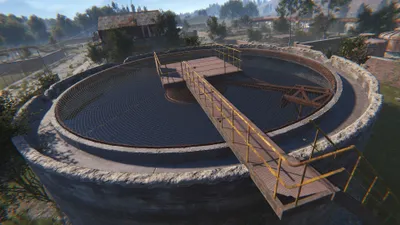
- the Water Treatment valve;
- the roadside transformers, which then deliver 12 power units per port.
Phase 2 — 4 to 9 fuses
No new unlock here, but a quantitative gain: roadside transformers go from 12 to 18 units of power per port. This is the least spectacular tier, and probably the one where many servers will end up stagnating.
Phase 3 — 10 to 17 fuses
The network reaches the sea. Switches appear on the Oil Rigs and trigger the Dome's crude oil pumps: around 1,500 units of Crude Oil from the Small Oil Rig, and nearly 3,000 from the Large Oil Rig. For clans who live off Low Grade Fuel — meaning flamethrowers, generators, and minicopters — this is the tier that justifies the investment.
Phase 4 — 18 fuses and above
The maximum tier, which will remain rare outside of very populated servers or organized communities. It unlocks:
- a high-efficiency recycler, with +15% yield on recycling;
- the Chinook resupply calls;
- the satellite crash events.
The +15% recycler deserves a mention: over a full wipe, a clan that recycles at scale (monument components, gear looted from kills) mechanically ends up with several thousand extra Scrap and High Quality Metal. This is the Phase 4 bonus that will have the biggest real impact on a server's economy.
The Airfield terminal: doubling airdrops
The Airfield tower is getting new terminals on the first floor. The instructions are precise, and it only works starting from Phase 1:
- Insert an Electric Fuse or a Heavy Fuse into the upper box.
- Wait for the charge to reach 240/240.
- Press the button.
Result: the natural airdrop rate is doubled for one hour. The terminal is reusable once the effect expires. It's one of the rare mechanisms in the patch that accepts a regular Electric Fuse — in other words, you can benefit from it without ever crafting a single Heavy Fuse, provided someone else has powered up the network for you.
Tactically, this terminal turns the Airfield into a permanent hotspot. Doubling airdrops means doubling the crates falling on players' heads, and therefore doubling the fights around them. Expect systematic camping of the tower's first floor right from the first weekend of the wipe.
Power poles become a resource
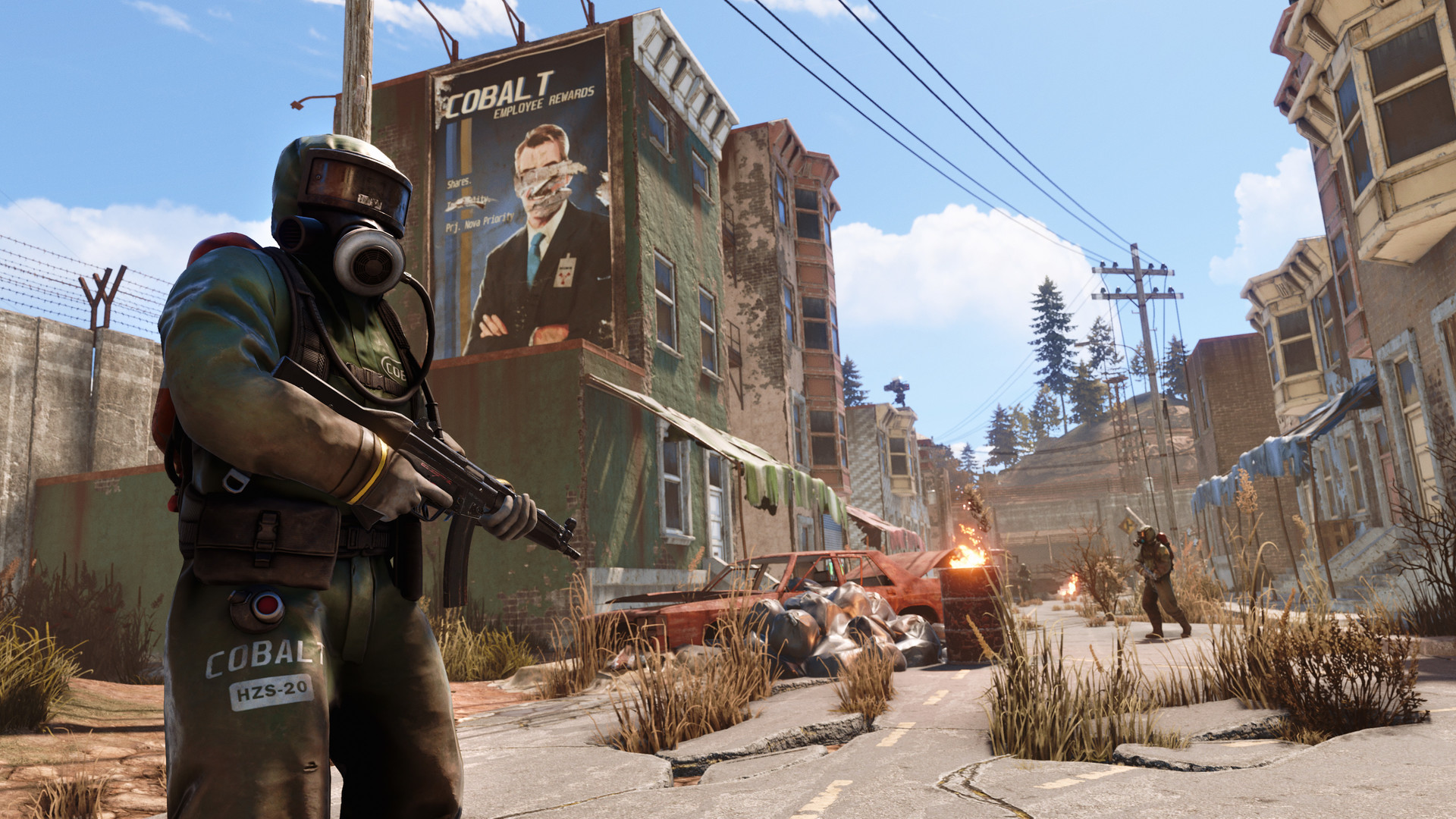
The roadside transformers have been reworked. They are now climbable and feature six output ports. You wire into them with the Wire Tool, exactly like a basic component, and access is subject to building privilege — meaning a clan that places a Tool Cupboard around a pole locks the resource for everyone else.
Output depends on the network's phase: 12 units per port in Phase 1, 18 from Phase 2 onward. For a roadside base, it's a credible alternative to solar panels: no day/night variation, no noise, and direct wiring. The downside is obvious: your power supply becomes dependent on a network you don't control. If the Power Plant's fuses run out, your turrets shut down. A Large Battery as a buffer is no longer a comfort, it's a life insurance policy.
If you've never wired a base, our complete guide to electricity and wiring 2026, published on August 4, covers the fundamentals (power sources, batteries, Splitter, Electrical Branch, Memory Cell) on which this new network builds.
The satellite crash event
Unlocked in Phase 4, the satellite event is triggered by the players themselves. The entry ticket is steep: 9 Tech Trash and 1 MLRS Aiming Module. Expect about 10 minutes of delay between the trigger and the actual arrival of the event.
An MLRS Aiming Module isn't found in a road crate: it's a high-tier component. In practice, this event will be the preserve of large clans in the late wipe — and, like every loot event in Rust, it will mainly serve as bait to draw in the competition.
The balancing changes that will affect you
Beyond the electrical network, several adjustments will alter your wipe routines:
- Auto Turret: 10 → 25 High Quality Metal. This is the change with the heaviest consequences. A base with six turrets goes from 60 to 150 HQM in crafting cost. For a solo or duo, the window for automatic defense pushes back by several hours of farming.
- High External Walls and gates now contribute to upkeep. No more free wall perimeters around bases: surrounding your base now comes with a recurring maintenance cost.
- 72-hour rent cap for apartments. The apartment complex's rent box can no longer be paid more than three days in advance.
- Nerf to the Water Well vendor. An easy early-wipe water source is partially closed off.
- Removal of resource nodes in safe zones. Passive farming sheltered inside safe zones is over.
- Kayak and paddle purchasable at the Fishing Village. A real gift for solos going the coastal route.
- Spoiled food items now stack up to 20, and the Recycle Bin becomes a workbench-tier storage item.
- Favorite sleeping bags and compass markers, plus three new radio stations and crafting variants for the wolf headdress.
The patch also brings a wave of Bar Games content as a paid DLC: darts, pool tables, bar stools, and a jukebox. Purely cosmetic and social, with no impact on balancing.
Our plan for the first 48 hours
Hours 0 to 6 — ignore the network. The Power Plant will be empty of fuses at launch, and crafting a Heavy Fuse isn't a priority when you have neither a base nor weapons. Do your usual starting farm: resources, tier 1 workbench, locked 2x2 or 2x1 base.
Hours 6 to 24 — keep an eye on the phase. Swing by the Power Plant during a monument run and check the number of active fuses. If the server is already in Phase 1, your electrification plan changes: a nearby road transformer is worth more than an immediate investment in solar panels. If the server has stayed in Phase 0, count on solar and wind, as usual.
Hours 24 to 48 — weigh your turret choices. With Auto Turrets now at 25 HQM, the right question isn't "how many turrets" anymore but "where." Two well-placed turrets covering entry points are worth more than six scattered around, especially since every HQM spent on a turret is one less HQM for your armored walls.
Over the full duration — mind the timer. A Heavy Fuse lasts 2h40. A server that reaches Phase 3 in the evening might have dropped back to Phase 1 by early morning. Never build a critical dependency (turrets, automated doors) on power drawn exclusively from the road network.
What this patch says about Rust in 2026
For twelve years, Rust has been a zero-sum game: what you gain, someone else loses. The Heavy Fuse network is the first mechanic to openly introduce a common-good dilemma — paying an irreversible individual cost for a shared benefit, including with those who will raid you tomorrow.
On paper, game theory predicts that no one should invest. In practice, it only takes one big clan that needs the Crude Oil pumps at Dome for the whole map to benefit. That's exactly the kind of asymmetry that makes Rust servers interesting — and it's what will be worth watching in the days following August 6.
Note that this information comes from advance patch notes and test builds. Facepunch regularly adjusts the numerical values right up until deployment. Check the official changelog at wipe time for the final figures.
Share this article
Faced with this new collective electrical grid system, do you think your clan will be more of a…
Frequently asked questions
What is a Heavy Fuse and where do you get one?
The Heavy Fuse is a new consumable item that can only be inserted into the Power Plant's two fuse boxes. It lasts 2 h 40 of real time and cannot be removed once placed, making it an irreversible investment for the benefit of the entire server. The exact crafting and acquisition details aren't covered in this guide, but the key point is that you'll find it as loot or craft it using monument components.
If nobody places a Heavy Fuse, does the grid stay off?
Yes. The default state at the start of the wipe is Phase 0, with no bonuses at all. On a low-population server or one without a community of investors, it's entirely possible for the grid to stay neutral for days. That's one of the design's gambles: two identical maps will never play out the same way depending on the server's collaborative mindset.
How does the Airfield terminal work, and do I need the grid to use it?
You insert an Electric Fuse or a Heavy Fuse into the terminal's upper box, wait for the charge to reach 240/240, then press the button to double the airdrop rate for one hour. Yes, you need the grid to be at Phase 1 minimum, but you can use a regular Electric Fuse instead of sacrificing a Heavy Fuse.
Why do Auto Turrets now cost 25 HQM instead of 10?
This is a deliberate rebalance to push back the automatic defense window for solos and duos, especially given the new dependency on the shared electrical grid. A base with six turrets goes from 60 to 150 HQM, which considerably delays defensive security early in the wipe.
Can roadside transformers be blocked by an enemy clan?
Absolutely. Transformers are now climbable and offer six output ports, but access is subject to building privilege. A clan can place a Tool Cupboard around a pole to lock its use, forcing others to wire elsewhere or rely on buffer batteries to cope with an outage.
Key takeaways
- The Heavy Fuse creates a shared resource: once placed at the Power Plant, it benefits the entire server but disappears after 2 h 40, forcing an ongoing collective contribution.
- The grid's five phases progressively transform the map, from unlocking airdrops in Phase 1 to autonomous Oil Rigs in Phase 3 and the supercharged recycler in Phase 4.
- Auto Turrets now cost 25 HQM instead of 10: a well-defended base requires 150 HQM to craft instead of 60, pushing back your defense window by several hours.
- Roadside transformers become electricity sources that can be locked with building privilege, offering a real alternative to solar panels but creating dependency on the global grid.
- The Airfield becomes a permanent hotspot thanks to the terminal that doubles airdrops for an hour with each activation, drawing campers as early as the first weekend.
Comments
No comments yet. Be the first to react!
Leave a comment
Similar guides

Latest articles






Your opinion counts
Rate Rust
Click a star to rate