



 Alexandre Jollier


Quarantine Zone: The Last Check Laboratory - How to optimize its operation
In brief
The Laboratory in Quarantine Zone: The Last Check is an advanced structure allowing you to identify and analyze new viral symptoms. Discover the complete procedure, from selecting survivors to organ extraction, to optimize your medical research and improve your ability to detect the infected.
In Quarantine Zone: The Last Check, one of the most sophisticated facilities in the game is the Laboratory. This advanced structure allows you to discover and analyze new symptoms, elements that are fundamental to identifying infected survivors. Let's take a look at how it works.

Discovering new symptoms
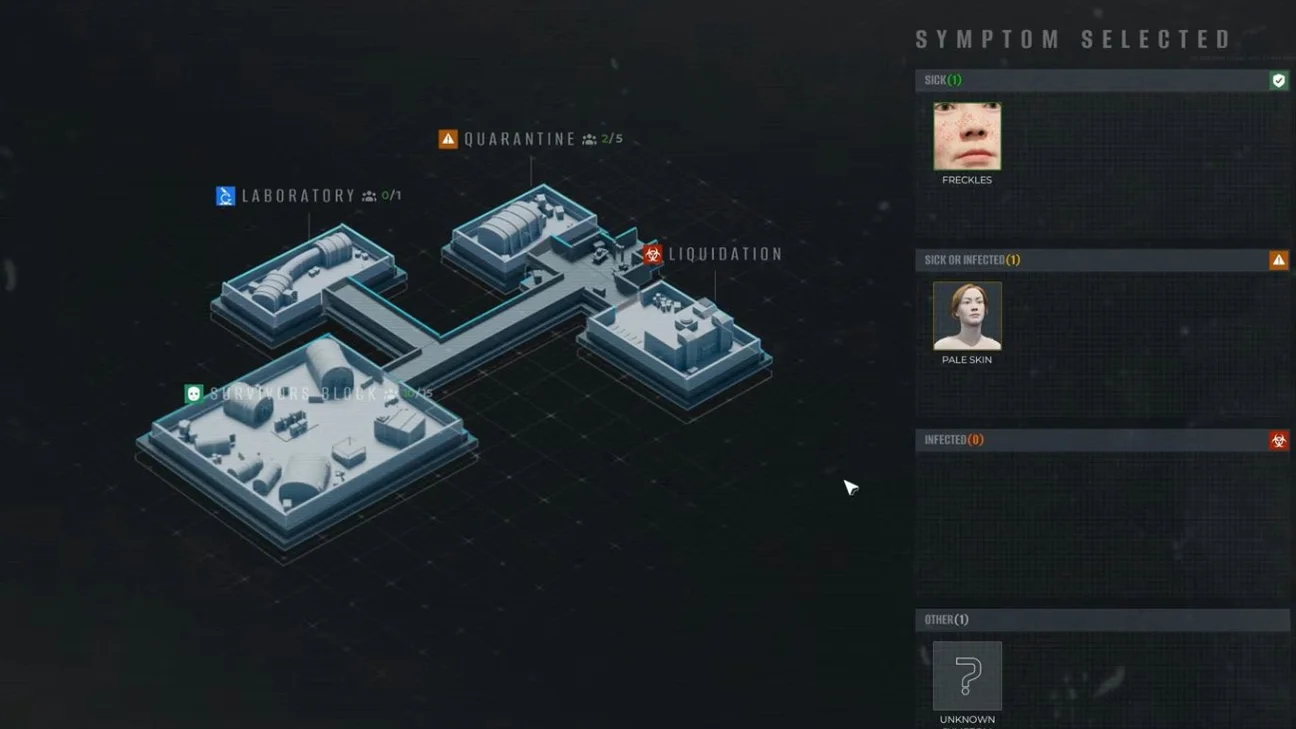
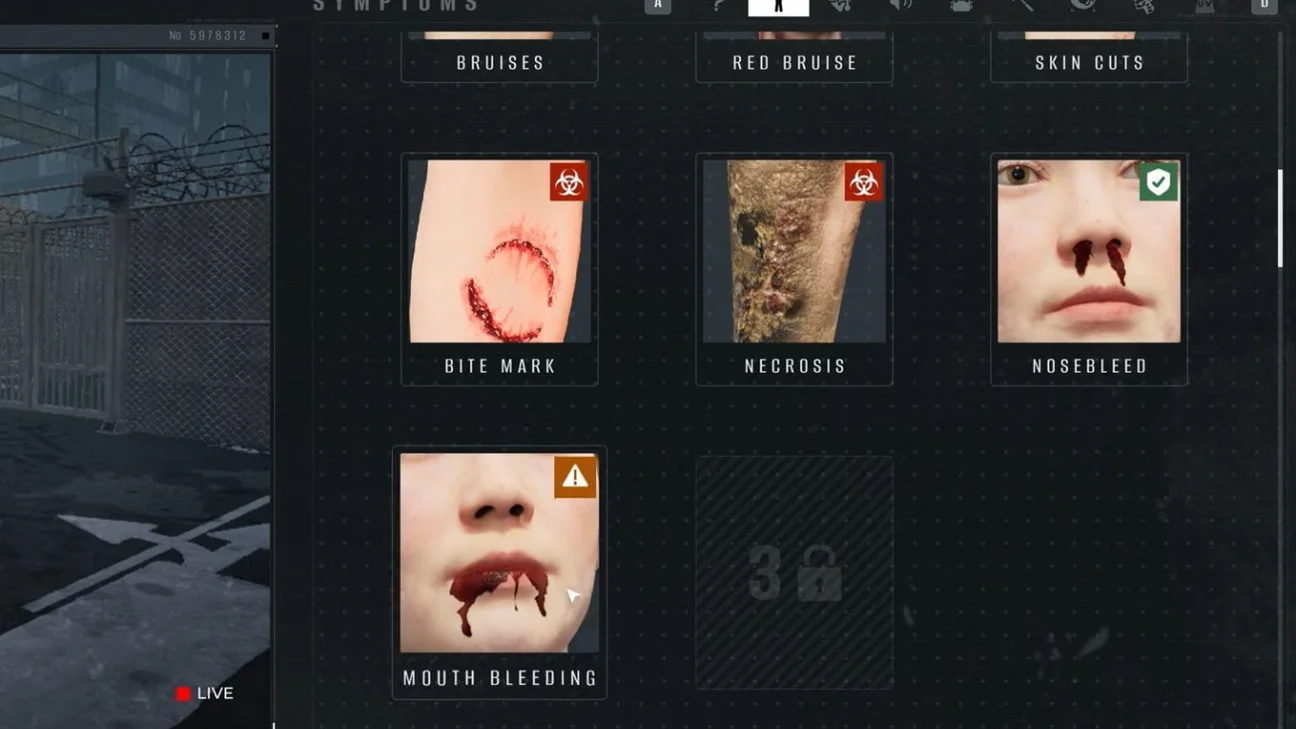
Searching for new symptoms is one of the main tasks in Quarantine Zone. To maximize your laboratory's efficiency, start by identifying survivors with unidentified symptoms. These unknown manifestations are essential for enriching your body of medical knowledge.
When you encounter a survivor with unidentified symptoms, be sure to examine all of their clinical manifestations, whether already catalogued or not. Finally, send this survivor to the Laboratory and follow them to your facility.
If several individuals present the same not-yet-identified symptom, you can optimize your time by placing some of them in temporary Quarantine.
Note
Analysis in the Laboratory is an invasive procedure that results in the subject's death - this sacrifice is unavoidable for the survival of the group...
Laboratory analysis procedure
Once the survivor has been transferred to the laboratory, you'll find them behind a glass enclosure dedicated to observation and intervention. Head to the terminal near this cage to proceed with the analysis.
The organ extraction stage is a dreaded moment. On your screen, you'll recognize infected organs highlighted in green, confirming their importance to your research. But other organs will block access to these infected tissues.
You'll then need to clear the occupied organs beforehand, identifiable by their yellow highlight, using the precision laser. Be careful with the organ outlined in red - destroying it would result in immediate failure of the operation, with the loss of all potential value from the diagnostic analysis.
Once the path to the infected organ is clear, activate the extraction function, which will take care of removing the targeted organ, resulting in the subject's death. This marks the beginning of the actual analysis phase.
Retrieve the extracted organ by holding down the left mouse button, then place it in the sample collector. Clicking on the collector will start the preparation process. At the end of this operation, you'll obtain a test tube containing the organic materials needed for the analysis.
Once the test tube is placed in the analyzer, open the device and wait while the system works to identify the nature of the symptoms. If the result is positive for the presence of infection in the surviving individual, you'll need to add the symptom to watch to your diagnostics. Otherwise, the survivor will have been sacrificed with no benefit to the community - which is unfortunately an inherent risk in your research and discoveries in this crisis situation.
Share this article
Would you be able to withstand the organ extraction phase in the Laboratory?
Frequently asked questions
Why should you send survivors to the Laboratory?
Laboratory analysis allows you to identify and record new viral symptoms, essential for developing your ability to detect the infected within your group. These discoveries enrich your body of medical knowledge.
What happens if I destroy the organ circled in red?
Destroying the red organ immediately results in the failure of the operation, and you lose all the potential benefits of the diagnostic analysis. It is crucial to identify it and avoid it during extraction.
Is it possible to save time by putting several survivors in Quarantine?
Yes, if several individuals present the same not-yet-identified symptom, you can put some of them in temporary Quarantine to optimize your analysis time.
What happens if the analysis does not detect infection in the survivor?
If the result is negative, the survivor will have been sacrificed with no benefit to the community. This is an inherent risk of research in crisis situations, where some attempts yield no results.
Key takeaways
- Target survivors with unidentified symptoms to enrich your medical knowledge base.
- Laboratory analysis requires precisely extracting infected organs while avoiding the yellow obstacles.
- Avoid destroying the organ circled in red, which would result in the immediate failure of the entire operation.
- Organ extraction is fatal for the survivor, a necessary sacrifice for the survival of the group.
- Place the sample in the analyzer to confirm the presence of infection and add the symptom to the diagnosis.
Comments
No comments yet. Be the first to react!
Leave a comment
Similar guides
Latest articles








Your opinion counts
Rate Quarantine Zone: The Last Check
Click a star to rate