

 Fabian Lainé
Beginner's Guide
Mobile Legends Storage Size: Full Resources GB Explained
In brief
Mobile Legends: Bang Bang can be intimidating at first glance, but this guide sets you up with the right basics: creating your account, breaking down the interface, choosing your first main without spreading yourself thin, and avoiding the classic pitfalls that slow beginners down. With over 130 Heroes and a dense interface, it's best to know where to click and who to play from the very start.
You just installed Mobile Legends: Bang Bang and you're wondering where to start? Welcome to the most played mobile MOBA in Southeast Asia, which now counts over 130 Heroes as of July 2026 and a community that's as active as ever. This getting-started guide was designed for players who have never touched a game of this genre, as well as for those coming back after a long break. Together, we'll go through the first launch, the interface, the currencies, choosing a first main, and the classic pitfalls to avoid.
A first launch without any bad surprises
MLBB is free on the Play Store and the App Store, with a footprint of about 1.6 GB including the initial patch. At startup, the game offers you the choice to create an account via a Moonton ID, your Google account, Apple, or Facebook — the Moonton option remains the most convenient for linking your progress across multiple devices.
The tutorial appears right after. It puts you in a scripted match of a few minutes featuring Layla, the marksman given free to all new accounts. Resist the temptation to skip it: this is generally the only time the app explains in depth the movement controls, manual targeting, recalling to base, and buying equipment.
Tip: launch your first session on Wi-Fi. Downloads of additional resources (voices, effects, event cinematics) trigger in the background and can easily exceed 1 GB in the following days.
Understanding the main screen
Once the tutorial is done, you land in the lobby. The interface is packed, but a few areas deserve your immediate attention:
- The Battle button at the bottom right opens the mode selection: Classic, Ranked, Brawl, Custom, Fight vs AI.
- The Hero Hall gathers all unlocked characters, with their stats, skills, skins, and recommended builds.
- The Diamond icon at the top gives access to premium currency top-up.
- The Bag stores your trial cards, Hero fragments, tickets, and event items.
- The Events and Missions tabs, on the left, are your best sources of free rewards during the first week.
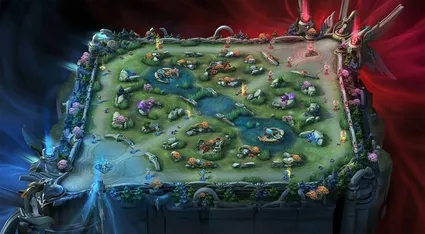
The reference map, called the Land of Dawn, has remained unchanged since the game's early days: three lanes (top, mid, bottom), a shared central jungle, and two control objectives, the Turtle and the Lord.

The free Hero rotation and your first unlocks
You don't need to buy characters to try out the game. Every Monday, MLBB offers a weekly rotation that makes six to eight Heroes playable for free in Classic and Brawl. The selection deliberately covers all six roles — Tank, Fighter, Assassin, Mage, Marksman, and Support — giving you a real testing ground for different playstyles.
On top of that, there are the gifts from the Rising Star journey: by logging in six days out of the first ten, you get five preset Heroes (Miya, Layla, Franco, Balmond, and Saber make up the current selection), plus a permanent skin on the seventh day. Finally, keep an eye on the Trial Cards earned through missions: they temporarily unlock a Hero of your choice, very handy for trying them out before buying with Battle Points.
Choosing a first main without spreading yourself too thin
The worst mistake a beginner can make is jumping from one Hero to another every match. Your learning curve doubles as soon as you stick to a very small pool. The commonly accepted rule in 2026 boils down to three points:
- Select a main role that matches your playstyle: ranged and cautious (Marksman, Mage), frontline (Tank, Fighter), or opportunistic flanker (Assassin).
- Choose two or three Heroes in that role and play them for at least twenty to thirty matches before switching.
- Avoid Heroes with demanding combos (Ling, Fanny, Chou) until your reflexes are settled.
Layla, Miya, Eudora, Tigreal, Franco or Balmond are excellent choices to get started: accessible, often present in the free rotation, and relevant at all low and mid tiers.
Note: every Hero displays a difficulty rating scored out of five stars in the Hero Hall. Below three stars, you're on comfortable ground for starting out.
Equipment and emblems: the two systems to understand
Two distinct mechanics determine your Hero's power once in a match.
Equipment is bought with the Gold earned during the match, via the Shop icon at the top right of the game screen. Each Hero can carry six items at once, boots included. At the start, let yourself be guided by the recommended builds offered by the game: they're designed Hero by Hero and adapted to your level of understanding. You'll personalize them later, once you know when to prioritize an Anti-Heal item, magic resistance, or a defensive piece.
Emblems, on the other hand, are set up before the match in the lobby. MLBB offers nine emblem sets that can be upgraded up to level 60, with a talent tree to customize. Don't worry about perfect synergy at first: prioritize leveling up the emblems that match your favorite roles and pick the recommended talents in the Hero's profile.

Battle Points, Diamonds and Tickets: the shop decoded
Three main currencies govern your progression outside of matches. It's best to know from the start what can be bought with what.
- Battle Points: the free currency, earned at the end of matches, through missions and login rewards. It's mainly used to buy standard Heroes and a few basic items.
- Diamonds: the premium currency, obtained with real money (in-game top-up or through official resellers like Codashop). Used for skins, event chests, permanent Trial Cards, and certain bundles.
- Tickets: an intermediate category. Lucky Tickets feed skin draws, while Fragment Tickets convert into Hero or skin fragments. You mainly earn them through events and seasonal rewards.
Tip: never spend your first Diamonds on a Hero. Battle Points are more than enough to grow your roster. Save your Diamonds for skins, which bring animations, voice lines, and sometimes real visual bonuses useful for readability in combat.
Classic, Ranked or Brawl: which mode to start off right?
Three 5v5 modes will shape your first weeks. Each one has a specific role in your progression:
- Classic: the go-to learning mode. No impact on your ranking, all your unlocked Heroes (and those in rotation) can be freely selected. This is where you should play the vast majority of your first hundred matches.
- Ranked: available from account level 8 with at least five Heroes. It opens the door to the seasonal ladder with bans, drafts, and divisions. Wait until you've mastered at least two Heroes and all the roles before venturing seriously into it — we've dedicated a full guide to this.
- Brawl: a short and fun version on a single lane, with a Hero randomly drawn from two options. Ideal for relaxing, completing quick missions, or recovering a credit score after a bad match.

Beginner mistakes you should absolutely avoid
A few unfortunate habits hold back new players' progress. Here are the main ones to fix right away:
- Ignoring minions. Gold and experience come primarily from them, not from kills. A missed last hit means a delayed piece of equipment.
- Rushing for kills under the enemy tower. Turrets hit hard and are unforgiving at level 3.
- Forgetting the minimap. A glance every five to ten seconds is enough to anticipate enemy rotations.
- Leaving a lane empty for three minutes. Every lost minion wave brings the opponent closer to your towers.
- Blindly copying a "top global" build. Anti-Heal items, magic resistance, or armor should be chosen based on the enemy team.
- Rushing into Ranked as soon as it unlocks. A level 8 account with five Heroes doesn't make a player ready for ranked.
Note: turn on the manual targeting option in the settings right away. It's the best way to learn to aim properly, rather than letting auto-lock choose the least relevant target.
Going further
Once you've mastered these basics, you're ready to dig deeper. On playnews.gg, check out our other Mobile Legends guides to round out your learning:
- Our MLBB Heroes tier list 2026, to find out who to prioritize picking based on the current meta.
- Our roles and lanes guide, which breaks down lane by lane what's expected of a Tank, a Marksman, a Fighter, or a jungler.
- Our complete Ranked mode guide, to understand the season system, bans, drafts, and the strategy for climbing the ladder.
Safe travels across the Land of Dawn, and remember: patience and consistency pay off far more than rushing.
Share this article
Which mode will you dive into first to get started?
Frequently asked questions
Should you really follow the tutorial at the start?
Yes, absolutely. It's the only time the game explains controls, targeting, and item purchasing in detail. Skipping it would deprive you of fundamentals you'd otherwise have to learn the hard way, elsewhere.
Which Hero should you pick to start out without making a mistake?
Layla, Miya, Eudora, Tigreal, Franco, or Balmond are your best friends: accessible (under three difficulty stars), often free in rotation, and viable at all low levels. Avoid Ling, Fanny, or Chou until your reflexes are solid.
Battle Points or Diamonds for your first Heroes?
Battle Points only. Diamonds are precious and scarce for newcomers. Use them for skins or event chests, not to pad out a roster you can build for free.
From what point can you start playing Ranked?
Technically at account level 8 with five Heroes unlocked, but wait until you've mastered at least two Heroes and understood the roles. Ranked opens up the seasonal ladder: it's a different world, so don't jump in too early.
Why is the minimap so important?
A glance every five to ten seconds saves you from ganks and ambushes. It's the difference between anticipating an enemy rotation and getting caught off guard in the mid lane.
Key takeaways
- Stick to two or three Heroes max before switching — your learning curve doubles once you stop jumping around.
- Ignore Battle Points concerns for Heroes: use them to build a roster, and save your Diamonds for skins that actually change the game.
- Minions are worth more than kills — a missed last hit means a delayed piece of equipment.
- Start your first sessions on Wi-Fi: MLBB downloads 1+ GB of resources in the background during the first few days.
- Classic is your training ground — no ranking, total freedom to test Heroes and roles before getting serious.
Comments
No comments yet. Be the first to react!
Leave a comment
Similar guides


Latest articles






Your opinion counts
Rate Mobile Legends: Bang Bang
Click a star to rate